A stakeholder communication plan sets out who needs to hear about a project, what they need to know, through which channel, how often, and who is responsible for telling them. It is prepared during planning and kept current through delivery.
The plan answers four questions in order:
who the audiences and stakeholders are
what messages they need
which methods suit each group
what happens when something has to be escalated
Written as a management deliverable, it is often titled a communications management plan or shortened to a comms plan, and on most projects the project manager owns it.
What's Included in This Stakeholder Communication Plan Template
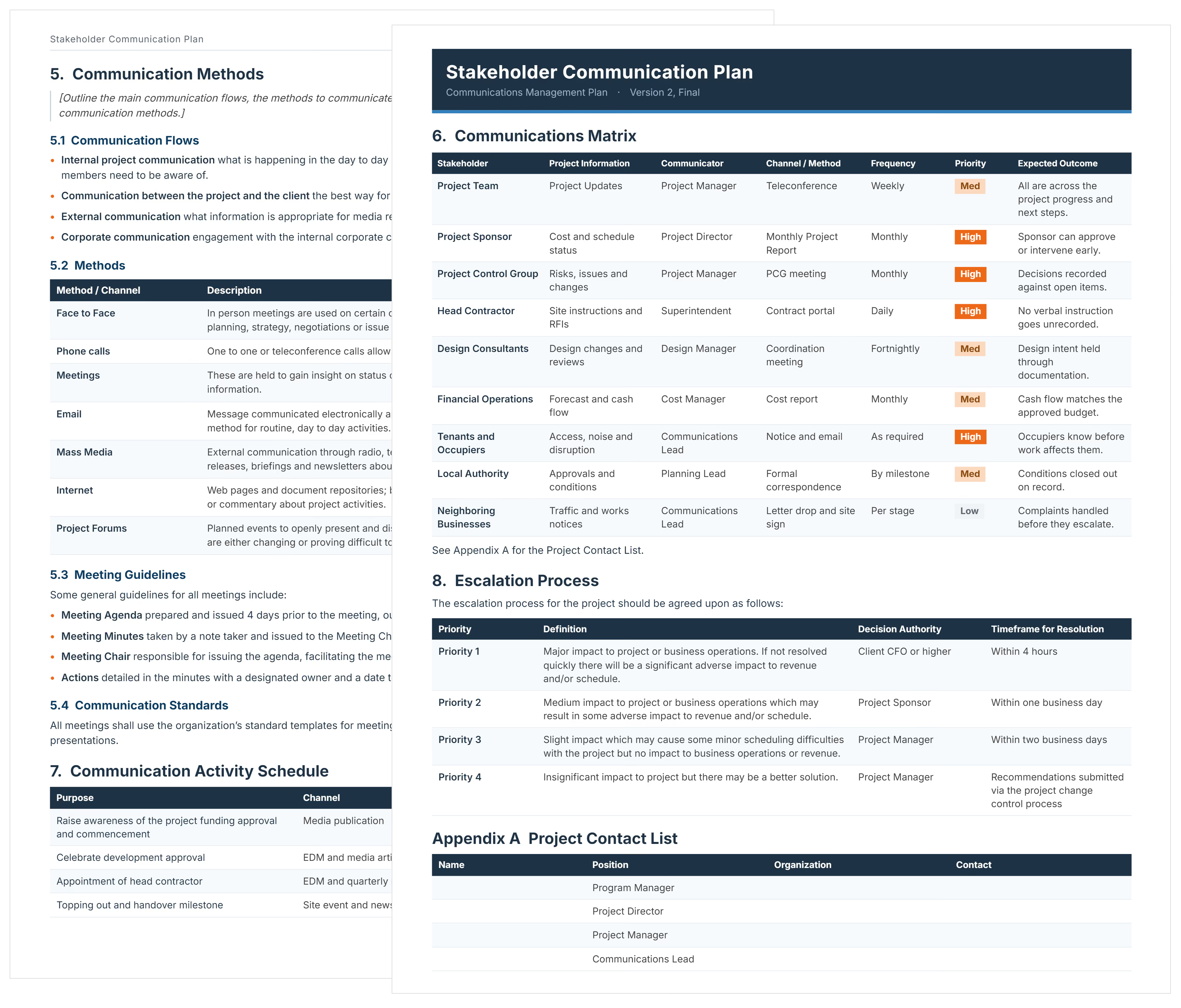
Thirteen sections in Word format, from document control through to a project contact list.
Section
What it covers
Document control
Version history, distribution list and an authorization record signed by the project manager and project director.
Introduction and purpose
What the plan governs, and that it sits alongside existing organizational policies rather than replacing them.
Key outcomes
What the plan is trying to achieve, stated as outcomes rather than activities.
Target audiences and stakeholders
The audiences the project affects, the stakeholders involved, and an objective for each.
Key messages
What the project needs each audience to understand.
Communication flows
Internal, client, external and corporate, following the Project Management Institute's four flows.
Methods
A channel table covering face to face, phone, meetings, email, mass media, internet and project forums, with the audience each suits.
Meeting guidelines
Agenda issued four days prior, minutes issued within two days, chair responsibilities and action ownership.
Communication standards
Which organizational templates apply to agendas, minutes, monthly reports and dashboards.
Communications matrix
Eight columns tying each stakeholder to the information they receive.
Communication activity schedule
Non-recurring activities aligned to milestones, with purpose, channel, audience, owner and timing.
Escalation process
Four priority levels, each with a definition, a decision authority and a resolution timeframe.
Appendix A
The project contact list.
Stakeholder Communication Plan Example
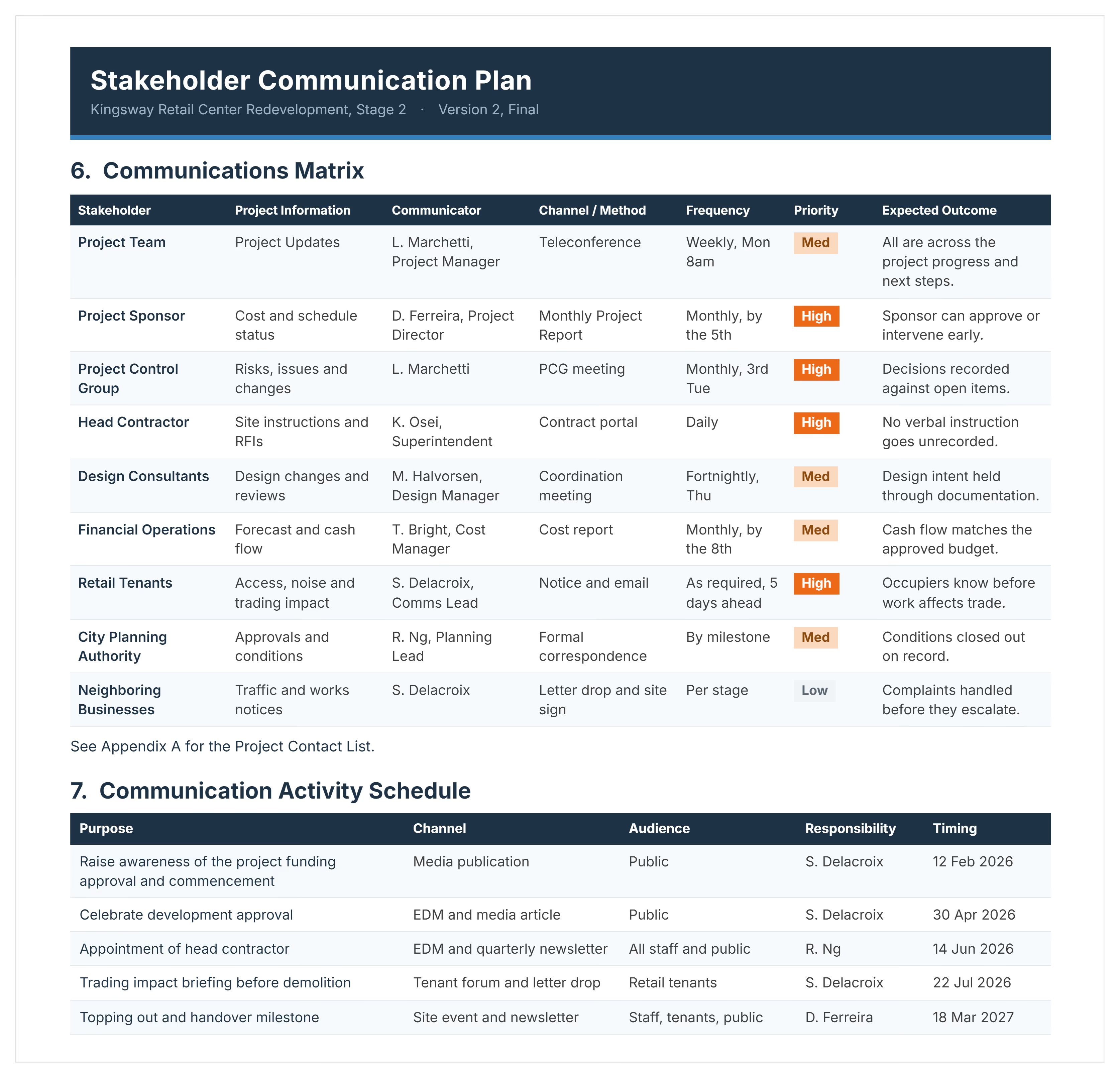
Here's an example of a filled out stakeholder communication plan, showing the communications matrix and activity schedule for a retail center redevelopment.
Stakeholder communication plan example showing a communications matrix with frequency, priority and expected outcome.
Communication Matrix: Who Gets What Information, and When
The matrix in the middle of the plan is where it stops being a policy document. Eight columns, one row per combination of stakeholder and information type.
Column
What it records
Stakeholder
The group receiving it.
Project information
What they receive, such as project updates, cost reports or milestone notifications.
Communicator
Who sends it.
Channel or method
Teleconference, email, meeting, publication.
Initial delivery date
When it starts.
Frequency
Weekly, monthly, at milestones.
Priority level
How important the exchange is.
Expected outcome
What the recipient should know or be able to do afterward.
How to Write a Stakeholder Communication Plan in Word
Work top down. Audiences first, then messages, then methods, then the matrix that connects them.
Complete document control, including who prepared the plan, who reviewed it and who it is distributed to.
State the purpose in relation to communication across the project life cycle, and note that it works alongside existing organizational policies.
Write the key outcomes as results, such as establishing clear communication between the people involved.
List the audiences the project affects and the stakeholders involved, with an objective for each.
Set the key messages you need each audience to take away.
Confirm the four communication flows: internal, with the client, external and corporate.
Edit the methods table to the channels you will actually use, and delete the ones you will not.
Set the meeting guidelines, including how far in advance agendas are issued and how quickly minutes are distributed.
Complete the communications matrix, one row per stakeholder and information type, filling in the expected outcome for each.
Add non-recurring activities to the schedule, aligned to the milestones that trigger them.
Agree the escalation process, since the priority levels and decision authorities need signing off before they are needed rather than during an incident.
The escalation table is the section to settle early. Four priority levels, each with a decision authority and a resolution timeframe, ranging from a major impact resolved within hours to a minor issue routed through change control. Agreeing who can decide what, and how fast, is the part of the plan that gets tested first.
Related Articles and Templates
Explore these resources for stakeholder identification, analysis, communication, and engagement planning:
A communication plan covers messages, channels and frequency. A stakeholder management plan covers relationships, influence and the commitments made to each stakeholder. The first decides how you talk to people, the second decides who matters and what you owe them.
The project manager, who produces it during the planning stage and keeps it current through delivery, seeking input as required. On larger projects a communications lead drafts it and the project manager owns it.
It depends which cut you mean. By method, project communication is usually split into formal written, formal verbal, informal written and informal verbal, which is the classification most project management training uses. By audience, it splits into internal communication within the delivery team, communication with the client, external communication with the public and media, and corporate communication with the wider organization. A communication plan needs the audience view, because each audience needs different channels, approvers and timing.
The stakeholder, the information they receive, who sends it, the channel, when it starts, how often, its priority, and the outcome it should produce. The outcome column is what separates a schedule of activity from a plan.
Periodically as a matter of course, and whenever a material change affects the business case the project rests on. New stakeholders, a change in scope or a change of phase are all triggers.
The agreed route for issues that cannot be resolved at project level. Each priority level names who decides and how quickly, from a major impact needing a decision within hours to a minor one handled through change control.
Word, since most of the plan is narrative: purpose, audiences, messages, standards and the escalation process. The communications matrix and activity schedule are tables inside it, and teams running very large stakeholder lists sometimes maintain those separately in a spreadsheet.
Topic:
Written by
Jackson Row
Jackson Row is the Growth & North American Market Lead at Mastt. With a background in risk modeling, cost forecasting, and integrated project delivery, he helps capital project owners work smarter and faster. Jackson’s work supports better tools, better data, and better outcomes across the construction industry.
Free Template
FREE stakeholder communication plan template in Word format. Set who gets what information, through which channel, how often, and who sends it.