




When it comes to human ambition, nothing showcases our determination quite like massive construction projects. From towering cathedrals to sprawling infrastructure networks, these endeavors often take decades or even centuries to complete.
In this article, we’ll explore the thirteen longest construction projects of all time, uncovering the stories, challenges, and triumphs behind these monumental undertakings. Whether you’re curious about the longest construction project ever or the most intricate cathedral projects, the principles of capital project management are vital in understanding how these endeavors are brought to completion.
1. The Great Wall of China: The Longest Construction Project That Took Millennia
The Great Wall of China holds the record for the building that took the longest to build. Built over 2,000 years, it started around 400 B.C. and continued through various dynasties until the early 17th century. The wall stretches over 13,000 miles, serving as a defensive barrier across northern China.
Timeline and Historical Context
- Construction Began: 400 B.C.
- Completion (or Pause): 17th century AD

The Great Wall wasn’t constructed in one go. Construction continued intermittently over the centuries, with different dynasties adding their own sections. Different dynasties built sections over 2,000 years, primarily for defense against invasions. Each ruler added their own touch, using locally available materials like tamped earth, wood, and later, bricks and stones.
Challenges in Construction
- Labor shortages led to forced conscription of peasants and soldiers.
- The terrain was brutal, with mountains and deserts making construction difficult.
Despite these challenges, the Great Wall still stands as a testament to human ingenuity and resilience.

2. Cologne Cathedral: A Gothic Giant 600 Years in the Making
The Cologne Cathedral in Germany holds the record for one of the longest construction projects in European history, clocking in at over 600 years. It’s also one of the most iconic examples of Gothic architecture ever completed. If you’re wondering which cathedral took the longest to build, the Cologne Cathedral easily makes the list.
Timeline and Historical Context
- Construction Began: 1248
- Completion: 1880
- Total Years: ~632 years

Work on Cologne Cathedral kicked off in 1248 with bold ambition and a towering Gothic design. Progress in the early years was solid, they built the choir, the apse, and made major headway before the 16th century. But in 1560, work stopped completely.
For the next 300 years, the cathedral stood unfinished missing its massive spires and most of its upper structure. Why? Funds ran out. Gothic architecture fell out of style. And the region moved on to other priorities.
It wasn’t until the 1800s that a wave of renewed national pride brought the project back to life. With the original medieval blueprints still intact, German builders picked up right where their ancestors left off centuries later.
What Took So Long?
- Construction paused for nearly 300 years due to lack of funding and shifting styles
- Political instability and religious change slowed interest in Gothic projects
- Final work resumed only in the 19th century, using preserved medieval plans
When Cologne Cathedral finally reached completion in 1880, it stood 157 meters tall, becoming the tallest building in the world at the time. Today, it's one of Germany’s most visited landmarks and a UNESCO World Heritage Site.
It took more than six centuries, but Cologne Cathedral is proof that Gothic patience pays off eventually.
3. Temple of Olympian Zeus: An Ancient Mega-Project Spanning Centuries
The Temple of Olympian Zeus in Athens is one of the longest-running construction projects in the ancient world. It began in the 6th century B.C., but wasn’t completed until the 2nd century A.D., giving it a timeline of roughly 600 years from start to finish. This project stalled repeatedly because of politics, regime change, and shifting priorities.
Timeline and Historical Context
- Construction Began: 6th century B.C.
- Completion: 2nd century A.D.
- Total Years: ~600+ years

The temple was originally conceived as a monumental tribute to Zeus and a statement of Athens’ power. Early efforts were ambitious, but progress didn’t last. Political upheaval and leadership changes disrupted construction, leaving the site unfinished for long stretches of time.
Centuries later, the Romans revived the project, and Emperor Hadrian ultimately oversaw its completion. By then, the structure had become as much a symbol of endurance as it was of religion, proving that some projects outlast the intentions of the people who start them.
Why Was the Temple Left Unfinished for Centuries?
- Frequent interruptions caused by political instability and shifting rulers
- Long periods where construction stopped entirely
- Enormous scale, requiring extensive stone sourcing and skilled labor
- Final completion depended on renewed funding and imperial support
Even in ruins, the Temple of Olympian Zeus remains one of Athens’ most iconic landmarks. Its timeline is a reminder that the biggest threats to project delivery are often political, economic, and human.
4. Chichen Itza: A Maya City Built Over Centuries
Chichen Itza was built over several centuries, making it one of the longest construction projects in Mesoamerican history. Located in Mexico’s Yucatán Peninsula, it began around 600 AD and expanded steadily until about 1200 AD.
Timeline and Historical Context
- Construction Began: ~600 AD
- Major Expansion: 750-1000 AD
- Completion/Decline: ~1200 AD
- Total Years: ~600 years (built in phases)

Rather than one project, Chichen Itza developed in stages. Maya rulers added new buildings, plazas, and roads over time. The city was built for religion, politics, and astronomy.
Its most famous structure is the Temple of Kukulcán (also called El Castillo). It was designed to act as a solar calendar. On the equinox, sunlight casts a shadow that looks like a serpent slithering down the stairs.
The city also featured over 80 sacbeob, or white roads, linking major buildings like the observatory, Las Monjas, and the Great Ball Court.
What Took So Long?
- Constructed in phases by different Maya rulers
- Combined local Puuc style with influences from Central Mexico
- Expanded as Chichen Itza became a regional capital
- Aligned many buildings to astronomical events
By 1200 AD, the city began to decline. But its legacy remains carved into stone. Timelines, temples, and traditions all layered into one massive site.
5. Milan Cathedral: 579 Years of Marble, Power, and Perseverance
The Milan Cathedral, or Duomo di Milano, is one of the longest construction projects in Italy and easily one of the most ambitious. It took nearly six centuries to complete, shaped by politics, pride, and an ever-changing list of design ideas.
Timeline and Historical Context
- Construction Began: 1386
- Completion: 1965
- Total Years: ~579 years

The Milan Cathedral construction project launched in 1386, backed by Archbishop Antonio da Saluzzo and his cousin, Gian Galeazzo Visconti, the Duke of Milan. This was a statement of power. Entire buildings were demolished to make room. Streets were re-routed. Marble was sourced from the Candoglia quarries and even got a tax exemption.
Things looked promising at first. They brought in top engineers and aimed to match the Gothic cathedrals of northern Europe. But soon, things got messy.
The design changed. Leadership changed. Budgets collapsed. And by the 1400s, construction had slowed to a crawl. For more than a century, progress was limited to minor additions and tombs. At one point, the cathedral sat unfinished for decades at a time.
Work picked up again under Francesco Sforza in the 15th century, and slowly, construction resumed spurred on by Milanese pride and religious persistence.
Why it Took Nearly 600 Years
- Frequent leadership changes and political interference
- Costly imported marble and structural complexity
- Construction stalled after the death of its main patron
- Final details weren’t completed until 1965
When it finally wrapped, the Duomo di Milano stood as Italy’s largest church featuring 135 spires, over 3,400 statues, and a roof filled with elaborate stonework you can still walk across today.
So if you’ve ever wondered what cathedral took the longest to build in Italy, this is your answer. The Milan Cathedral is a masterpiece of marble and ambition that took centuries to conquer.

6. The Winchester Cathedral: A Gothic Masterpiece in Slow Motion
Winchester Cathedral in England is a marvel of Gothic architecture and holds the record as the longest construction project cathedral. Its intricate design and nearly 500 years of construction make it an enduring symbol of dedication.
Timeline and Historical Context
- Construction Began: 1079
- Completion: 1525

Early builders underestimated the challenges of constructing on marshy ground, a lesson that aligns with understanding capital works meaning. Architect William Walker later saved it by working underwater to stabilize the structure an incredible feat of early engineering.
Financial Difficulties and Why it Took So Long
- Frequent pauses due to wars, funding shortages, and plague outbreaks.
- Artistic ambition grew over time, requiring ever more elaborate designs.
Today, visitors marvel at the cathedral’s grandeur, never suspecting how long it took to create.
7. York Minster Cathedral: A 250-Year Gothic Landmark Built in Stages
York Minster is one of the largest Gothic cathedrals in Northern Europe and one of England’s most time-intensive cathedral builds. Construction began in the early 13th century and continued in phases for roughly 250 years, making it a standout example of how monumental religious projects evolved over generations.
Timeline and Historical Context
- Construction Began: 1220
- Completion: 1472
- Total Years: ~250 years
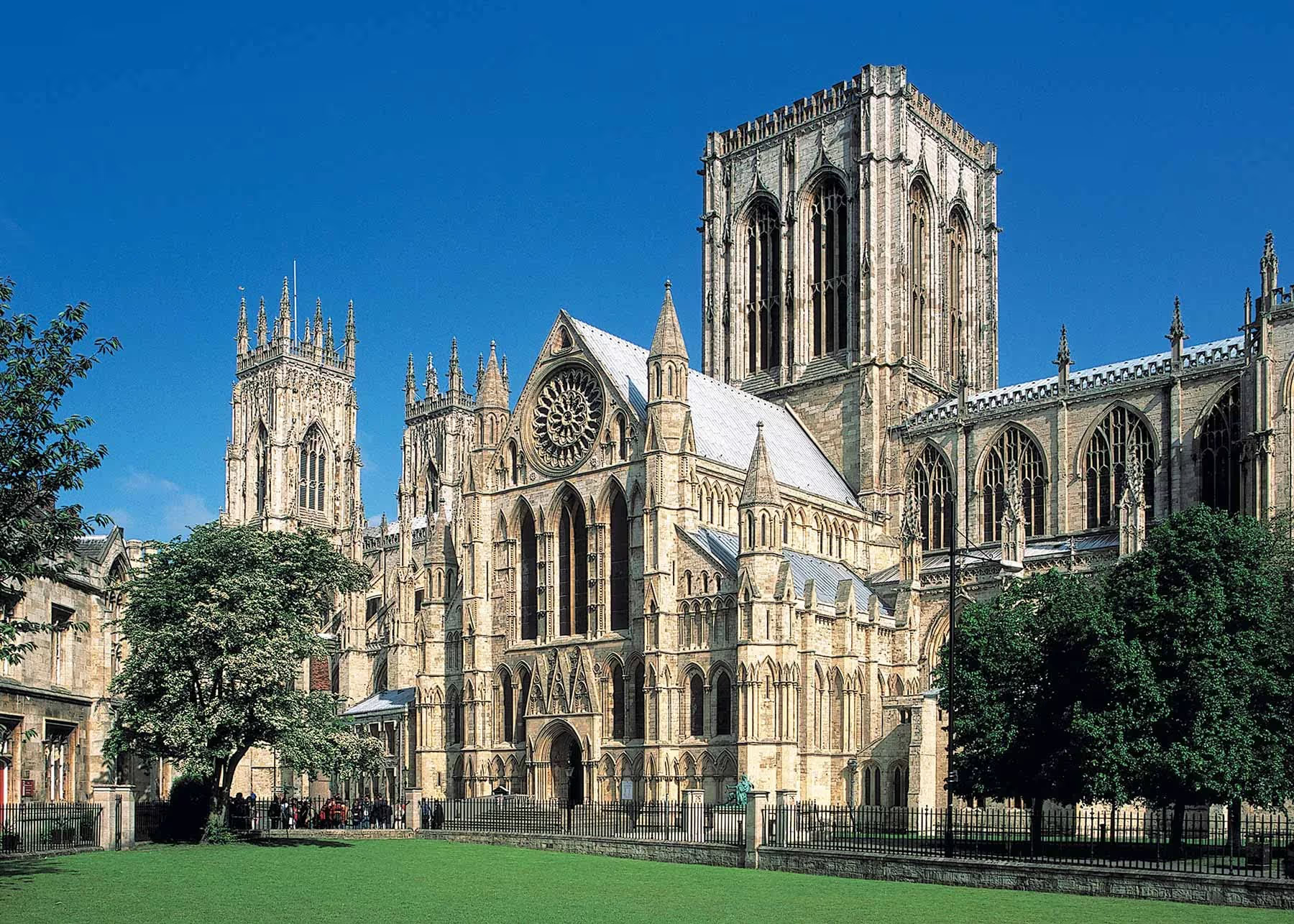
Instead of rising in one uninterrupted push, York Minster grew gradually, shaped by the realities of medieval time, money, and manpower. Like many cathedrals of its era, it expanded in stages, with new sections added when funding, labor, and political conditions aligned.
Early work reflects the clean lines and soaring proportions of Early English Gothic, while later additions became more ornate, layered, and decorative. Over time, the cathedral accumulated defining features like intricate stone carving and monumental stained-glass windows.
What Caused York Minster’s 250-Year Construction Timeline?
- Construction advanced in phases
- Funding depended on church wealth and the stability of the region
- Generations of craftsmen contributed to increasingly complex Gothic detail
- Design decisions shifted over time as architectural styles and priorities changed
By the time York Minster reached completion in 1472, it had become a centuries-long record of craftsmanship and persistence, built one generation at a time into the landmark that visitors see today.
8. Notre-Dame de Paris: A Gothic Cathedral Built Over Two Centuries
Notre-Dame de Paris took about 200 years to build, with construction starting in 1163 and finishing around 1345. The long timeline reflects both the scale of the structure and the evolving techniques used to build the cathedral.
Timeline and Historical Context
- Construction Began: 1163
- Completion: 1345
- Total Years: ~200 years
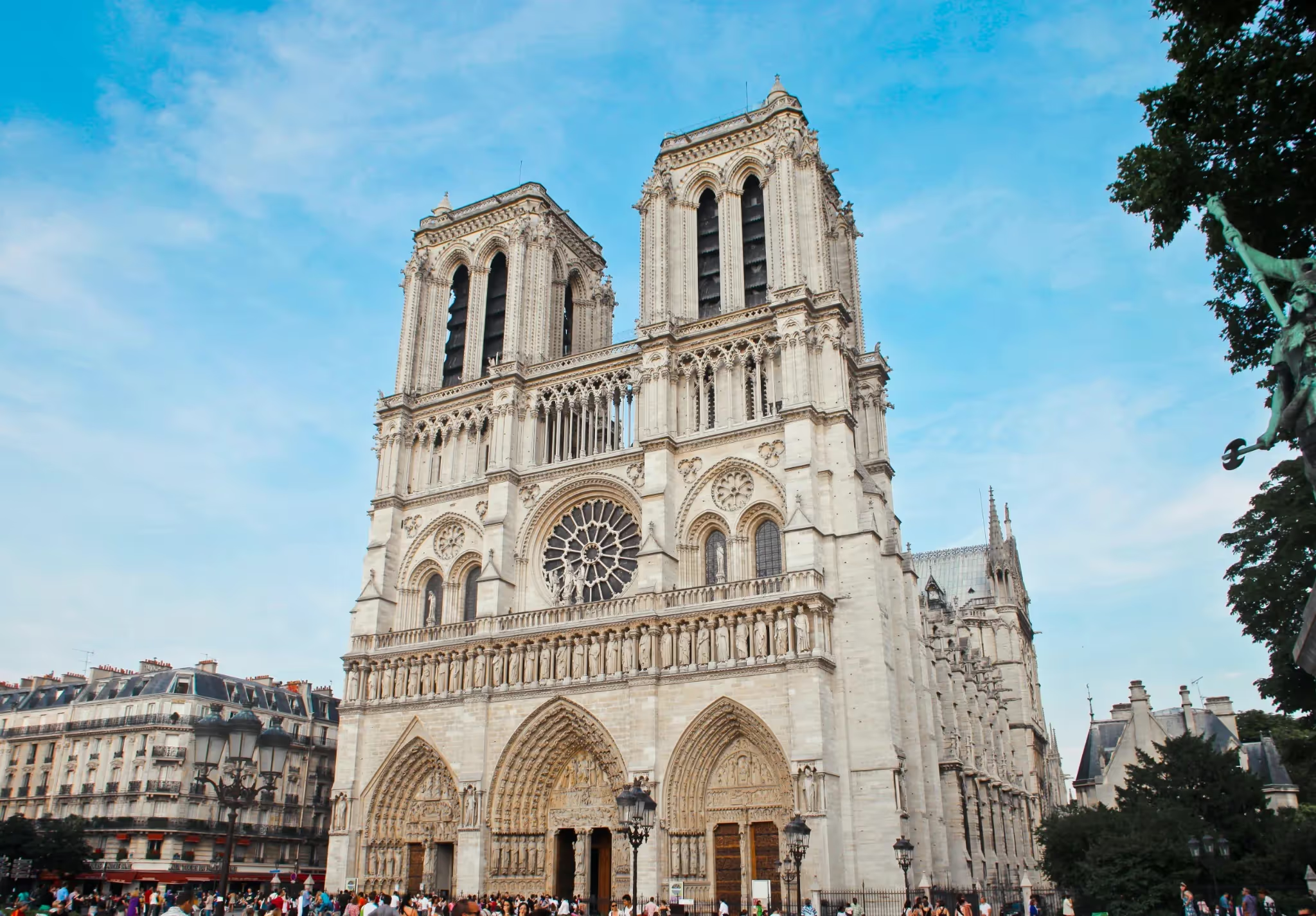
Builders worked in stages, completing major sections as methods improved and resources allowed. Innovations such as flying buttresses made it possible to build higher walls and larger stained-glass windows, but these techniques were refined over time, not used from the start.
Funding came largely from the Church and the city of Paris, which meant progress depended on political stability and economic conditions. Changes in leadership and priorities slowed work at different points, extending the overall timeline.
Why Did Notre-Dame Take Two Centuries to Build?
- Large scale and structural complexity
- Gradual development of Gothic construction techniques
- Construction progressed in phases over multiple generations
- Work depended on long-term funding and stability
By the time construction finished, Notre-Dame had become a showcase of mature Gothic design. Its size, height, and detailing reflected decades of refinement, with later builders improving and expanding on earlier work.
9. The Sagrada Familia: The Unfinished Icon
The Sagrada Família in Barcelona, Spain, is the longest-running cathedral construction. Work began in 1882, and it remains unfinished more than 140 years later. Designed by Antoni Gaudí, the basilica is expected to be completed by 2026, marking the centenary of Gaudí’s death.
Unlike traditional cathedrals, Sagrada Família relies entirely on private donations, causing frequent delays in construction progress.
Timeline and Historical Context
- Construction Began: 1882
- Projected Completion: 2026 (or later)

Gaudí’s ambitious vision incorporated highly detailed facades and towering spires that continue to challenge modern architects and builders. After Gaudí died in 1926, the project faced numerous challenges, but technological advancements have accelerated recent work.
The Spanish Civil War and What’s Holding it Up?
- Complex architectural designs requiring specialized craftsmanship.
- Funding relies entirely on donations, which fluctuates over time.
Despite the delays, millions visit the Sagrada Familia annually to witness history in the making.
10. Santa Maria del Fiore: Dome That Took Decades to Make Possible
Santa Maria del Fiore, better known as the Florence Cathedral, took around 140 years to complete. The main reason it moved so slowly came down to one problem that stalled progress for decades: how do you build a dome that huge, that high, without it collapsing?
Timeline and Historical Context
- Construction Began: 1296
- Completion: 1436
- Total Years: ~140 years
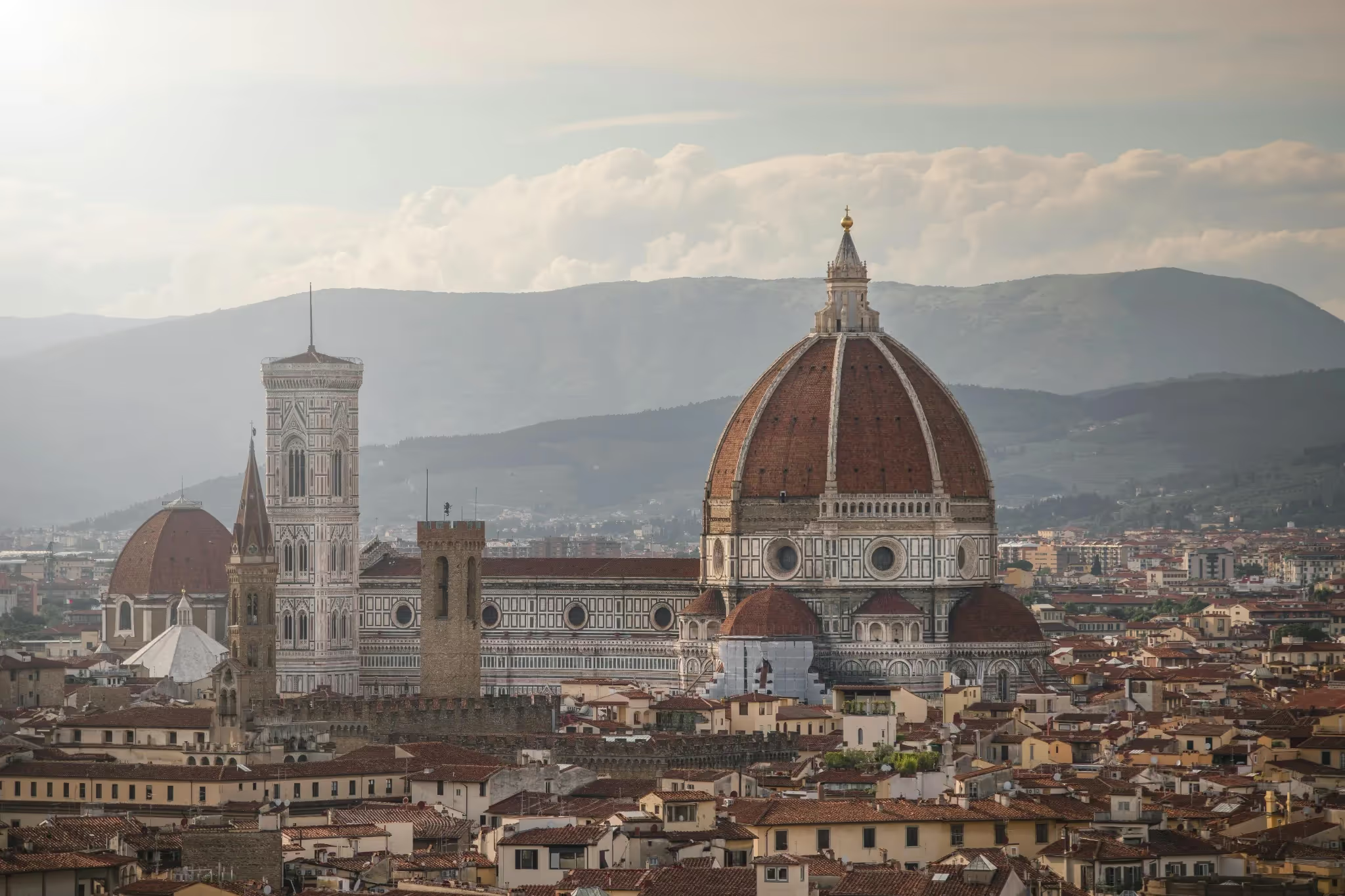
Florence set out to build a cathedral that matched the city’s rising power. Early construction moved forward, but once builders reached the point where the dome needed to go up, progress slowed. The opening was enormous, and traditional support methods weren’t enough for the job.
That changed in the early 1400s, when Filippo Brunelleschi introduced a solution that finally made the dome possible. His approach used a double-shell structure and a brick pattern that helped the dome hold its shape as it rose, allowing construction to continue without a full internal support frame.
What Slowed The Duomo’s Construction?
- The dome required a structural solution builders hadn’t mastered yet
- The project relied on sustained funding and civic commitment
- Work progressed in phases as designs and methods developed
- The scale demanded skilled labor and large volumes of material
Once Brunelleschi’s dome design proved workable, the project finally had a clear path forward. Florence gained a structure that still represents a turning point in engineering and construction planning.
11. St. Peter’s Basilica: A 120-Year Build Shaped by Changing Plans
St. Peter’s Basilica didn’t take 120 years because builders were slow. It took that long because the project kept growing in ambition. The plan shifted several times as new architects and church leaders stepped in and reshaped the vision.
Timeline and Historical Context
- Construction Began: 1506
- Completion: 1626
- Total Years: ~120 years
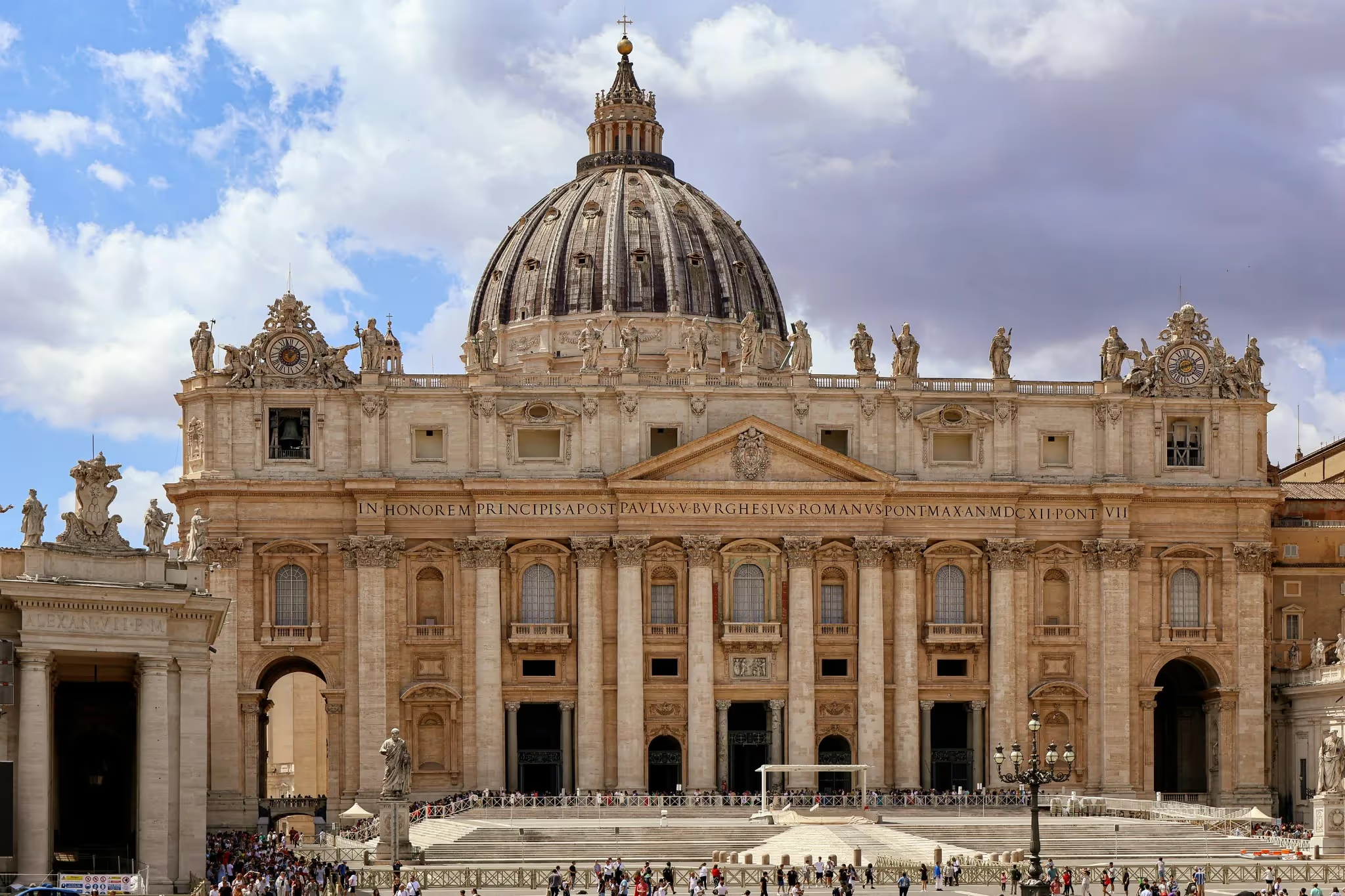
The basilica was built to replace an older church on the same site. Because it mattered politically and spiritually, every major choice came with scrutiny. Several architects led the work over time, and each introduced changes that affected both the structure and the schedule.
Scale added another layer of difficulty. Builders had to coordinate massive stonework, complex structural elements, and detailed interior construction, all while maintaining continuity over multiple generations of skilled labor.
What Extended St. Peter’s Construction Timeline?
- Leadership and design changes across different architects
- Adjustments to plans as priorities shifted over time
- Enormous scale and structural complexity
By the time the basilica was completed, it carried the decisions, revisions, and workmanship of an entire era, shaped by decades of evolving direction and careful execution.
12. Panama Canal: Bridging Oceans Across Decades
The Panama Canal, one of the most impactful infrastructure projects in history, also ranks among the longest. The project faced numerous safety issues, including tropical diseases and hazardous working conditions, which led to significant delays. It’s a story of ambition, failure, and eventual success.
Timeline and Historical Context
- Construction Began: 1881 (French attempt)
- Completion: 1914 (by the U.S.)

The French initially led the charge, but tropical diseases like malaria and yellow fever killed thousands of workers, and financial mismanagement doomed the effort. The U.S. took over in 1904, bringing innovative solutions, like the use of locks and dams, to finally complete the project.
Modern Construction Technologies and Why it Was So Challenging
- The tropical climate and mountainous terrain presented engineering nightmares.
- Managing the workforce’s health was a full-time battle in the pre-vaccine era.
Today, the canal handles over 14,000 ships annually and remains a cornerstone of global trade.

13. Ryugyong Hotel: North Korea’s Pyramid of Delays
Dubbed the “Hotel of Doom,” the Ryugyong Hotel in Pyongyang, North Korea, takes the crown for the longest ongoing construction project in the modern era. This futuristic pyramid was intended to symbolize North Korea’s economic might, but its completion remains elusive.
Speculation abounds about safety issues and structural flaws, significantly delaying the project.
Timeline and Historical Context
- Construction Began: 1987
- Projected Completion: Unknown

Construction halted in 1992 when funding dried up following the collapse of the Soviet Union. Although work resumed in 2008 with backing from Egyptian investors, it remains unfinished.
What’s the Hold-Up?
- Economic sanctions and financial struggles have repeatedly stalled progress.
- Speculation abounds about safety and structural flaws.
Today, the Ryugyong Hotel stands as both a bold architectural statement and a cautionary tale of overambition.
Why These Projects Fascinate Us
What draws us to stories about these long construction projects? It’s the human element, the drive to create something that lasts. These projects remind us that ambition and persistence often go hand in hand, much like the evolution of modern types of capital projects. They also highlight the challenges of managing resources, overcoming setbacks, and adapting to changing circumstances.
For modern construction professionals, lessons from these iconic endeavors are invaluable. From strategic planning to risk management, these stories underline the importance of structure and foresight in construction, timeless principles that are as relevant today as they were centuries ago.

Written by
Arlene Hidalgo
Arlene Hidalgo runs social media at Mastt, including its LinkedIn page, YouTube channel, weekly newsletter, and employee advocacy program. She holds a Postgraduate Certificate in Digital Marketing from the Asian Institute of Management. She contributes articles and social content for Mastt on capital projects.


Contributions by
Kristel Sapungan
Kristel Sapungan tracks how construction is changing for the people running capital projects, from data center growth to AI adoption in project teams. She holds a Bachelor of Science in Architecture from the Technological Institute of the Philippines (TIP) and took part in a design-build studio in Nepal focused on architecture for the public good. At Mastt, she works with external experts to produce construction content that project teams can use and manages contributor and creator collaborations.

Project Timeline Template
Use this FREE Project Timeline Template to plan, outline, and communicate your project schedule. Define key milestones and keep everyone aligned over the entire timeline.

Walk Into Every Meeting With Confidence, Clarity, and Control
No one wants to look unprepared, blindsided, or uncertain in front of stakeholders — but that’s exactly what happens without Mastt.
Start for FreeTrusted by the bold, the brave, and the brilliant across governments, Fortune 500s, and the world’s best in delivering the future