

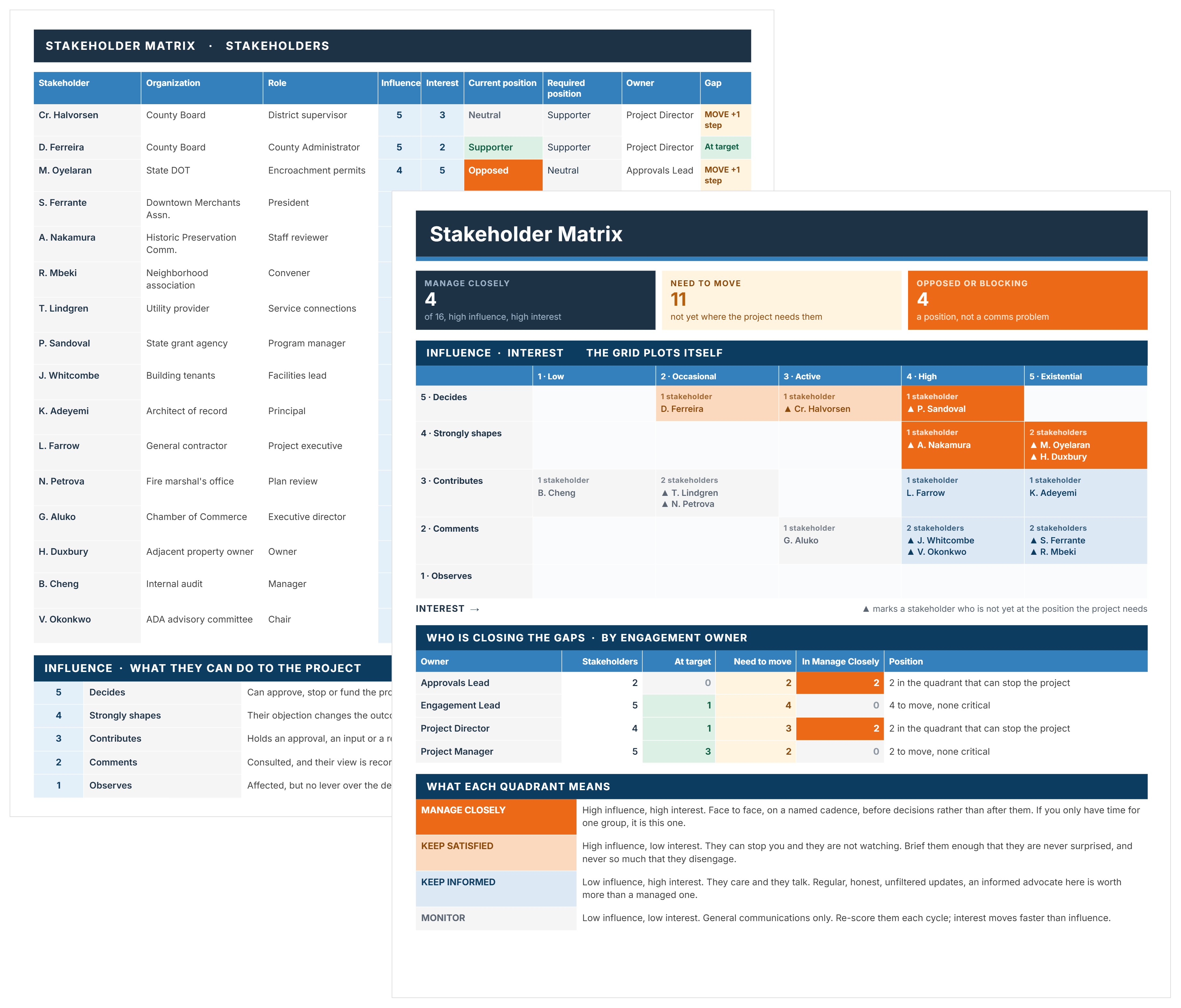

What is a Stakeholder Matrix Template?
A stakeholder matrix is a grid that plots every stakeholder by how much influence they hold and how much interest they take, producing four groups that each get a different kind of attention. A stakeholder matrix template gives you the grid, the scoring scale behind it, and somewhere to record what you do about each name.
Our stakeholder matrix page has a detailed definition that covers the concept and its variants in more detail. This page is the free template.
Stakeholder Matrix Example
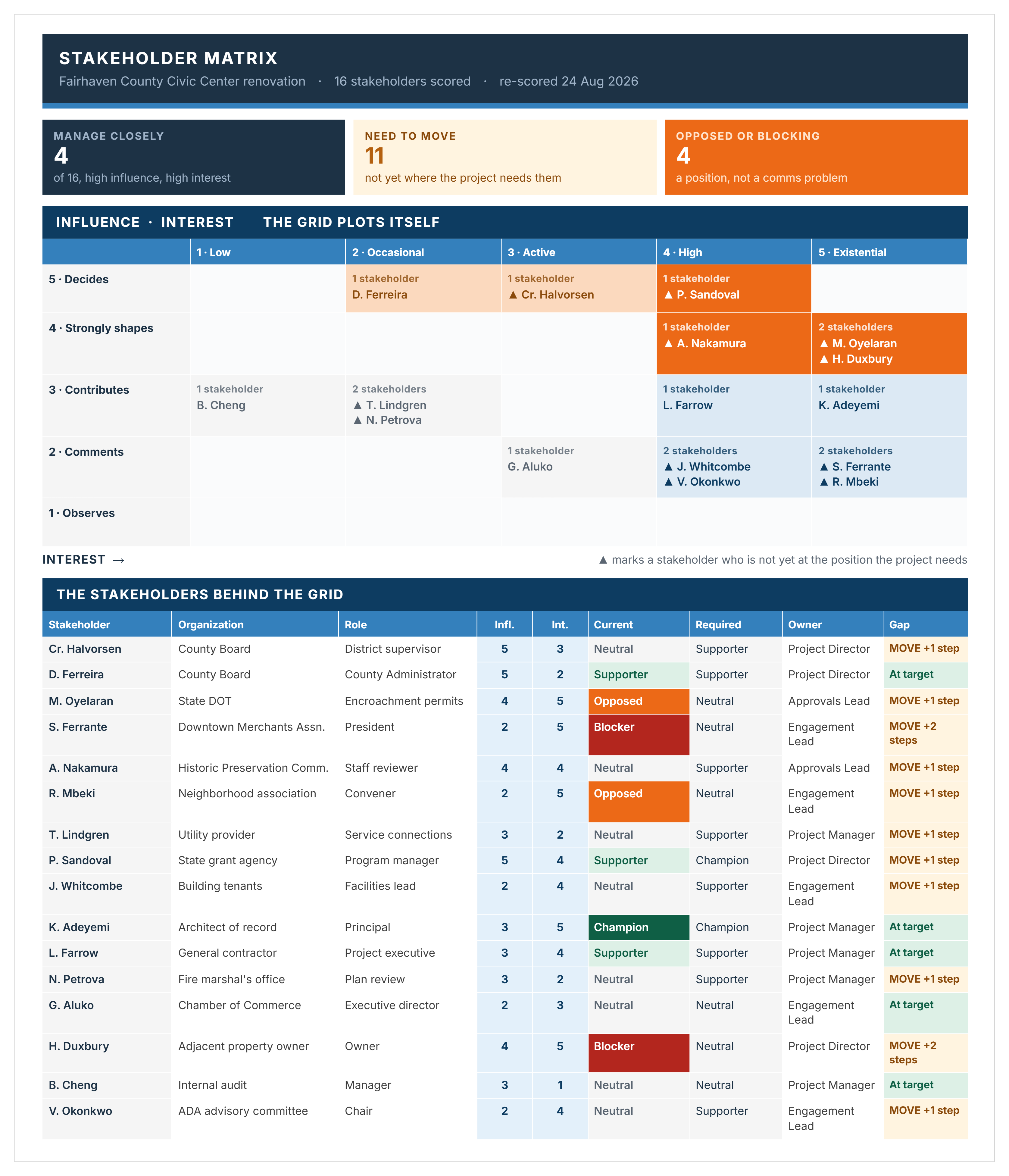
Here is a good example of a completed stakeholder matrix, scoring sixteen stakeholders on a civic center renovation.
What's Included in This Stakeholder Matrix Excel Template
A stakeholder matrix needs four things: an influence score, an interest score, the grid those two produce, and a record of what you intend to do about each name. Anything less is a picture rather than a working document.
This free template covers all four across four sheets.
A grid tells you who matters; current position against required position tells you which of them is a problem.
How to Use This Stakeholder Matrix Template
Score influence and interest first. Everything else on the sheet follows from those two numbers.
- List every stakeholder on the Stakeholders sheet, with their organization and role rather than just a name.
- Score influence from 1 to 5, using the Reference sheet: observes, comments, contributes, strongly shapes, decides.
- Score interest from 1 to 5: low, occasional, active, high, existential.
- Record the current position, from blocker through opposed, neutral, supporter and champion.
- Record the position the project needs, which is often neutral rather than supporter.
- Give every stakeholder an engagement owner by name.
- Read the Matrix sheet for who lands where, and who is marked as needing to move.
- Re-score each cycle, since interest moves faster than influence.
The matrix says who needs regular updates. Mastt's stakeholder guest access gives those stakeholders view-only access to live project information, instead of an exported report once a month.
The Four Quadrants of a Stakeholder Mapping Matrix
The four quadrants are manage closely, keep satisfied, keep informed and monitor. Where a stakeholder lands is set by their influence and interest scores, and it decides the kind of attention they get.
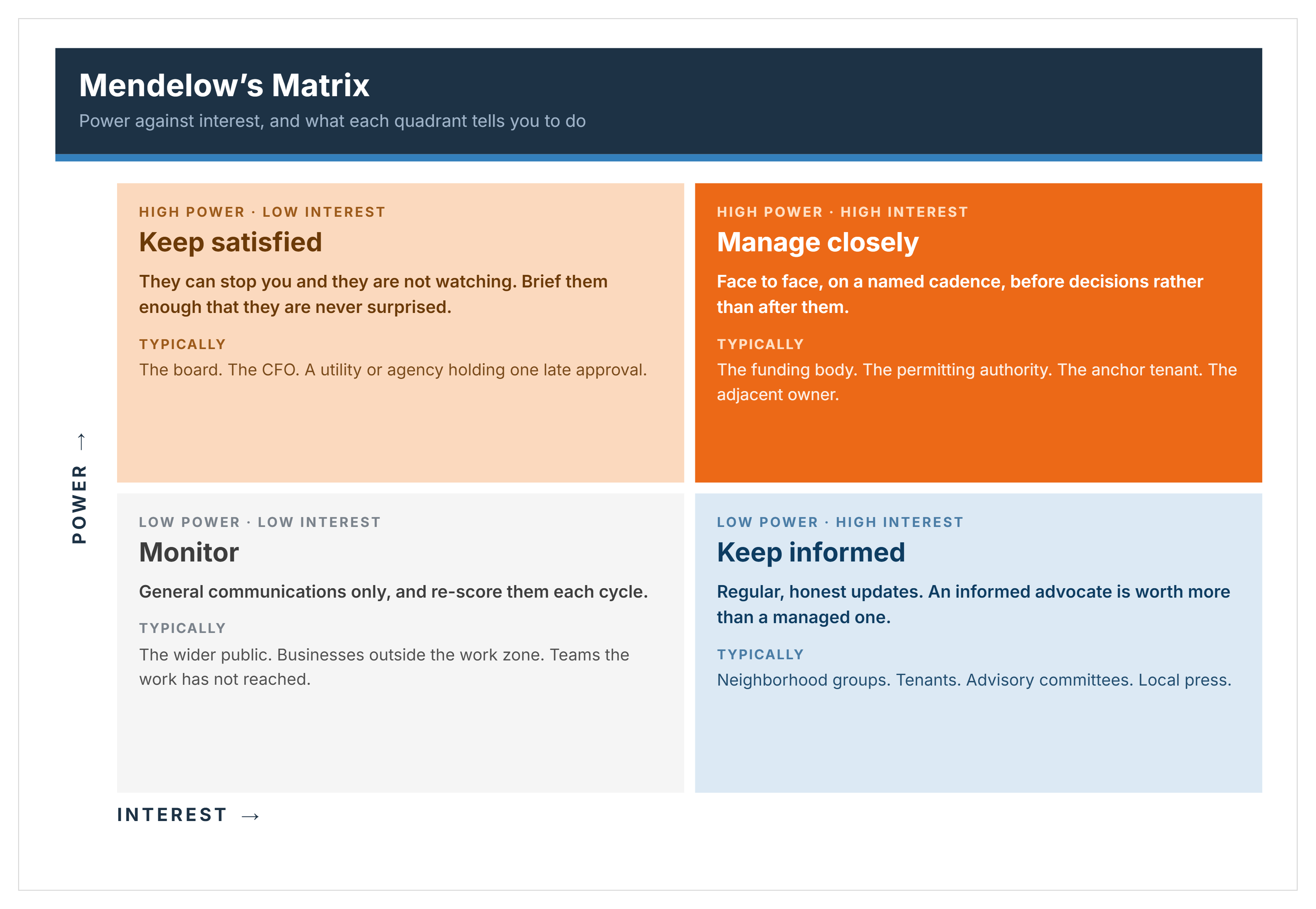
Mendelow's matrix, the power-interest grid and the stakeholder matrix are the same tool under three names. Academic texts use Mendelow's, project management literature uses power-interest, and practitioners usually just say stakeholder matrix.
Related Articles and Templates
Explore these resources for stakeholder mapping, analysis, prioritization, and engagement planning:
.avif)
Written by
Doug Vincent
Doug Vincent is the co-founder and CEO of Mastt, the AI capital-project management platform used by governments, Fortune 500 companies, and consultancies across APAC, North America, and MENA. Before founding Mastt in 2019, he spent a decade at RPS delivering more than $2 billion in capital works, including the $2.1B Defence Navy Infrastructure program, and holds a CPSPM certification with the AIPM. He contributes content and speaks on AI in capital project delivery at Mastt.

FREE stakeholder matrix template that shows where each stakeholder sits and who is not yet where the project needs them. Score influence and interest, and the grid plots itself.

Top Performers Don’t Guess. They Deliver.
Cut the stress of showing up unprepared
Start for FreeTrusted by the bold, the brave, and the brilliant to deliver the future