Commercial construction builds structures for business or public use. Learn the process, project types, roles, costs, and how it differs from other sectors.
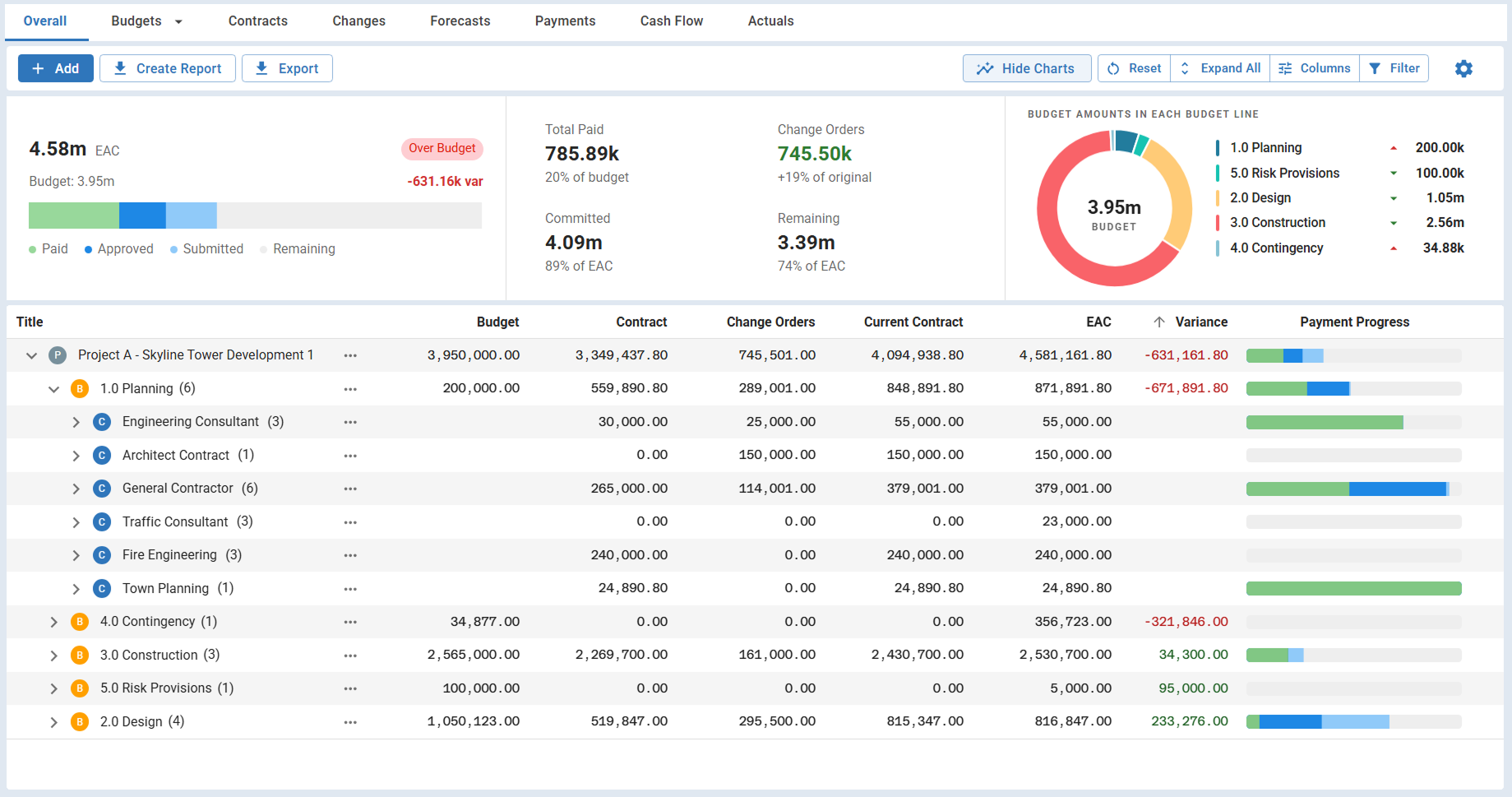
Use this FREE Commercial Construction Budget Template to plan and manage costs for your commercial project. Organize expenses by trade, phase, and cost code for clear budget control and accurate reporting.

Commercial construction is a big deal, not just because the buildings are large. These projects involve major investments, strict timelines, and a lot of moving parts. And if you're a project owner, consultant, or project manager, you need a solid understanding of how it all fits together.
Let’s walk through commercial construction, the different commercial project types, who’s involved, and the full process from planning to handover. You’ll also learn how commercial construction differs from other types and what challenges to expect along the way.
Commercial construction involves building structures meant for business or public use. These include offices, hotels, retail stores, hospitals, schools, and warehouses.
Unlike residential construction, commercial construction projects involve more complex systems, stricter codes, and larger teams. They often require specialized equipment and expertise to meet safety, accessibility, and operational standards for public or business use.

Commercial construction includes buildings made for business operations, public services, or industrial use. These spaces are built to support daily activity, customer access, and specific functional needs.
Here are some examples of commercial construction projects across different industries:
✅ Office buildings: From small two-story offices to corporate headquarters with multiple floors and open layouts.
✅ Retail space and grocery stores: Includes strip malls, standalone shops, big-box stores, and supermarkets with specific layout and display needs.
✅ Restaurants: Requires kitchen infrastructure, ventilation systems, and efficient customer flow.
✅ Hotels and accommodations: Often include amenities like pools, gyms, and conference rooms, with multiple guest levels and back-of-house operations.
✅ Healthcare facilities: Hospitals, urgent care centers, and clinics designed with accessibility, sanitation, and medical infrastructure in mind.
✅ Educational institutions: Schools, colleges, and training centers with classrooms, labs, and communal areas.
✅ Sports venues and stadiums: Large-scale builds needing seating, lighting, and safety systems for crowds.
✅ Warehouses and industrial facility: Built for storage, logistics, or manufacturing, often with docks, high ceilings, and reinforced flooring.
✅ Mixed-use developments: Combine retail, office, and residential spaces in one property with shared utilities and access points.
.avif)
Commercial construction projects fall into different levels based on size, scope, and complexity. These levels impact budget, timelines, permits, and the size of the team needed to deliver the project.
Here’s how most commercial construction projects are grouped by scale:
Small-scale projects involve limited work on a single structure. These may include remodeling a retail store, building a small office, or adding a new room to a commercial property. Projects usually stay under 5,000 square feet.
Here’s what these projects typically involve:
Mid-scale projects are more complex and usually involve expanding or building new mid-size facilities, such as clinics or boutique hotels.
These projects often include:
Large-scale work covers major builds like airports, hospitals, and shopping malls. These require intensive planning, large teams, and long timelines.
Below are key features of large-scale projects:
.avif)
Commercial construction costs vary based on a few key drivers. These factors impact pricing from the early planning phase through to completion:
💡 Pro Tip: Turn each cost driver into a tracked assumption with a trigger to reforecast. Any variance > 1% of total budget (or any single change > $25k) forces a forecast-to-complete update. Managing this in construction project cost management software reduces silent cost creep as design and procurement change.

Commercial construction projects rely on several key roles working together. Each role handles specific responsibilities that keep the project moving and aligned with design, budget, and schedule.
Here’s who’s typically involved and what they do:
On large projects, clear communication between these roles is essential. Delays often happen when teams work in silos or miss updates. A strong team dynamic and shared visibility into the project schedule help prevent mistakes and reduce rework.

To successfully complete a commercial construction project, you need to lead each phase with precision. Manage planning, design, approvals, and construction while keeping teams and timelines aligned. Here’s how the full process works.
This phase shapes the foundation of the entire project. It begins with a feasibility study to determine whether the project makes sense financially, legally, and technically.
The owner or development team assesses zoning restrictions, land use policies, environmental impact, and nearby infrastructure. If the study reveals major issues, like lack of utilities or costly environmental remediation, the project may pause or shift direction.
Once viability is confirmed, the team selects a project site based on access, location benefits, surrounding land uses, and regulatory conditions. A rough budget is created using cost-per-square-foot benchmarks and adjusted based on the location, design scope, and labor market.
At this stage, many owners involve a construction project manager or consultant to advise on delivery methods, risk management, and preliminary scheduling. Early involvement helps identify long-lead items, streamline decision-making, and prevent costly redesigns later on.
Pre-design translates the owner’s vision into a working concept. The goal is to define what the building needs to do, how big it should be, and what constraints exist before design begins.
The team:
This phase also allows the architect and commercial building contractor to flag conflicts early, such as unrealistic space requests, structural limitations, or supply chain issues. Aligning early avoids backtracking once design work begins.
Design unfolds in stages, starting with early concepts and ending in a full set of construction-ready documents. The architect leads this phase with input from engineers and the owner.
Design typically moves through:
Throughout the phase, engineers design core systems:
Each stage includes internal reviews to confirm compliance with safety in design code, performance standards, and the owner’s goals.
Once the final design is ready, the team submits it to local agencies for review and permitting. This process ensures the project complies with building codes, zoning laws, and accessibility standards like the ADA.
Permits may include:
Depending on the jurisdiction, review cycles can include plan markups, corrections, and multiple resubmissions. Some commercial projects may also face public hearings or design board reviews, especially in urban or historic areas. Construction cannot begin until all permits are approved.
Pre-construction transitions the project from planning to execution. It includes setting up contracts, finalizing procurement strategy, and aligning all parties on what happens next.
Key actions:
This phase sets expectations and ensures everyone knows what’s coming once boots are on the ground.
Procurement in construction is the process of purchasing or renting everything needed to build the project. It happens alongside pre-construction and often continues throughout the build.
The general contractor or construction manager:
Poor procurement leads to delays, duplicated orders, or missing materials when work is ready to begin. Careful coordination with vendors and project schedules is critical.
The construction phase is where the physical build happens. It requires tight coordination across crews, suppliers, and inspectors.
Construction typically starts with:
Throughout these phases of construction, the general contractor runs daily coordination meetings, maintains safety compliance, and manages inspections for code approval at each milestone. Quality control, schedule tracking, and budget monitoring happen in real time.
Once construction is complete, the project enters closeout. The team walks the building with the owner to identify punch list items. These include small fixes like touch-ups, missing fixtures, or signage corrections.
Final steps include:
At this point, the owner takes possession of the building and can begin operations, leasing, or move-in. Any warranty items or outstanding work become part of the contractor’s post-handover responsibilities.

Commercial construction typically uses four main project delivery methods. Each method affects speed, cost control, team roles, and how risks are managed on a commercial job. These are the most common methods used in commercial construction projects:
Design-Bid-Build is still one of the most widely used models in commercial projects, especially for offices, schools, and government-funded developments. The owner hires a design team first, then solicits bids from contractors once the design is complete.
It works well when the scope is clearly defined and cost control is critical. But since the contractor isn’t involved in design, it can lead to disconnects or expensive change orders if drawings don’t align with site realities.
Design-build is popular in commercial sectors that need speed and efficiency, like hospitality, healthcare, and retail. One entity handles both design and construction under a single contract, reducing delays between phases.
It’s often used when owners want fast-track delivery or prefer a single point of contact. The trade-off is less control over design specifics, since the builder influences design decisions to meet timelines and budgets.
CMAR is common in large-scale commercial projects, such as mixed-use developments, stadiums, or hospitals, where early cost input is valuable. The construction manager joins during design and helps guide decisions on materials, systems, and buildability.
They later act like a general contractor and commit to a guaranteed maximum price. This approach reduces surprises and allows more flexibility during design without losing control of cost.
While less common, IPD is gaining traction in complex commercial projects where collaboration is key, like tech campuses, hospitals, or institutional buildings. All parties share one contract, one budget, and one risk pool.
It’s used when owners want innovation, transparency, and strong alignment across teams. IPD requires trust but leads to fewer disputes and stronger project performance when done right.
Delays, cost overruns, and scope changes are common challenges in commercial projects. These issues often stem from miscommunication, missing information, or poor planning. Identifying them early and having a project management plan keeps the project on track.
Here are the common commercial construction challenges and how to solve them:
Poor coordination between teams causes work to overlap, stall, or happen in the wrong order. Subcontractors may show up before a site is ready or delay others downstream. Updates don’t always reach the right people in time.
💡 Solution: Use construction project scheduling software that all stakeholders can access. Hold short daily huddles or weekly coordination meetings to stay aligned. Assign one person to track dependencies and flag conflicts before they cause delays.
Missing, expired, or incorrect permits can shut down a job site. Incomplete or outdated drawings create confusion and failed inspections. Teams may work off different plan sets.
💡 Solution: Assign a document control lead to manage version control and submission timelines. Start the permitting process early and track each permit status with deadlines and responsible parties clearly documented.
Material price spikes, scope changes, and delayed deliveries all push costs up. Subcontractor bids may come in higher than expected, or rework adds to labor costs.
💡 Solution: Lock in material pricing early with vendor agreements. Build in a contingency budget (typically 5–10%). Track actual costs weekly against forecasted spend and flag deviations immediately.
Undocumented utilities, contaminated soil, or uneven grading can cause delays during excavation. These issues often aren’t fully discovered until crews break ground.
💡 Solution: Conduct full site investigations before construction, including soil testing and utility locates. Budget time and funds for unexpected remediation or redesigns.
Clients may request layout changes or add features mid-project. These disrupt procurement, affect schedules, and raise costs.
💡 Solution: Set clear scope boundaries early. Use construction change order software to document decisions, approvals, cost impacts, and timeline shifts. Avoid verbal requests.
Crews may be stretched across multiple jobs or not show up on time. Specialty trades might be overbooked in busy regions.
💡 Solution: Prequalify subcontractors and lock in availability with signed commitments. Stagger start dates strategically and offer incentives for meeting milestones.
Rain, snow, or extreme temperatures can halt exterior work, especially in site prep or concrete pours.
💡 Solution: Build inclement weather allowances into the schedule. Use temporary protection like tents or heaters where possible. Prioritize interior work during bad weather seasons.
Damaged tools, faulty installations, or substandard materials slow down progress and risk safety.
💡 Solution: Inspect materials on arrival. Track equipment usage and maintenance. Only buy from trusted vendors and require warranties for key items.

Commercial construction differs from other types in its purpose, complexity, and who it's built for. Each type follows its own rules, standards, and project demands. Here’s how commercial compares across four major categories.
Commercial buildings are designed for business use while residential buildings are for people to live in. Commercial projects follow stricter codes for fire safety, accessibility (like ADA compliance), and high occupancy.
They often require:
Residential projects are typically faster and simpler. They involve fewer permits, less equipment, and smaller crews. Safety standards still apply, but they’re less demanding than those in commercial builds.
Commercial construction involves a vertical commercial structure, like a building made for work, sales, or services. Infrastructure construction builds what's around them: roads, bridges, tunnels, airports, and utilities.
Key differences:
Infrastructure supports movement and connectivity. Commercial construction focuses on enclosed spaces that serve people directly.

Getting a commercial construction project off the ground takes more than just a set of blueprints. It takes clear decisions, the right people, and a solid understanding of how each phase works.
The building process is detailed. And yes, it takes time, coordination, and planning. But when you know what to expect, from who’s involved to how the project is delivered, you’re in a stronger position to avoid delays, control project costs, and deliver successful project outcomes.

Written by
Anna is a seasoned Senior Content Writer at Mastt, specialising in project management and the construction industry. She leverages her in-depth knowledge to create valuable content that helps professionals in these fields. Through her writing, she contributes to the company's mission of empowering project managers and construction professionals with practical insights and solutions.


Contributions from

Cut the stress of showing up unprepared
Start for FreeTrusted by the bold, the brave, and the brilliant to deliver the future