




Building a project management consulting business means turning your project experience into a service clients will pay for. I help build the ACT project management business within Colliers, and this article draws on that experience alongside practical guidance on starting a consultancy, finding clients, and managing earnings.
What Is a Project Management Consulting Business?
A project management consulting business provides clients with project management expertise for an agreed fee. Its consultants advise on or manage project work, with responsibilities and deliverables defined in their service agreement. Clients can appoint a consultancy for a specific project stage, an entire project, or a portfolio.
In construction, these businesses often represent owners, coordinating delivery and helping them manage cost, schedule, and risk. A consultancy may operate as an independent firm or a business unit within a larger organization, as ours does within Colliers.
What Services Do Project Management Consultants Offer?
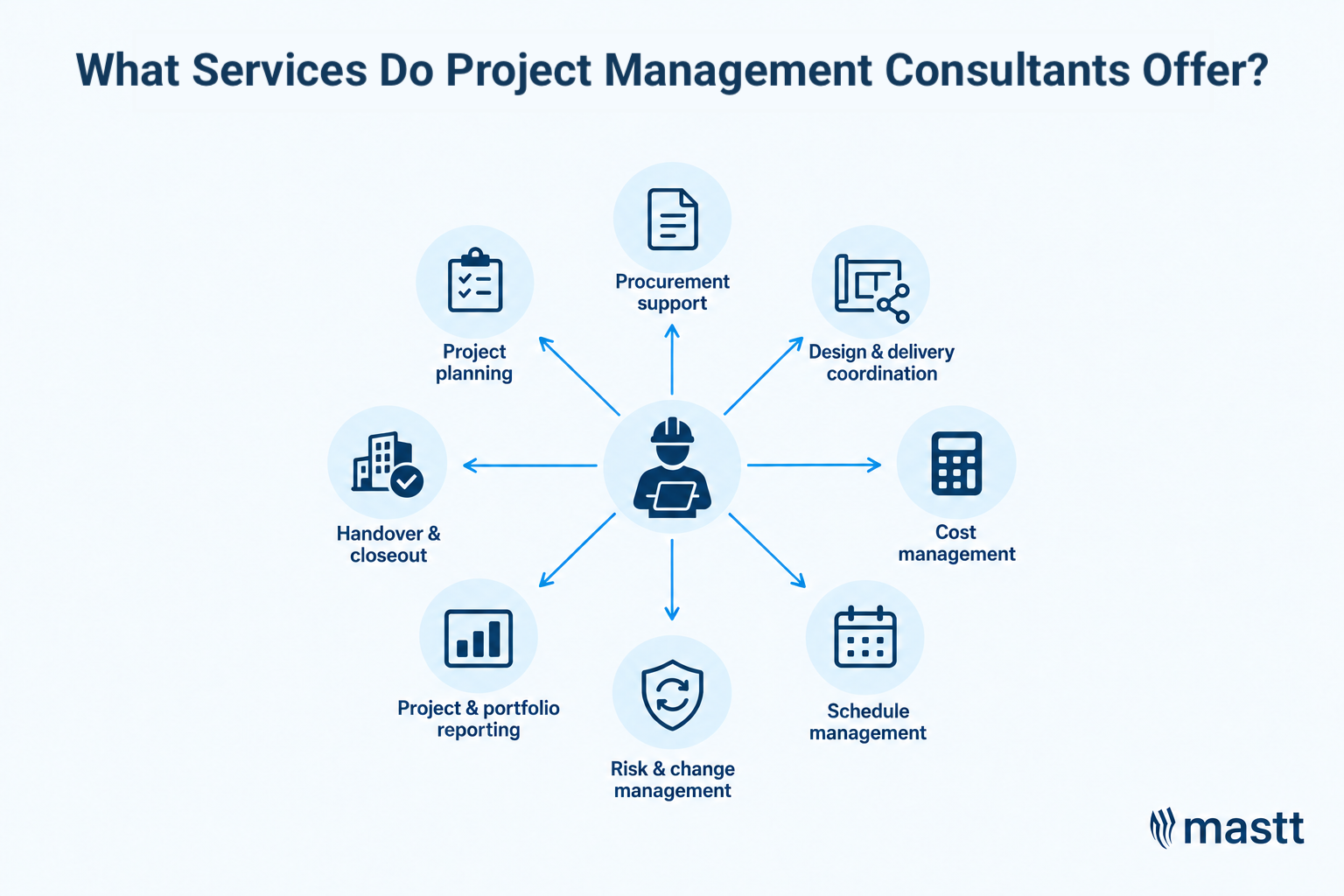
Project management consultants help clients plan projects, coordinate delivery, and maintain control over performance. In construction, their services depend on the owner’s internal capabilities and the responsibilities included in the appointment.
A consultancy’s scope may include:
- Project planning: Define objectives, scope, milestones, and responsibilities so the team understands what it must deliver and how decisions will be made.
- Procurement support: Help select consultants and contractors, coordinate tendering, and assess proposals against the client’s requirements.
- Design and delivery coordination: Coordinate designers, contractors, and client stakeholders to resolve issues and keep decisions moving.
- Cost management: Track budgets, commitments, and forecasts to help owners understand their financial position and assess proposed changes.
- Schedule management: Monitor progress against agreed milestones, identify delays, and coordinate responses with the responsible teams.
- Risk and change management: Assess emerging risks and proposed scope changes, explain their consequences, and support informed client approvals.
- Project and portfolio reporting: Bring cost, schedule, and risk information into consistent reports that show the current position and decisions required.
- Handover and closeout: Coordinate completion activities, outstanding defects, and handover documentation to support the owner’s transition into operation.
At Colliers, we can allocate people across projects and bring in the experience each assignment needs. For clients whose workload does not require a dedicated full-time team, this can provide access to project management expertise as needed. Whether that arrangement suits the client depends on the scale of their work and their internal capabilities.
How to Start a Project Management Consulting Business
To start a project management consulting business, identify a client need you can serve and define a commercially viable offering. Then establish how you will win work, charge for your time, and deliver the service consistently.
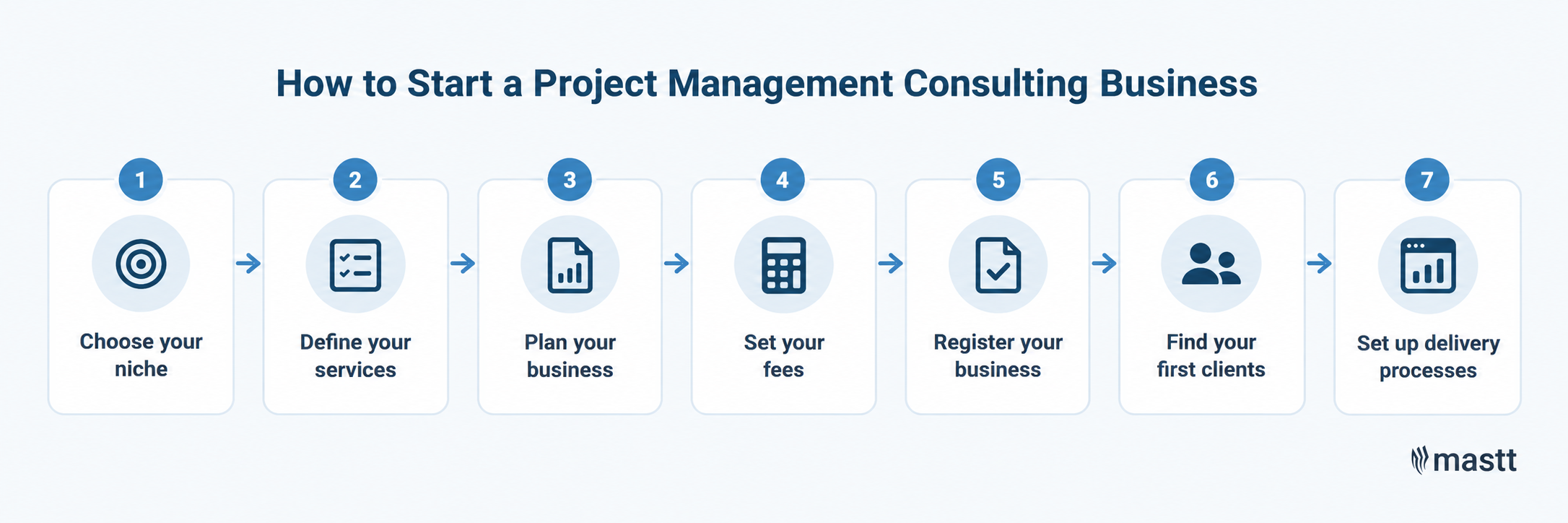
1. Choose your niche and target clients
Start with the projects you understand and the clients who need that experience. Narrow your focus by project type, sector, or service. For example, you might support commercial owners with building upgrades or help organizations manage recurring capital works.
Test that focus through conversations with potential buyers. Ask what projects they have planned, how they currently manage them, and where they need support. Identify who approves consulting appointments and how they select providers.
2. Define your consulting services and scope
Turn the client’s need into a specific assignment. Describe what you will deliver, which project stages you will cover, and what the client must provide. Make the limits of your authority clear, particularly for expenditure and change approvals.
For example, a reporting assignment could include monthly cost forecasts, schedule updates, and a consolidated portfolio report. Specify how many projects it covers, who supplies the information, and when each report is due.
Record exclusions and assumptions alongside deliverables. If the client later adds projects or increases reporting frequency, you have a basis for discussing additional fees.
3. Create a business plan
Build your plan around how the consultancy will generate enough work to cover its costs and support your income. Set out your target clients, service offering, and route to winning assignments.
Prepare a monthly forecast showing expected fees, operating expenses, and when clients are likely to pay. Allow time for proposals and administration when estimating your capacity for paid work.
Test the plan against a delayed appointment or an unpaid invoice. Calculate how long available cash would cover expenses under those conditions. Keep prospective opportunities separate from signed engagements so your forecast shows how much income remains uncertain.
4. Set your project management consulting fees
Estimate the effort required before quoting a price. Include project meetings, preparation, reporting, and the coordination that happens between formal deliverables.
Choose a fee structure that fits the assignment. Hourly or daily rates can suit work with uncertain demands. A fixed fee suits a defined scope, while a monthly retainer can cover agreed ongoing support.
For fixed fees, specify assumptions about project duration, meeting frequency, and review rounds. Explain how you will price additional work or an extended appointment. The Australian Government’s guidance on preparing quotes recommends clearly defining the work and including all costs plus a profit margin.
5. Register your business and establish client agreements
If you are starting independently, choose a business structure and complete the registrations required where you operate. Establish a business bank account and bookkeeping process. Review insurance needs against your services and prospective clients’ requirements.
In Australia, check your requirements for an Australian Business Number (ABN), business name registration, and GST registration. Register a company if that is your chosen structure. The Australian Government Business Registration Service brings these applications together. Check state and territory licensing requirements separately.
Have a lawyer review your consulting agreement before using it. Address scope, fees, payment timing, confidentiality, and how either party can end the appointment. Include a process for approving additional services and clarify responsibilities for client-supplied information.
6. Build your referral network and find your first clients
Start with professional contacts who know your work or already advise your target clients. Explain which projects you can support and share examples that demonstrate your experience. Give them enough detail to recognize when an introduction would be useful.
At Colliers, introductions from our property and facilities management teams helped us speak with building owners about their upcoming capital projects and building upgrades. We also worked with our leasing colleagues on tenant fit-outs. We still had to show clients how our project management service could add value.
For an independent consultancy, referral relationships can develop through former colleagues and other property professionals. When an introduction leads to a conversation, establish what the client needs, how they appoint consultants, and when support is required. Use that information to prepare a proposal with a clear scope and relevant experience.
7. Set up project delivery and reporting processes
Before your first assignment begins, establish the project governance: who makes decisions, what requires client approval, and how issues will be escalated. Set a reporting schedule and assign responsibility for updating project information.
Use consistent formats for cost reports, risk registers, and decision logs. Define when updates are due and who checks them before reports reach the client. For portfolio work, apply common reporting definitions so projects can be compared meaningfully.
At Colliers, we needed reporting that brought multiple projects into a clear view for executives and boards. Mastt’s construction project dashboard software supported that consistency, helping stakeholders understand finances, schedules, and risks without being involved in each project daily.

What Skills and Qualifications Do You Need to Become a Project Management Consultant?
Project management consultants need relevant delivery experience and the ability to advise clients on decisions that affect their projects. Building a consulting business also requires commercial judgment and the ability to win work. Qualifications can strengthen your credibility, while client and employer requirements vary.
For construction consulting, assess your readiness across these areas:
My own career began in civil engineering, with a first job as a CAD drafter, before moving into client-side project management. Later, experience in leasing and tenant advisory helped me bring a broader understanding of property needs to our consulting services.
How Much Does It Cost to Start a Project Management Consulting Business?
The cost depends on your business structure, staffing, and the services you plan to deliver. A solo consultant working from home has different funding needs from a firm hiring staff and leasing an office. Your budget should cover setup expenses and the cash needed to operate before client payments arrive.
Build your estimate around these cost categories:
Registration costs provide an initial reference point, although they represent only part of your startup budget:
- United States: Applying directly to the IRS for an Employer Identification Number (EIN) is free. Business registration costs are generally below US$300, depending on the state and business structure. Additional licenses, annual fees, and professional services can increase the total.
- Australia: Applying directly for an ABN is free. From July 2026, business name registration costs A$47 for one year or A$108 for three years. Standard company registration costs A$636, with a separate A$342 annual review fee for a proprietary company. These registrations apply according to your chosen structure and business name.
Get individual quotes for insurance and legal work. Price software against the number of users and projects you expect to manage, including any annual payment commitments.

How to Grow a Project Management Consulting Business
Once your consultancy has established a record of delivery, growth can come from supporting more of your clients’ planned work. That requires understanding their wider needs and building a team they trust to take on additional responsibilities.
Turn successful projects into repeat business
A completed project gives you insight into how the client operates and where they need support. Use that knowledge to discuss their upcoming capital works. For example, an owner upgrading one building may have similar projects planned across several properties.
For our ACT project management business at Colliers, a strategic partnership involving portfolio work became a turning point. The client’s core purpose was outside project management and real estate, so they needed a team they could trust with those responsibilities. Delivering value helped that relationship endure.
When discussing a continuing appointment, identify which projects are ready to proceed and where continuity would help. Agree on how new assignments will be commissioned and how support will change between projects.
Help clients with their wider property needs
Working closely with a client can reveal needs beyond the current assignment. A business approaching the end of a lease, for example, may be considering relocation before it has a defined project. An introduction to the right adviser can help it assess the options.
At Colliers, our property network allows us to connect clients with expertise and opportunities, including potential sites or sources of capital. Understanding where we can contribute helps us remain useful as their needs change.
An independent consultancy can apply this through relationships with trusted specialists. Explain why an introduction may help, then let the client decide whether to pursue it. Discuss a separate appointment if the opportunity develops into additional work for your team.
Build client confidence in your team
As those relationships generate more work, clients need confidence that service will remain consistent when the business owner is less involved. Give project leads responsibility for client discussions within their authority and introduce them before handing over the relationship.
For example, a project lead could present recommendations at review meetings while the business owner handles changes to the consulting appointment. This gives the client direct access to the person managing delivery and frees the owner to develop other opportunities.
Support that transition with a proper handover. Explain previous commitments, unresolved concerns, and how the client prefers to make decisions.
Choose opportunities that fit your strengths
A growing reputation can bring invitations to work outside your established market. Assess each opportunity before committing time to a proposal. Consider whether your team has relevant experience and whether that experience matches the client’s selection criteria.
In Canberra, we focused largely on private clients despite the substantial Commonwealth government market. We received government tender opportunities, but we were selective about pursuing them.
Apply the same discipline when considering expansion. If an assignment requires expertise your team lacks, assess whether a qualified partner would make the proposal credible. If you cannot demonstrate the required capability, direct your effort toward work you are equipped to deliver.
What Challenges Do Project Management Consulting Businesses Face?
Project management consulting businesses face scope creep, delayed payments, dependence on key clients, and competing demands on their time. These pressures can reduce profitability and make it harder to deliver existing work while securing future assignments.
For ongoing assignments, compare the remaining fee with the estimated cost of completing your services. This can reveal a shortfall while there is still time to adjust how you deliver the work or negotiate additional fees for an agreed extension.
How Much Can You Earn From a Project Management Consulting Business?
Your income depends on the fees your business earns and the cost of delivering the work. For a solo consultant, start with expected annual revenue, then subtract business expenses to estimate what remains available for your pay and other commitments.
For example, a consultant charging A$1,000 per day for 150 billable days could calculate:
These are planning scenarios, not market averages. Expenses exclude owner pay, and the remaining amount is before taxes, owner retirement contributions, and any funds retained for future business needs.
Hiring consultants can increase the amount of work your business delivers, but their employment costs and your supervision time also need to be covered. Before expanding, estimate how much each additional appointment will contribute after its delivery costs.
Build a Consulting Business Clients Trust
A project management consulting business grows by giving clients a reason to appoint you again. For our ACT business within Colliers, that meant building a capable team that complemented our wider property services. Start with work you can deliver well at a sustainable fee, and expand as your team gains the capacity and experience to support more clients.

Written by
Iain Davidson
Iain Davidson is the State Chief Executive for the Australian Capital Territory at Colliers and a member of the firm's Australian Executive Leadership Team. Holding a degree in land economics and a Certified Practicing Project Manager credential, he built Colliers' Canberra project management and government property businesses and has transacted more than 170,000 square meters of property, much of it for the Commonwealth Government. At Mastt, he contributes content on client-side project delivery and the Canberra property market.

.avif)
Contributions by
Doug Vincent
Doug Vincent is the co-founder and CEO of Mastt, the AI capital-project management platform used by governments, Fortune 500 companies, and consultancies across APAC, North America, and MENA. Before founding Mastt in 2019, he spent a decade at RPS delivering more than $2 billion in capital works, including the $2.1B Defence Navy Infrastructure program, and holds a CPSPM certification with the AIPM. He contributes content and speaks on AI in capital project delivery at Mastt.
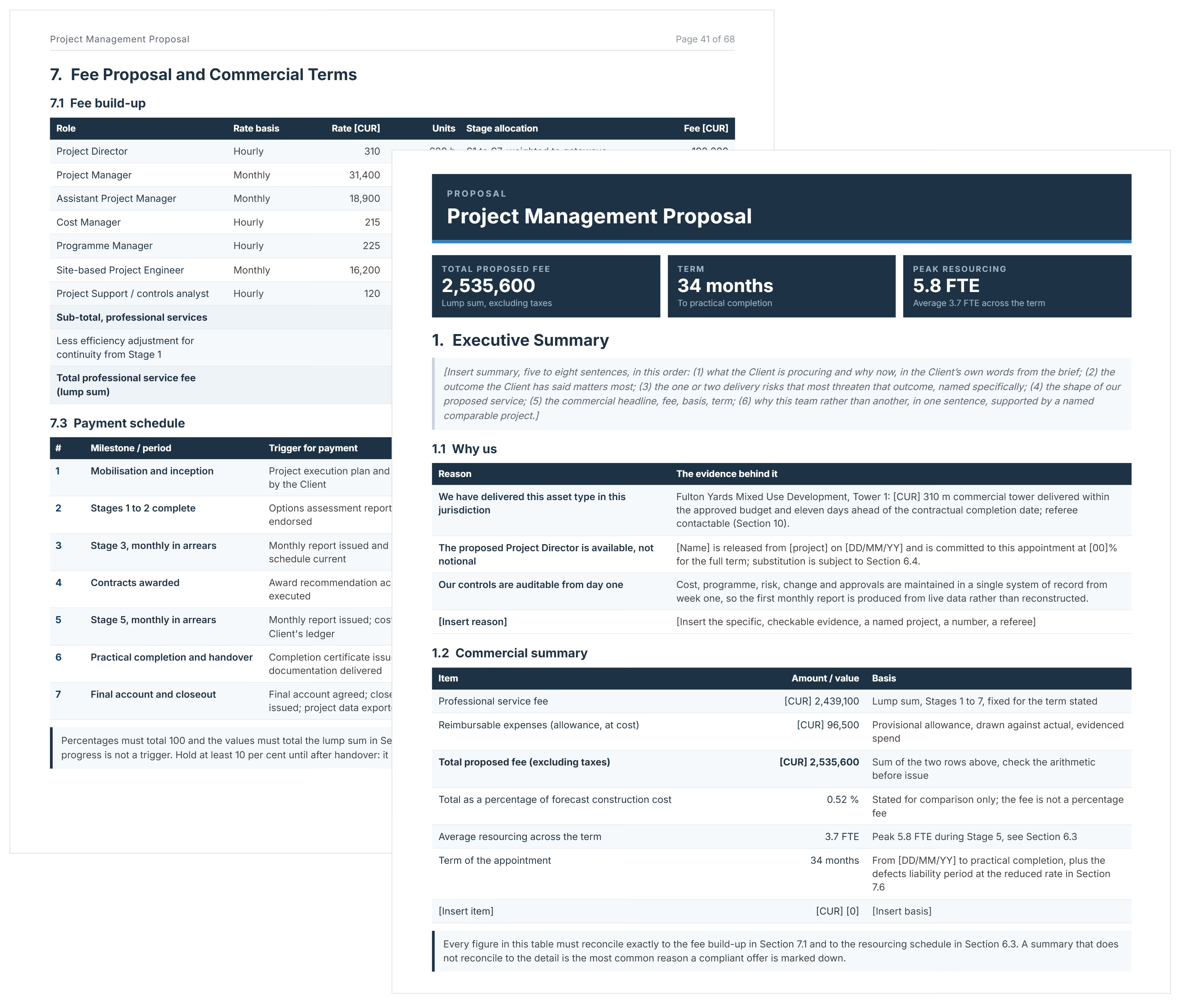
Project Management Proposal Template and Example
FREE project management proposal template in Word, with a worked example. Thirteen sections, including the exclusions most proposals leave out.

Walk Into Every Meeting With Confidence, Clarity, and Control
No one wants to look unprepared, blindsided, or uncertain in front of stakeholders — but that’s exactly what happens without Mastt.
Start for FreeTrusted by the bold, the brave, and the brilliant across governments, Fortune 500s, and the world’s best in delivering the future