

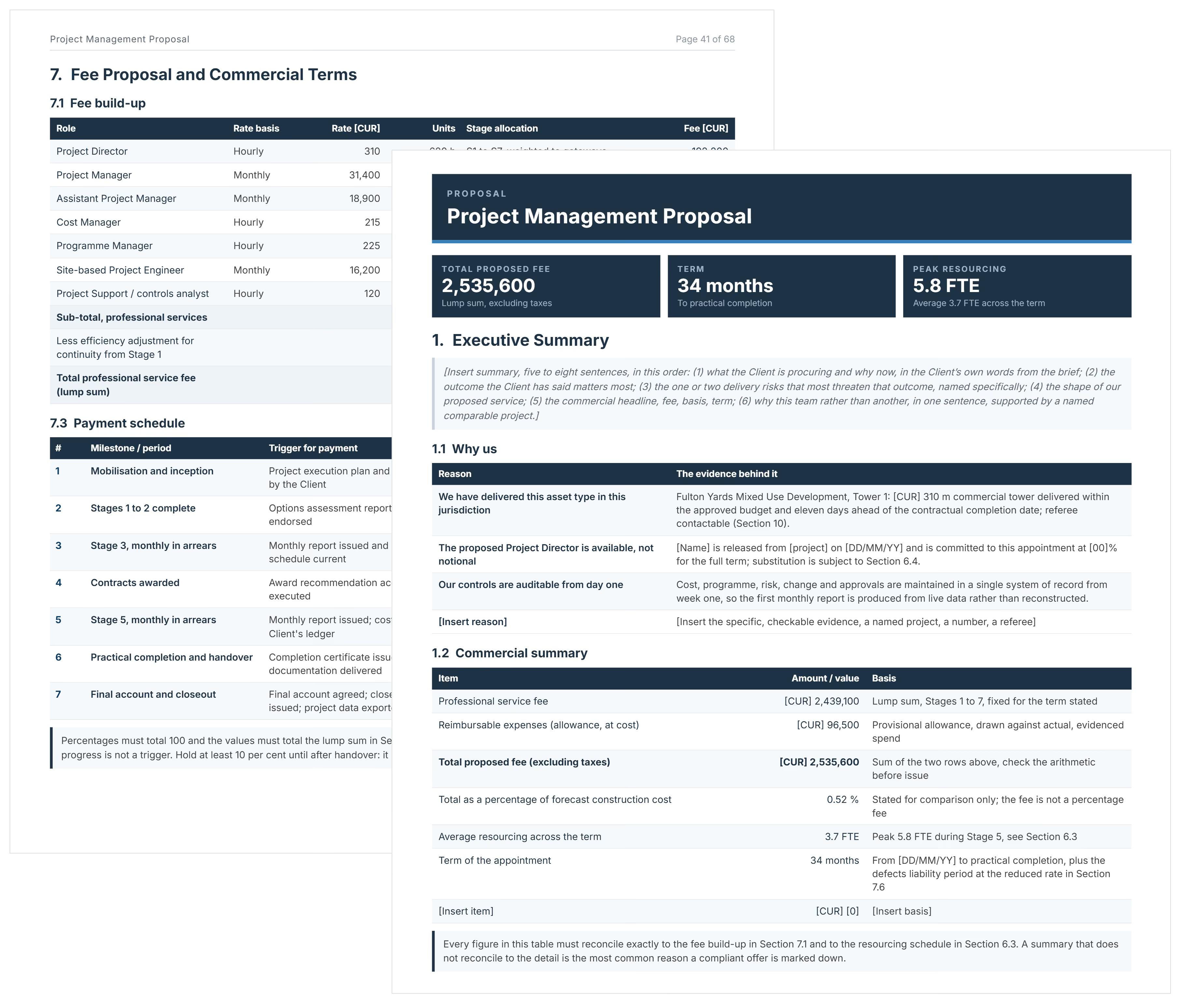

What is a Project Management Proposal?
A project management proposal is the document a PM consultant submits to win an appointment. It states what services you will provide, what you will not, who will deliver them, what it costs and on what basis.
Most are written in response to a client's RFP, which means the proposal has to answer that document requirement by requirement rather than describe the firm in general terms. The fee is the part that gets read first and the exclusions are the part that gets read last, usually during an argument six months later.
Project Management Proposal Sample
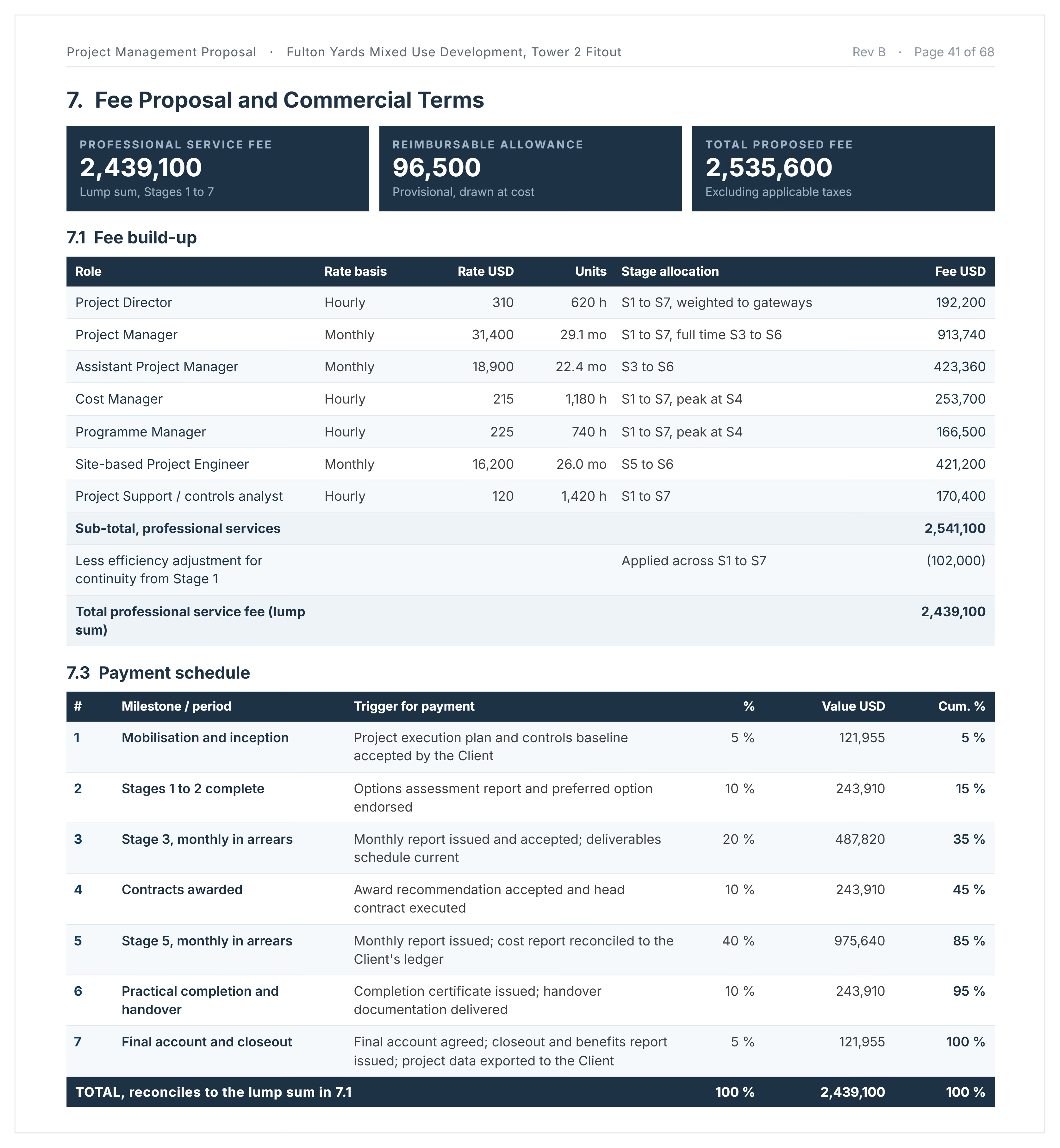
Here is a good example of a project management proposal showing fee section, from a proposal on a mixed use development fitout.
How to Write a Project Management Proposal Using This Template
Answer the RFP requirement by requirement, price it by role and phase, state what you do not do, and name the people who will actually be on site.
- Open the compliance table first, listing each RFP requirement against the section that answers it.
- Write the understanding section from the client's constraints, not your firm's history.
- Set scope by project stage and by discipline, so nobody has to infer coverage.
- Write the exclusions in the same detail as the inclusions.
- Build the fee up by role, by phase and by hours at published rates. A percentage alone invites a comparison you cannot control.
- Name the individuals, their hours by phase, and days per week on site.
- Number every assumption the fee depends on, since an unstated assumption is a free change for the client.
- State the validity period and the expiry date, and keep them consistent.
- Have the pricing approved by someone other than the person who prepared it.
- Update the contents field before issuing, and delete every placeholder and drafting note.
The proposal is a commercial offer. Anything ambiguous in it will be read in the client's favor later.
What's in This Project Management Proposal Template in Word
A project management proposal needs your understanding of the requirement, the scope of services, the exclusions, your delivery approach, the team, the fee build-up, your experience and the commercial terms. This template covers all of it across thirteen sections.
A document control page sits ahead of section 1, carrying revision history, distribution and the confidentiality position. The reviewer and approver must not be the person who prepared it, since pricing is approved by someone with delegated authority.
Exclusions and Limitations: What to Say You Do Not Do
State exclusions in their own section, in the same detail as the scope. The services a client assumes are covered are where the argument with a project manager starts.
Services not included in the fee. Name them individually:
- Design services and design coordination beyond managing the design team.
- Quantity surveying and formal measurement.
- Superintendency or contract administration where the client appoints a separate superintendent.
- Statutory approvals and authority liaison.
- Specialist certification, commissioning agent or independent verification roles.
Anything not listed as included is excluded whether or not it appears here. Saying so removes the argument.
Limitations on the service. What the offer depends on:
- The brief revision and cost plan revision the fee was built against.
- The assumed commencement date and engagement duration.
- What you rely on the client to provide, and by when.
- What changes if an assumption fails.
An exclusion is only worth writing if it names a service somebody could plausibly have expected. "We do not provide legal advice" protects nothing. "We do not chair the design team's internal coordination meetings" protects a real cost.
Responding to a Project Management RFP
Open with a compliance table mapping each RFP requirement to the section that answers it. Evaluators score against their own document, and one that makes their job easy scores better than one that makes them hunt.
Three things decide a response:
- Address every requirement, including the ones you answer poorly. A gap reads worse than a weak answer.
- Acknowledge every addendum by number. An unacknowledged addendum is a standard ground for setting a submission aside.
- Follow their format, not yours. Where the RFP prescribes section order or page limits, a better-structured proposal that ignores them still loses points.
An RFP and a proposal are opposite sides of the same transaction. The client issues the RFP; the consultant responds with the proposal. If you are the owner preparing to go to market rather than the consultant responding, you need a request for proposal document, not this one.
Related Articles and Templates
Explore these resources for project proposals, construction proposals, quotes, and proposal planning:

Written by
Jackson Row
Jackson Row is the Growth & North American Market Lead at Mastt. With a background in risk modeling, cost forecasting, and integrated project delivery, he helps capital project owners work smarter and faster. Jackson’s work supports better tools, better data, and better outcomes across the construction industry.

FREE project management proposal template in Word, with a worked example. Thirteen sections, including the exclusions most proposals leave out.

Top Performers Don’t Guess. They Deliver.
Cut the stress of showing up unprepared
Start for FreeTrusted by the bold, the brave, and the brilliant to deliver the future