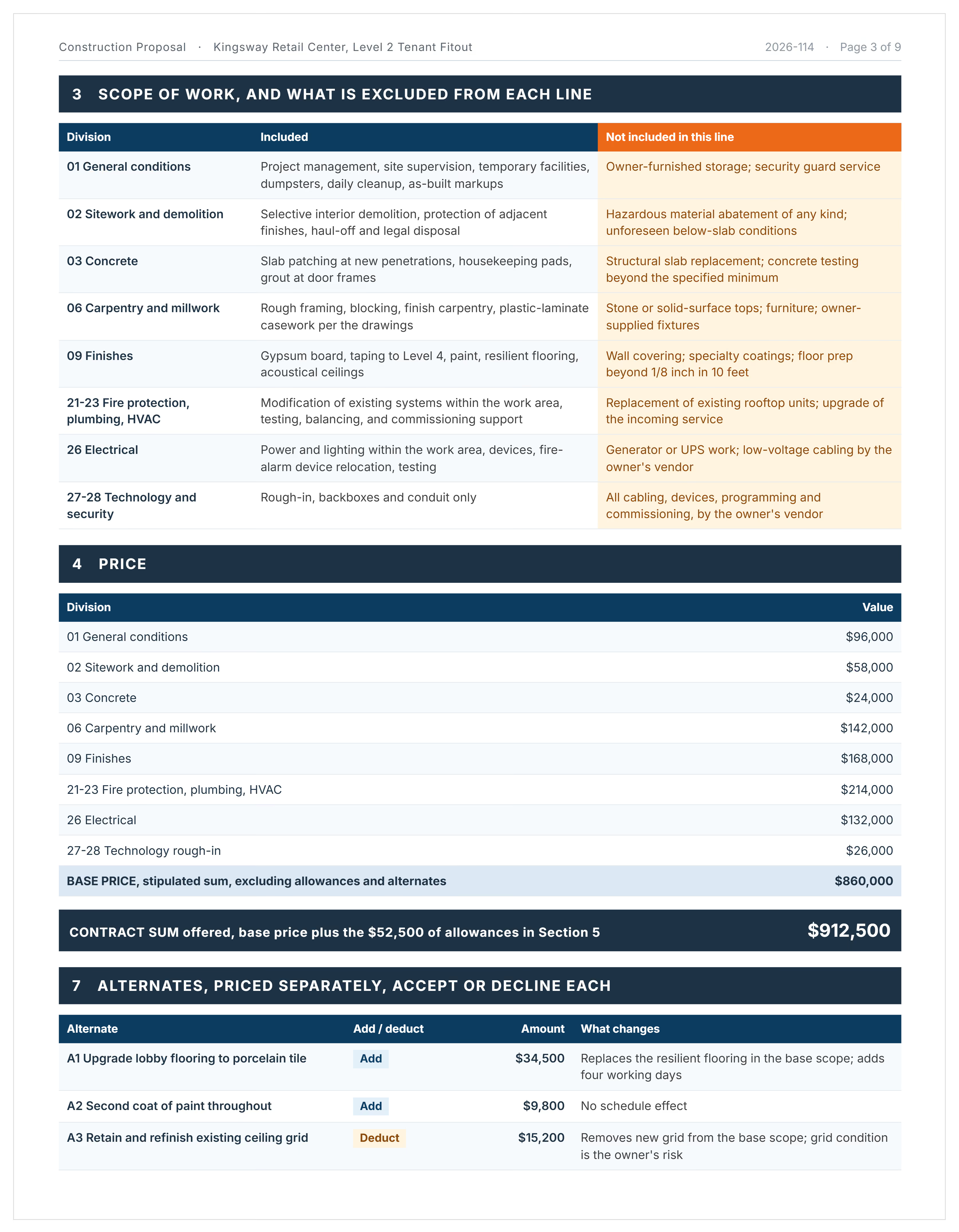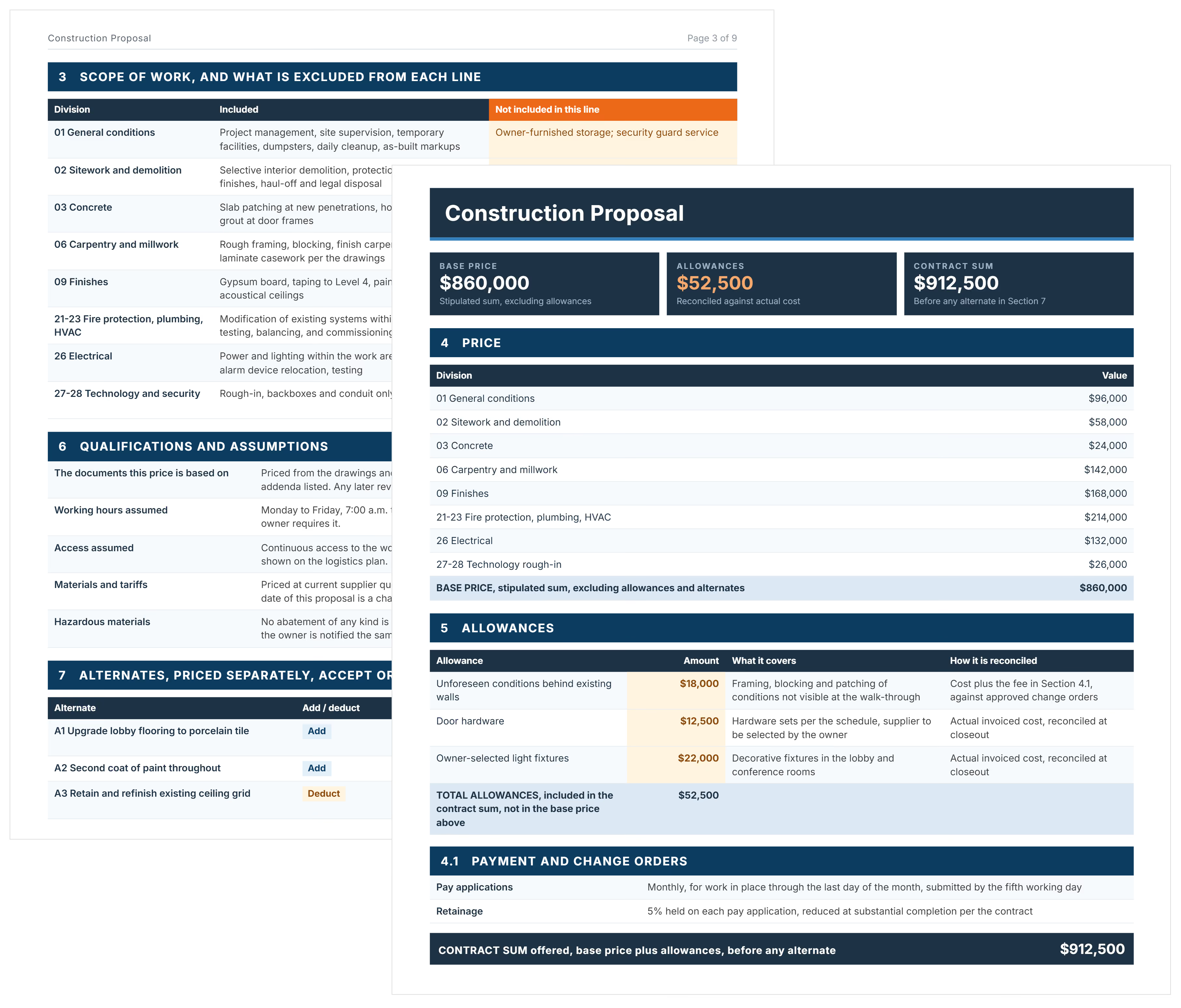
Construction proposal template example showing executive summary, project details, and technical approach sections
Free Template

Construction Proposal Template

Use this construction proposal template to win more bids with polished presentations. Pre-formatted sections for scope, pricing, terms, and qualifications help contractors submit proposals faster.

Templates
Word Template
Excel Template
Powerpoint Template
Construction Proposal Template
Template by
Jefbeck Eje
Published:
Nov 26, 2025

What is a Construction Proposal Template?

A construction proposal template is a pre-formatted document contractors use to present project bids. It provides standardized sections for scope, pricing, qualifications, and contract terms. These sections transform rough cost estimates into professional client-facing proposals.

Unlike internal planning documents, proposals serve as sales tools during competitive construction bidding. The structured format helps property owners compare multiple contractors fairly. It includes itemized cost breakdowns, payment schedules, project timelines, and company qualifications.

Construction firms submit construction proposals responding to Requests for Proposal (RFP) from government or private clients. Templates ensure critical information like exclusions, warranties, and change order procedures appear in every bid. This consistency speeds proposal creation while maintaining professional standards.

What's Included in Construction Bid Proposal Templates?

A construction bid proposal template contains essential components clients need to evaluate contractor bids. Each section addresses specific evaluation criteria property owners use when comparing proposals.

Standard components include:

  • Project scope specifications: Detailed task breakdown showing exactly what work the contractor performs, organized by phase.
  • Itemized cost estimate: Line-by-line pricing for materials, labor, equipment, subcontractors, and overhead with calculations.
  • Payment terms and schedule: Deposit requirements, milestone billing, retention percentages, and due dates aligned with delivery.
  • Project timeline: Start date, completion date, and major milestones with realistic durations demonstrating understanding.
  • Company profile: Business background, relevant experience, licensing details, insurance certificates, and safety records.
  • Past project references: Portfolio of similar completed projects with client contacts who verify performance.
  • Terms and conditions: Legal framework covering changes, delays, disputes, warranties, and contract formation.
  • Exclusions section: Explicit list of work not included preventing scope disputes after award.
  • Signature blocks: Acceptance area where clients sign to create legally binding agreements.
💡 Pro Tip: Front-load your strongest qualification in the first paragraph. Clients reviewing 15 proposals skip pages. Make expertise visible immediately to survive the first cut.

Why Use Templates for Construction Proposals

Templates ensure contractors submit complete professional proposals without missing critical information. Standardized formats eliminate time wasted building proposals from scratch during tight bidding deadlines.

Construction firms adopting templates gain competitive advantages:

  • Submit proposals faster: Pre-formatted sections reduce prep time from days to hours.
  • Present consistent branding: Uniform appearance signals organizational competence clients value.
  • Prevent costly omissions: Required fields ensure warranties, terms, and exclusions appear.
  • Improve win rates substantially: Professional presentation separates contractors even with comparable pricing.
  • Reduce post-award disputes: Clear scope documentation minimizes disagreements about coverage.
  • Enable accurate comparisons: Clients appreciate consistent formatting making contractor evaluation straightforward.
  • Support scalable growth: Small contractors compete with larger firms on proposal quality.
  • Protect legal interests: Standard terms reviewed by attorneys reduce contract risk.

Bidding win rates often depend on presentation quality. Construction proposal templates transform technical estimates into compelling business cases.

How to Write a Winning Construction Proposal with Templates

Writing winning proposals requires tailoring pre-formatted sections to match specific project requirements. Templates provide structure while contractors customize content addressing unique site conditions.

Follow these steps:

  1. Review bid documents thoroughly: Study RFP, plans, specifications, and site before touching templates.
  2. Complete project information first: Fill basic details like project name, location, client contact, bid due date.
  3. Customize scope description precisely: Adapt generic scope language matching actual work required.
  4. Build detailed cost breakdown: Insert line-item pricing for labor, materials, equipment, subcontractor costs.
  5. Set realistic project timeline: Establish start, completion, milestones based on crew availability.
  6. Add qualifications strategically: Include only relevant experience demonstrating capability for this project type.
  7. Define payment terms clearly: Specify deposit, progress billing, retention, final payment conditions.
  8. List exclusions explicitly: Document what's excluded preventing scope disputes later.
  9. Attach supporting documentation: Include licenses, insurance, safety records, reference letters.

Templates save time but require thoughtful customization. Generic construction proposals lose to competitors who tailor content.

Create Professional Construction Proposals with Mastt AI

Mastt AI eliminates formatting work slowing proposal creation during tight deadlines. Contractors generate tailored proposals matching specific project requirements in minutes.

Here's what Mastt AI delivers:

🚀 Generate complete structures instantly: Create formatted layouts with required sections in seconds.

📄 Upload existing documents: Attach RFP documents so AI extracts requirements structuring submissions.

📂 Customize for project specifics: Describe in natural conversation project type and client requirements for tailored content.

Adapt for different projects: Generate separate formats for commercial builds, residential remodels, government contracts.

📑 Export ready-to-edit formats: Download in Word or Excel for immediate customization.

Getting started takes straightforward steps:

  1. Describe your project: Type "create construction proposal for commercial renovation" or similar.
  2. Upload RFP documents (optional): Attach client bid documents for requirement extraction.
  3. Refine through conversation: Adjust sections for pricing format, qualifications, payment terms naturally.
  4. Export and customize: Download in Word, then add project-specific pricing and details.

Mastt AI applies construction industry knowledge recommending structures satisfying client evaluation criteria. Every conversation stays private in secure workspace.

👉 Visit the Mastt Help Center to explore proposal creation today.

Mastt AI chat interface for generating a construction proposal template with project-specific customization options

Who Needs a Construction Project Proposal Template?

A construction proposal template serves contractors competing for projects through formal bidding processes. These standardized formats help construction professionals present qualifications and pricing effectively.

Project Owners and Developers: Require standardized proposal formats from contractors ensuring bids are comparable and complete.

General Contractors: Submit comprehensive bids on commercial and residential projects to property owners.

✅ Specialty Trade Contractors: Respond to bid invitations from GCs for electrical, plumbing, HVAC work.

✅ Small Business Owners: Create professional proposals without consultants, competing with larger firms.

Subcontractors: Submit pricing packages to general contractors standing out through organized documentation.

✅ Residential Remodelers: Present clear proposals homeowners understand, explaining complex renovation work accessibly.

Commercial Contractors: Respond to formal RFPs from corporations meeting strict formatting requirements.

✅ Construction Estimators: Convert cost estimates into client-facing proposals quickly without manual layout.

Design-Build Firms: Present integrated proposals combining design services and construction delivery.

💡 Pro Tip: Customize master versions for residential, commercial, and capital projects. Homeowners need simpler language. Commercial clients expect detailed specifications. Capital projects require compliance documentation and funding justifications.

When to Use Construction Proposal Documents

Contractors deploy templates whenever formal bidding requires documented submissions to property owners. Templates structure information so clients evaluate multiple bids fairly during contractor selection.

Critical situations requiring templates include:

  • Responding to formal RFPs: Government agencies and corporations issue solicitations requiring specific formats.
  • Competitive bidding scenarios: Property owners invite multiple contractors comparing pricing, qualifications, approach.
  • Pre-qualification submittals: Large projects require demonstrating capability through detailed proposals first.
  • Design-build proposals: Integrated delivery needs proposals combining design approach, methodology, comprehensive pricing.
  • Negotiated contracts: Even sole-source awards benefit from professional documentation of scope and terms.
  • Subcontractor bidding: Specialty trades submit proposals to GCs during procurement.
  • Change order proposals: Additional work during construction requires formal pricing before approval.
  • Time-sensitive opportunities: Quick turnaround bidding demands templates accelerating creation without sacrificing quality.

Align proposal submission with client deadlines. Late proposals get rejected regardless of pricing.

Best Practices for Winning Construction Proposals

Effective proposals require strategic content organization beyond simply filling fields. These practices transform standard submissions into persuasive documents winning against competition.

☑️ Lead with client benefits first: Open with how your approach solves challenges before listing experience.

☑️ Match length to complexity: Residential remodels need 5-10 pages. Commercial projects justify 30-50 pages. Capital projects require 50-100 pages for funding and compliance documentation.

☑️ Use visual aids strategically: Include site photos, timelines, past projects, cost charts making information accessible.

☑️ Address evaluation criteria explicitly: Structure content around scoring rubrics with headers matching categories.

☑️ Quantify past performance: Replace vague statements with specific metrics like "completed 47 similar projects."

☑️ Demonstrate local knowledge: Reference site challenges, building codes, regional subcontractors, permitting requirements.

☑️ Include realistic contingencies: Build appropriate buffers for unforeseen conditions rather than artificially low pricing.

☑️ Provide reference contacts proactively: List clients who will recommend work with current phone numbers.

Problems with Free Construction Proposal Templates in Excel, Word, and PDF

Free construction proposal templates in Word, Excel, and PDF formats create documentation challenges. Generic downloads require extensive customization before suiting specific bidding requirements.

⚠️ Outdated legal language risks: Free Word template downloads contain obsolete contract terms.

⚠️ Missing critical sections regularly: Generic formats omit insurance requirements, safety protocols, warranty terms clients expect.

⚠️ Poor formatting across devices: Free PDF downloads break on tablets contractors use.

⚠️ Calculation errors in spreadsheets: Free Excel templates have broken formulas miscalculating costs.

⚠️ No brand customization options: Printable free downloads online lack professional appearance customization.

⚠️ Generic scope wastes time: Common template for construction proposal files use vague language requiring complete rewriting.

⚠️ Incompatible file formats: Free Word downloads won't open in current software.

⚠️ Version control impossible: Multiple team members editing simple template files create conflicts.

Even editable Word documents require significant reformatting for branding, project details, compliance requirements. "Free" templates cost hours in customization.

Win More Projects with High-Impact Proposals Created in Mastt

Moving from generic downloads to AI-generated proposals transforms bidding from administrative burden to competitive advantage. Contractors submitting professional tailored proposals faster win more projects even with comparable pricing.

For contractors competing on tight deadlines, a construction proposal template in Mastt turns 8-hour preparation into 15-minute customization. You spend time refining pricing strategy instead of wrestling document formatting.

👉 Create your first construction proposal with Mastt AI today and start winning more bids.

FAQs About Construction Proposal Templates

A comprehensive proposal includes qualifications, approach, and pricing. Bids typically focus primarily on pricing with minimal supporting information. Proposals respond to complex RFPs while bids answer simpler Invitations to Bid (ITB).
No, residential clients need simpler language and visual aids. Commercial clients expect detailed specifications. Create separate templates with appropriate terminology for each market.
Word format allows easy customization before submission. Convert to PDF for final client submission while maintaining formatting. Excel works for cost-heavy proposals with extensive line-item calculations.
Residential remodeling proposals typically run 5-10 pages. Major commercial projects justify 30-50 pages. Match proposal length to project complexity and client evaluation requirements.
Include enough detail for clients to understand pricing without exposing markup calculations. Show line items for major scope, materials, and labor categories without revealing subcontractor quotes.
Topic: 
Construction Proposal Template

Written by

Jefbeck Eje

Jefbeck is an SEO Specialist at Mastt who creates optimised content for the construction project management industry. Focused on delivering accurate and actionable insights, Jef combines SEO expertise with industry knowledge to enhance visibility, build authority, and drive engagement. His work ensures Mastt remains a trusted resource for construction professionals seeking reliable information.

LinkedIn Icon
Back to top

Frequently Asked Questions

More Templates

Supercharging Construction Project Management with AI Powered Tools