

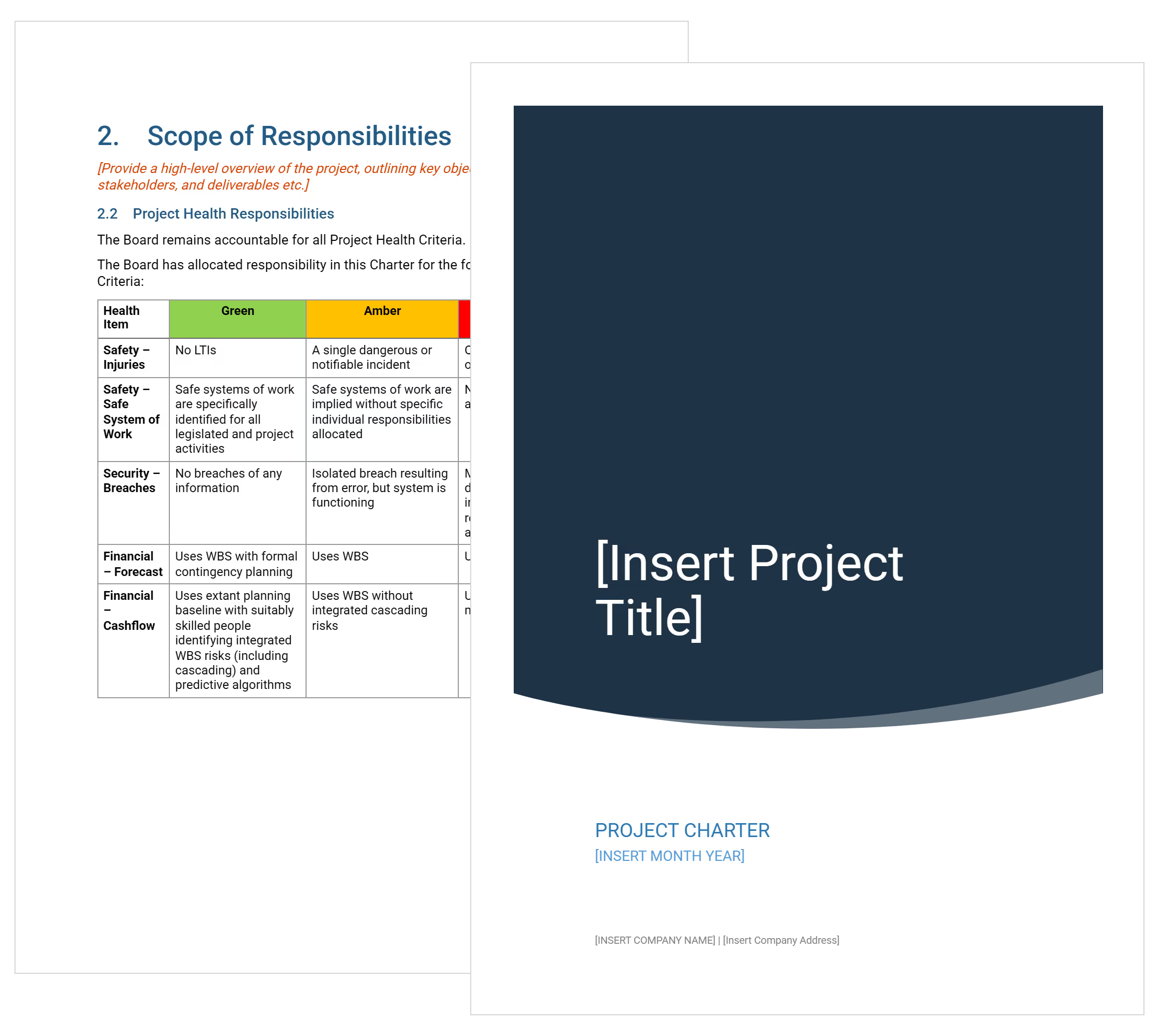

What is a Project Charter Template?
A project charter template is a pre-formatted document that structures how project authorization gets documented before work begins. It provides ready-made sections for capturing objectives, scope boundaries, stakeholder roles, budget estimates, and executive approval signatures.
Project teams use charter templates to establish formal authority for project managers. The template defines success criteria stakeholders agree upon upfront. It ensures critical information like deliverables, constraints, and resource allocation appears consistently across all projects.
Project charter templates come in multiple formats including Word, Excel, PowerPoint, and Google Docs. Word for text-heavy documentation, Excel for calculation-heavy budgets, PowerPoint for executive presentations. Regardless of format, the charter creates a single reference point that prevents misalignment during execution.
What's Included in Project Management Charter Templates?
Project management charter templates contain essential authorization fields that define project scope, objectives, and governance. The template includes sections for business justification, stakeholder roles, budget estimates, timelines, authority limits, and executive approval signatures.
Core components of a project charter template typically include:
- Project identification details: Unique ID, official name, project manager assignment, executive sponsor, and start/end dates.
- Business justification: Problem statement explaining why the project exists, expected benefits, strategic alignment, and ROI projections supporting investment decisions.
- Objectives and success criteria: SMART goals defining measurable outcomes, key performance indicators, and specific targets determining project success.
- Scope definition: Explicit boundaries showing included deliverables, what falls outside limits, and major exclusions preventing scope creep.
- Stakeholder identification: List of affected parties, decision-makers, team members, their roles, responsibilities, and communication requirements throughout the project lifecycle.
- High-level budget: Estimated costs broken into major categories, funding sources, approval thresholds, and contingency allocations for risk management.
- Timeline and milestones: Major phases with key delivery dates, critical dependencies, and approval gates that control progression between stages.
- Authority and decision rights: Defined limits for manager spending, change approval thresholds, and escalation paths for executive intervention.
- Approval signatures: Sign-off section for executive sponsor, stakeholders, and governance bodies confirming formal project authorization.
💡 Pro Tip: Include a "not in scope" section that explicitly lists what the project won't deliver. Stakeholders often assume features are included when they're not, causing disputes later.
Why Project Teams Need Charter Documentation
Project teams need charter documentation because formal authorization prevents political interference and scope confusion. Documented charters establish decision-making authority that protects project managers when competing priorities emerge.
Charter documentation protects projects through:
- Formal authority establishment: Charters define spending limits, approval thresholds, and decision rights preventing unauthorized stakeholder demands.
- Scope boundary protection: Written exclusions stop unapproved feature requests, preventing scope creep that causes cost overruns and project delays.
- Stakeholder alignment confirmation: Signed approvals prove executives agreed to objectives, timelines, and budgets before work started.
- Resource commitment documentation: Approved charters secure funding, personnel allocation, and equipment access against competing initiatives.
- Success criteria agreement: Measurable objectives prevent moving goalposts where stakeholders redefine success after completion.
- Risk awareness establishment: Documented constraints and assumptions create shared understanding of limitations, reducing unrealistic expectations.
- Change control foundation: Baseline scope enables systematic change management requiring formal approval and budget adjustments.
- Executive support demonstration: Sponsor signatures signal organizational priority, improving cooperation from departments that might otherwise deprioritize requests.
Without charter documentation, project success depends on memory and verbal agreements that evaporate when personnel change or pressure mounts. Written authorization creates accountability that survives organizational turbulence.
How to Develop and Use a Project Charter
Creating a project charter requires gathering stakeholder requirements before documenting agreed scope, objectives, and constraints. Start by interviewing the executive sponsor to understand business drivers and strategic alignment.
Follow these steps for effective project charter development:
- Conduct stakeholder interviews: Meet with executives, department heads, and end users to understand needs, expectations, and obstacles.
- Draft the business case: Document the problem being solved, quantified benefits, strategic alignment, and why investment is justified.
- Define measurable objectives: Write SMART goals with specific targets, completion dates, and metrics that determine success without ambiguity.
- Establish scope boundaries: List deliverables included in the project, then explicitly state exclusions stakeholders might incorrectly assume.
- Identify all stakeholders: Map affected parties, decision-makers, subject matter experts, and governance bodies with their roles and communication needs.
- Estimate budget and timeline: Break costs into major categories, identify funding sources, and create high-level milestones with realistic delivery dates.
- Define authority limits: Specify spending thresholds, change approval requirements, and escalation paths so managers know when executive involvement is required.
- Validate with stakeholders: Circulate the draft charter to all parties, incorporate feedback, and resolve conflicts before seeking formal approval.
- Secure executive signatures: Present the finalized charter to the sponsor and governance bodies, obtaining sign-off authorizing project commencement.
- Distribute and reference: Share the approved charter with the team and stakeholders, referencing it when questions or disputes arise.
💡 Pro Tip: Keep project charter length under five pages. Executives won't read lengthy documents, and brevity forces you to focus on essentials rather than padding with generic content.
Who Should Use Project Charter Document Templates?
Charter templates serve project managers, program directors, business analysts, and executives who initiate formal projects. They're used by professionals in IT, construction, consulting, product development, and operations across all organization sizes.
✅ Project Managers and Team Leads: Establish authority, secure resources, and protect against scope expansion from unauthorized stakeholder demands.
✅ Program Managers and PMO Directors: Standardize project initiation across portfolios, ensuring consistent information capture and governance compliance.
✅ Construction Project Managers: Define project scope, budget, and milestones for building initiatives, securing approval before mobilization.
✅ Construction Managers and General Contractors: Document deliverables, timeline, and resource requirements for construction delivery, aligning subcontractors and consultants on expectations.
✅ Business Analysts and Product Managers: Translate business requirements into formal project definitions, securing stakeholder agreement on features and release criteria.
✅ IT Managers and Solutions Architects: Define technical implementations, system requirements, and integration scope before development teams write code.
✅ Consultants and Agency Leaders: Formalize client engagements with clear deliverables, preventing scope disputes that damage relationships and profitability.
✅ Small Business Owners: Structure initiatives systematically, securing team alignment even when formal processes seem unnecessary for smaller operations.
💡 Pro Tip: Assign a single "charter owner" responsible for maintaining the document as the single source of truth. Multiple versions destroy the charter's value.
When to Prepare a Project Charter Document
Project charter documents should be prepared during initial planning before budgets get approved or teams mobilize. Charters authorize projects to begin. They're prerequisites for resource allocation and formal commencement.
Critical moments requiring project charter preparation include:
- Concept approval stage: After executives express interest but before detailed planning begins, charters formalize commitment and establish boundaries.
- Budget allocation cycles: Before annual planning or quarterly reviews, charters justify resource requests with business cases that secure funding.
- Proposal acceptance: When clients approve bids or stakeholders greenlight initiatives, charters translate agreements into formal project definitions.
- Cross-functional initiatives: Before engaging multiple departments, charters establish governance, authority, and coordination preventing territorial conflicts.
- Organizational restructuring: When strategic shifts create new priorities, charters align initiatives with updated objectives and secure sponsorship.
- Scope clarification needs: If requirements remain ambiguous or stakeholders disagree, charter development forces resolution before work begins.
- Complex project initiation: For initiatives involving significant investment, risk, or organizational impact, charters provide governance protecting against failure.
Charter timing matters more than perfection. Better to have a signed charter that evolves than to delay authorization seeking perfect information that never arrives.
💡 Pro Tip: Schedule a formal charter approval meeting rather than circulating documents for signature. Live discussion resolves conflicts faster than email threads.
Challenges with Generic Project Charter Templates in Excel and Word
Generic project charter templates downloaded in Excel or Word formats create authorization problems undermining project success. Static templates lack the customization and guidance needed for effective project definition.
⚠️ Vague objective statements: Generic templates encourage broad goals like "improve customer satisfaction" without specific, measurable targets defining success.
⚠️ Incomplete scope definition: Downloaded templates omit exclusion sections or provide inadequate space, causing stakeholders to assume features are included.
⚠️ Missing stakeholder analysis: Simple templates list names without defining roles, responsibilities, authority levels, or communication requirements preventing coordination failures.
⚠️ Inadequate budget structure: Excel templates with generic categories miss project-specific cost drivers, creating unrealistic estimates causing funding problems.
⚠️ Weak risk identification: Word templates provide minimal risk coverage, failing to document assumptions and constraints becoming problems during execution.
⚠️ Outdated governance approaches: Free downloads reflect old methodologies, missing modern practices like agile governance or cross-functional decision-making structures.
⚠️ No customization guidance: Static templates provide no instructions on adapting sections for different project types, industries, or contexts.
⚠️ Version control problems: Teams download separate copies, make different modifications, and lose track of which version represents approved scope.
Even professional project charter templates in PowerPoint or Google Docs require substantial customization before they're useful for specific projects and organizational requirements.
Best Practices for Project Charter Development
Effective charter development requires disciplined execution following proven practices that prevent authorization failures. Experienced project leaders apply these principles to accelerate approval and strengthen delivery governance.
☑️ Circulate drafts 48 hours before approval meetings: Stakeholders need time to digest content, preventing last-minute objections that derail sign-off.
☑️ Quantify objectives with specific numbers and dates: "Reduce processing time 30% by Q3" prevents disputes better than "improve efficiency."
☑️ Define three spending authority tiers: Document what managers approve alone, what needs sponsor sign-off, and thresholds requiring committee review.
☑️ List assumptions explicitly in charter body: Documenting "client provides data within 5 days" protects against later claims you promised impossible timelines.
☑️ Archive signed charters in project management systems: Version control prevents multiple-copy chaos that destroys charter authority when disputes arise.
☑️ Reference charter weekly in team meetings: Regular reviews reinforce boundaries when stakeholders push unauthorized scope additions mid-project.
☑️ Require formal amendments for major changes: Verbal agreements on scope, budget, or timeline shifts create the misalignment charters exist to prevent.
Accelerate Project Success with Mastt
Every successful project starts with clear authorization that aligns stakeholders on objectives, scope, and success criteria. The difference between projects that deliver value and those that fail often traces back to charter quality.
With Mastt's AI, you generate complete, customized charters in minutes rather than hours. Describe your initiative, and AI builds authorization documentation tailored to your specific needs, ready for stakeholder review and executive approval.
👉 Try Mastt's AI Assistant today and create your free project charter template that secure approval and protect delivery.

Written by
Jefbeck Eje
Jefbeck Eje is Mastt's SEO Specialist, working on how its construction guides earn visibility in Google and in AI answer engines such as Perplexity and ChatGPT Search. Earlier, at the language-learning app Ling, he carried out technical SEO audits with an external agency and reviewed work from a team of more than five writers.

Use this FREE project charter template to secure stakeholder approval and prevent scope creep. Define objectives, boundaries, and authority before work begins, ensuring teams understand deliverables and success criteria.

Top Performers Don’t Guess. They Deliver.
Cut the stress of showing up unprepared
Start for FreeTrusted by the bold, the brave, and the brilliant to deliver the future