
Types of data centers range from small modular units deployed in weeks to hyperscale campuses that take years to build. Each type carries different requirements for site planning, MEP design, and procurement. The table below compares these variables across the six primary categories.
Establishing these baselines early prevents misaligned budgets and schedule overruns. The following sections detail the specific data center development constraints and procurement strategies for each facility class.
1. Enterprise Data Centers: Privately Owned Facilities
An enterprise data center is a privately owned facility that serves a single organization. It is located either on the company's premises or at a dedicated off-site location they own and operate.
Enterprise facilities suit organizations that need direct control over security, compliance, uptime, and internal systems. Banks, healthcare groups, and large corporations often choose this model when shared infrastructure does not match operational requirements.
- MEP complexity: Moderate compared to colocation or hyperscale. Systems are sized for a known, single-tenant load rather than variable multi-tenant demand.
- Delivery model: Typically procured through design-bid-build or design-build, depending on the owner's procurement preference and project timeline.
- Sizing: Built to serve the organization's current and near-future compute needs. Rarely designed with headroom beyond 3 to 5 years.
- Common owners: Large corporations, financial institutions, and healthcare systems.
The most common coordination challenge on enterprise data center builds is the gap between IT requirements and construction scope. Project managers should resolve this misalignment during the design phase to prevent rework.
2. Colocation Data Centers: Multi-Tenant Leased Spaces
A colocation data center is a multi-tenant facility where organizations lease space, power, and connectivity from a specialist operator. The building owner provides the shell, power, cooling, and security. Tenants bring their own servers and networking equipment.
Colocation works well for organizations that want reliable infrastructure without funding and operating a full facility. This setup gives tenants room to scale, while still keeping control over their own hardware and network environment.
- Power and cooling density: Demands are higher than enterprise builds to handle variable multi-tenant loads. The selected cooling system dictates structural slab loading, void depth, and HVAC routing.
- Cooling systems: Facilities use precision air cooling, hot-aisle containment, cold-aisle containment, or liquid cooling. Design teams resolve the spatial and structural requirements for these systems early.
- Phased construction: Operators build the core shell and base MEP first. They fit out individual tenant suites as leases are signed. Project managers coordinate the transition between base building work and tenant contracts.
- Delivery model: Developers use design-build or engineer-procure-construct (EPC) contracts. These agreements manage the complex MEP scope and phased schedules.
- Common owners: Specialist developers and real estate investment trusts (REITs) own these sites.
Colocation MEP construction is more complex than a single-tenant facility. Variable tenant loads require mechanical and electrical systems designed for maximum flexibility. Locking in this adaptability during the design phase keeps future fit-outs on schedule.
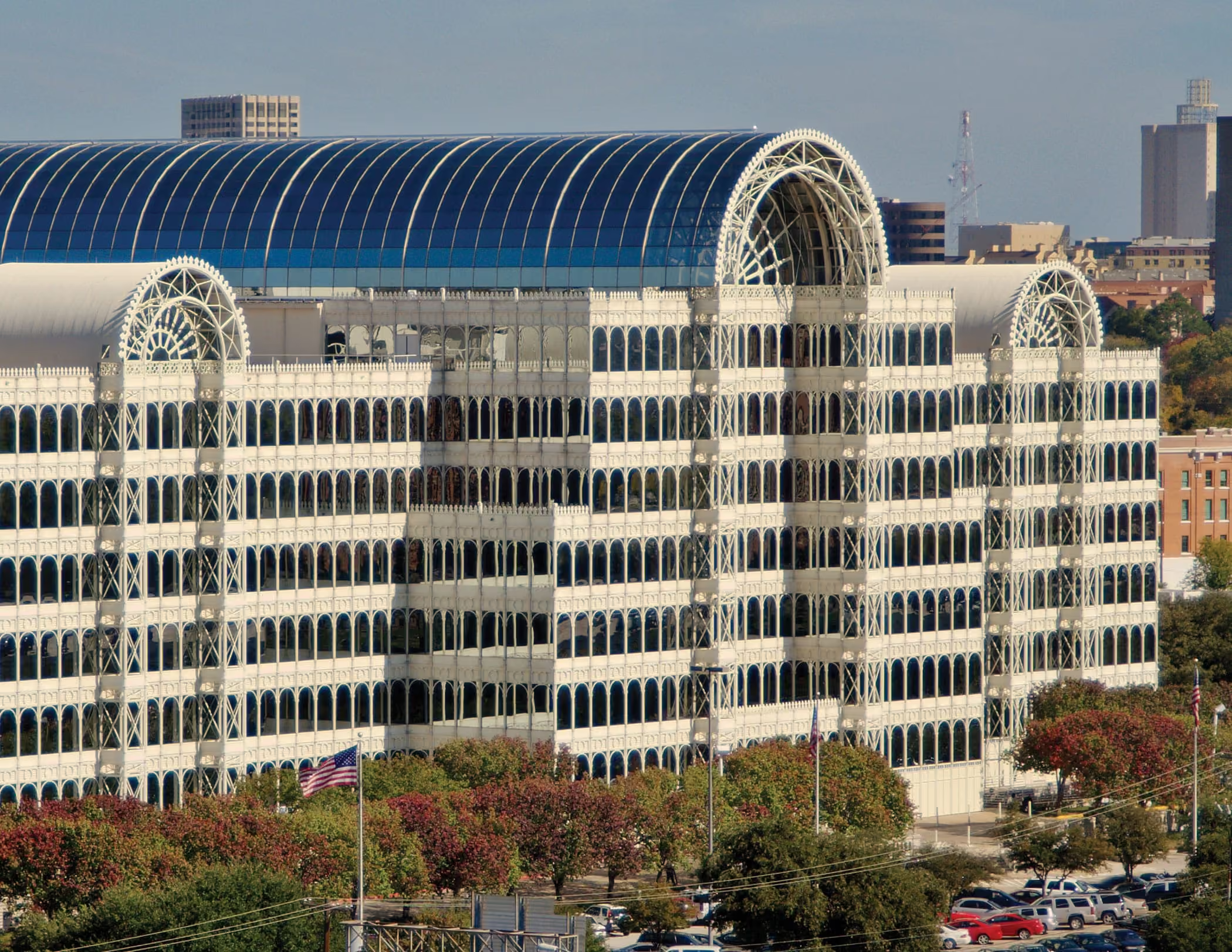
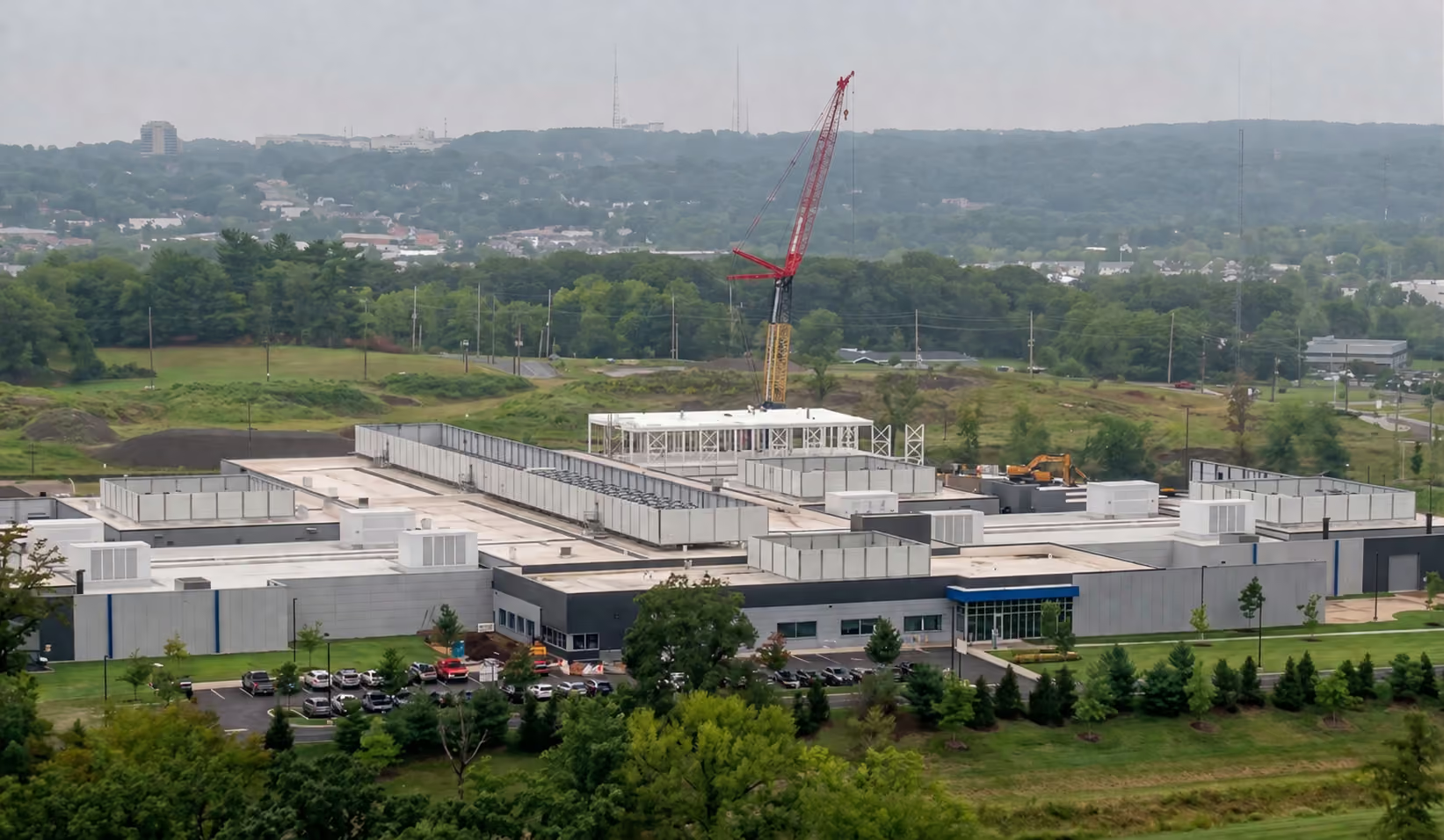
3. Hyperscale Data Centers: Massive-Scale Campuses
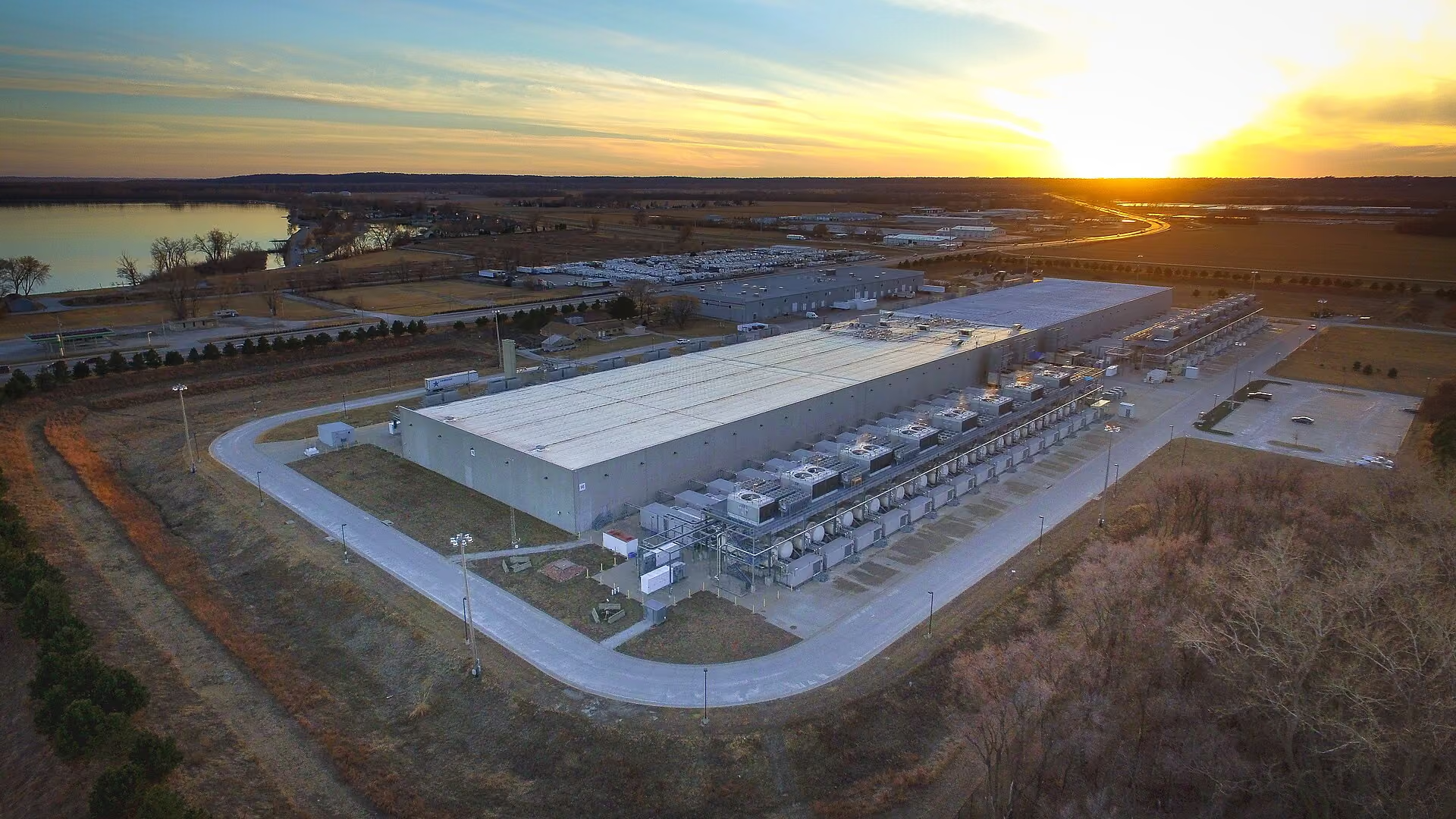
A hyperscale data center is a massive facility built by cloud providers like Amazon Web Services, Microsoft, Google, and Alibaba Cloud. These companies operate the sites to handle fast-growing compute and artificial intelligence (AI) workloads. These are the most complex and capital-intensive data centers to build.
Hyperscale campuses are built for volume. Cloud platforms, AI training, storage, and digital services for millions of users depend on this model because smaller facilities cannot deliver the same capacity, redundancy, or expansion speed.
- Scale: Synergy Research Group reports that approximately 1136 hyperscale data centers exist globally, having doubled in five years. A typical hyperscale facility has at least 5,000 servers, 500 cabinets, and 10,000 sq ft of floor space.
- Market leaders: Amazon Web Services, Microsoft, and Google account for more than half of all hyperscale data centers worldwide.
- Build timeline: A greenfield campus takes 18 to 24 months to complete. Teams frequently build multiple concurrent structures. They execute commissioning in parallel with construction to hit phased occupancy milestones.
- MEP scope: Tier III or IV redundancy is standard. The 2N or 2N+1 power and cooling systems double the MEP coordination effort. Energy efficiency operates as a primary design constraint due to the massive power consumption.
- Market growth: Precedence Research data shows the hyperscale cloud market will expand from $553.92 billion in 2026 to $5,837.58 billion by 2035. This growth reflects a 29.91% compound annual growth rate.
- Delivery model: These massive projects require EPC or EPCM contracts. These agreements manage the capital-intensive scale and strict redundancy requirements.
Project managers negotiate commissioning milestones with the client before construction begins. Program delays directly postpone the facility's ability to generate revenue.
4. Cloud Data Centers: Provider-Managed Infrastructure
A cloud data center is an off-premises facility operated by a cloud service provider. Businesses access computing resources as a service rather than owning physical infrastructure.
For many organizations, cloud data centers remove the need to build physical capacity. The model suits teams that need flexibility, faster deployment, and on-demand compute without taking on the cost and complexity of a construction program.
- Who builds them: Construction is managed entirely by the provider. Amazon Web Services, Microsoft Azure, and Google Cloud Platform develop and operate their own cloud data center facilities. Project owners and PMs typically engage through service agreements.
- Relationship to hyperscale: Providers house cloud services within massive hyperscale campuses. This eliminates all physical construction requirements for the end user and replaces site logistics with IT migration.
- Cost structure: Clients avoid capital expenditures on physical buildings. They pay operational expenses for virtual capacity.
The cloud model separates access to computing capacity from responsibility for building and operating the facility. This classification helps project managers compare provider-managed infrastructure with conventional data center development.
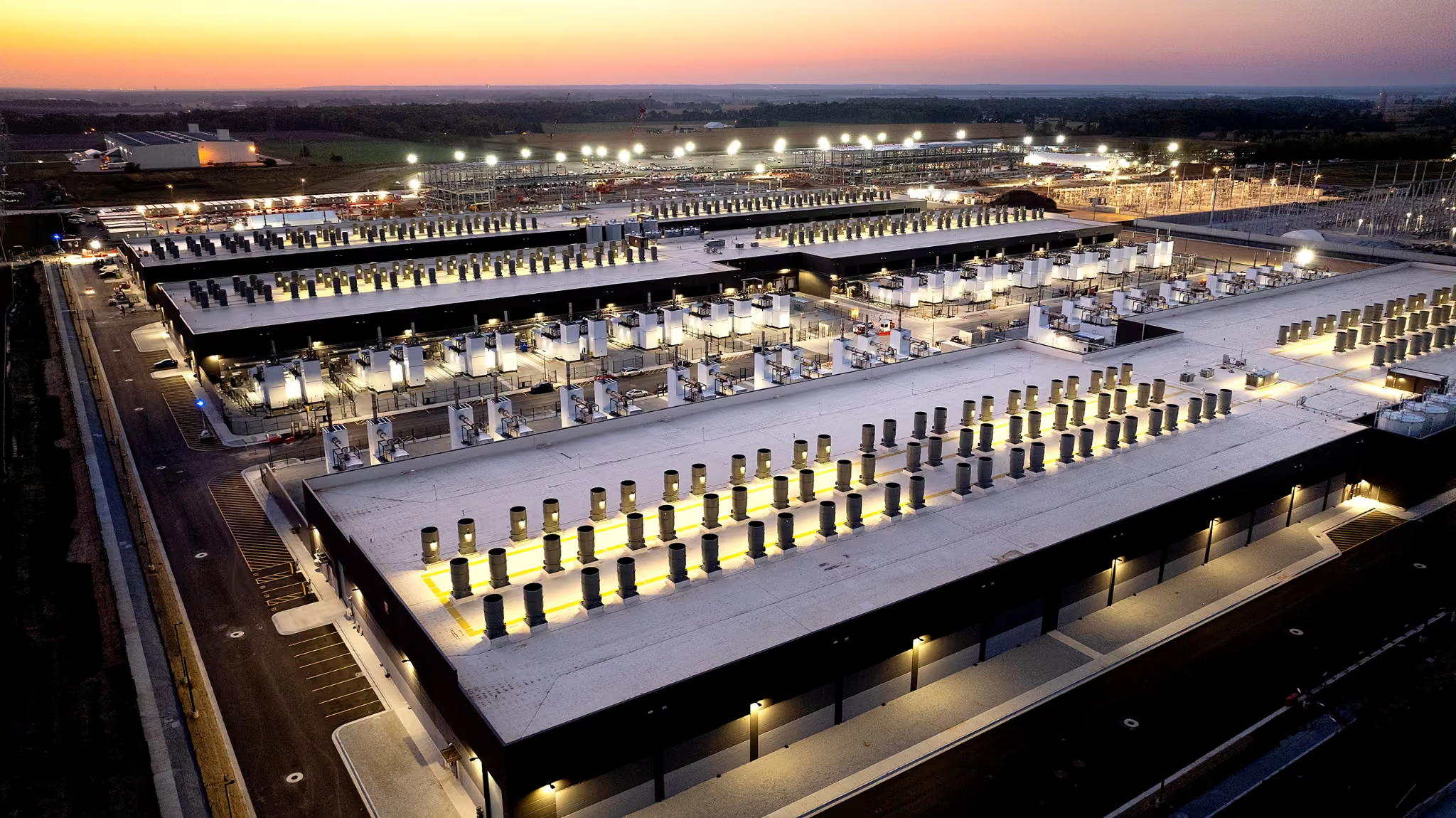
5. Edge Data Centers: Small Distributed Facilities
An edge data center is a small, distributed facility positioned close to end users or data sources to reduce processing latency. These facilities are typically under 1MW in capacity and located in urban or suburban environments.
Edge facilities support workloads that depend on speed and local processing. Connected devices, real-time analytics, industrial systems, and smart infrastructure all benefit from compute capacity placed closer to where data is generated and used.
- Growth driver: Ericsson forecasts cellular IoT connections will reach 7.8 billion by 2031. This device volume and 5G network expansion require edge facilities near data sources.
- Build timeline: Typically three to six months for a purpose-built edge facility.
- Site constraints: Lower build complexity than enterprise or colocation, but site logistics are often challenging. Urban locations mean limited footprint, constrained access for deliveries, and tight coordination with local utilities for power connections.
- Delivery model: Owners frequently use design-build contracts for edge facilities. This single-point-of-responsibility model suits the short three-to-six-month project schedule.
Facility volume drives edge network expansion. Project managers secure local utility agreements early to protect the short delivery timeline.
6. Modular Data Centers: Prefabricated Container Units
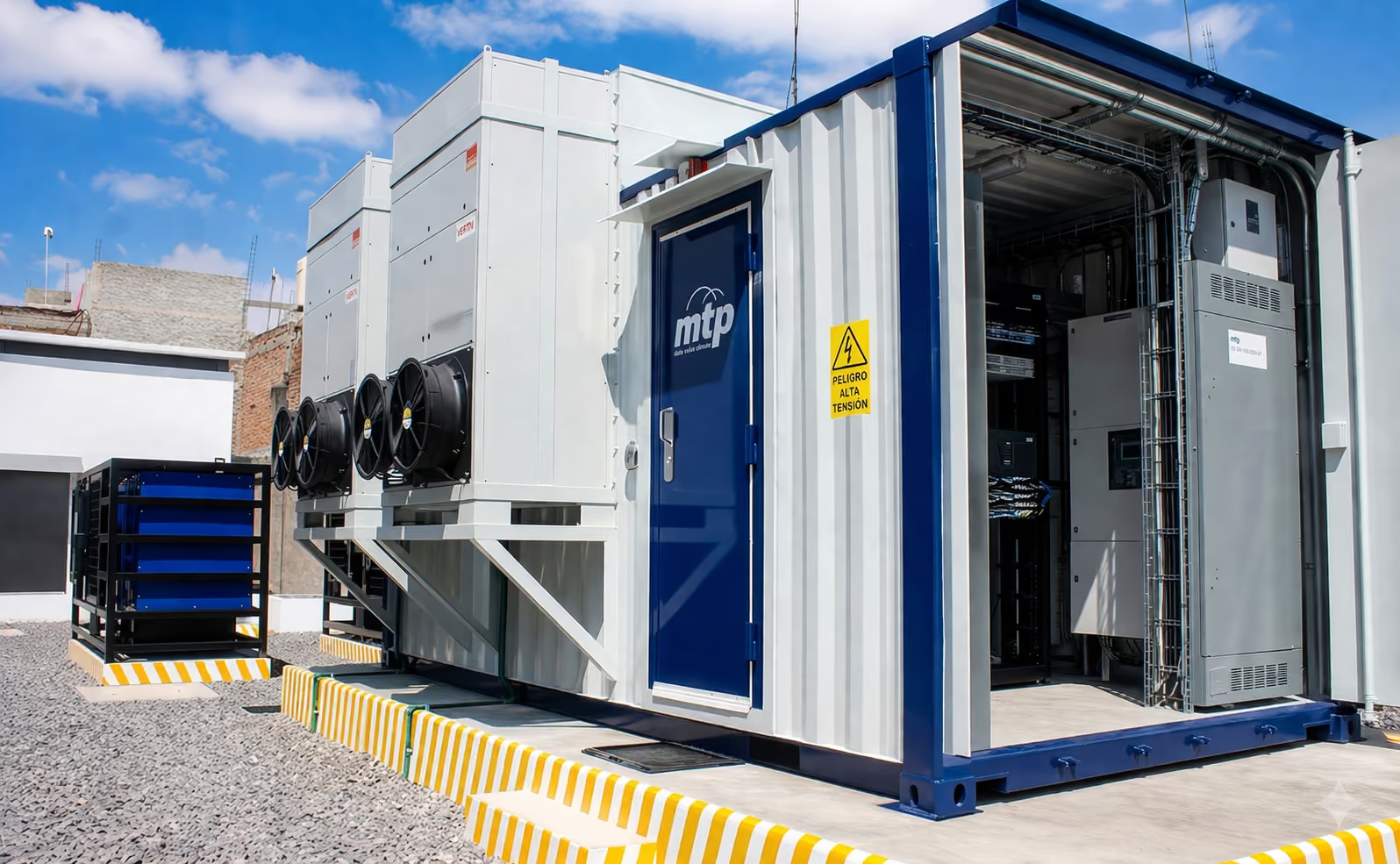
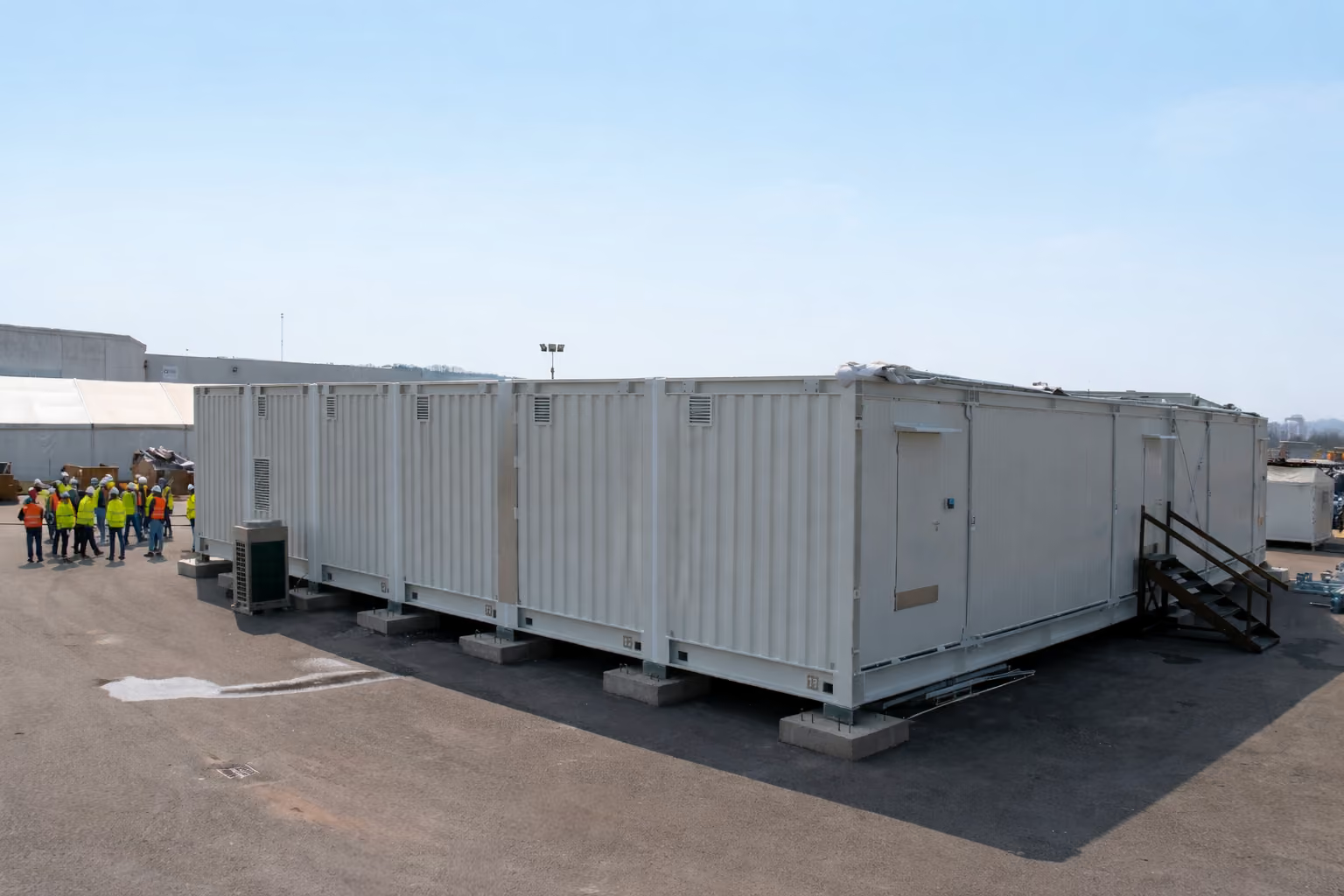
A modular data center is a prefabricated, container-based facility assembled off-site and delivered as plug-and-play units. Each module contains servers, cooling, power, and networking in a self-contained enclosure.
Modular deployments make sense when speed, mobility, or site limits shape the project brief. Many owners use this format for fast capacity expansion, temporary operations, remote sites, or disaster recovery where traditional construction would take too long.
- Deployment speed: The fastest of any data center type. Modular facilities can go from order to commissioning in 12 to 16 weeks.
- Critical path: Equipment procurement restricts the timeline more than on-site construction. Factory lead times for prefabricated units can run 10 to 14 weeks. Site civil and utility work must be coordinated to match the delivery schedule.
- Use cases: These modules provide fast capacity expansion and temporary disaster recovery. They also solve footprint constraints where traditional builds do not fit.
- Delivery model: Traditional construction contracts do not apply here. The project structure shifts entirely to equipment procurement agreements and separate civil works contracts for site preparation.
Modular data centers suit projects where speed or site constraints rule out traditional data center construction. Success on these fast-track deployments relies entirely on executing procurement and coordinating delivery logistics.
💡 Pro Tip: The primary schedule risk across all data center types is the delayed delivery of long-lead MEP equipment. Track these external supply chain variables directly within your construction project management software to protect the critical path.
How to Choose a Data Center Type
Facility selection depends on capital budget, uptime requirements, site constraints, and operational capacity. Project managers must define these parameters before comparing delivery models. Early estimates prevent late-stage scope changes.
Facility selection balances upfront capital against operational capacity and site constraints. Organizations lacking internal teams use colocation, while owners with tight footprints rely on modular deployments. Project managers use this classification to establish the baseline risk profile and select the proper delivery contract.

Your Next Step in Data Center Construction
Data center construction complexities vary significantly across these facility classes. The selected data center type establishes the foundation for your budget, schedule, contract structure, and MEP design. Define your organization's ability to manage physical infrastructure and IT fit-outs before outlining the initial project brief.
.avif)
Written by
Doug Vincent
Doug Vincent is the co-founder and CEO of Mastt, the AI capital-project management platform used by governments, Fortune 500 companies, and consultancies across APAC, North America, and MENA. Before founding Mastt in 2019, he spent a decade at RPS delivering more than $2 billion in capital works, including the $2.1B Defence Navy Infrastructure program, and holds a CPSPM certification with the AIPM. He contributes content and speaks on AI in capital project delivery at Mastt.


Contributions by
Kristel Sapungan
Kristel Sapungan is a licensed architect and Content Writer at Mastt, combining her technical background with expertise in SEO and digital strategy. With experience in architectural design, construction documentation, and on-site coordination, she delivers precise, high-quality content for the construction and capital works sector. Her work enhances industry communication by translating complex concepts into clear, professional narratives.
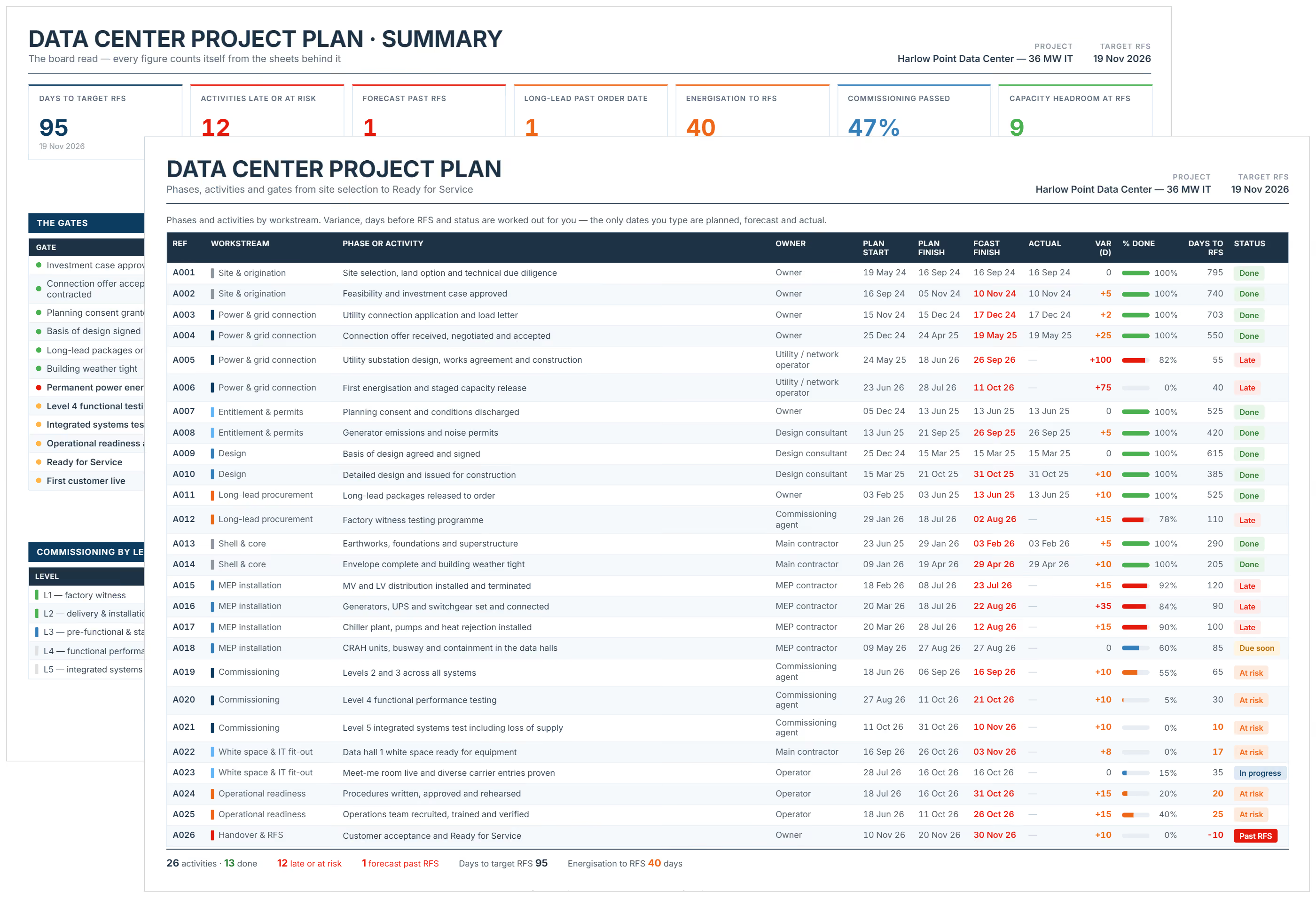
Data Center Project Plan Template
Use this data center project plan template to organize infrastructure phases and coordinate MEP installation. Track equipment procurement, testing milestones, and dependencies to prevent coordination failures that delay commissioning by months.

Walk Into Every Meeting With Confidence, Clarity, and Control
No one wants to look unprepared, blindsided, or uncertain in front of stakeholders — but that’s exactly what happens without Mastt.
Start for FreeTrusted by the bold, the brave, and the brilliant across governments, Fortune 500s, and the world’s best in delivering the future