
Data center design lays the foundation for reliable, efficient, and secure IT operations. Power systems, cooling, network infrastructure, security, and layout all need to be resolved before construction starts. This guide walks you through the key components of data center, standards, and planning steps.
What is Data Center Design?
Data center design is the end-to-end process of planning a facility that can reliably house, power, cool, and protect IT equipment. It encompasses everything from data center building design to redundancy architecture, data storage provisions, and environmental controls.
The design phase in data center development is where the majority of the total project cost gets locked in. Early decisions on layout, capacity, and redundancy have lasting impacts on capital costs, operational efficiency, and future upgrade needs.
What are the Design Components of a Data Center?
Data center infrastructure spans seven core systems, including power infrastructure and the cooling system. Each affects the others and carries direct implications for project budget, schedule, and long-term operational cost.
These systems are interdependent. For example, rack layout affects airflow and cabling routes. That interdependency is why most costly design errors trace back to one system being designed in isolation from the others, making integrated construction management coordination essential.

How to Plan a Data Center Design Process
Start planning the design of a data center by defining requirements and confirming site feasibility. The steps below follow the required sequence for these decisions.
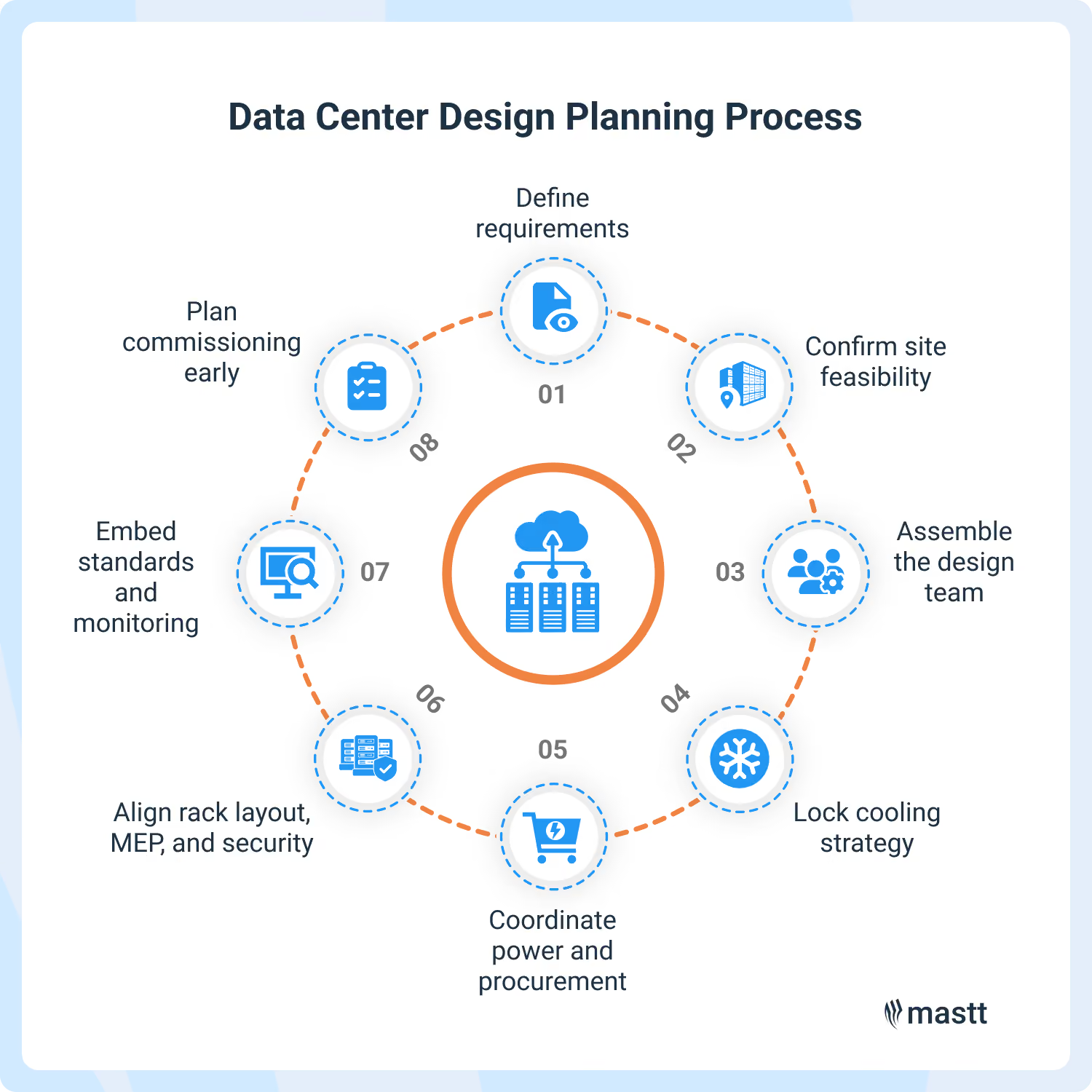
Step 1: Define requirements before design starts
Document the IT load, tier target, site constraints, and budget range in an Owner's Project Requirements (OPR) document. Specify redundancy expectations for power systems and target Power Usage Effectiveness (PUE). Use the OPR to direct all subsequent design decisions.
Step 2: Select the site and complete the feasibility study
Confirm grid capacity before you commit to a site. Utility interconnection timelines often span 12 to 36 months. Address water access, local climate conditions, flood risks, and fiber connectivity during your site analysis.
Order a geotechnical survey to determine foundation requirements. Verify the site supports floor loads of 100 to 300 lbs per square foot.
Step 3: Assemble the design team early
Hire the architect, MEP engineer, commissioning agent, and cost planner. Bring the commissioning agent in at the start of the design phase. Ask them to review design documents for specification gaps and MEP coordination conflicts.
Include operations and facilities management personnel during design development. Ask them to identify maintenance access issues and control logic gaps.
Step 4: Lock in the cooling strategy before schematic design
Choose between air cooling and liquid cooling methods before structural design begins. This choice dictates structural loads, MEP layout, piping routes, and energy costs.
Specify air cooling for rack densities of 5 to 10 kW. Specify liquid cooling for high-performance computing workloads of 40 to 140 kW per rack. Changing the cooling strategy later forces a full MEP redesign.
Step 5: Coordinate power infrastructure and procurement early
Account for utility feeds, switchgear, UPS systems, and power distribution units (PDUs) in the design. Design the path from utility feed to rack-level distribution with redundancy appropriate to the target tier.
Build major equipment lead times into the project program. Factor in 12 to 52 weeks for switchgear and 16 to 40 weeks for transformers. Allocate 12 to 30 weeks for UPS systems and 20 to 40 weeks for backup generators.
Begin construction procurement during design development. Procure equipment early to hit the commissioning date.
Step 6: Coordinate rack layout with MEP and security design
Plan rack layout and cable routing alongside MEP systems. Confirm your fire suppression system selection in early design. Ensure the facility complies with NFPA 75 and NFPA 76 requirements.
Integrate physical security controls into the facility layout during design development. Map out access control, CCTV, mantrap configurations, and perimeter security.
Step 7: Build standards compliance into design documents
Assign compliance responsibility in the scope of work for each designer. Write BICSI-002 and TIA-942-C requirements into the basis of design. This provides a clear reference for reviewing substitutions during construction.
Specify BMS and DCIM integration during the design phase. Adding monitoring systems after construction increases installation costs.
Step 8: Plan for multi-level commissioning
Plan the structured sequence for data center commissioning during design. Schedule factory acceptance testing, site installation verification, system integration testing, and operational acceptance.
💡 Pro Tip: Build a long-lead equipment tracker on your construction project scheduling software during schematic design. Map each major item to its confirmed lead time and required on-site delivery date. Work backward from the planned commissioning date to verify the procurement schedule is achievable.
What are Data Center Tiers and Why Do They Matter for Design?
The Uptime Institute Tier Standard classifies data centers by availability target and redundancy level. The tier selected determines design complexity, equipment quantities, and total project cost.
Each step up in tier adds more equipment, more space, and more time to design and commission. That cost compounds quickly. Moving from Tier III to Tier IV after design has started typically adds 40 percent to capital cost and 3 to 6 months to the schedule. This is why tier selection needs to happen during preconstruction feasibility, before the design team is engaged.
💡 Pro Tip: Lock in the tier target as part of your project governance framework and Owner's Project Requirements (OPR) before engaging the design team. Once structural and MEP systems are designed to a specific tier, changing it requires a full redesign of the affected systems.
What Design Standards Apply to Data Centers?
Data center design requires compliance with specific industry frameworks, such as ANSI/BICSI 002-2024, ANSI/TIA-942-C, and the Uptime Institute Tier Standard. The table below summarizes what each standard covers.
Each applicable standard should be assigned to a specific designer's scope and written into the basis of design before design development starts. Standards that only appear in project specifications are easier to overlook during substitutions and value engineering.
Who's Involved in Data Center Design?
Designing data center requires coordination across more specialist disciplines than most construction projects. The PM's job is to keep these stakeholders aligned on scope, schedule, and design intent throughout the design phases.
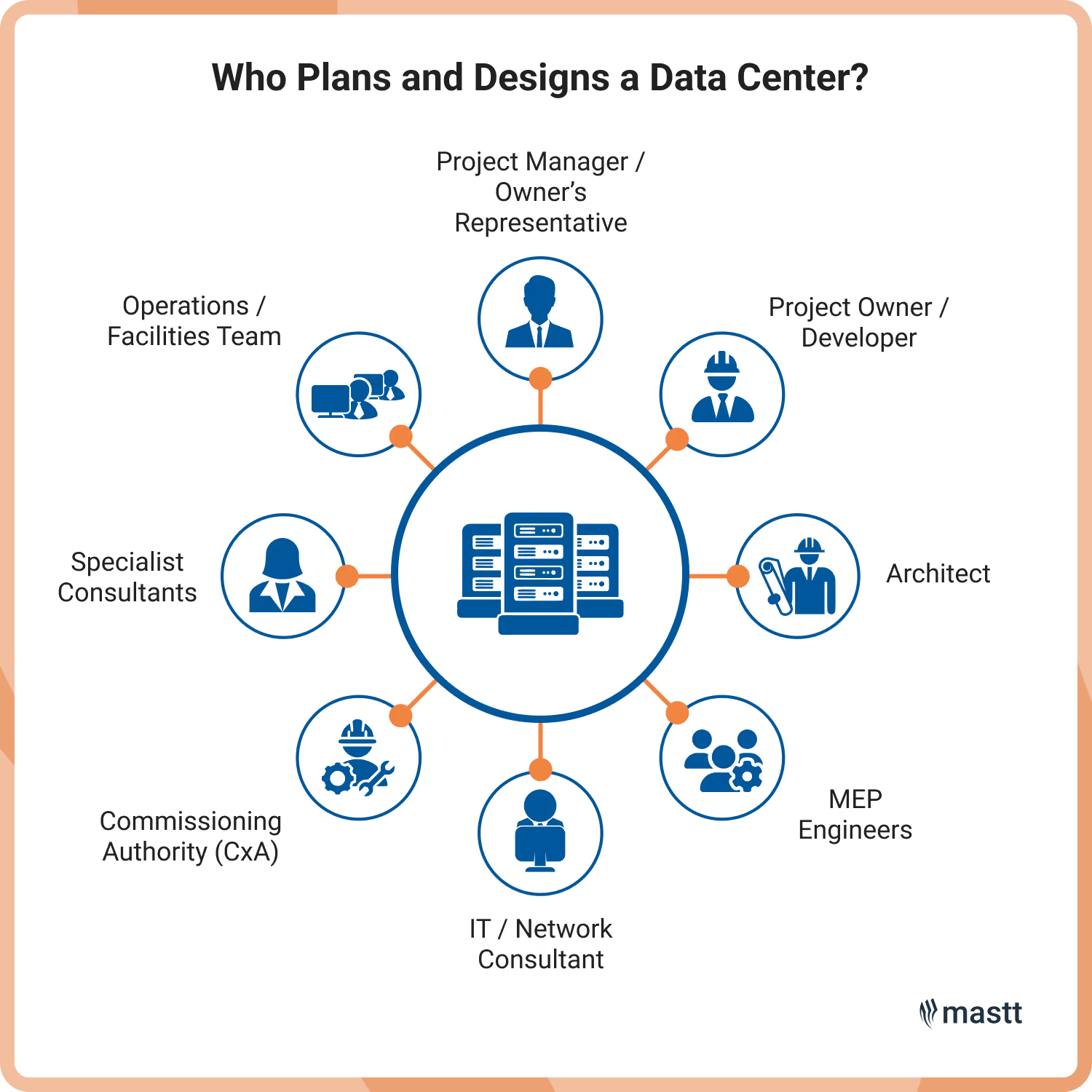
- Project owner or developer: Sets the facility requirements, approves the target tier and budget, and signs off at each review gate. Their decisions on tier and capacity drive the entire project scope.
- Project manager or owner's representative: Coordinates all parties, manages review gates, and tracks design deliverables and budget. A project management consultant often fills this role on large data center programs.
- Architect: Handles the building envelope, spatial layout, code compliance, and coordination with local planning authorities. Active from concept through construction documents.
- MEP engineers: Design the power distribution, cooling systems, fire protection, and plumbing. This is the largest design scope in a data center, and MEP coordination drives most of the design schedule.
- IT and network consultant: Defines structured cabling, rack layout, connectivity requirements, and carrier coordination. Must be engaged from schematic design to avoid late-stage network conflicts.
- Commissioning authority (CxA): Reviews design documents for testability and commissioning readiness. Should be engaged by the 60% design stage at the latest.
- Specialist consultants: Includes acoustics, security, sustainability (LEED), and geotechnical specialists. Their involvement depends on site conditions and owner requirements.
The challenge for PMs is that these disciplines are deeply interdependent. A change in the cooling topology affects structural loads, electrical capacity, and plumbing routes simultaneously. Effective coordination reduces operational cost during construction and prevents rework.
Common Challenges in Designing a Data Center and How to Avoid Them
One of the most common challenges in designing data center is underestimating the complexity of interdependent infrastructure systems. Avoid this by running integrated design reviews at every project gate. The table below lists these common design mistakes and their specific solutions.
The common thread across these mistakes is that design decisions are deeply interconnected. A late tier decision, a missed lead time, or an uncoordinated discipline review can cascade into months of delay. Using a structured project controls approach helps contain these risks.

Best Practices in Designing Data Centers
Good data center design comes down to planning early, coordinating across disciplines, and making infrastructure decisions that account for future growth. These six practices help project managers protect long-term facility performance during the design phase.
☑️ Right-size the facility using realistic growth projections: Oversizing wastes capital. Undersizing forces costly retrofits within years of commissioning.
☑️ Design for modular expansion: Modular approaches allow incremental growth without disrupting live operations and support stronger construction risk management.
☑️ Target energy efficiency from the start: Aim for a PUE below 1.4 by incorporating free cooling, economizers, and renewable energy sources where feasible.
☑️ Run clash detection across all disciplines at every review gate: MEP and structural clashes found during construction cost far more to fix than those caught in construction drawings.
☑️ Document every design decision and its rationale: When value engineering discussions happen, the original rationale prevents unnecessary rework.
☑️ Build flexibility into power and cooling architecture: Scalable UPS, containment strategies, and adaptable cooling give the facility room to handle changing workload densities over its lifetime.
These are especially important for sustainable data center. Energy efficiency targets and environmental controls must be embedded in the design from the start. Operational efficiency in facilities management over the facility's lifespan depends on decisions made during this phase.
Design Trends Shaping Modern Data Center
Modern data center is evolving rapidly, driven by AI in construction trends, sustainability mandates, and new construction methods. PMs planning data center projects today need to account for these shifts in their design requirements and procurement timelines.
Cloud computing growth, edge computing deployments, and edge data center construction are also expanding the range of facility types PMs may encounter.
PMs using capital project management software today need to account for these shifts in their design requirements and procurement timelines. Each technological advancement adds new design variables that did not exist five years ago.
Early Design Decisions Drive Better Data Center Outcomes
Data center projects demand technical clarity early. Defining requirements upfront and confirming tier puts teams in a stronger position to protect cost, delivery, and long-term performance. For project managers planning a new facility or expansion, this is where better outcomes start.
.avif)
Written by
Doug Vincent
Doug Vincent is the co-founder and CEO of Mastt, the AI capital-project management platform used by governments, Fortune 500 companies, and consultancies across APAC, North America, and MENA. Before founding Mastt in 2019, he spent a decade at RPS delivering more than $2 billion in capital works, including the $2.1B Defence Navy Infrastructure program, and holds a CPSPM certification with the AIPM. He contributes content and speaks on AI in capital project delivery at Mastt.


Contributions by
Kristel Sapungan
Kristel Sapungan is a licensed architect and Content Writer at Mastt, combining her technical background with expertise in SEO and digital strategy. With experience in architectural design, construction documentation, and on-site coordination, she delivers precise, high-quality content for the construction and capital works sector. Her work enhances industry communication by translating complex concepts into clear, professional narratives.
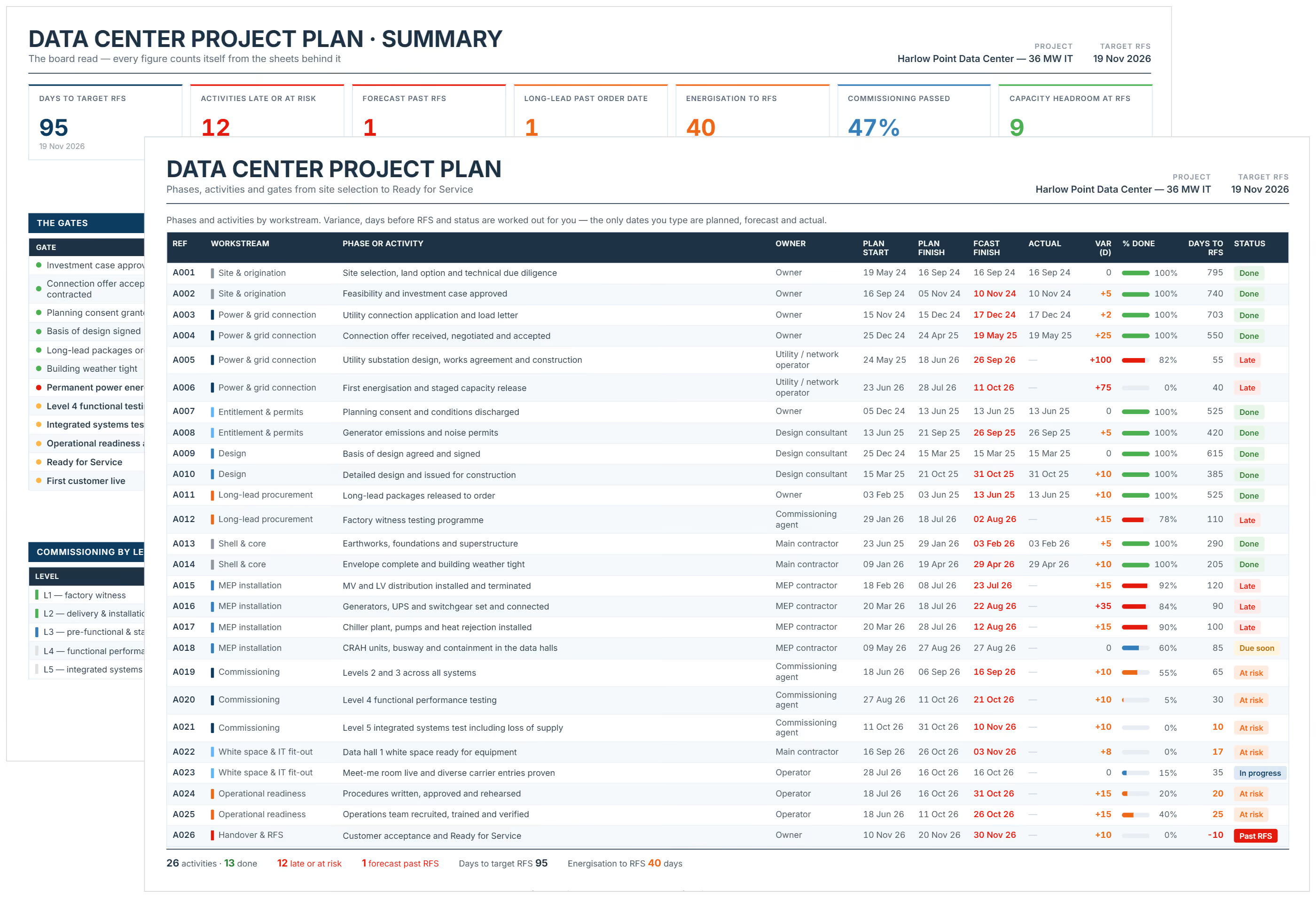
Data Center Project Plan Template
Use this data center project plan template to organize infrastructure phases and coordinate MEP installation. Track equipment procurement, testing milestones, and dependencies to prevent coordination failures that delay commissioning by months.

Walk Into Every Meeting With Confidence, Clarity, and Control
No one wants to look unprepared, blindsided, or uncertain in front of stakeholders — but that’s exactly what happens without Mastt.
Start for FreeTrusted by the bold, the brave, and the brilliant across governments, Fortune 500s, and the world’s best in delivering the future