

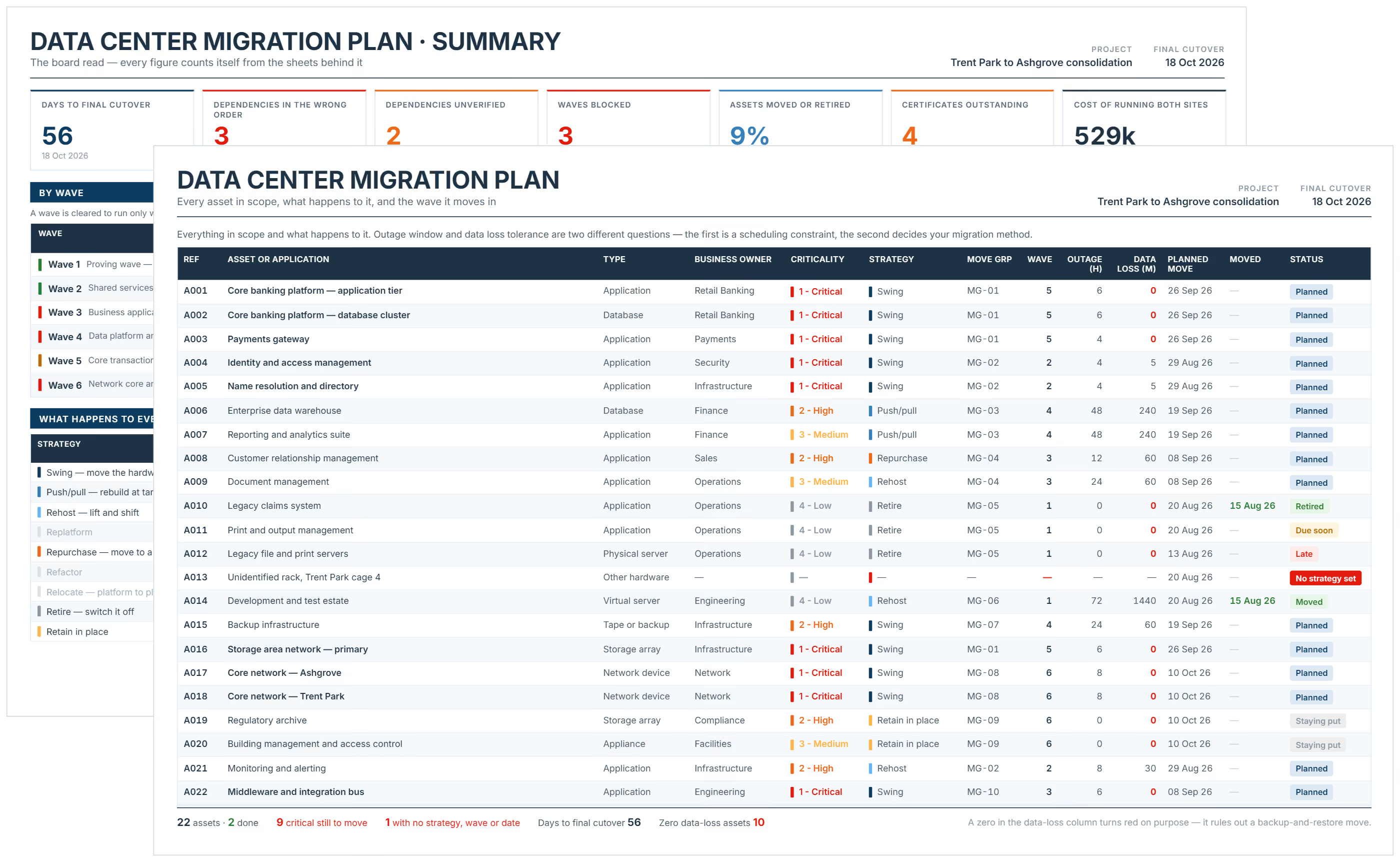

What is a Data Center Migration Project Plan?
A data center migration project plan outlines how infrastructure, applications, and data relocate from one facility to another. It documents discovery findings, migration strategy, execution timelines, and rollback procedures.
The project plan for data center migration captures application dependencies that determine move sequencing. Network diagrams show connectivity requirements between systems. Testing protocols validate functionality before production cutover occurs.
Project teams use data center migration plans to coordinate hundreds of interdependent tasks across facility decommission and activation. The documented framework prevents the coordination failures that cause extended outages during infrastructure transitions, whether relocating to existing facilities or new data center construction projects.
What's Included in a Data Center Relocation Project Plan?
A proper data center relocation plan should have all the technical specifications and execution details needed for infrastructure migration. The plan ensures every dependency, sequence, and validation step gets documented before cutover.
Standard components in migration plan templates include:
- Discovery Results: Inventory tables for applications, servers, network devices, storage systems, and their documented interdependencies.
- Migration Strategy: Selection framework comparing physical move, virtual migration, cloud transition, or hybrid approaches.
- Dependency Maps: Diagram templates showing system connections, determining safe migration sequences that prevent breaking critical links.
- Wave Definitions: Grouping structure organizing infrastructure into logical batches based on dependencies and business criticality.
- Cutover Procedures: Step-by-step checklists for decommissioning old infrastructure, activating new systems, and redirecting traffic.
- Testing Protocols: Validation checklists confirming application functionality, network connectivity, data integrity, and performance after each wave.
- Rollback Plans: Documented reversion procedures for returning to original infrastructure if critical issues emerge during cutover.
- Communication Schedule: Stakeholder notification timeline, escalation paths, status update frequency, and go/no-go decision checkpoints.
💡 Pro Tip: Map your Active Directory and ServiceNow dependencies first, before touching application discovery. These enterprise systems touch everything. Missing one dependency chain cascades failures across your entire migration.
How to Use This Data Center Migration Project Plan Template in Excel
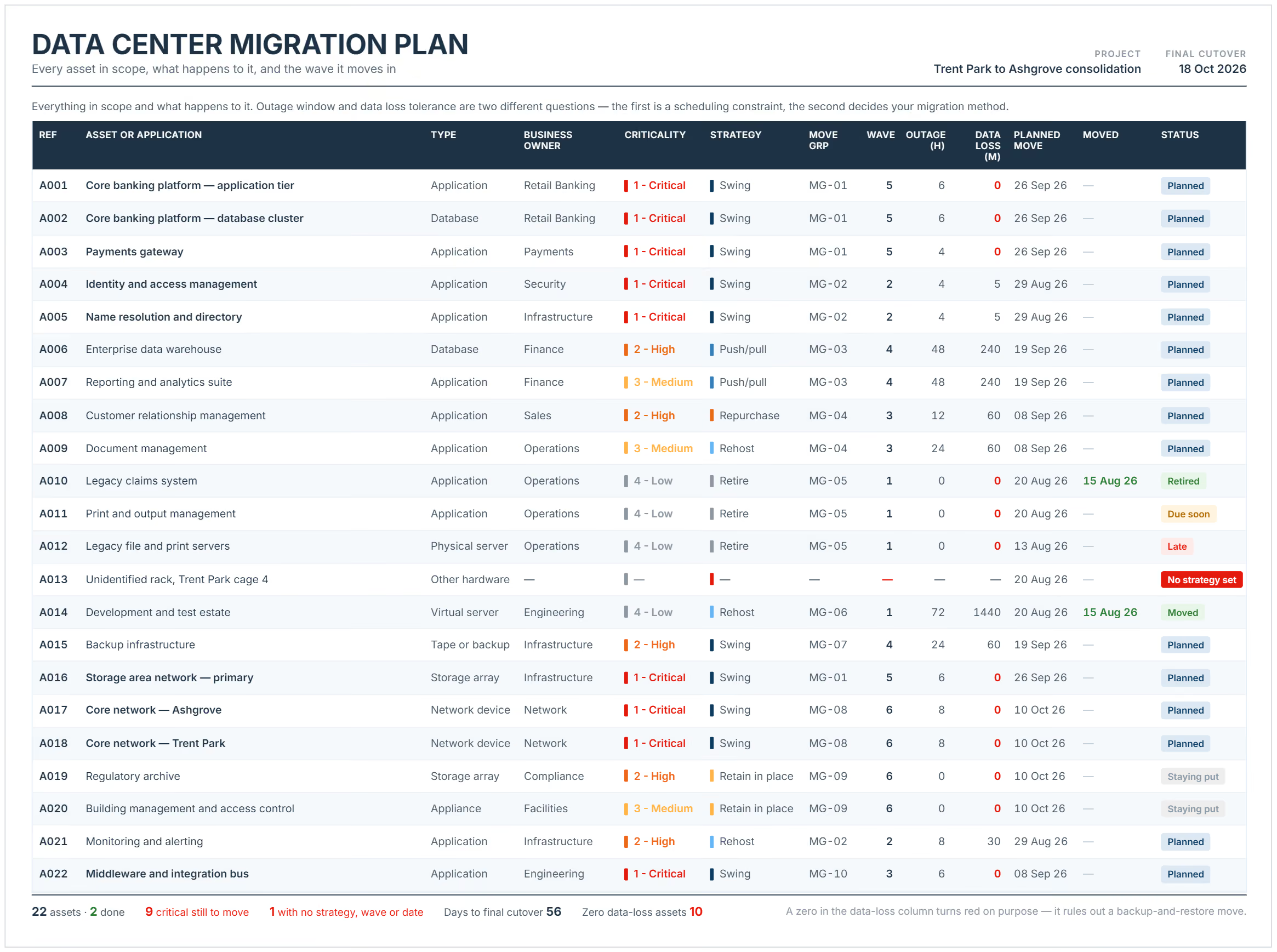
Fill in Setup, including the contract dates for the site you are leaving, then inventory everything and decide what does not move. The workbook sequences the move into waves, times the cutover night step by step, and works out whether you can actually exit the old site in time.
A worked example runs through every sheet, and the banner clears once you type your own project name on Setup.
- Enter the sites you are moving out of and into, the first wave date, the final cutover and the hypercare period on Setup
- Complete the contract block at the bottom of Setup: fallback period, notice period, renewal date and the monthly cost of both sites
- Inventory every asset and application, giving each one a strategy, since retire is the cheapest outcome on the programme and the only one that shrinks everything downstream
- Record each dependency with how it was found and who verified it, because an unverified dependency stays red until somebody signs for it
- Build the waves, keeping the early ones small and dull so the process is proven on something that does not matter
- Check the wave sheet for dependencies moving before the thing they need, which is the failure nobody sees until the night
- Write the cutover runbook with a success criterion and a duration against every step, and mark the step that is the point of no return
- Record sanitization on Decommission as three separate facts, then work through Exit & Close-out to close the old site
Read the Days between the two figure on Exit & Close-out. A negative number means the contract will not wait for your fallback period, so the exit decision has to be taken before you know whether you still need the old site.
Why Project Plans for Data Center Migration Matter
Infrastructure migration plans are important because moving production systems without systematic project planning creates the multi-day outages that destroy business operations. Documented migration frameworks prevent the dependency oversights and timing conflicts that turn planned maintenance into crisis response.
Planning delivers these protection mechanisms:
- Prevents downtime catastrophes: Dependency mapping identifies hidden connections that cause cascading failures during uncoordinated system moves.
- Eliminates data loss incidents: Cutover procedures ensure replication completes and backups verify before old infrastructure powers down.
- Reveals infrastructure dependencies: Discovery documentation exposes undocumented application connections that only surface when systems fail after migration.
- Controls budget catastrophe: Wave sequencing prevents scope creep when teams discover missed systems during production windows.
- Accelerates regulatory approval: Audit trails with systematic risk assessment and testing validation satisfy compliance requirements blocking improvised migrations.
- Improves team coordination: Communication schedules synchronize facility teams, network engineers, application owners, and business units across migration windows.
- Enables reliable forecasting: Documented wave timelines and resource requirements support accurate schedules that stakeholders trust for capacity planning.
Teams executing data center migrations without documented plans experience longer downtime than planned windows. The difference lies in anticipation rather than reaction when technical complications arise.
How to Develop Data Center Migration Planning Document
Developing data center migration plans requires systematic discovery documenting current infrastructure before designing future state architecture. Teams gather dependency data, define migration waves, sequence cutover activities, and validate testing protocols.
Build comprehensive migration documentation through these steps:
- Conduct discovery assessments: Inventory every server, application, network device, storage array, and security appliance currently running in the existing data center.
- Document application dependencies: Map which systems connect to what services, identifying database relationships, API integrations, authentication dependencies, and network requirements.
- Analyze migration options: Evaluate physical infrastructure moves versus virtual machine migrations versus cloud transitions, selecting approaches based on risk and business requirements.
- Design wave sequences: Group interdependent systems into logical batches that migrate together, ordering waves from lowest to highest business criticality.
- Develop cutover procedures: Write step-by-step instructions for decommissioning old systems, activating new infrastructure, redirecting network traffic, and validating functionality.
- Design rollback plans: Document procedures for reverting to the original data center if critical issues emerge, including data restoration and traffic redirection steps.
- Establish testing protocols: Define validation checkpoints confirming application functionality, data integrity, network connectivity, and performance benchmarks after each wave migrates.
- Create communication schedules: Define stakeholder notification timing, status update frequency, escalation procedures, and go/no-go decision checkpoints spanning the entire migration timeline.
💡 Pro Tip: Schedule your production cutover for Friday night, then immediately execute rollback Sunday morning if anything looks suspicious. This gives you the weekend to fix issues before Monday business opens, instead of burning the weekend on rollback and starting the week with a crisis.
When to Deploy a Data Center Move Project Plan Template
Migration planning templates deploy whenever infrastructure transitions require systematic coordination across technical dependencies and business constraints. Structured documentation becomes essential during specific phases where planning gaps create the outage risks that destroy migration success.
Deploy migration templates during these critical moments:
- Feasibility assessment: Initial planning when executives evaluate migration options, compare costs, and determine business case for infrastructure transitions.
- Project planning phase: Detailed design when teams inventory infrastructure, map dependencies, define waves, and establish transition timelines.
- Vendor selection: RFP preparation requiring documented scope, technical requirements, and execution approach for migration service provider bids.
- Executive approval: Funding requests requiring risk assessments, cost estimates, timeline projections, and contingency plans for capital investment.
- Pre-migration preparation: Detailed planning when teams finalize wave sequences, develop cutover procedures, establish testing protocols, and coordinate schedules.
- Migration execution: Active coordination when infrastructure moves occur, teams reference procedures, and stakeholders receive status updates.
- Testing validation: Post-migration verification confirming applications function correctly, data integrity remains intact, and performance meets requirements.
- Post-migration optimization: Performance tuning after infrastructure stabilizes, documenting lessons learned, and improving processes for future transitions.
💡 Pro Tip: Lock your Excel wave tracking tabs with passwords after stakeholders sign off. Teams will try editing migration sequences mid-execution when problems emerge, but changing dependencies during live cutover windows creates the cascading failures that turn small issues into total disasters.
Best Practices for Data Center Migration Execution
Successful infrastructure migrations require disciplined execution following proven practices that prevent the common failures destroying facility transition projects. Experienced migration teams apply these principles systematically across discovery, planning, execution, and validation phases.
Essential practices protecting data center migration success:
☑️ Discover infrastructure twice: Run discovery tools initially, then validate findings manually, catching orphaned systems that automated scanning misses.
☑️ Test rollback procedures first: Execute full rollback during pilot wave before production, confirming recovery works when needed.
☑️ Pilot non-critical applications: Select low-risk systems for initial waves, refining procedures before migrating business-critical infrastructure.
☑️ Maintain dual operations briefly: Run parallel systems after cutover, validating functionality before decommissioning old infrastructure prevents mistakes.
☑️ Update documentation constantly: Record actual timing, discovered dependencies, and modifications immediately, creating accurate references for subsequent waves.
☑️ Schedule conservative windows: Plan migrations assuming everything takes twice as long, providing buffer for unexpected issues during transitions.
☑️ Communicate status relentlessly: Update stakeholders at defined intervals whether status changes or not, preventing information vacuum during execution.
☑️ Document lessons obsessively: Capture what worked and failed after each wave, improving processes for remaining migrations and future transitions.
Problems with Generic Data Center Project Migration Plans in XLS, PPT, and Word
Generic data center migration project plan in Excel spreadsheets and Word documents creates the documentation gaps and coordination failures that destroy infrastructure transitions. Static formats can't handle the complexity and constant change that characterize multi-wave facility migrations.
Typical problems undermining migration success:
⚠️ Outdated dependency mapping: Spreadsheet diagrams become obsolete as environments change, missing new dependencies that cause post-migration failures.
⚠️ Disconnected task tracking: Wave steps live separately from dependency maps and rollback procedures, forcing document reconciliation during cutover windows.
⚠️ Version control chaos: Teams maintain separate Excel files with conflicting wave sequences, dependency data, and cutover timing nobody reconciles.
⚠️ Inadequate rollback procedures: Generic Word instructions lack specific steps and timing required for rapid recovery during critical migration issues.
⚠️ Missing validation criteria: Testing protocols document what to test but omit pass/fail criteria, leaving teams guessing about application functionality.
⚠️ Poor communication coordination: Static stakeholder lists become outdated, causing notification failures that leave business units unaware of migration status.
⚠️ Insufficient lessons capture: Word documents recording issues get filed away after completion, losing institutional knowledge that improves future transitions.
Related Articles and Templates
.avif)
Written by
Doug Vincent
Doug Vincent is the co-founder and CEO of Mastt, the AI capital-project management platform used by governments, Fortune 500 companies, and consultancies across APAC, North America, and MENA. Before founding Mastt in 2019, he spent a decade at RPS delivering more than $2 billion in capital works, including the $2.1B Defence Navy Infrastructure program, and holds a CPSPM certification with the AIPM. He contributes content and speaks on AI in capital project delivery at Mastt.

Use this data center migration project plan to prevent downtime and control relocation costs. Map dependencies, sequence moves, and validate success before cutover.

Top Performers Don’t Guess. They Deliver.
Cut the stress of showing up unprepared
Start for FreeTrusted by the bold, the brave, and the brilliant to deliver the future