.avif)
Post author:
Doug Vincent

Construction cost estimate classes explain accuracy levels from ROM to detailed pricing. Learn each class and choose the right method for your project.
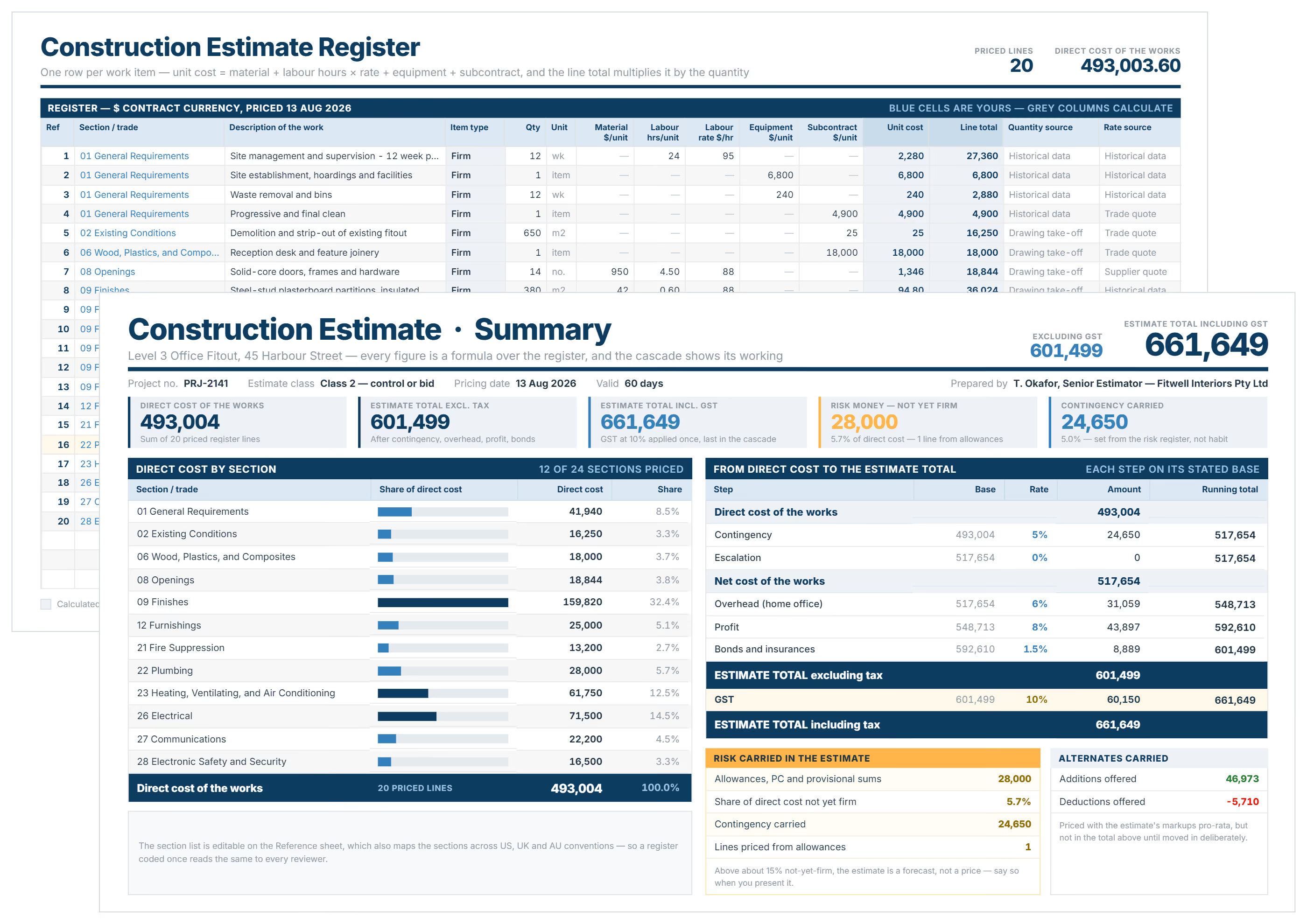
Use this construction estimate template to price projects accurately, win more bids, and control costs. Create professional estimates in Excel or Word format instantly.

Construction cost estimate classes are a standard system the industry uses to group estimates by accuracy and by how far the project has progressed. Each class reflects the project’s definition, level of detail, and the amount of data available to build the estimate.
This guide explains what each class means, how accuracy changes as the project grows, and how the classes fit into construction estimating. You’ll also learn when to use each class and how the numbers are built.
Cost estimate classes are the standard way construction teams group estimates based on accuracy and how much of the project is defined. Each class reflects the level of design detail, scope clarity, and cost data available at that point. These classes give owners, contractors, and estimators a shared reference point during construction estimating.
A cost estimate class can range from a high-level figure built on limited information to detailed pricing backed by drawings and quantity takeoffs. The class indicates how reliable the estimate is for decisions in each stage of the project. As the project definition grows, the estimate moves up to the next class and accuracy improves.
Classes also help standardize communication across teams. For instance, a Class 5 estimate might rely on basic scope and capacity, while a Class 2 estimate draws from firm quantities and vendor quotes. By naming the class, the team sets realistic expectations and avoids treating early numbers as final costs.
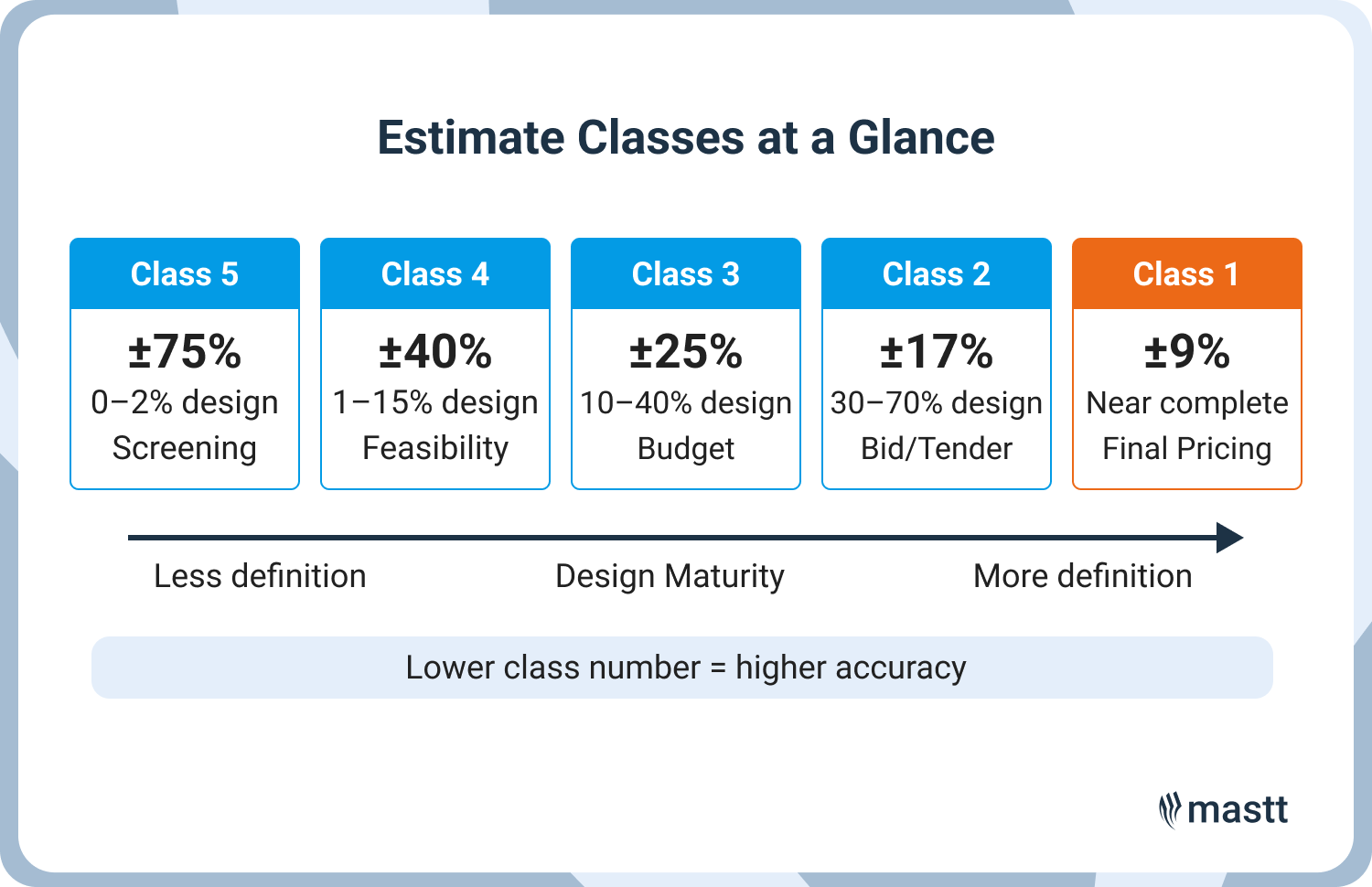
The five classes of estimates are the industry’s way of organizing project costs by design maturity. Each class reflects a different level of accuracy and scope detail.
Here are the five classes of estimates and how they work:
Class 5 cost estimates give a rough order of magnitude when only a small amount of project information is available. They help teams screen ideas, compare broad options, and decide if a project is worth studying further. Accuracy is wide because the scope is still conceptual.
A Class 5 estimate is based on roughly 0% to 2% design maturity. The scope usually includes basic capacity, location, and a high-level description of the work. At this stage, there are no detailed construction drawings or quantity takeoffs. The numbers reflect broad assumptions, not measured quantities.
Accuracy for Class 5 typically ranges from -50% to +100%. The wide band comes from limited project definition and the heavy reliance on historical cost data. Costs can shift quickly once real quantities, site conditions, and system requirements become known. The purpose here is early screening, not precise budgeting.
Estimators lean on parametric models, capacity factors, cost indices, and past project data. They may use rules of thumb, similar project benchmarks, or early market indicators. The goal is to produce a fast, directional estimate without deep engineering work.
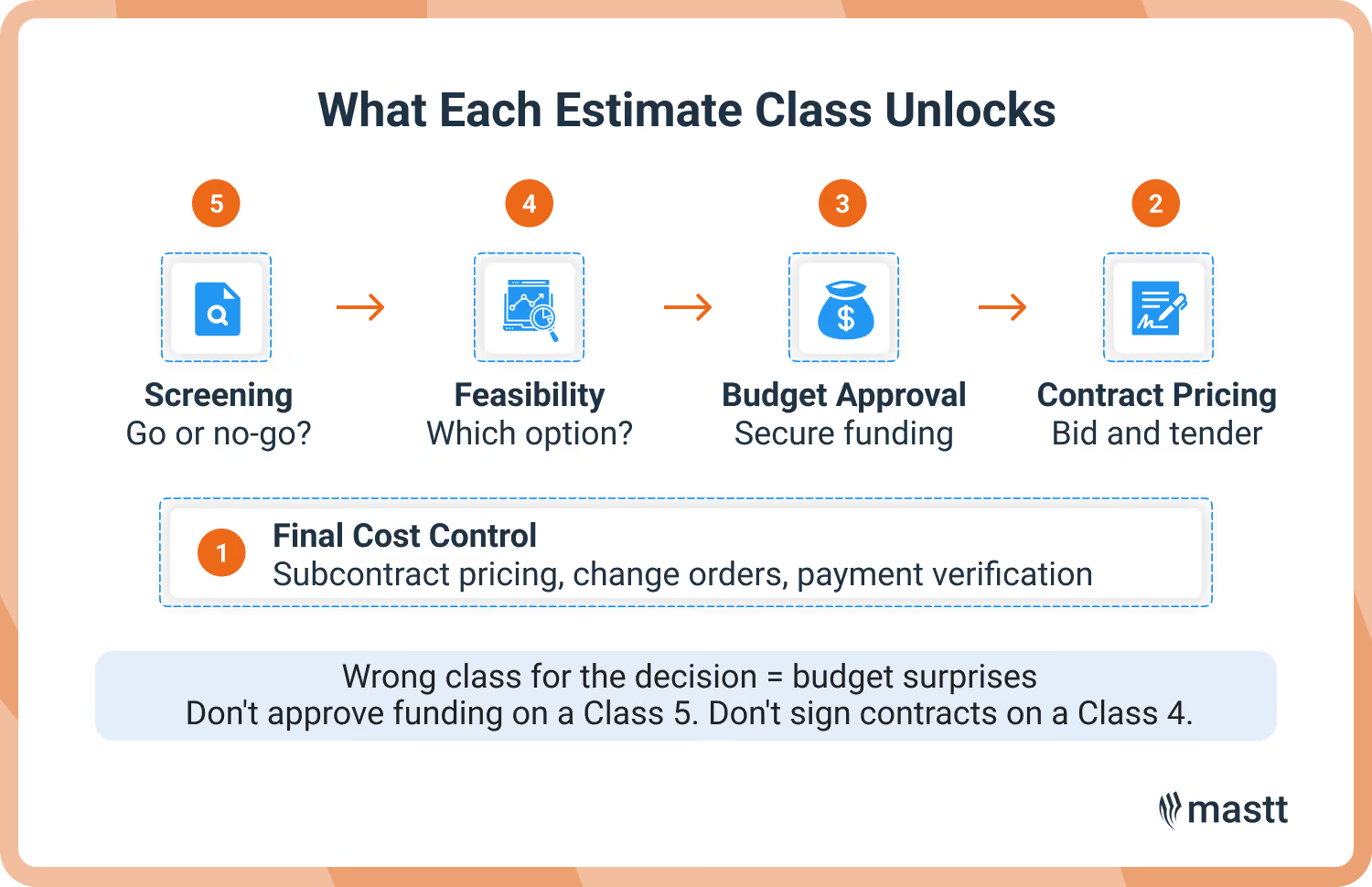
Teams use Class 5 estimates for conceptual planning, early feasibility checks, and go or no-go decisions. Owners often need this level to compare options or test if a project is financially viable before investing in design. Contractors may also use it internally to gauge whether a potential job is worth pursuing.
This estimate helps set realistic expectations during the earliest stage of construction estimating. It gives decision makers enough information to move forward without committing to detailed engineering or large planning costs.
💡Pro Tip: When creating a Class 5 estimate, always record every assumption in one short note. These early assumptions often drive major cost shifts later, and having them documented makes it easier to explain changes as the estimate moves into higher classes.
Class 4 cost estimates help teams test feasibility and refine the early scope once more project details come into focus. They offer better accuracy than Class 5 because the design has started to take shape, and major project components are identified.
A Class 4 estimate is based on roughly 1% to 15% design maturity. The scope usually includes early process diagrams, concept layouts, and preliminary equipment lists. These inputs give estimators a clearer sense of project scale, layout, and system requirements.
Accuracy for Class 4 typically ranges from -30% to +50%. The improvement comes from having more defined scope elements, though many quantities remain approximate. Accuracy still swings because layout, system integration, and material choices can shift as design progresses.
Estimators rely on preliminary drawings, early engineering notes, major equipment pricing, and updated historical data. They use factoring and proportioning methods to estimate supporting systems. This level often includes the first pass at indirect costs tied to project type and site conditions.
Teams use Class 4 estimates to compare design options, test cost feasibility, and narrow down project strategies. Owners often require this level to decide if the project is economically sound before moving into deeper design. It is also useful for evaluating alternatives like layout changes or system upgrades.
Class 4 estimates give teams a clearer cost picture without requiring full engineering development. They help project managers steer early decisions with numbers that reflect real scope changes, not just broad assumptions.
💡Pro Tip: Before finalizing a Class 4 estimate, confirm that all major equipment and system choices are listed, even if they are placeholders. Missing a single large item can distort feasibility decisions and push the project down the wrong path.
Class 3 cost estimates serve as the budget foundation for most projects. They give owners enough detail to approve funding and let project teams begin early project planning with a reasonable level of cost certainty. Accuracy improves because the design has progressed far enough for measurable quantities and clearer scope boundaries.
A Class 3 estimate is based on roughly 10% to 40% design maturity. At this stage, basic engineering design is underway, and key project elements such as layouts, system arrangements, and early specifications are available. Estimators can begin using real quantities instead of broad assumptions.
Accuracy for Class 3 estimates typically ranges from -20% to +30%. This improvement comes from having enough drawings and data to create a structured quantity takeoff. Accuracy still varies because many details, finishes, and system choices remain flexible as design progresses.
Inputs usually include plot plans, basic engineering drawings, equipment lists, early Piping and Instrumentation Diagram information, and preliminary material takeoffs. Estimators combine these with updated labor rates, market pricing, and known site conditions. Contingencies are more refined because the risk areas are easier to identify.
Teams use Class 3 estimates for budget approval, early procurement planning, and preliminary scheduling. Owners often rely on this level to secure internal funding or align with financial partners. Project managers use it to set early cost baselines and prepare for detailed design development.
Class 3 estimates give teams enough certainty to move forward while still allowing room for design changes. They form the turning point where planning shifts from concept to structured project development.
💡 Pro Tip: Before locking in a Class 3 budget, run a quick sensitivity check on the largest cost drivers. Small changes in structural quantities, major equipment, or labor assumptions can shift the final budget more than expected at this stage.

Class 2 cost estimates provide the level of detail needed for construction bidding and contract-level pricing. They rely on a strong design package, firm quantities, and real vendor data. Accuracy tightens because most of the project definition is established.
A Class 2 estimate is based on roughly 30% to 70% design maturity. Drawings, material lists, and equipment specifications are developed enough to support detailed pricing. Estimators can rely on measured quantities and documented assumptions instead of broad factors.
Accuracy for Class 2 estimates typically ranges from -15% to +20%. The improvement comes from clear scope definition and more predictable material, labor, and equipment costs. Changes still occur because some design details may change before construction starts.
Inputs include detailed quantity takeoffs, vendor quotes, subcontractor pricing, updated labor rates, and complete equipment data. Estimators also account for indirect costs such as overhead, markups, supervision, temporary facilities, and administrative support. Contingency becomes more focused because major risks are easier to identify.
Teams use Class 2 estimates to set bid pricing, negotiate construction contracts, and establish the project’s commercial baseline. Owners rely on this level to evaluate contractor proposals with confidence. Contractors use it to plan labor needs, secure vendor commitments, and manage margin exposure.
Class 2 estimates give project teams a reliable view of the expected cost before final design is complete. They ensure that contract pricing reflects real quantities and current market conditions instead of early assumptions.
💡 Pro Tip: When preparing or reviewing a Class 2 estimate, always verify that every major subcontract package has updated vendor quotes. Missing or expired quotes can distort the entire bid and lead to margin losses once construction begins.
Class 1 cost estimates offer the highest level of detail and reliability. They rely on nearly complete design information and firm quantities, which makes them suitable for subcontract pricing and for reviewing change orders. Accuracy is tight because the scope is fully defined.
A Class 1 estimate comes from design work that is almost finished. Drawings, specifications, and material lists reflect the final scope, which allows estimators to measure quantities instead of relying on assumptions. The cost structure matches what will be built in the field.
Accuracy usually falls between -3% and +15%. The narrow range comes from established quantities and clear system information. Costs can still move due to labor productivity, market pricing, or complex site conditions, but the major variables are already known.
Inputs include final drawings, detailed takeoffs, current vendor quotes, updated labor pricing, and verified indirect costs. Estimators also account for jobsite constraints such as access, staging, and sequencing because these factors influence real installation costs. Contingency is specific and tied to identified risks.
Teams use Class 1 estimates to confirm subcontract values, review change orders, and verify pricing adjustments. Owners and contractors rely on this level to ensure that cost changes reflect real scope changes. It also helps finalize budgets before construction starts.
Class 1 estimates provide the level of accuracy needed for detailed commercial decisions because they mirror the actual work that will take place. They become the most dependable source when validating final pricing or negotiating adjustments.
💡Pro Tip: When reviewing a Class 1 change order, ask for the updated quantity takeoff before looking at the proposed cost. Quantity changes reveal the true scope impact and prevent inflated pricing from slipping through.
The cost estimate classification system is essential because it sets clear expectations about how accurate an estimate is and what decisions it can support. They also keep everyone aligned when project information is still changing.
Here are the reasons why estimate classes make a difference in real construction projects:
Construction cost estimate classes add structure to a process that can become vague when information shifts or design changes. They help project teams align cost certainty with project definition and current cost data.
The most common method across all classes is quantity-based estimating, but it only becomes reliable once enough design information is available. The estimation technique changes as the project definition improves, which is why each class relies on different tools and data.
✅ Parametric methods: Estimators use cost indices, historical data, and scaling factors to build early figures when the scope is still high-level.
✅ Factoring methods: Teams apply ratios to estimate supporting systems based on the cost of major components when details are limited.
✅ Quantity-based estimating: Estimators measure real quantities from drawings and apply unit costs as the design matures, which makes this method the primary approach in later classes.
✅ Vendor quotes: Pricing becomes more reliable when suppliers and subcontractors provide updated quotes tied to actual specifications.
✅ Risk allowances: Contingency is adjusted based on scope maturity, known risks, and the level of definition in the detailed estimate package.
A construction cost calculator helps apply these estimating methods faster and keeps inputs consistent.
💡Pro Tip: Before selecting an estimating method, check the quality of the design documents. A quick look at drawings and specs will tell you whether the estimate should rely on parametric factors or detailed takeoffs.

Each construction cost estimating class depends on clear ownership, and the estimator carries the primary responsibility for matching the estimate to the project’s maturity. Other roles support this work by supplying scope, data, and field insight.
These responsibilities work best when information moves quickly between teams. When one group sends late updates or incomplete data, the estimate often lands in the wrong class or reflects outdated assumptions.
Typical oversights with estimate classes usually come from misjudging design maturity or using the wrong level of detail for the decision at hand. These issues cause unrealistic budgets, missed project risks, and confusion between teams.
💡Pro Tip: Before approving any estimate class, ask for the three items that matter most: current drawings, updated quantities, and the basis of estimate. If those don’t align, the class is wrong, no matter what the spreadsheet says.
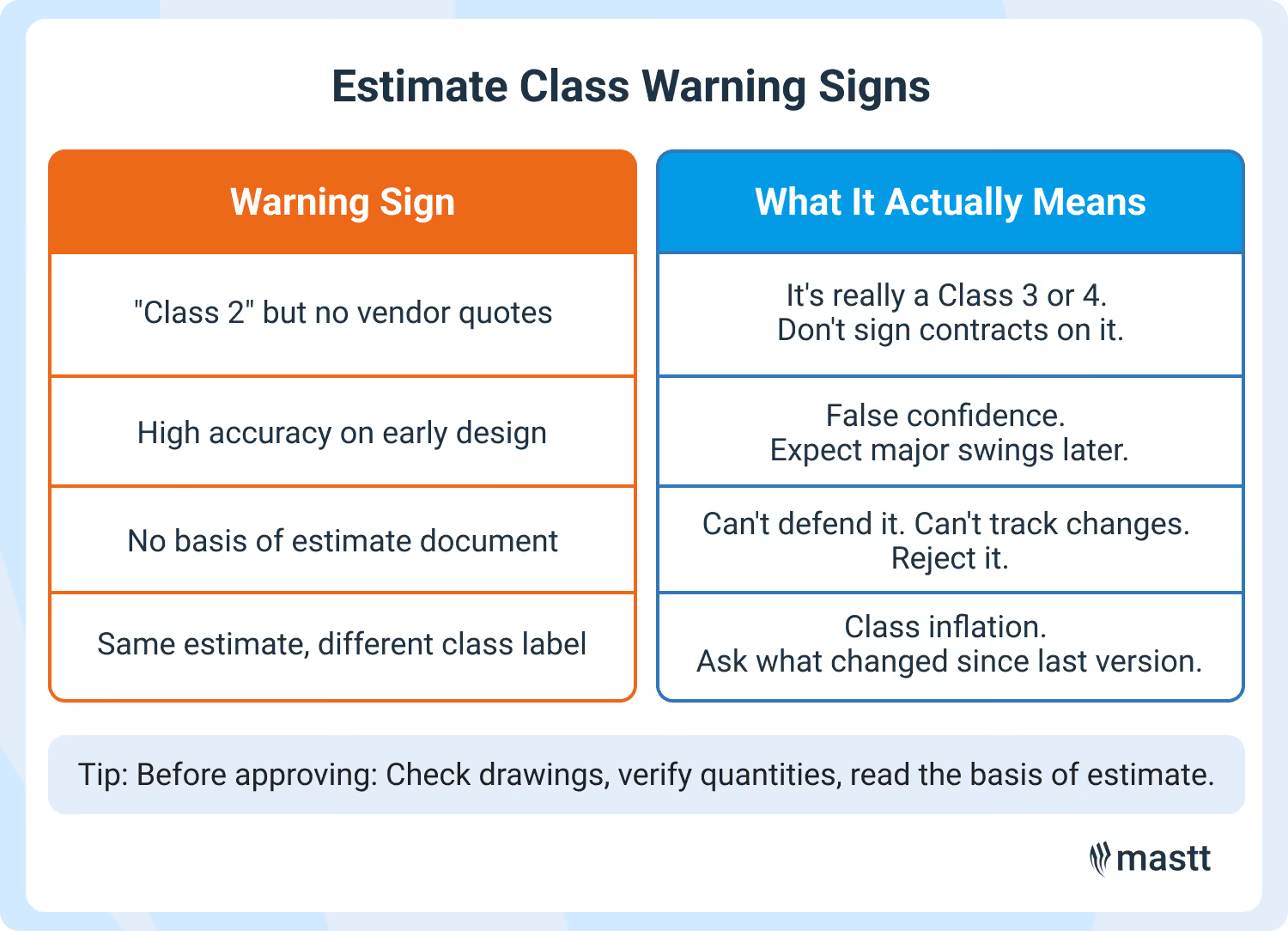
Getting cost estimate classes right helps teams set realistic budgets and avoid confusion as the project evolves. The goal is to match the estimate to the real level of design maturity, not to force it into a class that looks more precise.
These best practices keep the estimate grounded in accurate, defensible information:
☑️ Match the class: Check drawings, specs, and scope notes to confirm the estimate aligns with actual project definition.
☑️ Set scope early: Define inclusions and exclusions so the estimate reflects the true workload.
☑️ Use the right method: Apply parametric or factoring methods early and switch to quantity-based methods as design develops.
☑️ Show accuracy ranges: Keep the expected range visible so early estimates are not treated as final numbers.
☑️ Refresh cost data: Update labor rates, unit pricing, and vendor quotes at every class change.
☑️ Write a clear Basis of Estimate: Document assumptions and data sources so the estimate is easy to defend later.
☑️ Follow project gates: Move between classes only when design maturity supports the shift.
☑️ Avoid skipping levels: Each class captures decisions that become costly to revisit if missed.
☑️ Hold cross-discipline checks: Confirm scope, quantities, and design status with engineering and procurement.
☑️ Track quantity changes: Recalculate cost impacts instead of relying on broad adjustment factors.
💡Pro Tip: As your estimate moves into Class 3 and beyond, load it into Mastt as the live budget. Mastt links budgets, contracts, changes, and forecasts in one place so you can see how every design and scope change affects the final cost.
Digital tools enhance estimate accuracy by giving teams cleaner data, faster calculations, and consistent methods across estimate classes. Software also reduces manual errors that come from spreadsheets or scattered project files.
Here are the key ways modern platforms strengthen the estimating process:
Digital tools make estimating more predictable because they tie the numbers to verified inputs instead of outdated assumptions. With clearer data and automated checks, estimators can match each estimate class to actual design maturity with more confidence.
Once an estimate is adopted as the project budget, Mastt’s cost management software helps owners track commitments, changes, payments, and forecast final costs against that budget.
Construction cost estimate classes help teams move from early concepts to reliable numbers with far less confusion. When each class matches the real level of project definition, budgets stay grounded, and decisions improve. This gives everyone a clear sense of the accuracy they can expect at each stage.
Written by
Doug Vincent is the co-founder and CEO of Mastt, the AI capital-project management platform used by governments, Fortune 500 companies, and consultancies across APAC, North America, and MENA. Before founding Mastt in 2019, he spent a decade at RPS delivering more than $2 billion in capital works, including the $2.1B Defence Navy Infrastructure program, and holds a CPSPM certification with the AIPM. He contributes content and speaks on AI in capital project delivery at Mastt.


Contributions from

Cut the stress of showing up unprepared
Start for FreeTrusted by the bold, the brave, and the brilliant to deliver the future