

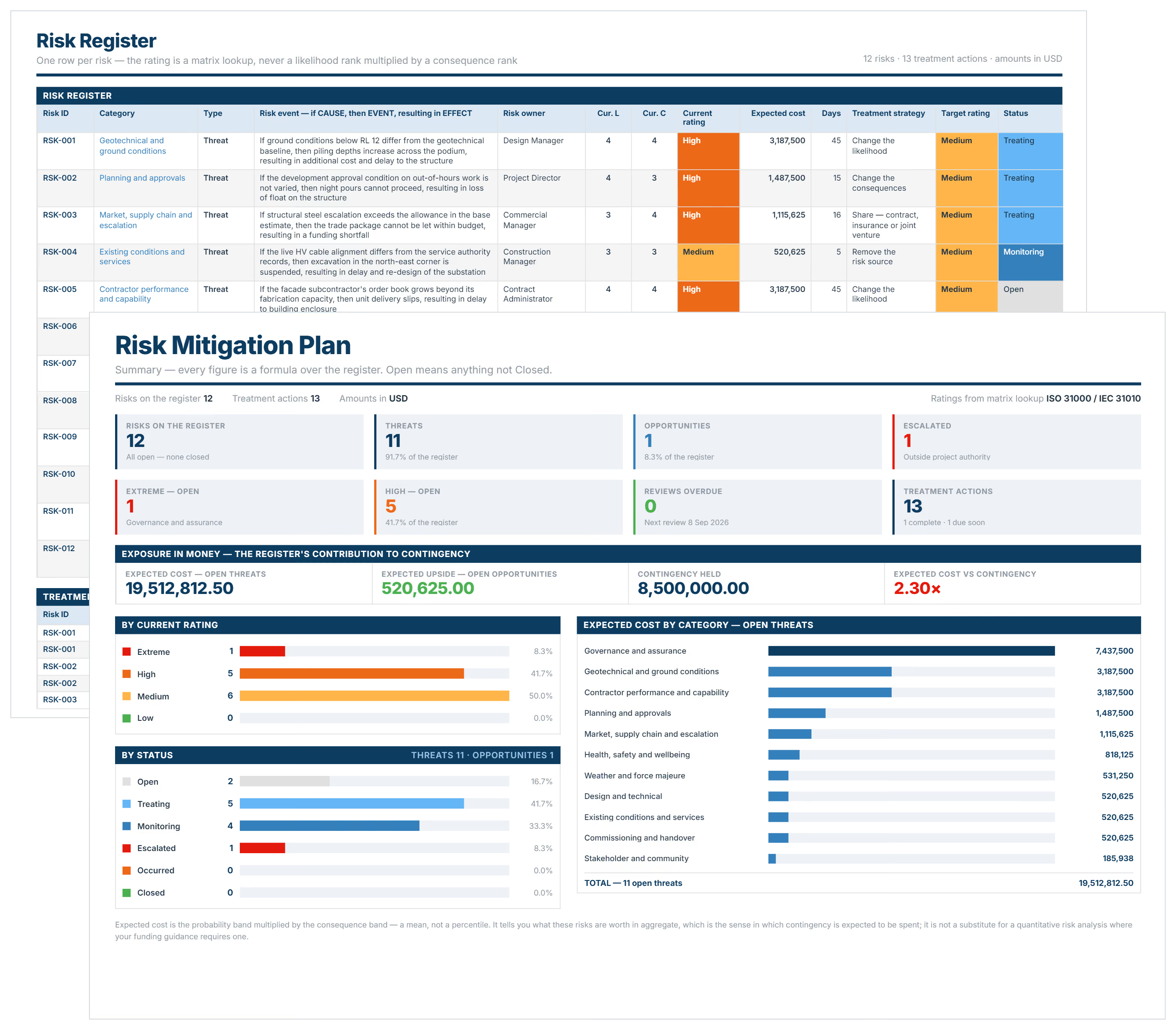

What is a Risk Mitigation Plan Template?
A risk mitigation plan template is a pre-formatted document providing structured sections for identifying threats, assessing severity, and documenting response strategies. It organizes risk information into consistent fields that project teams complete systematically.
A risk mitigation plan is the completed strategic document defining how organizations respond to identified threats. It documents specific actions reducing likelihood or minimizing impact of potential risks. The plan assigns risk owners, establishes monitoring procedures, and creates accountability throughout project delivery.
Templates standardize how teams capture risk data across projects. They include fields for risk descriptions, likelihood ratings, impact assessments, and mitigation actions. Project managers use templates to maintain consistent risk documentation supporting informed decision-making.
What's Included in Risk Assessment and Mitigation Plan Templates?
Risk assessment and mitigation plan templates contain essential fields capturing threat information and response strategies. Each component ensures teams document project risks systematically while maintaining clear accountability.
Standard inclusions in comprehensive templates are:
- Risk identification and breakdown: Unique ID, description, category, root cause analysis, and potential triggers organized through risk breakdown structures.
- Likelihood and impact ratings: Probability scales and severity levels determining priority using assessment matrices and heat maps.
- Risk score calculation: Combined likelihood and impact values creating prioritized rankings guiding resource allocation decisions.
- Mitigation strategy selection: Response approaches including avoidance, reduction, transfer, or acceptance aligned with organizational risk appetite.
- Action plan documentation: Specific preventive measures, corrective actions, implementation timelines, and required resources for each identified risk.
- Risk ownership assignment: Designated individuals accountable for monitoring potential threats and executing mitigation strategies.
- Monitoring and review procedures: Status tracking methods, review cycles, escalation triggers, and governance protocols throughout delivery.
- Residual risk assessment: Evaluation of remaining threat exposure after implementing primary mitigation actions.
- Communication and reporting: Stakeholder notification schedules, audit trails, and reporting formats maintaining transparency across the team.
💡 Pro Tip: Add a "trigger event" column documenting specific conditions signaling when risks materialize. This early warning system lets teams activate contingency plans before threats impact critical project milestones.
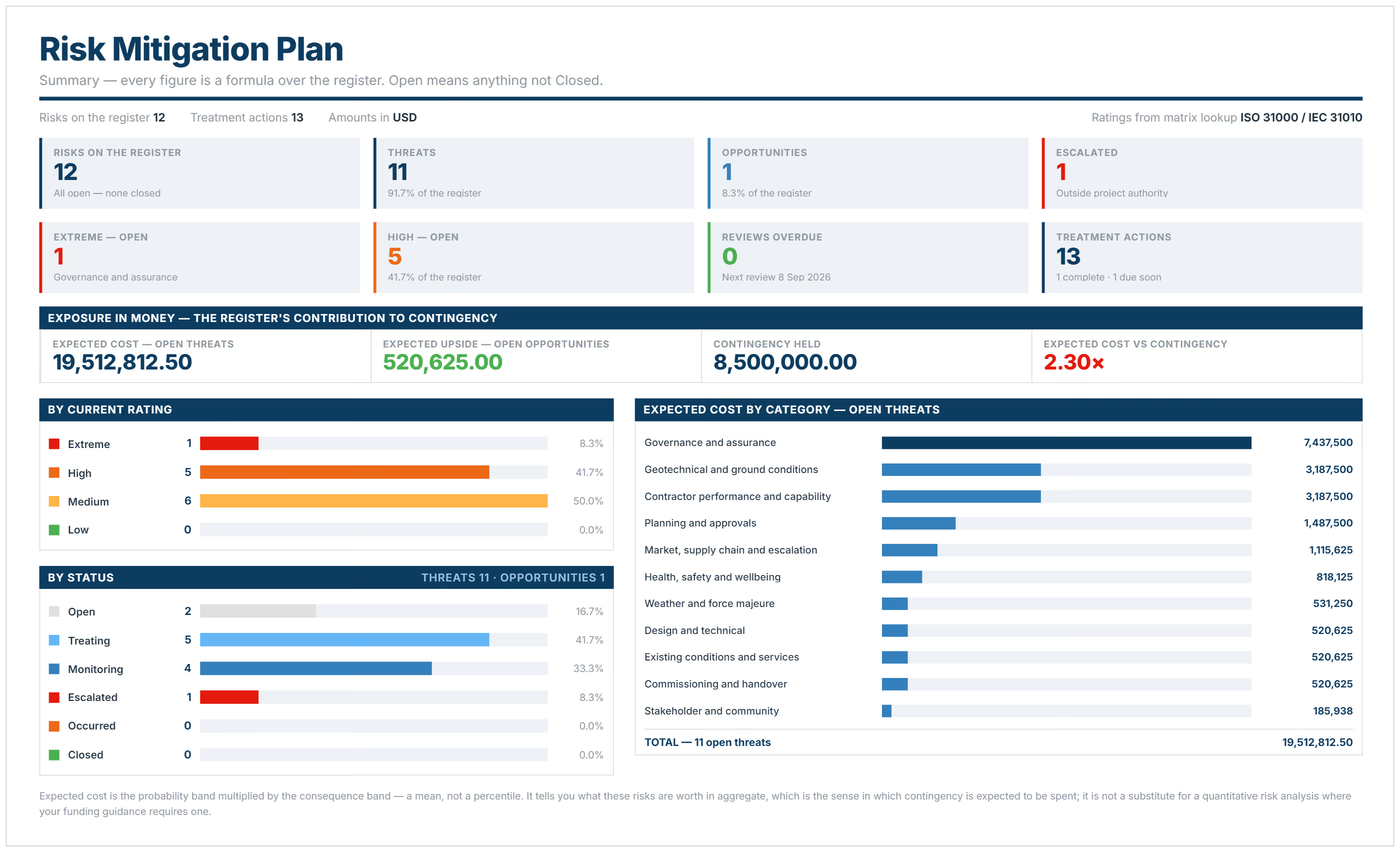
Why Use a Risk Mitigation Plan?
Risk mitigation plans transform reactive crisis management into proactive threat control. Documented frameworks prevent the coordination failures and oversights causing project delays and cost overruns.
Systematic risk planning delivers critical protections:
- Prevents costly surprises: Early threat identification enables teams to address potential risks when mitigation costs hours instead of major rework.
- Improves resource allocation: Understanding risk exposure and tolerance levels helps managers assign inspection resources strategically.
- Accelerates decision-making: Clear risk data supports objective choices about procurement strategies, contract terms, and uncertainty management approaches.
- Strengthens organizational resilience: Documented risk management demonstrates professional capability maintaining stakeholder trust when challenges emerge.
- Protects project budgets: Mitigation strategies prevent scope creep and unforeseen conditions from destroying profit margins.
- Reduces schedule delays: Anticipating procurement, design, and coordination risks enables realistic timelines with appropriate buffer.
- Creates audit trails: Complete risk documentation satisfies compliance requirements supporting dispute resolution when conflicts arise.
- Enables effective communication: Risk registers and heat maps facilitate clear updates to executives, boards, and funding bodies.
Teams managing risks systematically complete projects faster than those reacting to problems. The difference lies in anticipation rather than firefighting.
How to Develop and Use a Risk Mitigation Action Plan?
Creating effective mitigation action plans requires systematic threat identification before documenting response strategies. Begin by assembling project managers, subject matter experts, and team members who understand potential risks.
Follow these steps for comprehensive risk planning:
- Conduct brainstorming sessions: Gather diverse perspectives identifying threats across technical, financial, operational, and external risk categories.
- Document each identified risk: Record descriptions, root causes, potential impacts, and likelihood of occurrence systematically.
- Apply assessment matrices: Rate probability and severity using consistent scales aligned with PMI or ISO 31000 frameworks.
- Calculate risk scores: Multiply likelihood by impact, creating priority rankings focusing resources on high-exposure threats.
- Select mitigation strategies: Choose appropriate responses like avoidance, reduction, transfer through insurance, or acceptance with monitoring plans.
- Define specific actions: Document preventive measures, corrective procedures, required resources, and implementation timelines for each risk.
- Assign clear ownership: Designate individuals accountable for monitoring threats, executing mitigation actions, and reporting status changes.
- Establish review cycles: Schedule regular risk assessments updating threat status, evaluating mitigation effectiveness, and identifying emerging risks.
- Create contingency plans: Develop backup responses activating when primary strategies prove insufficient during project execution.
- Communicate systematically: Share risk status with stakeholders through scheduled updates, dashboard reports, and escalation notifications.
💡 Pro Tip: Involve frontline team members in risk identification sessions. They spot operational threats that executives miss, creating more comprehensive risk registers than leadership-only planning produces.
Who Should Use Project Risk Mitigation Plan Templates?
Risk mitigation plan templates serve professionals managing project uncertainty and organizational threats. Structured frameworks ensure teams systematically identify, assess, and control risks throughout delivery.
✅ Project Manager: Identify potential threats, prioritize mitigation actions, and maintain risk registers throughout project lifecycles.
✅ Risk Manager and Officer: Develop enterprise-wide frameworks, standardize assessment methodologies, and report risk exposure to executives.
✅ PMO Director: Implement consistent risk management across project portfolios, enabling comparative analysis and organizational learning.
✅ Business Analyst: Document operational risks, assess business continuity threats, and develop response strategies protecting strategic objectives.
✅ Operations Manager: Mitigate supply chain disruptions, process failures, and resource constraints threatening daily operations.
✅ Compliance Officer: Ensure regulatory adherence, document due diligence efforts, and maintain audit-ready risk documentation.
✅ Construction Project Manager: Address project risks including weather delays, subcontractor defaults, and unforeseen site conditions.
✅ IT Managers: Control technology risks, cybersecurity threats, and system integration challenges throughout implementation projects.
✅ Small Business Owners: Protect operations from financial, operational, and market risks without dedicated risk management departments.
When to Deploy Risk Assessment and Mitigation Plan Templates?
Use risk assessment and mitigation plan templates whenever uncertainty threatens project success or organizational objectives. Structured frameworks become essential during phases where uncontrolled threats create significant exposure.
Deploy templates during these critical moments:
- Project initiation: Establish baseline risk identification before detailed planning begins, capturing early threats to scope and feasibility.
- Project Planning and design phases: Document technical risks, coordination challenges, and resource constraints before major commitments occur.
- Budget development: Assess financial risks determining appropriate contingency allocations protecting against cost overruns.
- Procurement decisions: Evaluate vendor risks, supply chain vulnerabilities, and contract terms before executing binding agreements.
- Implementation kickoff: Review operational risks, update threat assessments, and activate monitoring procedures as work begins.
- Major milestone gates: Reassess risk landscape at phase transitions, validating mitigation effectiveness and identifying emerging threats.
- Change events: Update risk registers when scope changes, budget adjustments, or schedule modifications introduce new uncertainties.
- Crisis response: Deploy rapid risk assessment when unexpected events occur, documenting impacts and coordinating immediate responses.
💡 Pro Tip: Schedule monthly risk reviews separate from operational meetings. Dedicated sessions prevent urgent tasks from consuming time needed for proactive threat management.
Best Practices for Effective Project Management Risk Mitigation Planning
Effective risk mitigation planning requires disciplined execution beyond template completion. Experienced project teams apply these systematic approaches integrating risk management into daily operations.
☑️ Establish clear risk ownership from day one: Assign specific individuals to each risk before problems emerge, preventing accountability confusion during crises.
☑️ Link mitigation budgets to contingency allocations: Reserve 5-15% of budgets specifically for implementing documented strategies and managing inherent risks.
☑️ Create executive escalation thresholds: Define specific risk score levels and tolerance limits triggering automatic leadership notifications.
☑️ Integrate risks with schedules: Connect identified threats directly to affected tasks maintaining visibility across delivery phases.
☑️ Conduct post-mitigation effectiveness reviews: Evaluate whether implemented actions actually reduced threat exposure as predicted by assessments.
☑️ Maintain living risk registers: Update threat status weekly rather than quarterly ensuring data reflects current realities.
☑️ Document assumptions underlying assessments: Record what conditions must hold true for risk ratings to remain valid during execution.
☑️ Build cross-functional review teams: Include diverse perspectives from technical, commercial, and operational stakeholders during threat identification sessions.
☑️ Implement enterprise risk management governance: Establish oversight committees reviewing portfolio-level risks and approving major mitigation investments.
☑️ Archive lessons learned systematically: Capture which risks materialized, mitigation effectiveness, and improvement recommendations for future initiatives.
Challenges with Generic Risk Mitigation Plan Template Excel and Word Formats
Generic risk mitigation plan templates downloaded in Excel or Word create management gaps undermining threat control. Free online formats lack the customization and integration supporting effective risk management.
⚠️ Incomplete risk categories: Generic Excel templates miss industry-specific threats like regulatory changes, supply chain disruptions, or technical dependencies.
⚠️ Inconsistent assessment scales: Free Word templates provide vague likelihood definitions, causing different team members to rate identical risks differently.
⚠️ No calculation automation: Manual Excel formulas break easily when rows shift, producing incorrect risk scores guiding flawed prioritization.
⚠️ Version control chaos: Downloaded templates circulate via email, creating multiple conflicting versions with different risk data.
⚠️ Static format limitations: Word document templates require manual reformatting when adding risks, slowing updates during critical phases.
⚠️ Missing integration pathways: Standalone templates don't connect to project schedules, budgets, or change management systems where risks impact delivery.
⚠️ Inadequate monitoring guidance: Generic formats lack structured review procedures, causing teams to complete templates once then ignore them.
⚠️ Poor stakeholder reporting: Basic Excel layouts don't translate into executive-ready dashboards or board presentations without extensive rework.
⚠️ Limited collaboration support: Downloaded files prevent simultaneous editing, forcing sequential updates that delay risk communication during fast-moving situations.
💡 Pro Tip: If using Excel templates, protect formula cells with passwords and restrict editing to designated fields. This prevents accidental calculation errors that corrupt risk scoring across entire registers.
Prevent Project Failures with Mastt's AI
Every project faces threats to timeline, budget, and quality objectives. Success depends on systematic identification and mitigation preventing threats from escalating into failures.
Mastt's AI transforms generic templates into customized frameworks matching your specific risks and organizational requirements. Describe your context and AI generates comprehensive plans incorporating ISO 31000 principles, COSO enterprise risk management, and PMI best practices.
👉 Try Mastt's AI today and build risk mitigation plans that safeguard project success from day one.
.avif)
Written by
Doug Vincent
Doug Vincent is the co-founder and CEO of Mastt, the AI capital-project management platform used by governments, Fortune 500 companies, and consultancies across APAC, North America, and MENA. Before founding Mastt in 2019, he spent a decade at RPS delivering more than $2 billion in capital works, including the $2.1B Defence Navy Infrastructure program, and holds a CPSPM certification with the AIPM. He contributes content and speaks on AI in capital project delivery at Mastt.

Use this FREE risk mitigation plan template to identify threats before they derail projects. Document risks, assign owners, and implement response strategies that protect budgets and timelines.

Top Performers Don’t Guess. They Deliver.
Cut the stress of showing up unprepared
Start for FreeTrusted by the bold, the brave, and the brilliant to deliver the future