


Estimating methods in construction are the structured approaches teams use to forecast costs based on how much is known about the project. Each approach reflects the level of design detail, the clarity of the scope, and the reliability of the data available at that moment.
This guide explains how construction estimating works across each project stage. The article also highlights the advantages and drawbacks of the most common estimating techniques, showing when each method applies and how accuracy improves as the design develops.
8 Common Types of Estimation Techniques in Construction
The most common construction estimating methodologies are quantity takeoff, unit-cost estimating, and parametric modeling, and several others that support different phases of construction. This table shows when each technique is typically used and the level of accuracy it provides.
Each method plays a specific role in the estimation methods workflow, and the differences become clearer once you look at how they work in practice. What follows offers a closer look at how the type of estimation techniques guides cost planning from early design through construction.
1. Rough Order-of-Magnitude Construction Estimates
A rough order-of-magnitude estimate provides a very broad cost range based on minimal project information. It’s used early in feasibility when only basic details like size and building type are known, giving owners a first look at whether a project is financially realistic.
Estimators rely on simple comparisons to past projects and adjust those figures for location, complexity, or market shifts to shape a realistic project cost. This keeps the rough estimate grounded even when drawings or scope descriptions are not yet available.
This method is most valuable when paired with clear assumptions, because early decisions depend on understanding how limited information affects cost outcomes.
2. Analogous Construction Cost Estimating
Analogous estimating builds a cost forecast by comparing a planned project to completed projects with similar size, function, or complexity. It’s most useful during early design when the team has a concept, a few defining parameters, and enough context to identify a suitable benchmark project.
This approach relies on actual cost data from past work, which is then adjusted for differences in scope, market conditions, or project features. Analogous estimating offers a practical preliminary estimate without requiring construction drawings or measured quantities.
Analogous estimates can also guide site selection and project feasibility early on, since comparing similar completed projects highlights how location and conditions influence overall cost.
3. Parametric Construction Estimating Techniques
Using measurable project variables is what gives parametric estimating its consistency and reliability. This technique works well once the team knows key details such as floor area or unit count, but does not yet have the information needed for a full quantity takeoff.
This estimating strategy applies mathematical relationships drawn from historical data. Estimators link project attributes, such as room-count-to-cost patterns, giving them a fast way to test options and understand cost impacts with greater consistency than analogous methods.
Parametric estimates can also reveal cost efficiencies by showing where design adjustments, such as minor layout changes or unit reductions, yield the largest financial benefit with minimal impact on functionality.
4. Top-Down Cost Estimating for Projects
A top-down estimate starts with a total project budget based on benchmarks or cost targets, then allocates that amount across major components. This estimating process works best in early planning when the owner has a budget in mind, and the team needs to see whether the concept can realistically fit within that limit.
Instead of building the estimate from individual quantities, the estimator uses high-level metrics from comparable projects to set an overall cost structure. That breakdown is then broken into broad categories, such as structure, finishes, and MEP, to guide early design and scope decisions.
Top-down estimating can also reveal whether a project is fundamentally viable before significant design effort begins, helping teams avoid investing time in concepts that can’t meet the financial target.
5. Elemental and Unit-Based Cost Estimating
Cost forecasts improve once the design includes measurable details, making elemental and unit-based estimating a key part of estimating methods in construction. This estimating technique fits schematic and early design development because the team can price major building elements using unit rates tied to real project metrics.
Estimators build the forecast by applying cost rates to elements such as foundations, exterior walls, or mechanical systems. These rates come from historical data, cost databases, or recent bids, allowing the estimate to reflect design intent and current market pricing without a full quantity takeoff.
Elemental and unit-based estimating also supports design coordination by showing which systems carry the highest cost exposure, encouraging discussions around simplification or refinement.
6. Quantity Take-Off (QTO) and Detailed Cost Estimating
A detailed estimate is based on measuring the actual quantities shown in the construction documents, which is the basis of quantity takeoff and detailed estimating. This estimating strategy becomes essential once drawings and specifications are developed enough for the estimator to quantify materials, labor, and equipment with confidence.
The process centers on a systematic takeoff of items such as concrete volume, wall area, or ductwork length, followed by assigning unit rates based on recent bids, market pricing, or internal cost databases. Because the estimate uses documented quantities instead of assumptions, the method provides the accuracy required for bidding and budgeting.
Quantity-based estimates also strengthen subcontractor engagement because detailed quantities give trades a clearer scope foundation, improving the accuracy of their pricing and coverage.
7. Bottom-Up Cost Estimating for Work Packages
Cost clarity improves once a project can be divided into specific tasks, which is where the bottom-up estimating technique becomes effective. This method works best in later design and preconstruction because each work package has enough definition for the estimator to measure quantities and assign labor, material, and equipment costs.
The estimate is built by reviewing the work breakdown structure, quantifying each task, and applying unit rates tied to production data or subcontractor pricing. Adding these pieces together creates a detailed total that reflects how the project will actually be built in the field.
Because bottom-up estimates follow real construction workflows, this method also highlights labor needs and material timing early, giving teams better insight into potential bottlenecks.
8. Three-Point and Range-Based Cost Estimating
Some early budgets benefit from a wider view of uncertainty, and three-point and range-based estimating offer a structured way to express that variability. This technique introduces a range rather than a single value by considering best-case, most likely, and worst-case outcomes tied to the project’s key cost drivers.
The estimator builds this range by identifying the variables with the most uncertainty and assigning reasonable optimistic, likely, and pessimistic values. These scenarios are then compared or averaged to show the budget’s sensitivity to shifts in scope, design decisions, or market conditions.
Three-point analysis also strengthens contingency planning by showing how much potential variation sits behind each cost driver, leading to more transparent and defensible allowances.

Why is it Important to use the Right Estimating Method?
Using the correct construction cost estimation method matters because each one fits a particular level of design detail. When the technique aligns with the available information, the estimate reflects real project conditions.
Here are a few practical reasons why aligning the method with the available detail improves construction estimating outcomes:
- Budgets reflect the actual scope: Cost expectations rise in step with how much scope is actually defined.
- Cleaner assumptions: Estimators base inputs on verified quantities or known design parameters instead of guesswork.
- Fewer scope surprises: The team avoids using detailed methods until plans are ready, reducing rework.
- Better coordination with procurement: Schedules and material planning track more reliably when estimates mirror design maturity.
Choosing the proper construction estimating method also leads to clearer conversations with project owners. It shows exactly what the team knows at that design phase and avoids giving a false sense of accuracy too early.
How to Choose Which Construction Cost Estimating Method to Use
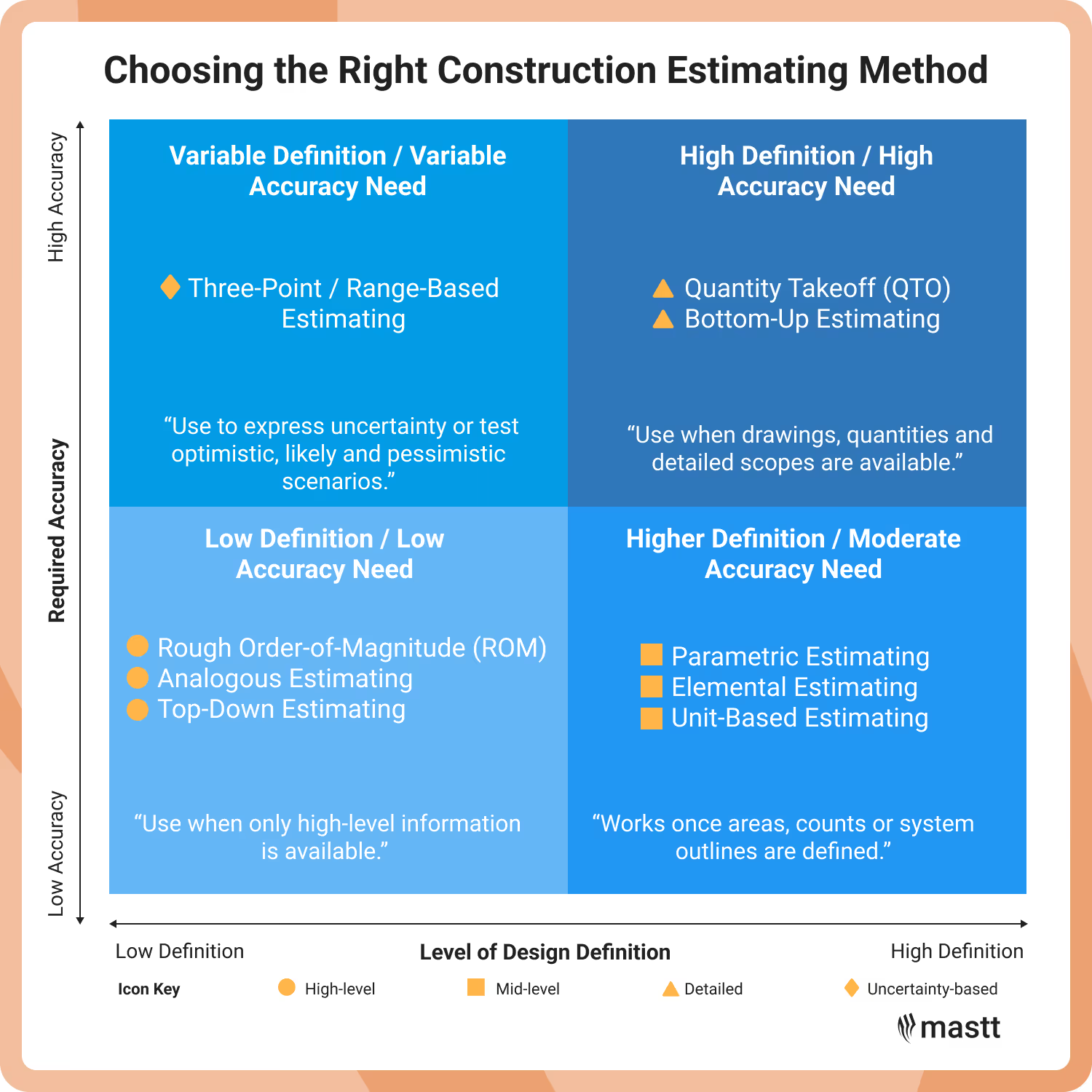
Selecting an estimation method starts with understanding how reliable the information you have about the project is. The goal is to pick a method that fits the project’s current definition before moving to more detailed techniques later.
Use the steps below to decide which estimating method in construction to apply:
- Evaluate the level of design detail: Review what can actually be measured in the drawings or narrative. Use high-level techniques for basic concepts and shift to elemental or quantity-based methods once areas, counts, or layouts are defined.
- Define the purpose of the estimate: Pin down what decision the estimate must support. Feasibility needs a cost range, budgeting needs more structure, and procurement needs measurable detail tied to trade scopes.
- Assess the quality of available data: Check the strength of your historical costs and market inputs. Reliable data support parametric or detailed methods. Limited data works better with broad, defensible techniques.
- Consider project complexity: Identify any unusual systems or site conditions. Complex projects need methods that capture more variables. Simple buildings can rely on unit-based or analogous techniques.
- Factor in the time available: Match the method to the schedule. Tight deadlines call for faster, high-level techniques. More time allows detailed takeoffs and refined cost modeling.
💡 Pro Tip: Keep a running log of assumptions and update it whenever you change methods. This keeps estimates consistent and protects you during scope discussions.

Challenges When Choosing a Cost Estimating Method and How to Avoid Them
Deciding how to build an estimate is difficult when the scope, data, or schedule isn’t clearly defined. Early choices here can either support accuracy or create avoidable cost issues later.
This table outlines each estimating challenge and the practical steps that resolve it.
Tackling these issues early also improves the handoff between estimators and project teams, ensuring pricing reflects how the work will actually be delivered. This level of alignment strengthens cost certainty as schedules tighten and design decisions accelerate.
AI and Emerging Technologies Advancing Construction Estimating Techniques
AI and new digital tools are reshaping how estimators build and refine cost forecasts. These technologies expand traditional techniques by adding automation, prediction, and real-time data analysis.
The list below shows the new estimating techniques gaining traction in the industry:
- AI-driven probabilistic cost estimating: Uses machine learning to produce cost ranges with confidence levels for clearer early forecasting.
- Automated quantity extraction from drawings and models: Uses computer vision to detect elements in 2D/3D files and generate faster, more consistent takeoffs.
- Dynamic model-based estimating with AI-enhanced BIM: Links BIM geometry with cost logic so estimates update automatically as the model changes.
- AI-supported specification and scope interpretation: Uses natural language processing to flag missing scope, conflicts, and key cost drivers in specs and drawings.
- Predictive cost modeling for market and escalation risk: Applies pattern recognition to forecast labor, material pricing, and escalation trends.
These emerging techniques help estimators build more reliable budgets by reducing manual steps and revealing risk earlier in the process. Mastt’s AI document analysis can help with this by surfacing scope details, design changes, and requirement notes from PDFs, giving estimators clearer inputs without hours of manual review.

Using Estimating Methods Effectively Across the Project Lifecycle
Estimating improves when each method matches the project’s level of definition. The key is shifting techniques as information grows, so accuracy strengthens at the same pace as the design. When teams choose methods based on project stage and decision deadlines, budgets stay aligned, and expectations remain realistic throughout the lifecycle.
.avif)
Written by
Doug Vincent
Doug Vincent is the co-founder and CEO of Mastt, the AI capital-project management platform used by governments, Fortune 500 companies, and consultancies across APAC, North America, and MENA. Before founding Mastt in 2019, he spent a decade at RPS delivering more than $2 billion in capital works, including the $2.1B Defence Navy Infrastructure program, and holds a CPSPM certification with the AIPM. He contributes content and speaks on AI in capital project delivery at Mastt.


Contributions by
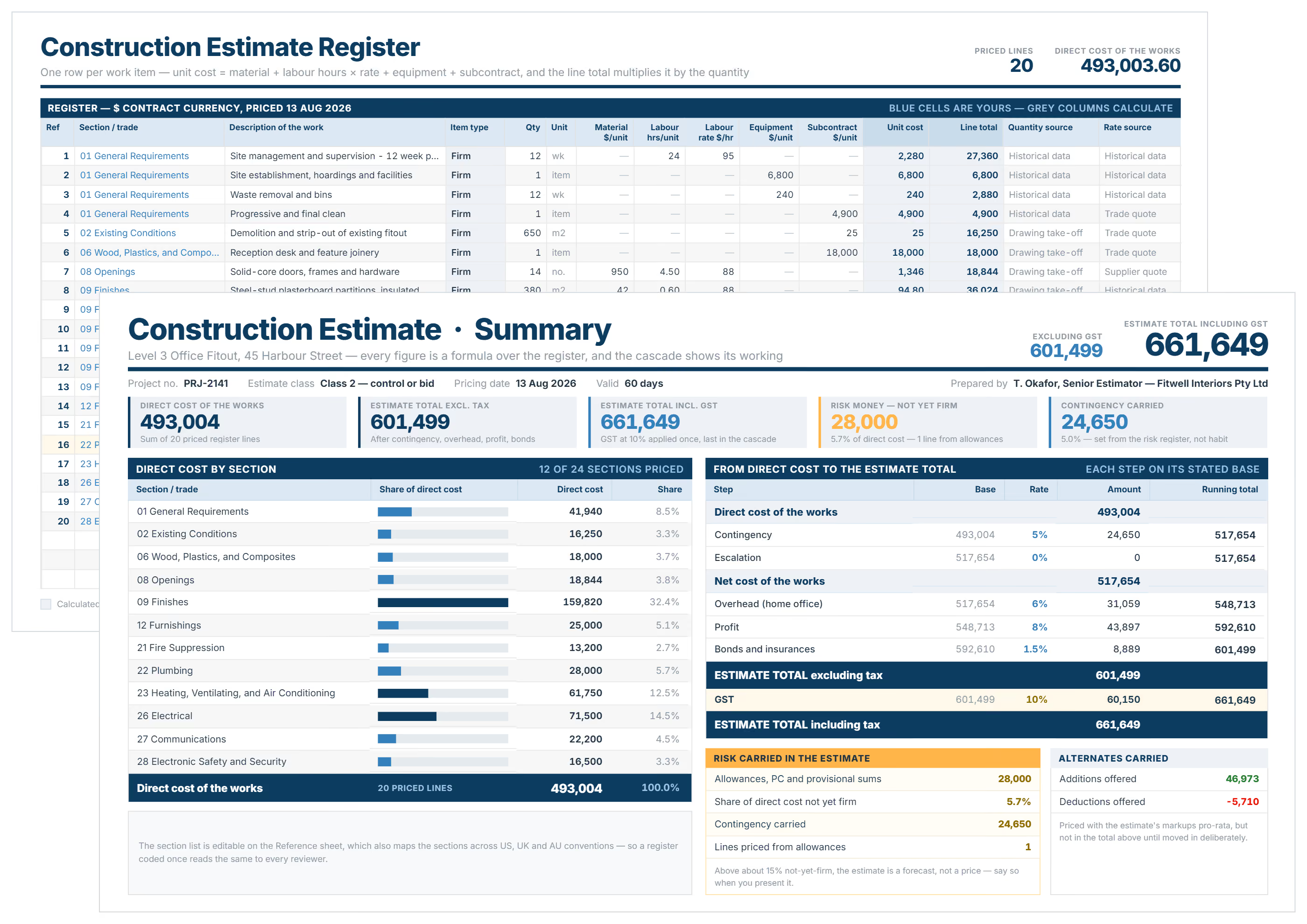
Construction Estimate Template
Use this construction estimate template to price projects accurately, win more bids, and control costs. Create professional estimates in Excel or Word format instantly.

Walk Into Every Meeting With Confidence, Clarity, and Control
No one wants to look unprepared, blindsided, or uncertain in front of stakeholders — but that’s exactly what happens without Mastt.
Start for FreeTrusted by the bold, the brave, and the brilliant across governments, Fortune 500s, and the world’s best in delivering the future