

Accurate estimating starts with a clear scope, current pricing, and defined risk. When these elements are handled well, Owner’s Representatives and Project Managers guide projects with more certainty. Explore the best practices below to keep estimates reliable from early planning through delivery.
1. Validate Contractor Estimates With Structured, Documented Review
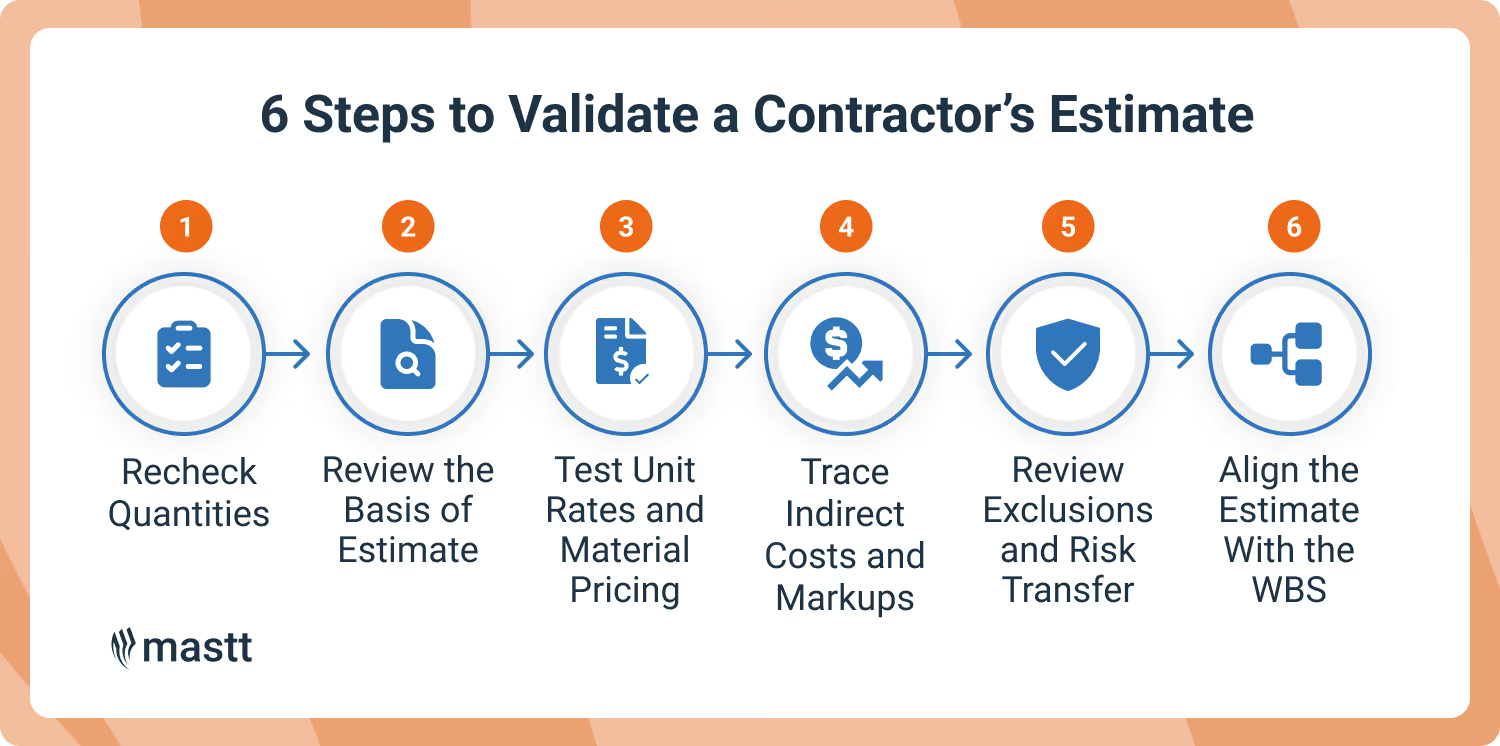
Start by reviewing the estimate in the same order it was built, beginning with quantities and moving through assumptions, pricing, and markups. Follow the Basis of Estimate (BoE) as your guide so you can see how each cost item was formed. This step creates a clear workflow before you begin detailed checks.
Here’s how to carry out a structured estimate review:
- Check measured quantities against the latest drawings to confirm the scope is current.
- Review each BoE entry to see how assumptions and allowances support the pricing.
- Compare unit rates and material pricing to updated supplier data or subcontractor trends.
- Trace indirect costs and markups to their sources to confirm they follow contract rules.
- Scan exclusions to see where scope or risk may shift back to the owner.
- Match the estimate’s structure to the Work Breakdown Structure (WBS) so costs remain traceable across versions.
Impact on Estimate Reliability:
Weak validation leads to incomplete scope coverage, inaccurate quantities, and pricing that does not match the market. These issues distort the budget early and make it harder to compare bids or manage changes later.
Common Signs the Estimate Needs Closer Review:
- Missing or unclear assumptions behind major cost items.
- Quantities that do not match drawing scale or design maturity.
- Pricing based on past projects instead of updated market data.
- Lump-sum allowances used where measurable quantities should exist.
- Backup files that do not trace how key numbers were derived.
💡 Pro Tip: Use a free online construction cost calculator when a cost item looks out of range. It gives a quick benchmark and helps you decide whether a deeper review or backup is needed.

2. Strengthen Scope Definition and Confirm Design Maturity
Review the design package with the goal of replacing assumptions with confirmed details. Work through each discipline to see which elements are defined and which still rely on provisional information. Bring drawings, specifications, and site data to the same level of clarity before any major pricing effort.
Try these to confirm scope and design maturity:
- Compare drawing sets across disciplines to check that layouts, systems, and details align.
- Review specifications for clarity on materials, performance levels, and system requirements.
- Verify site information, including utilities, ground conditions, access paths, and staging limits.
- Identify constraints such as shutdowns, operational restrictions, or special working hours.
- Flag unresolved design items and record how they may affect measurable quantities.
Impact on Estimate Reliability:
Gaps in scope introduce uncertainty that affects multiple trades. Early allowances often turn into higher costs during detailed design or procurement, making the estimate less predictable and harder to manage.
Common Signs Scope or Design Maturity is Not Ready for Pricing:
- Frequent placeholders, such as TBD or incomplete system descriptions.
- Missing information for finishes, equipment selections, or system capacities.
- Conflicting or uncoordinated drawings between disciplines.
- Unresolved design decisions that affect measurable quantities.
💡 Pro Tip: Before estimating begins, ask each discipline to list the decisions they are still waiting on. These unresolved items usually carry the highest cost risk and should be reviewed before numbers are set.
3. Use Independent Cost Reviews at Key Decision Points
Choose an independent estimator who can rebuild the major quantities and pricing without relying on the project team’s assumptions. Have them perform a parallel check of the estimate using their own data sources and estimating methods. Use the comparison to understand where logic, scope, or pricing differ and what needs adjustment before any approvals are made.
Here’s how to carry out an independent cost review:
- Ask the reviewer to remeasure key quantities using the latest drawings.
- Compare their unit rates and pricing sources with those in the project estimate.
- Review differences in logic, scope coverage, or allowance levels.
- Request written notes explaining variances and their likely impact.
- Use benchmarking to see whether both estimates align with market norms.
Impact on Estimate Reliability:
Without an external review, hidden assumptions or outdated pricing can move forward unchecked. This creates gaps between expected and actual costs once bids arrive. An independent review helps identify project variance early, when adjustments are still manageable.
Common Signs an Independent Review is Needed:
- Large increases between the estimated versions without a clear explanation.
- High-value scopes priced with limited detail or broad allowances.
- Uncertainty in market conditions or upcoming procurement windows.
- Significant design changes that affect quantities or system choices.
- Early warning signals from benchmarking or internal review.
💡 Pro Tip: Ask the independent reviewer to highlight the cost items most sensitive to market movement. These items shape bid outcomes and help prepare realistic expectations before contractor pricing arrives.
4. Challenge Assumptions Early and Rigorously
Look through the estimate to identify items driven by placeholders, broad allowances, or unresolved design information. Test each assumption against actual site conditions, design maturity, and procurement timing. Replace guesswork with verifiable inputs whenever new details become available.
Use this approach to validate assumptions:
- Review productivity factors to confirm they match access limits and building conditions.
- Check material choices and system selections against current design intent.
- Match escalation values to the expected procurement timeline.
- Identify allowances and convert them into measurable quantities once details are known.
- Confirm each assumption aligns with the correct estimate class for the stage.
Impact on Estimate Reliability:
Unverified assumptions often inflate or suppress costs without clear justification. They create uncertainty in labor hours, material choices, sequencing, and indirects, which makes the estimate less dependable as the project advances.
Common Signs Assumptions Need Closer Attention:
- Large cost items with vague or missing notes.
- Productivity factors that do not reflect actual access or site logistics.
- Escalation applied without reference to current indices or market trends.
- Budget numbers that remain unchanged despite design updates.
- Allowances covering major scope elements that could be measured instead.
💡 Pro Tip: During design review meetings, highlight the assumptions that drive the top cost items. These are the levers that shift estimates most sharply and should be resolved or validated before the next estimate cycle.
5. Apply Robust Risk and Contingency Frameworks
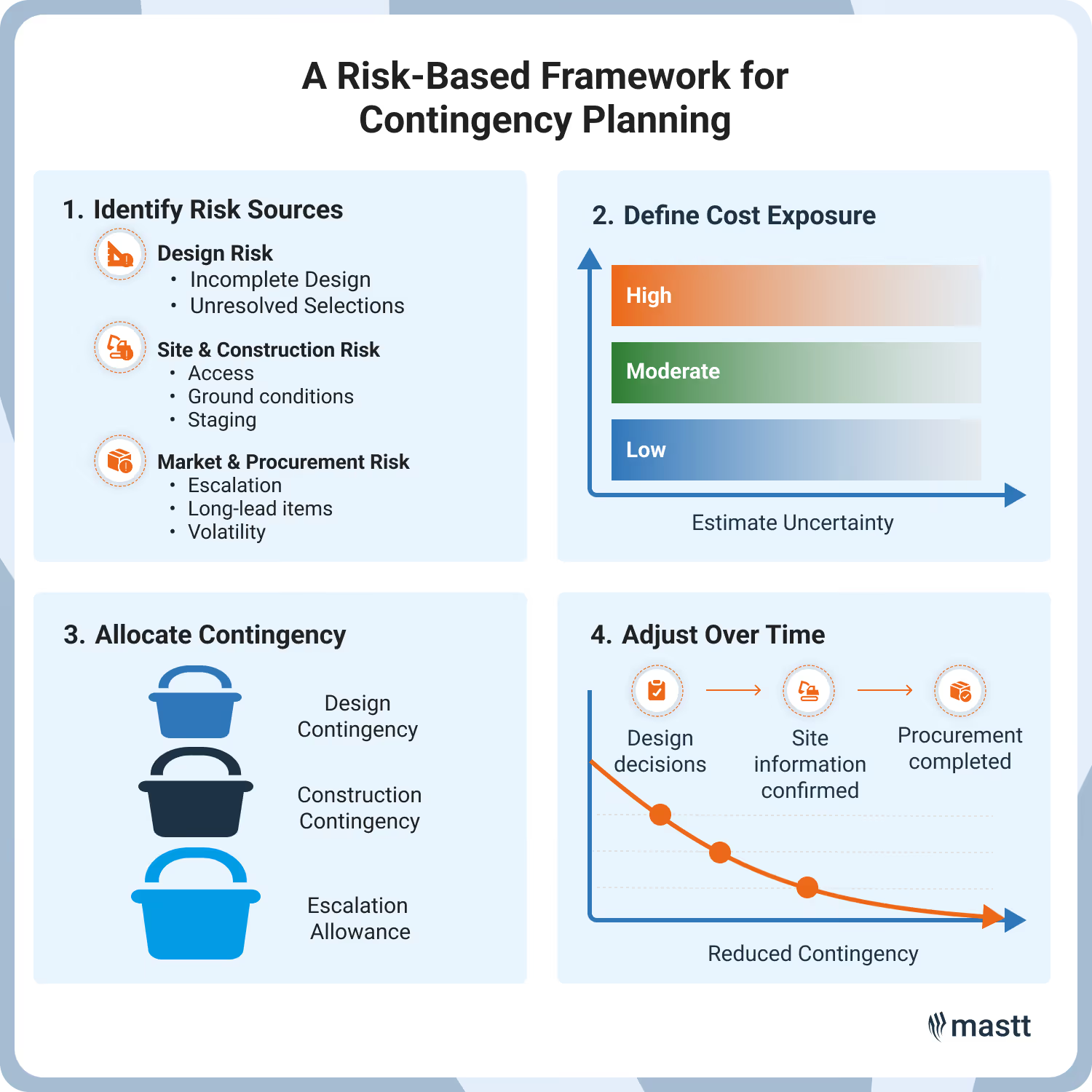
Work through the risk register to understand where uncertainty sits in the design, site conditions, and procurement timing. Assign cost exposure to each major risk, then separate what belongs in design contingency and what belongs in construction contingency. Update these values as risks are resolved, not just when estimate versions change.
Use these steps to build a dependable risk and contingency approach:
- Review each risk item and record its potential cost impact using ranges, not single values.
- Separate design contingency from construction contingency so each reflects its purpose.
- Match escalation allowances to the expected timeline for procurement and long-lead items.
- Adjust contingency when risks gain or lose definition, rather than carrying a flat percentage.
Impact on Estimate Reliability:
Poorly defined risks leave major cost drivers unpriced. This affects both direct and indirect costs, especially when design changes or market movement occur. Contingency then becomes a flat number rather than a value tied to actual exposure, which weakens the accuracy of the overall estimate.
Common Signs the Risk Approach Needs Adjustment:
- Contingency applied as a single percentage without explanation.
- Long-lead materials are priced without considering market volatility.
- Unknown site conditions listed in the register but not costed.
- Shifting cost totals between estimate versions without documented risk inputs.
💡 Pro Tip: Review the risk register with the design team before each estimate update and ask which items are gaining definition. Falling risk should reduce contingency in specific areas, not just at the overall project level.

6. Manage Change to Protect Estimate Integrity
Review design updates as they occur and record how each adjustment affects quantities, methods, or staging. Compare each new drawing set to the previous version to identify scope shifts. Reprice changes as soon as they appear so the estimate stays aligned with the evolving design.
Follow these to keep changes under control:
- Track every design decision that affects scope, quantities, or construction methods.
- Recalculate quantities linked to layout changes, system choices, or added interfaces.
- Update pricing for long-lead items when specifications or equipment details change.
- Record cost impacts in a change log so movement between estimate versions is clear.
Impact on Estimate Reliability:
Uncontrolled change distorts quantities, sequencing, and pricing assumptions. Even small adjustments to layout, systems, or access can affect multiple trades and alter indirect costs. This creates gaps between the estimate and the project budget that are difficult to correct once procurement or construction begins.
Common Signs Change is Affecting Estimate Integrity:
- Repeated revisions to quantities without updated cost impacts.
- Allowances are used to cover unresolved design items instead of pricing the change.
- Cost movements between estimate versions with no linked change record.
- Late design decisions that affect long-lead materials or major equipment.
💡 Pro Tip: Flag any change that affects temporary works, staging, or access. These adjustments often create indirect cost impacts that exceed the cost of the change itself, especially on constrained sites.
7. Recognize the Commercial Factors Influencing Contractor Pricing
Review the contract terms, bidding conditions, and project constraints to understand how they shape contractor pricing. Look at how risk is allocated, how work must be staged, and how payment timing affects cash flow. Interpret pricing through a commercial lens rather than relying only on quantities and unit rates.
Here are ways to assess commercial influences on pricing:
- Review contract clauses for liquidated damages, staging rules, and risk transfer.
- Check workload and market activity to gauge subcontractor interest and competition.
- Note requirements for overtime, shutdowns, or restricted work hours that raise risk premiums.
- Assess payment terms to see how cash flow may affect markup or pricing strategy.
Impact on Estimate Reliability:
Commercial pressures can raise or lower pricing in ways that technical reviews do not capture. Markups, exclusions, subcontractor interest, and risk allocation each affect the final number. Ignoring these drivers leads to unrealistic expectations and large gaps between pre-tender estimates and contractor bids.
Common Signals Commercial Conditions are Shaping Pricing:
- Wide bid spreads among subcontractors for the same scope.
- Higher markups on trades exposed to schedule or staging constraints.
- Extensive exclusions or qualifications in early contractor feedback.
💡 Pro Tip: Before issuing tender documents, review the contract package with a contractor or cost advisor who is not bidding. Their feedback often reveals where pricing pressure will occur and which terms may elevate risk premiums.

8. Align Estimates With Budgets and Funding Requirements
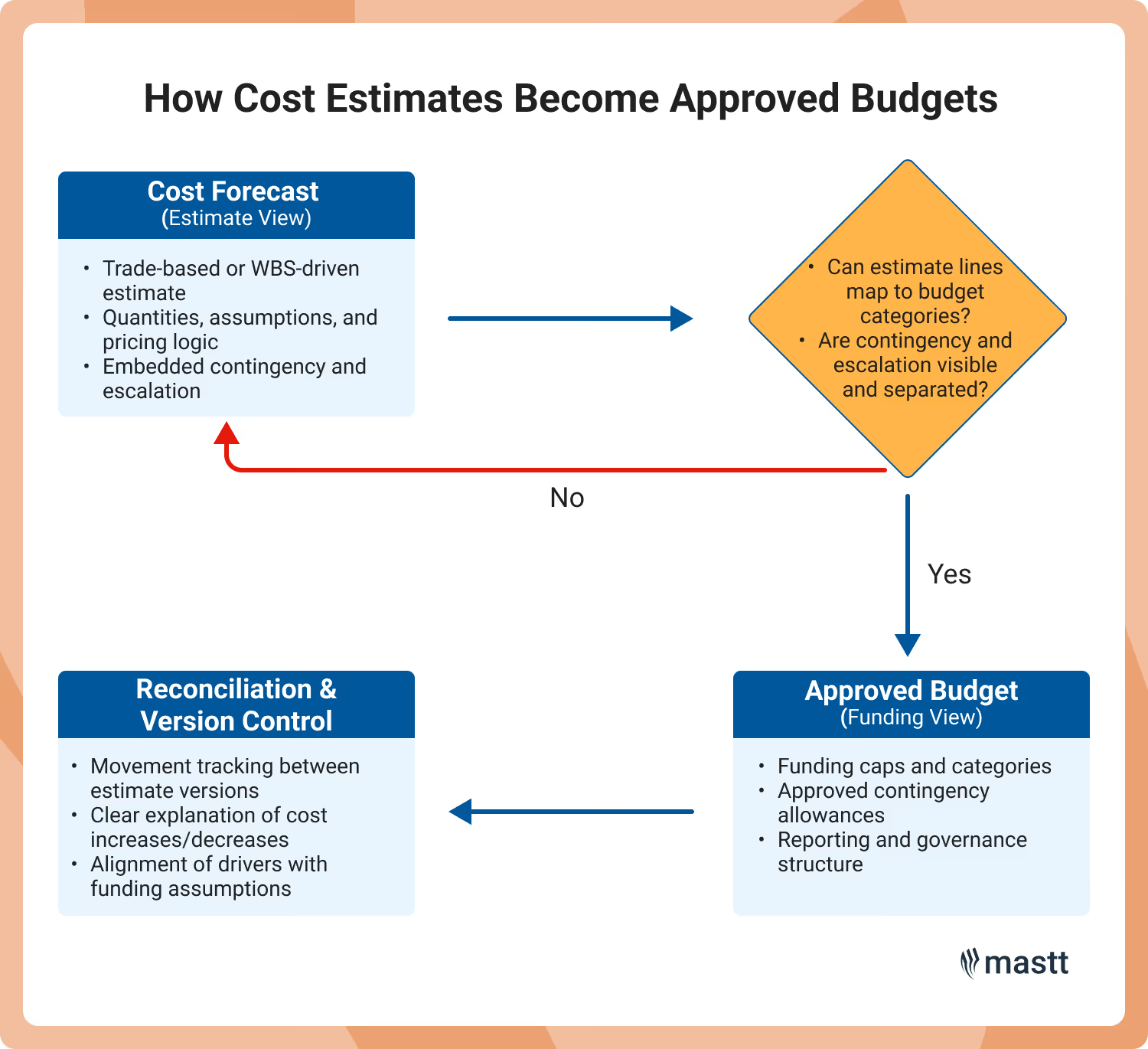
Compare the estimate structure to the approved budget, so both follow the same coding and cost categories. Review contingency, escalation, and allowances to confirm they fit within funding limits. Track cost movements between estimate versions to show how design and risk are shaping the total.
Use these steps to keep the estimate aligned with the budget:
- Map estimate line items to the owner’s budget structure for clear reporting.
- Check whether contingency and escalation values still fit within funding constraints.
- Reconcile each update to show where costs increased or decreased.
- Confirm that cost drivers match the assumptions used in earlier funding approvals.
Impact on Estimate Reliability:
Misalignment between cost forecasts and available funds often forces design changes that disrupt coordination and dilute cost accuracy. It also makes it harder to secure timely approvals, since decision makers cannot see how cost drivers fit within the project’s financial framework.
Common Signs the Estimate and Budget are Not Aligned:
- Frequent scope adjustments to meet budget targets without updated cost justification.
- Unclear or inconsistent use of contingency and escalation.
- Differences between the estimated structure and the owner’s financial coding requirements.
- Funding approvals are delayed because cost drivers are not documented or explained.
💡 Pro Tip: At each design milestone, review whether the top cost drivers are still consistent with the numbers used for funding approvals. Catching movement in these areas early prevents late-stage scope cuts and protects the project’s financial position.
9. Use Collaboration and Cross-Discipline Review to Improve Estimates
Bring design teams together to review how each discipline’s decisions affect quantities, methods, and construction sequencing. Compare drawing updates side by side to understand how changes in one area influence costs in another. Use shared information so estimates reflect coordinated design rather than isolated assumptions.
Follow this approach to strengthen cross-discipline reviews:
- Meet with design leads to confirm how systems, layouts, and interfaces connect.
- Compare drawing revisions across disciplines to spot clashes or scope shifts.
- Assign clear responsibility for items that fall between trades, such as penetrations or temporary works.
- Share updates in one location so all teams price the same information.
Impact on Estimate Reliability:
Limited coordination creates inconsistencies in quantities, system choices, and staging needs. These gaps lead to duplicated costs, missing scope, or incorrect assumptions about sequencing and access, which weaken the estimate’s accuracy.
Common Signs Collaboration is Limited:
- Different disciplines use conflicting assumptions for the same area of work.
- Repeated quantity revisions due to late coordination.
- Missing scope where no team assumed responsibility.
💡 Pro Tip: During each design review cycle, ask every discipline to identify one coordination issue that could change quantities or methods for another team. These cross-trade interactions often drive the largest shifts in estimate accuracy.
Why Estimating Quality Matters for Owner’s Representatives and Project Managers
Estimating quality shapes how predictably a project can move from planning to completion. When an estimate reflects clear scope, consistent quantities, and current pricing, owner’s reps and project managers can make decisions with greater confidence.
Accurate construction estimating supports project outcomes in several ways:
- Budget protection: Verified quantities and realistic pricing reduce overruns and limit unplanned funding needs.
- Scope confidence: Clear definition of the work helps owners approve scope without guessing the final cost.
- Reliable procurement: Accurate expectations make bid evaluation easier and highlight gaps in contractor pricing.
- Effective cost control: A dependable baseline supports forecasting, variance tracking, and contingency use.
- Fewer disputes: Transparent assumptions reduce misunderstandings during procurement and construction.
Accurate estimating also improves timing of key decisions. ORs and PMs can see when design choices raise costs, when procurement paths may shift, or when risks need closer attention. This early insight keeps the project steady and helps guide scope, schedule, and commercial strategy before pressure builds.
Tools, Data, and Benchmarking for Better Owner-Side Estimating
Owner-side estimating improves significantly when supported by reliable data, structured tools, and consistent benchmarking. These resources help teams validate quantities, compare cost outcomes, and maintain traceability across estimate versions. The table below outlines the key tools and data sources that enhance accuracy and visibility.
Modern estimating workflows perform best when tools are connected in one place. With capital project management software, you can track revisions, document assumptions, and link cost changes to design updates. This creates a clear record of how the estimate evolves and reduces reliance on scattered files or informal notes.

Build Better Estimating Habits for Greater Project Certainty
Reliable estimating grows from best practices that owners’ reps and project managers apply consistently throughout a construction project. Clear scope, tested assumptions, and steady documentation reduce surprises as work develops. When these habits guide each estimate cycle, project teams see cost movement early and make decisions with greater confidence.
.avif)
Written by
Doug Vincent
Doug Vincent is the co-founder and CEO of Mastt, the AI capital-project management platform used by governments, Fortune 500 companies, and consultancies across APAC, North America, and MENA. Before founding Mastt in 2019, he spent a decade at RPS delivering more than $2 billion in capital works, including the $2.1B Defence Navy Infrastructure program, and holds a CPSPM certification with the AIPM. He contributes content and speaks on AI in capital project delivery at Mastt.


Contributions by

Basis of Estimate Template
Use this basis of estimate template to justify project costs and strengthen client confidence. Pre-structured sections document methodology, assumptions, and pricing rationale with complete traceability.

Walk Into Every Meeting With Confidence, Clarity, and Control
No one wants to look unprepared, blindsided, or uncertain in front of stakeholders — but that’s exactly what happens without Mastt.
Start for FreeTrusted by the bold, the brave, and the brilliant across governments, Fortune 500s, and the world’s best in delivering the future