

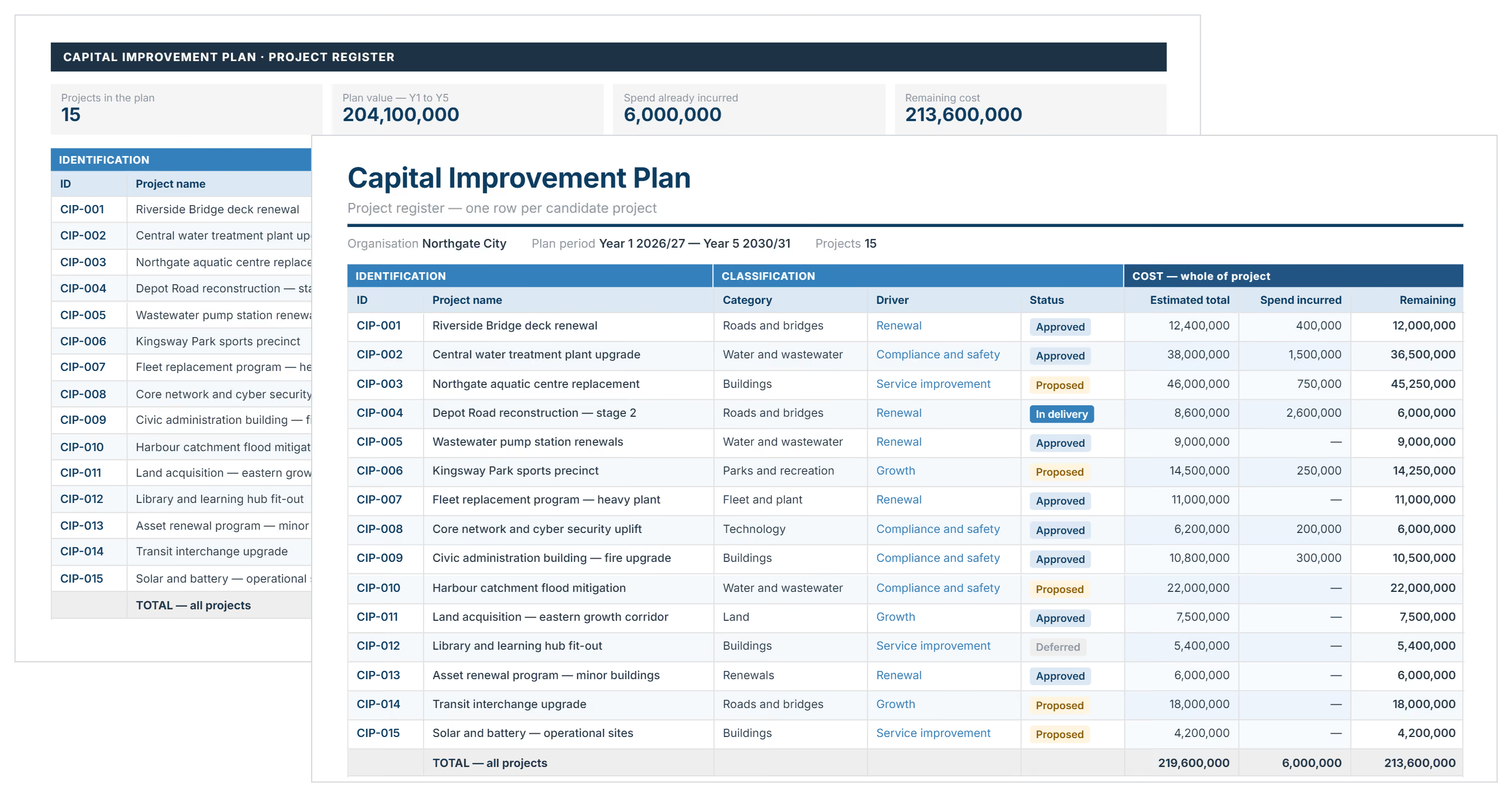

What is a Capital Improvement Plan Template?
A capital improvement plan template is a pre-formatted document organizing how municipalities schedule, fund, and prioritize infrastructure projects. It provides ready-made sections for listing projects, estimating costs, identifying funding sources, and ranking priorities. Most templates span five to ten years with detailed project specifications.
What's Included in CIP Templates?
Capital improvement plan templates contain essential fields for documenting infrastructure projects and resource allocation decisions. Core components in capital planning templates typically include:
- Project identification details: Unique ID, project name, requesting department, project manager assignment, and scope description for project management.
- Cost estimates by category: Design fees, land acquisition, construction costs, equipment purchases, and contingency allocations across project phases.
- Funding sources breakdown: General obligation bonds, revenue bonds, federal grants, state aid, impact fees, and general fund allocations.
- Timeline and schedule: Project start date, completion date, multi-year phasing, and dependencies on other capital improvements or studies.
- Priority ranking criteria: Public safety urgency, legal compliance requirements, asset condition scores, and alignment with strategic objectives.
- Facility condition data: Deferred maintenance costs, facility condition index scores, useful life remaining, and replacement values for aging assets.
- Operating budget impact: Annual maintenance costs, staffing requirements, utility expenses, and ongoing service costs post-project completion.
- Department justification: Problem statement, community needs addressed, consequences of deferral, and expected benefits from capital investments.
💡 Pro Tip: Include baseline facility condition assessments following ASCE standards before requesting replacement funding. Councils approve projects faster when FCI scores demonstrate genuine deterioration versus premature replacement requests.
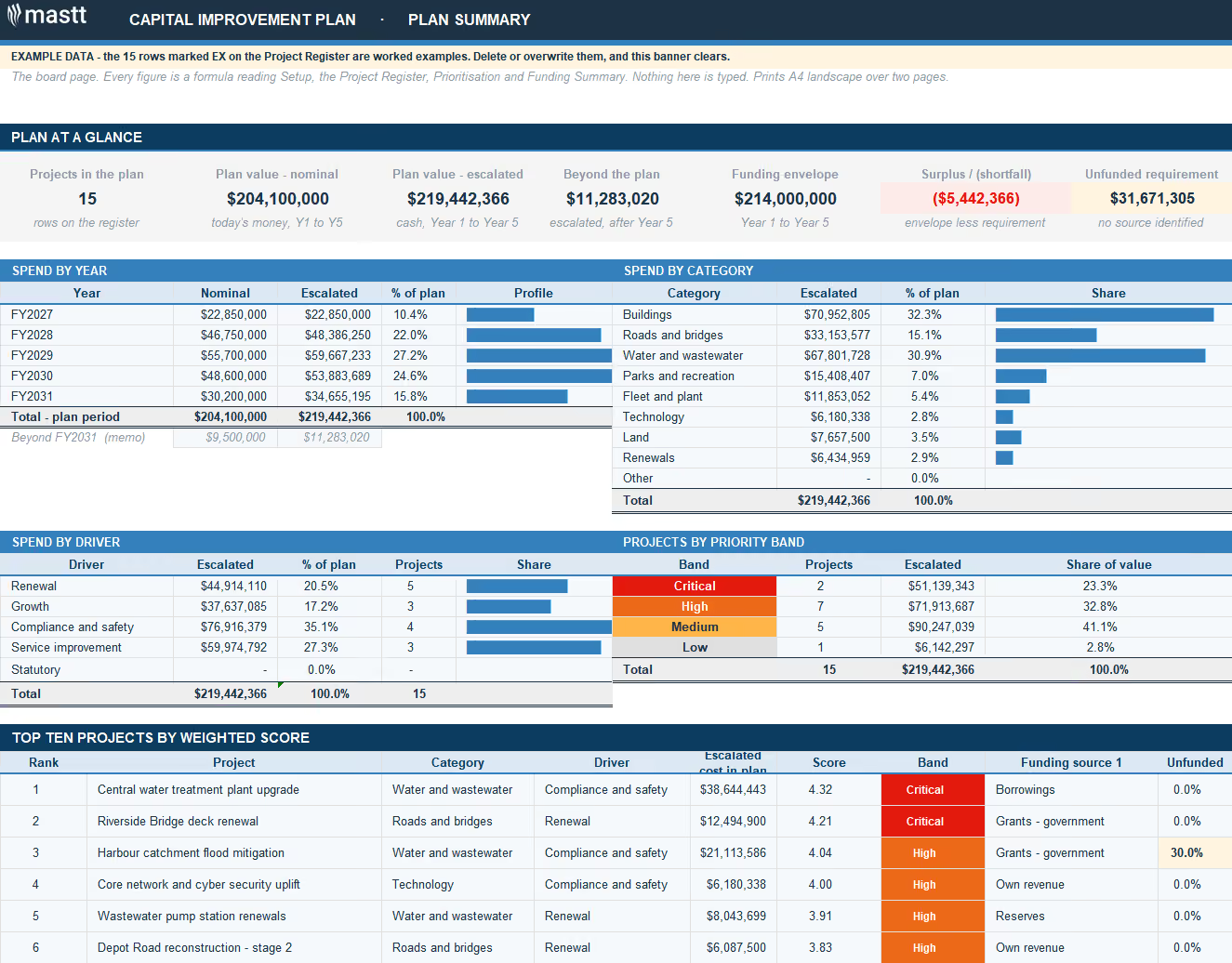
Why do you Need Capital Planning Documentation
Capital planning documentation prevents reactive spending that drains reserves when infrastructure fails unexpectedly. Documentation strengthens municipal financial management across multiple dimensions:
- Secures council funding approval: Written justifications with cost-benefit data convince officials to authorize bonds and allocate resources.
- Demonstrates fiscal responsibility: Multi-year projections show taxpayers that officials plan major expenditures carefully rather than spending impulsively.
- Coordinates infrastructure development: Systematic scheduling prevents utility conflicts where road projects happen before water line replacements underneath.
- Qualifies for grant programs: Federal agencies require formal CIP documentation for Infrastructure Investment and Jobs Act funding, CDBG grants, and aid.
- Controls debt capacity: Planned borrowing schedules keep debt service within limits and maintain bond ratings that reduce costs.
- Aligns stakeholders on priorities: Objective ranking criteria reduce political pressure when departments compete for limited capital expenditure authority.
- Supports transparent governance: Public CIP documents build community trust by showing how tax dollars fund infrastructure needs systematically.
Without documentation, municipalities fund whatever breaks next. That approach exhausts reserves. It increases borrowing costs and undermines long-term planning.
💡 Pro Tip: Present CIPs to council three months before budget adoption. Early review allows time to refine project justifications and secure necessary votes before formal appropriation deadlines.
How to Develop and Use a Multi-Year Capital Improvement Plan
Creating effective capital improvement planning documents requires gathering facility condition data before prioritizing projects systematically. Start by conducting comprehensive assessments that identify deferred maintenance, safety hazards, and capacity constraints.
Follow these steps to develop your CIP:
- Conduct facility condition assessments: Inspect buildings, roads, utilities, and equipment to document deficiencies and estimate repair costs.
- Collect department project requests: Require standardized forms showing project need, cost estimates, funding sources, and strategic plan alignment.
- Establish objective ranking criteria: Define weights for public safety, legal compliance, asset condition, economic development impact, and community needs.
- Calculate fiscal capacity: Analyze debt limits, revenue projections, grant opportunities, and operating budget impacts to determine affordable funding levels.
- Prioritize projects systematically: Score each capital improvement project against criteria, then rank by total score to create defensible sequences.
- Develop financing strategies: Match project timelines with funding sources including bonds, TIFIA loans, grants, TIF districts, and capital reserves.
- Draft multi-year schedules: Spread projects across fiscal years based on urgency, funding availability, and capacity to manage concurrent work.
- Review with stakeholders: Present draft CIP to department heads, planning commissions, and finance committees for feedback before council submission.
- Present to city council: Provide executive summary, priority list, funding strategy, and debt service impact for formal adoption.
- Update annually: Reassess project status, adjust costs for inflation, add new requests, and roll forward the planning timeline.
💡 Pro Tip: Schedule annual CIP workshops in January for June adoption. This six-month timeline allows comprehensive review without rushing critical infrastructure decisions during compressed budget cycles.
Who Should Use CIP Templates?
Finance directors and budget officers are primary users of CIP templates, coordinating infrastructure planning across departments. But they're valuable for anyone involved in municipal asset management, public works administration, or long-range facility planning.
✅ Municipal Finance Directors: Coordinate CIP development, analyze fiscal capacity, prepare debt schedules, and present funding recommendations to city councils.
✅ Public Works Directors: Identify infrastructure needs, estimate costs, justify timing, and prioritize roads, utilities, and improvements per APWA standards.
✅ City Managers and County Administrators: Oversee strategic plan alignment, balance competing requests, and present comprehensive capital programs to officials.
✅ Project Owners and Department Heads: Initiate project requests, justify needs, provide technical requirements, and secure budget allocations for departmental capital improvements.
✅ Capital Planning Committees: Review project submissions, apply objective ranking criteria, resolve conflicts, and recommend funding priorities to governing bodies.
✅ Project Managers: Track individual capital projects, manage budgets and schedules, coordinate contractors, and report progress against CIP timelines.
✅ School District Business Managers: Plan facility renovations, coordinate bus replacements, manage building improvements, and present capital requests to boards.
✅ Hospital Facilities Directors: Schedule equipment replacements, plan building expansions, manage deferred maintenance, and coordinate major infrastructure upgrades systematically.
✅ Park and Recreation Directors: Prioritize playground replacements, trail improvements, facility renovations, and sports field upgrades across multiple sites.
When to Prepare Capital Improvement Plans
Capital improvement plan templates should be prepared annually during budget development cycles before councils adopt spending appropriations. The CIP process typically begins six to nine months before fiscal year start.
Critical moments requiring CIP preparation include:
- Annual budget cycle initiation: Start CIP updates when finance departments issue calendars, typically January through March for July.
- Strategic plan adoption: Develop new CIPs after comprehensive plans update to ensure capital investments align with community vision.
- Major bond issuance planning: Prepare detailed CIPs when considering general obligation bonds requiring voter approval or large flotations.
- Infrastructure assessment completion: Update CIPs immediately after facility assessments reveal new deferred maintenance or safety issues requiring attention.
- Grant application deadlines: Refresh project documentation when federal or state funding programs announce application periods requiring CIP references.
- Economic development initiatives: Create supplemental CIPs when major developments require infrastructure expansions funded through TIF districts, SPLOST revenues, or fees.
- Council strategic planning retreats: Present draft CIPs during goal-setting sessions where officials establish priorities for upcoming budget years.
💡 Pro Tip: Timing matters more than perfection. Better to update CIPs systematically each year than wait for perfect information that never arrives.
Best Practices for Capital Improvement Planning
Effective capital improvement planning requires disciplined execution following practices that prevent funding failures and project delays. Experienced finance teams apply these principles to strengthen approval rates and delivery performance.
☑️ Update facility condition data biannually: Fresh assessments provide accurate cost estimates for each capital asset, preventing mid-project surprises from deterioration.
☑️ Separate maintenance from capital budgets: Operating budgets fund routine upkeep while capital plans address replacements and expansions.
☑️ Establish minimum project thresholds: Define capital as projects exceeding $50,000 with five-year useful lives to prevent clutter.
☑️ Calculate total ownership costs: Include design fees, construction, equipment, commissioning, and 20-year maintenance when comparing project alternatives.
☑️ Coordinate with comprehensive plans: Align CIP projects with master plan goals ensuring infrastructure supports land use policies.
☑️ Review quarterly with departments: Use capital project management software to monitor project progress, adjust schedules for delays, and identify emerging needs before annual updates.
☑️ Archive decision documentation: Maintain records explaining why projects were approved, deferred, or rejected to inform future councils.
Common Problems with Generic Excel CIP Templates
Generic Excel templates downloaded for capital improvement planning create coordination problems undermining systematic infrastructure management. Static spreadsheets lack the integration and version control needed for effective multi-departmental planning.
⚠️ Inconsistent project data entry: Different departments use different formats, making cost comparisons impossible across similar projects.
⚠️ Broken formulas after modifications: Staff accidentally delete critical calculations when inserting rows, causing totals that don't reconcile.
⚠️ Version control chaos: Multiple spreadsheet copies circulate with conflicting priorities, leaving uncertainty about which document reflects current approved plans.
⚠️ Limited prioritization capability: Simple Excel rankings can't weight multiple criteria simultaneously, forcing subjective decisions without transparent scoring methodologies.
⚠️ Missing audit trails: Spreadsheets don't track who changed what when, eliminating accountability for priority shifts or cost estimate revisions.
⚠️ Inadequate scenario modeling: Testing different funding strategies requires manual recalculation across dozens of cells, discouraging comprehensive fiscal analysis.
⚠️ No stakeholder collaboration: Email attachments prevent real-time input from department heads, creating delays when feedback requires redistribution.
Even professionally designed Excel templates require constant maintenance. Formula integrity needs checking. Consistent formatting demands attention. Multiple users accessing separate copies creates coordination challenges.

Written by
Jefbeck Eje
Jefbeck is an SEO Specialist at Mastt who creates optimized content for the construction project management industry. Focused on delivering accurate and actionable insights, Jef combines SEO expertise with industry knowledge to enhance visibility, build authority, and drive engagement. His work ensures Mastt remains a trusted resource for construction professionals seeking reliable information.

Use this FREE capital improvement plan template to prioritize infrastructure projects and secure funding approval. Pre-formatted structures organize costs, timelines, and funding sources for city council presentations.

Top Performers Don’t Guess. They Deliver.
Cut the stress of showing up unprepared
Start for FreeTrusted by the bold, the brave, and the brilliant to deliver the future