

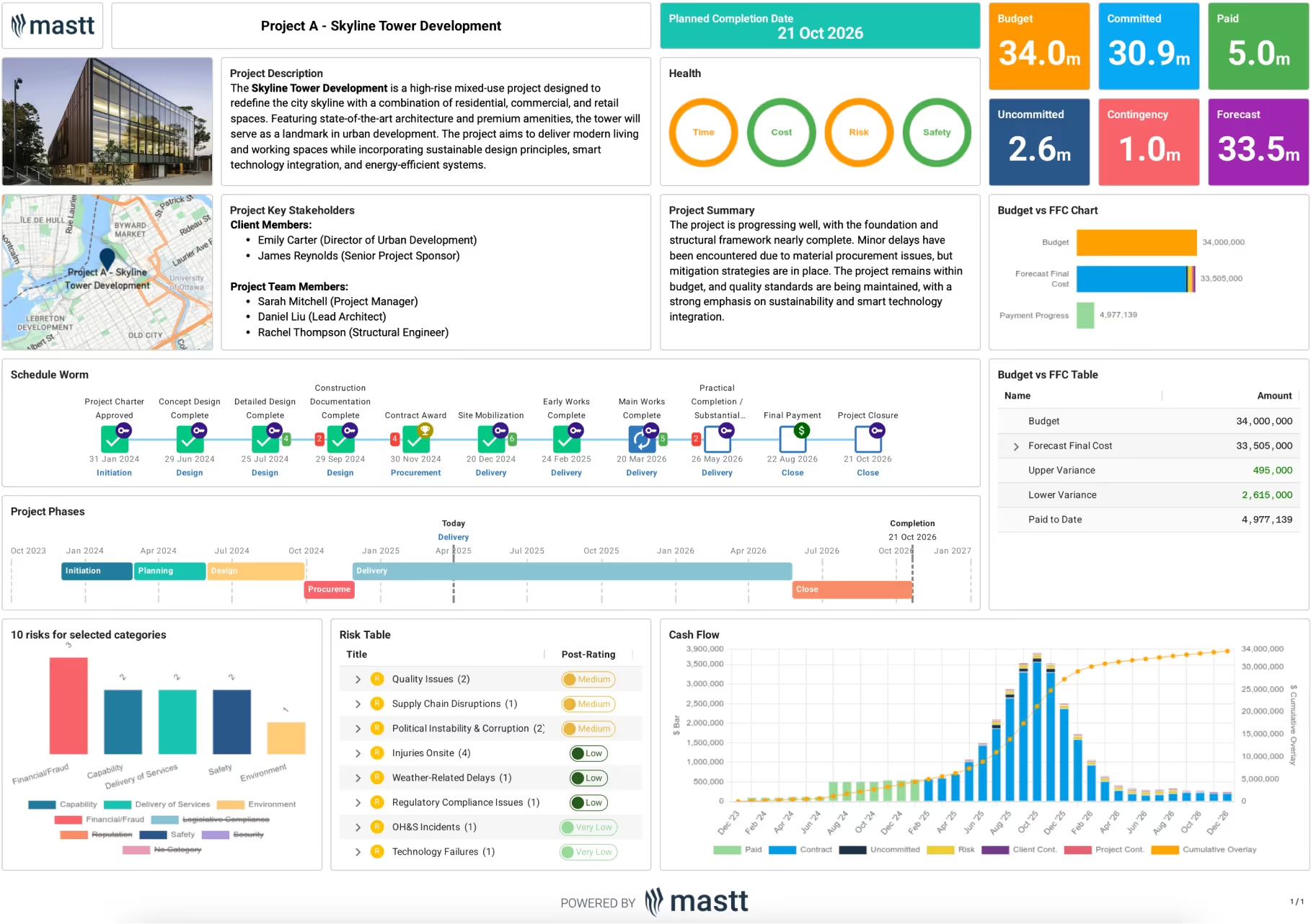

What is a Progress Report Template?
A progress report template is a formatted document that tracks work completed, schedule status, and upcoming activities on construction projects. It provides pre-structured sections for recording milestone achievement, budget performance, and issues requiring attention during each reporting period.
Construction teams use progress reporting templates to maintain consistent documentation across daily, weekly, and monthly cycles. The template includes fields for percent complete tracking, critical path items, and corrective actions.
Project teams choose between project progress report template Word formats for narrative emphasis or construction progress report template Excel spreadsheets for metric-heavy tracking.
What's Included in Project Progress Reports?
Construction progress report templates contain essential fields for documenting work status, schedule adherence, and performance metrics across reporting periods.
Standard components in a progress report template include:
- Period Identification: Report date, reporting cycle (daily/weekly/monthly), project phase, and cumulative working days charged to date.
- Work Completed This Period: Detailed summary of activities finished, deliverables handed over, and milestones achieved during the reporting interval.
- Percent Complete Tracking: Overall project completion percentage, individual work package progress, and baseline comparison showing variance.
- Schedule Performance: Activities on schedule versus behind, critical path status, look-ahead schedule for upcoming work.
- Budget Status: Costs incurred versus budget, forecast completion amounts, change order impacts on project financial health.
- Outstanding Issues: Current problems blocking progress, required decisions, pending approvals, and RFI submissions awaiting responses.
- Upcoming Activities: Planned work for next period, resource requirements, equipment needs, material deliveries, and coordination requirements.
- Safety and Quality Metrics: Incident reports, quality inspections completed, punch list items, and compliance observations from field documentation.
💡 Pro Tip: Include a "work not started" column to prevent those frustrating "I thought that was already underway" conversations during owner meetings.
Why Use Templates for Construction Project Progress Tracking?
Progress report templates ensure project status updates remain complete, accurate, and comparable across all reporting cycles without requiring teams to reinvent documentation formats.
Progress tracking templates strengthen project delivery because they:
- Accelerate report preparation: Pre-formatted sections reduce compilation time from hours to minutes each reporting cycle.
- Maintain consistency across projects: Teams compare performance easily when all projects use identical progress reporting formats.
- Prevent information gaps: Required fields ensure critical details like safety incidents or budget variances never get omitted.
- Support faster decision-making: Executives spot problems immediately when reports follow predictable structures highlighting issues.
- Create defensible audit trails: Complete documentation demonstrates due diligence during disputes or funding reviews with lenders.
- Improve stakeholder confidence: Professional formats signal project control, maintaining trust when challenges emerge during delivery.
- Enable portfolio visibility: Program managers track multiple projects efficiently when progress reports follow consistent templates across all work.
- Reduce miscommunication: Standardized terminology and metrics eliminate confusion about what "75% complete" actually means on different projects.
Consider a superintendent managing five active projects. Without a progress report template, each site foreman documents differently. With weekly progress report templates, all field updates follow identical structures. Portfolio status becomes instantly clear without reconciling conflicting formats.
How to Create and Use Construction Progress Reports
Effective progress reporting requires systematic data collection before documenting project status using your chosen template format. Start by gathering field updates from superintendents, cost data from accounting systems, and schedule analysis from planning tools.
Follow these steps to create meaningful construction progress reports using a template:
- Select your template format: Choose construction progress report template Word for narrative updates or Excel for calculation-heavy metrics.
- Establish baseline data: Record original schedule, approved budget, planned milestones so actual performance comparisons remain accurate throughout delivery.
- Collect field updates systematically: Gather site observations, crew productivity, equipment utilization, material deliveries, and weather impacts from daily logs.
- Calculate completion percentages: Measure work in place against scope, using earned value or physical progress rather than time elapsed.
- Identify schedule variances: Compare actual completion dates against baseline, highlighting activities behind schedule and critical path impacts.
- Document budget performance: Track costs incurred versus forecasts, including change impacts and anticipated cost overruns or savings.
- List outstanding issues clearly: Document problems requiring decisions, approvals needed, pending submittals, and obstacles blocking upcoming work.
- Forecast next period activities: Outline planned work, resource needs, major deliveries, inspections scheduled, and coordination requirements.
- Include supporting documentation: Attach progress photos, inspection reports, test results, and correspondence referenced in narrative sections.
- Distribute on schedule: Send reports same day each cycle, maintaining predictable communication that stakeholders rely on for planning.
💡 Pro Tip: Collect field data within 24 hours of the reporting cutoff date, not the morning reports are due. Waiting until the last minute means superintendents guess at percentages and forget critical issues, turning your report into fiction rather than fact.
Build Your Progress Report with Mastt AI Template Studio
Mastt's AI Template Studio eliminates the guesswork of choosing the right progress report format. Instead of building layouts from scratch, you describe what you need and AI recommends the best-fit dashboard template instantly.
Here's what you can do with Mastt's AI Template Studio right away:
🎯 Get AI-matched templates instantly: Describe your reporting needs and AI selects the three most relevant dashboard templates from Mastt's template library.
📊 Preview before committing: Review each recommended template in detail before selecting.
🚀 Pre-populated and ready to use: Click "Use This Template" and Mastt builds it directly into your project with structure already in place.
📂 Browse the full template library: Search all available construction project management dashboards manually, or start from scratch if your requirements are highly specific.
Getting started takes four easy steps:
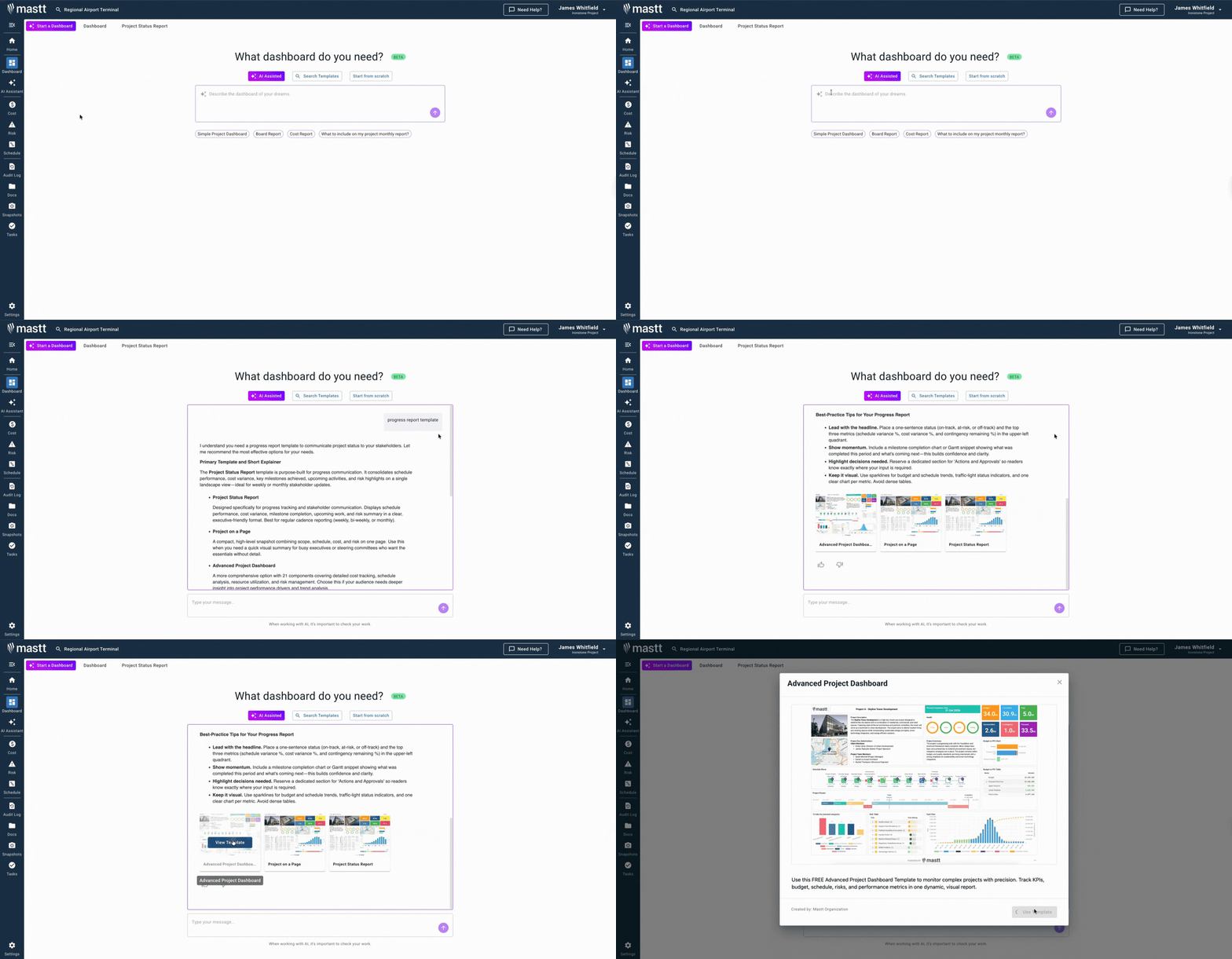
- Access AI Template Studio: Click Start a Dashboard in the top left of your Mastt workspace, then select AI Assisted.
- Describe your needs: Type a query like "I need a progress report template" or "show me a report for owner updates" into the search box.
- Review recommendations: AI presents three dashboard options. Click Preview on any to see the layout and read what each template provides.
- Select and customise: Click Use This Template and Mastt pre-populates it directly into your project, ready for your data immediately.
Who Should Use a Construction Progress Report?
Progress reports are valuable for anyone managing delivery timelines, coordinating trades, or maintaining stakeholder visibility across construction projects.
These professionals benefit most from structured progress report templates:
✅ Project Managers: Coordinate all project activities, maintain schedule control, and keep owners informed on delivery status and emerging risks.
✅ General Contractors: Track subcontractor performance, manage trade coordination, document site conditions, and provide owner updates meeting contractual obligations.
✅ Construction Superintendents: Document daily field activities, workforce levels, equipment usage, safety observations, and quality issues from active worksites.
✅ Project Owners and Developers: Monitor investment performance, validate contractor billing against work completed, and satisfy lender reporting requirements.
✅ Client-Side Project Managers: Provide independent verification of progress claims, assess schedule impacts, and advise owners on project health.
✅ Construction Managers: Oversee multiple sites simultaneously, comparing performance across projects and identifying portfolio-level trends requiring attention.
✅ Owners' Representatives: Protect client interests by validating progress against payment applications, confirming schedule adherence, and identifying risks early.
💡 Pro Tip: Assign one team member as "report owner" responsible for collecting updates by noon Wednesday for Friday distribution. Distributed accountability sounds collaborative, but progress reports fall through cracks without clear ownership.
When to Deploy Project Progress Reporting Documentation
A progress report template should be used whenever status updates are required by contracts, stakeholders, or organizational governance across the project life cycle.
Deploy structured progress reporting during these situations:
- Daily site operations: Field supervisors document crew activities, equipment usage, material deliveries, weather impacts, and safety observations.
- Weekly contractor updates: GCs summarize week's progress, upcoming milestones, coordination needs, and issues requiring owner decisions.
- Monthly executive reporting: PMs compile comprehensive updates for owners, boards, or lenders showing budget status and forecast completion.
- Milestone achievement verification: Document deliverable completion, inspection results, and readiness criteria met before moving to next phase.
- Payment application support: Provide progress documentation justifying billing amounts, showing work completed versus contract schedule of values.
- Schedule delay analysis: Record impacts when problems emerge, documenting causes, durations, mitigation efforts, and time extension requests.
- Change order justification: Support scope modifications with progress context showing why changes became necessary during execution.
- Project closeout documentation: Compile final progress records demonstrating how the project progressed from mobilization through substantial completion.
💡 Pro Tip: Front-load your executive summary with bad news, not achievements. Executives scan reports looking for problems requiring intervention, not celebration of things going right.
Challenges with Generic Construction Progress Report Templates in Excel and Word
Generic free construction progress report template downloads in Excel and Word create documentation problems that undermine visibility into actual project status and performance.
Typical challenges with manual progress reporting templates include:
⚠️ Outdated data immediately: Excel spreadsheets require manual updates, so progress figures lag behind actual site conditions within hours.
⚠️ Disconnected from project systems: Word documents and Excel files don't link to construction project scheduling software, cost systems, or field documentation.
⚠️ Version control chaos: Multiple team members maintain separate copies, creating conflicting progress figures during stakeholder meetings.
⚠️ Time-consuming compilation: Gathering updates across systems takes hours each cycle, delaying reports when timing matters most.
⚠️ Inconsistent formatting: Different projects use different templates, making portfolio comparisons nearly impossible for program managers.
⚠️ Calculation errors: Manual formulas in Excel break easily, producing incorrect completion percentages that mislead decision-makers.
⚠️ Missing critical information: Generic templates omit project-specific fields, causing safety incidents or quality issues to go unreported.
⚠️ No historical tracking: Comparing current progress against prior periods requires manual reconciliation across multiple spreadsheet versions.
💡 Pro Tip: If your Excel progress report hasn't been updated in more than a week, it's worthless for actual decisions. Stale data creates false confidence more dangerous than no data.
Best Practices for Construction Progress Reporting Using Templates
Effective progress reporting requires disciplined execution following proven practices that prevent the common failures undermining project status visibility.
☑️ Lead with exceptions, not summaries: Open reports with items behind schedule, over budget, or requiring decisions before describing routine activities.
☑️ Quantify impacts in days and dollars: Replace "significant delay" with "14 working days behind, $180K cost impact" giving executives concrete information.
☑️ Tag action items to specific people: Assign every open issue to an individual by name with response dates, preventing diffusion of responsibility.
☑️ Use consistent terminology across periods: Don't call something "substantial completion" one month and "practical completion" the next, confusing trend analysis.
☑️ Archive reports before each major meeting: Store copies showing project status immediately before owner reviews, protecting against later disputes about what was known when.
☑️ Number issues consecutively across reports: Track items as #247, #248, #249 rather than restarting at #1 each cycle, simplifying reference in correspondence.
☑️ Separate fact from opinion explicitly: Label sections "Project Status" versus "Recommendations" preventing confusion about what happened versus what you think should happen.
☑️ Include executive summaries for senior stakeholders: Add one-page overviews highlighting critical metrics and decisions needed, respecting limited attention spans.
☑️ Cross-reference related documentation: Link report items to RFI numbers, change order references, and submittal logs enabling quick verification without searching.
Transform Construction Progress Tracking with Mastt
Manual progress reporting consumes hours each cycle while producing inconsistent updates that lag behind actual project conditions and undermine stakeholder confidence. Static Excel files and Word documents can't keep pace with the coordination demands of modern construction delivery.
Mastt's AI transforms construction reporting from administrative burden into strategic communication tool. Generate professional progress report templates, extract data from site documentation, and produce reports in seconds rather than hours.
👉 Try AI Template Studio today and get your progress report dashboard up and running before your next site meeting.
.avif)
Written by
Doug Vincent
Doug Vincent is the co-founder and CEO of Mastt, the AI capital-project management platform used by governments, Fortune 500 companies, and consultancies across APAC, North America, and MENA. Before founding Mastt in 2019, he spent a decade at RPS delivering more than $2 billion in capital works, including the $2.1B Defence Navy Infrastructure program, and holds a CPSPM certification with the AIPM. He contributes content and speaks on AI in capital project delivery at Mastt.

Use this FREE progress report template to track project milestones, work completed, and schedule status. Download formats in Word and Excel that keep owners, contractors, and stakeholders aligned on delivery progress.

Top Performers Don’t Guess. They Deliver.
Cut the stress of showing up unprepared
Start for FreeTrusted by the bold, the brave, and the brilliant to deliver the future