


What is a Defect Notification Letter to Contractors?
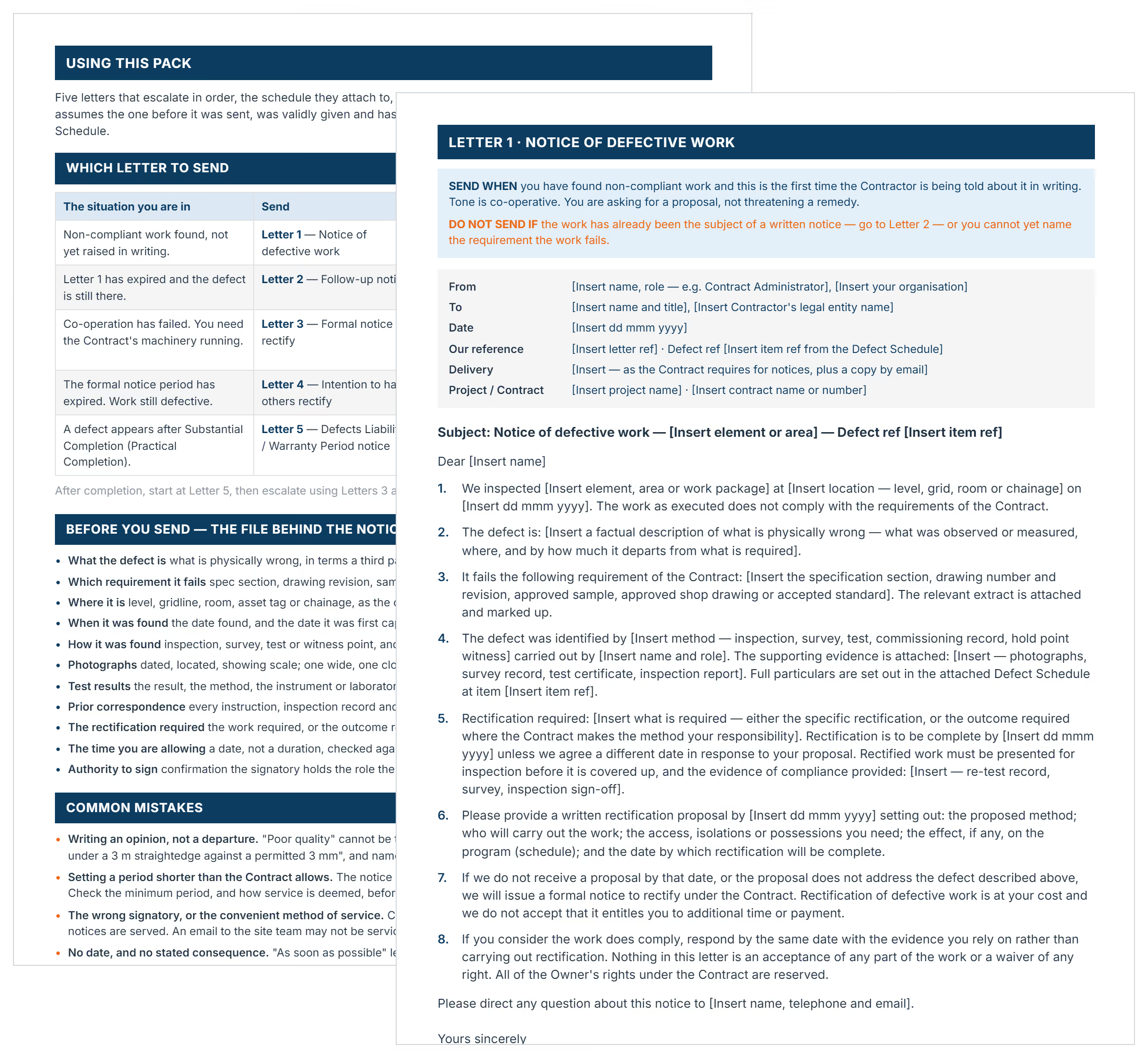
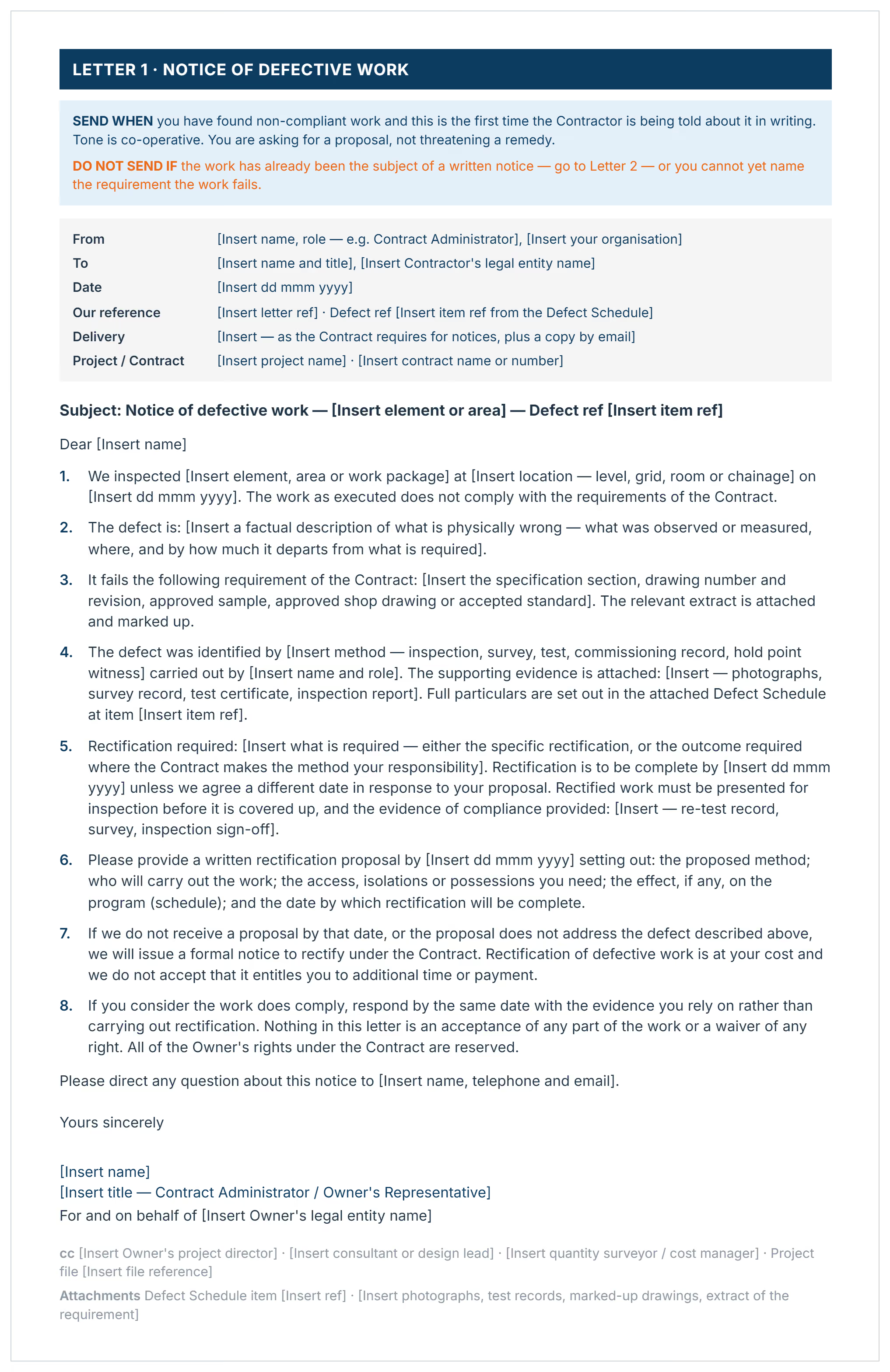
A sample letter to contractor for defective work documents construction quality failures. It provides ready-made language for describing specification violations and demanding immediate corrections. Project owners, client-side PMs, and contract admins use these letters to notify contractors of workmanship deficiencies.
The letter creates an official record showing work fails to meet requirements. It specifies observed defects and references applicable contract standards. Written notice triggers warranty obligations under the construction contract.
What's Included in a Construction Defect Letter?
Construction defect notification letters contain documentation fields formally communicating quality failures to contractors. These letters include project identification, defect descriptions, contract references, evidence, deadlines, and consequences.
Core components typically include:
- Project identification details: Contract number, project address, date, and all parties involved in construction.
- Detailed defect descriptions: Specific locations, poor workmanship nature, specification violations, and observable quality failures discovered.
- Contract document references: Specific sections, construction drawings, specifications, or standards that defective work violates or fails.
- Photographic evidence: Date-stamped images showing each defect clearly with comparisons to specification requirements.
- Correction deadlines: Reasonable timeframes for response (10-15 days), inspection access, and remedial work completion.
- Non-compliance consequences: Payment withholding, back-charge notifications, performance bond calls, or potential legal action if unaddressed.
- Delivery documentation: Certified mail receipt, email confirmation, or hand-delivery witness proving formal notice received.
- Contact information: Project representative names, phone numbers, email addresses, and company name for responses.
💡 Pro Tip: Send defect letters via certified mail with return receipt requested. This creates legal proof the contractor received formal complaint and started the correction period clock.
Why Send a Poor Workmanship Complaint Letter?
A poor workmanship complaint letter protects the project owner and PM when contractors deliver poor quality results. Documented complaints establish legal rights that verbal discussions cannot provide. Building contractors must receive reasonable care in formal notification procedures.
Written defect notification strengthens owner and PM protection through:
- Contract enforcement activation: Triggering warranty obligations, correction periods, and performance bond provisions requiring documented notice.
- Payment leverage preservation: Justifying retainage withholding, back-charges for re-work, or final payment refusal until defects corrected.
- Legal rights protection: Establishing timeline documentation for statute of limitations and preserving future litigation rights.
- Dispute resolution evidence: Creating formal records showing good faith efforts and reasonable correction opportunities provided.
- Additional costs recovery: Documenting expenses for inspections, testing, temporary fixes, or replacement contractor costs incurred.
- Project delays documentation: Recording schedule impacts from defective work discovery and correction time requirements affecting occupancy dates.
- Professional accountability: Demonstrating owner diligence to stakeholders, lenders, insurers, or regulatory bodies overseeing quality compliance.
Without formal defect letters, contractors often claim they never received proper notice. Written documentation eliminates disputes and strengthens enforcement actions.
💡 Pro Tip: Reference specific AIA Document A201 sections in your defect letter. This shows contractors you understand obligations and expect compliance with general conditions.
How to Write a Demand Letter for Construction Defects
Writing effective demand letters requires documenting specific defects while maintaining professional tone. Start by gathering contract documents, inspection reports, photographs, and correspondence about quality concerns.
Follow these steps for effective defect notification:
- Review contract requirements thoroughly: Identify sections, drawings, specifications, or submittals that defective work violates before writing.
- Document defects with evidence: Photograph each defect showing location, extent, and specification deviation with measurements.
- Draft clear defect descriptions: List each defect separately with location, problem nature, contract violation, and condition.
- Establish correction deadlines: Specify reasonable timeframes for contractor response, site access for inspection, and correction completion.
- State consequences clearly: Explain payment withholding, back-charge rights, performance bond notification, or other remedies if unresolved.
- Send via certified mail: Use return receipt requested, maintain correspondence copies, and document every contractor notification attempt.
- Follow up systematically: Track response deadlines, document contractor replies or silence, and escalate if defects unresolved.
💡 Pro Tip: Avoid emotional language in your letter. Courts favor parties demonstrating professionalism and adherence to contract procedures over aggressive complainants.
Who Should Use Contractor Defect Complaint Letters?
Construction defect letters serve anyone managing contractor performance and enforcing quality standards. These formal notifications protect project interests when work fails to meet requirements.
Defect notification letters are essential for:
✅ Project Owners: Exercise contract rights when builders deliver substandard work and withhold payments pending correction.
✅ Project Managers: Document contractor quality failures, enforce specification compliance, and protect budgets from defect costs.
✅ Client-Side Project Managers: Represent owner interests by notifying contractors of workmanship deficiencies and preserving warranty rights.
✅ Contract Administrators: Manage formal notice requirements, track correction deadlines, and escalate unresolved defects to enforcement actions.
✅ Construction Consultants: Advise clients on defect documentation, prepare formal notifications, and guide owners through enforcement.
✅ Program Directors: Oversee quality across multiple projects and enforce consistent contractor performance standards protecting portfolios.
✅ Real Estate Developers: Protect development investments by documenting builder defects and enforcing correction before final delivery.
✅ General Contractors: Send defect letters to subcontractors whose work fails standards and document quality failures.
When to Issue Formal Defect Notifications
A sample letter to contractor for defective work should be sent immediately upon discovering failures. Whether drafting a sample complaint letter or formal demand notice, timing matters critically. Delay weakens enforcement rights and suggests owners and PMs accepted defective work despite knowing failures.
Critical moments requiring formal defect notification include:
- During substantial completion walks: When punch list inspections reveal work violating specifications or building codes requiring correction.
- Within warranty periods: After discovering latent defects during one-year correction period requiring contractor remediation per contract.
- Following failed inspections: When building officials, testing agencies, or design professionals reject work for code non-compliance.
- After informal requests fail: When verbal complaints, email discussions, or site meetings fail producing contractor action.
- Before withholding payment: Prior to reducing payment applications, formal notice documents specific issues justifying retainage increases.
- When discovering safety issues: Immediately upon identifying defects creating hazardous conditions or structural concerns requiring urgent response.
- Near statute deadlines: Before legal claim periods expire, formal letters preserve rights if contractors refuse corrections.
💡 Pro Tip: Issue defect letters within 7 days of discovery. Many contracts require "prompt" notice. Delays suggest waiving defect claims or accepting non-conforming work.
Best Practices for Documenting Defective Work
Effective defect documentation combines thorough evidence gathering with systematic notification procedures. Strong documentation protects enforcement rights throughout correction processes and potential litigation.
☑️ Reference specific contract sections: Cite drawing numbers, specification paragraphs, or submittal approvals that defective work violates clearly.
☑️ Attach date-stamped photographs: Include multiple images per defect showing context, close-up details, measurements, and execution comparisons.
☑️ Quantify defect scope: State exact quantities using square footage, linear feet, or number of locations justifying back-charges.
☑️ Include independent verification: Attach testing reports, engineer findings, or code official observations supporting defect claims beyond owner and PM observations.
☑️ Maintain chronological records: Log every notification, contractor response, inspection, and correction attempt creating timeline documentation for enforcement.
☑️ Specify performance standards: Reference building codes (IBC), material standards (ASTM), or industry practices establishing objective quality benchmarks.
☑️ Document correction attempts: Photograph repair efforts, record dates work occurred, and note whether corrections remedied defects successfully.
Common Problems with Informal Defect Complaints
Informal defect complaints through emails, phone calls, or site conversations create documentation gaps. Verbal notifications lack legal weight necessary to trigger contract remedies or withstand disputes.
⚠️ No proof of contractor receipt: Email discussions and phone calls lack delivery confirmation letting contractors claim never receiving.
⚠️ Insufficient defect detail: Casual complaints lack specific locations, contract references, or technical descriptions contractors need understanding requirements.
⚠️ Unclear correction deadlines: Informal requests without firm response dates enable contractors delaying indefinitely claiming schedule constraints.
⚠️ Missing contract references: Generic quality complaints fail citing specific contractual obligations weakening owner arguments requiring defect remediation.
⚠️ No consequence statements: Casual defect mentions lack payment withholding warnings or back-charge notices motivating contractor action.
⚠️ Inconsistent documentation: Scattered emails, texts, and meeting notes create incomplete records failing to demonstrate systematic efforts.
⚠️ Relationship preservation attempts: Trying maintaining friendly contractor relationships through soft complaints results in defects remaining unaddressed indefinitely.
⚠️ Statute of limitations risks: Informal complaints fail establishing formal notice dates potentially starting legal claim periods without documentation.
💡 Pro Tip: Follow every phone call about defects with formal email summary. This creates contemporaneous written record corroborating verbal communications if disputes require notification evidence.

Written by
Jackson Row
Jackson Row is the Growth & North American Market Lead at Mastt. With a background in risk modeling, cost forecasting, and integrated project delivery, he helps capital project owners work smarter and faster. Jackson’s work supports better tools, better data, and better outcomes across the construction industry.

Use this FREE sample letter to contractor for defective work to document quality failures. Notify contractors of poor workmanship and request immediate corrections to protect your project.

Top Performers Don’t Guess. They Deliver.
Cut the stress of showing up unprepared
Start for FreeTrusted by the bold, the brave, and the brilliant to deliver the future