

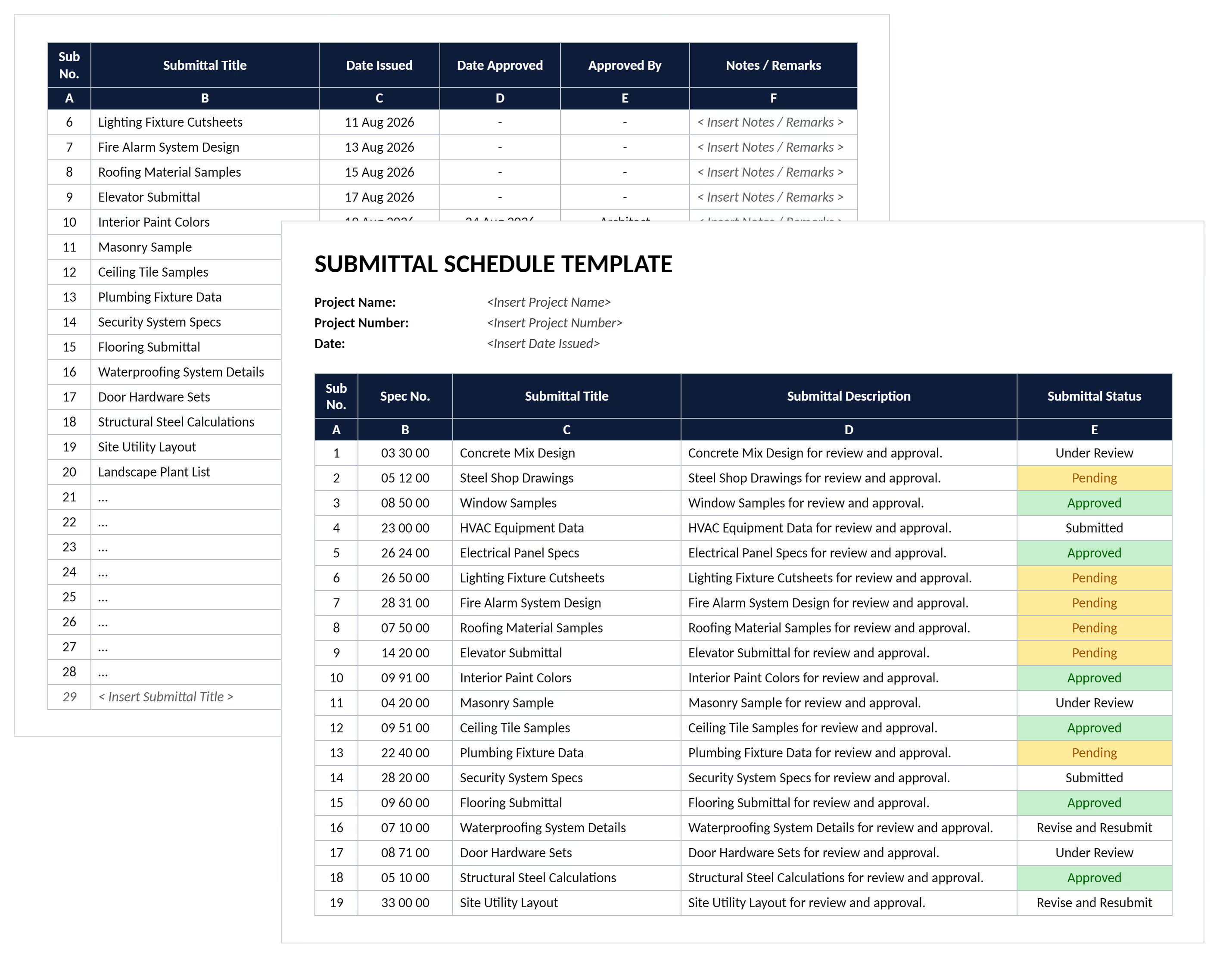

What is a Construction Submittal Schedule Template?
A construction submittal schedule template is a pre-structured document listing all shop drawings, product data, and material samples requiring review during construction. It establishes submission deadlines, review periods, and approval workflows for validating contractor coordination and preventing fabrication delays.
The template organizes construction submittals by specification section, trade, or phase. Whether you're building schedules as a contractor or reviewing submissions as an owner, it tracks when documentation must arrive, how long reviews take, and when approvals must return to maintain critical path activities.
Project owners use submittal schedule templates to hold contractors accountable for realistic timelines. Client-side project managers validate that review periods accommodate design team coordination without compressing procurement schedules for structural steel, mechanical equipment, or other long-lead items.
What's Included in a Construction Submittal Template?
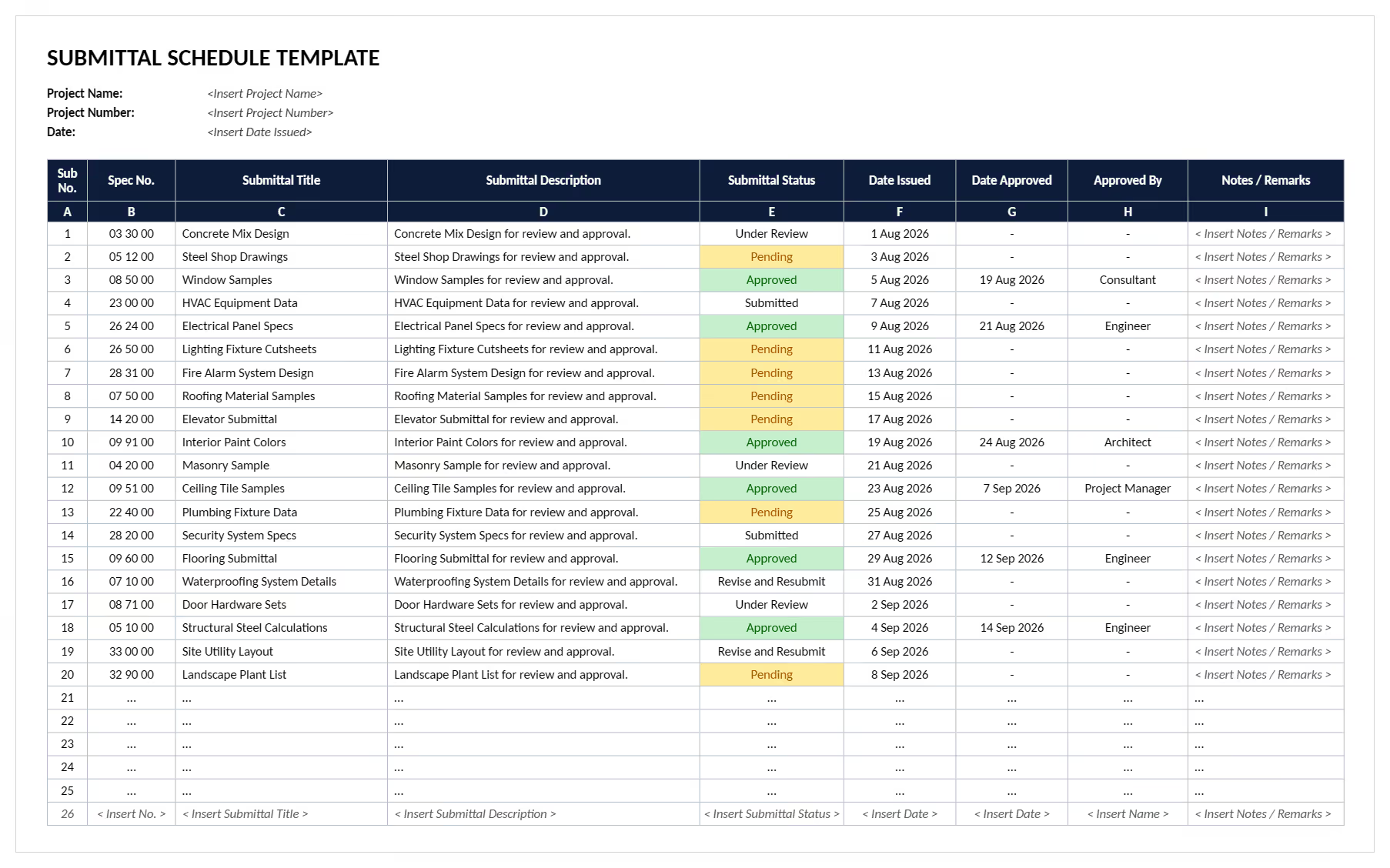
An ideal construction submittal template captures essential details for both creating contractor submissions and validating owner review workflows. The structure ensures submission deadlines align with construction milestones whilst review periods remain achievable for design teams.
Standard components in an effective schedule of submittals include:
- Submittal item description: Identification of each shop drawing, product data sheet, or material sample requiring architect review.
- Specification section reference: CSI MasterFormat division numbers linking submittals to contract documents.
- Responsible subcontractor identification: Company name and contact establishing accountability for timely submissions.
- Submission deadline dates: When contractors deliver packages to design teams, calculated from installation milestones.
- Review period duration: Time allocated for architect and engineer review, typically 14-21 days.
- Required approval date: Latest date approved submittals must return to maintain fabrication schedules.
- Lead time requirements: Duration from approval to delivery for structural steel (10-12 weeks), mechanical equipment (8-10 weeks), electrical gear (6-8 weeks).
- Submittal status tracking: Current position showing submitted, under review, or approved for fabrication.
💡 Pro Tip: Compare contractor submittal schedules against your project schedule before contract award. Unrealistic review periods or missing long-lead items signal coordination problems that will derail activities months later.
Why Effective Submittal Schedule Management Matters
Construction submittal schedule management prevents fabrication delays and cost overruns caused by late approvals returning when materials should already be on site. A construction project submittal schedule template creates accountability for realistic review periods whilst protecting critical path activities from compression.
Here's why structured submittal scheduling protects project delivery:
- Validates contractor coordination: Confirms submission deadlines demonstrate realistic review requirements and approval workflows.
- Prevents fabrication delays: Ensures structural steel, mechanical equipment, and electrical gear receive approvals before production starts.
- Protects review period integrity: Stops unrealistic 7-day review cycles forcing rushed approvals or waived coordination requirements.
- Identifies long-lead item risks: Flags items with 8-12 week procurement cycles preventing critical path delays.
- Coordinates multiple trade submissions: Sequences 15-20 subcontractors without overwhelming architects with simultaneous reviews.
- Supports accountability tracking: Documents baseline for measuring submittal preparation performance and submission timeliness.
- Enables proactive intervention: Spots schedule compression, missing submittals, or coordination problems during planning.
Teams that validate submittal schedules during contract negotiation catch coordination problems before mobilization. This prevents the disputes over review period adequacy that emerge when approvals fall behind.
How to Create and Use a Schedule of Submittals
Creating a schedule of submittals requires extracting submittal requirements from specifications, then sequencing them against the construction schedule. Start by reviewing specification sections for shop drawing, product data, and sample obligations.
Follow these steps to build effective construction submittal schedules:
- Extract submittal requirements from specifications: Review each CSI specification section, documenting every shop drawing, product data sheet, material sample, and test report requiring architect or engineer review. Capture this list in a submittal register template before assigning any dates to it.
- Sequence against construction activities: Work backward from installation dates on your Critical Path Method (CPM) schedule, adding review periods and procurement lead times.
- Identify critical path submittals: Flag structural steel, long-lead mechanical equipment, and building enclosures for priority processing and expedited coordination.
- Assign subcontractor responsibilities: Designate which trade prepares each submittal, establishing accountability across multiple specialty contractors.
- Calculate submission deadlines: Work backward from required approval dates, accounting for review periods to ensure approvals support fabrication schedules.
- Coordinate submission sequencing: Stagger subcontractor submissions across weeks rather than scheduling 15 submittals simultaneously, giving architects manageable workloads.
- Distribute and track performance: Issue schedules to all subcontractors at preconstruction meetings, then monitor actual submission dates weekly. Record those actual dates in a construction submittal log template so planned deadlines and real approval status sit side by side.
💡 Pro Tip: Front-load structural and MEP submittals in your construction submittal schedule even if installation comes later. These items have the longest lead times and highest potential for multiple review cycles requiring extensive design coordination.
Who Should Use Construction Submittal Scheduling Templates?
Submittal schedule templates serve anyone responsible for validating contractor coordination or building submission timelines that protect project delivery. They ensure both owner-side review teams and contractor-side execution teams work from realistic, coordinated workflows.
✅ General Contractors: Build coordinated schedules that sequence 15-20 subcontractor submissions without overwhelming architects.
✅ Subcontractors and Specialty Contractors: Understand submittal obligations and submission deadlines before contract execution.
✅ Project Owners and Developers: Validate contractor submittal schedules demonstrate realistic review periods before signing contracts.
✅ Client-Side Project Managers: Review contractor submission deadlines against project schedules, ensuring adequate review periods.
✅ Owner's Representatives: Assess submittal coordination quality during contractor selection, comparing proposed schedules.
✅ Project Managers: Coordinate submittal reviews across design teams, tracking approval progress to prevent critical path delays.
✅ Construction Managers: Develop submittal schedules aligned with CPM schedules, coordinating trade packages to maintain critical path protection.
✅ Contract Administrators: Enforce submittal schedule compliance by tracking contractor performance and documenting approval timing disputes.
✅ Architects and Design Consultants: Validate contractor schedules provide adequate review periods for coordination amongst design teams.
When to Develop Construction Submittal Schedules
Construction submittal schedules should be developed during preconstruction planning before contractors mobilize to site. Early development identifies coordination requirements when teams can still adjust submission sequences, review periods, and procurement strategies.
Deploy or validate submittal scheduling at these critical moments:
- During contract negotiation: Review proposed contractor submittal schedules before signing, validating submission deadlines and review periods demonstrate realistic coordination.
- Immediately after contract award: Finalize detailed schedules within 10 days of notice to proceed, coordinating subcontractor submissions before mobilization.
- Before long-lead procurement: Prioritize submittal schedules for structural steel, mechanical equipment, and electrical gear requiring 8-12 week fabrication cycles.
- At preconstruction meetings: Validate submittal coordination across all trades, confirming subcontractors understand submission deadlines and architects confirm review periods.
- When baseline schedules update: Revise submittal deadlines whenever construction schedules shift installation dates, ensuring approvals protect critical path activities.
- During coordination problem resolution: Update schedules when design conflicts require resubmissions, documenting impact on downstream procurement timing.
- Monthly throughout construction: Track actual submission performance against planned deadlines, identifying subcontractors falling behind.
💡 Pro Tip: Front-load submittal schedule validation during the first 30 days after contract award. Problems caught during preconstruction cost coordination meetings. Problems discovered when steel should be fabricating cost change orders and schedule extensions.
Common Problems with Generic Submittal Schedule Template Excel Files
Excel spreadsheets and static PDFs create coordination problems that undermine submittal management. Construction submittal schedule template Excel files become outdated within days whilst lacking integration for tracking submission performance.
Typical challenges with manual schedule formats include:
⚠️ Disconnected from construction schedules: Excel templates don't link to CPM schedules, so date changes don't update submission deadlines.
⚠️ Unrealistic review period assumptions: Generic templates often default to inadequate review periods, forcing rushed approvals or creating disputes.
⚠️ Missing long-lead item prioritization: Spreadsheets rarely flag extended procurement items, letting structural steel or mechanical equipment slip.
⚠️ Version control destroys accountability: Multiple Excel files circulate as different parties maintain separate copies, eliminating any single source of truth.
⚠️ No status tracking integration: Static templates can't connect to submittal logs showing actual submission dates or progress.
⚠️ Inadequate trade coordination visibility: Excel formats make it difficult to visualize simultaneous submissions, creating architect review bottlenecks.
⚠️ Specification requirement gaps: Building schedules manually risks missing submittal requirements buried in specification sections.
⚠️ Revision cycle complexity: Excel templates can't show how resubmission cycles compress downstream procurement timing.
💡 Pro Tip: If Excel is your only option, require contractors to maintain color-coded status updates showing on-time (green), at-risk (yellow), and late (red) submissions. Visual tracking forces accountability conversations before problems become critical path delays.
Best Practices for Submittal Schedule Coordination
Effective submittal schedule coordination requires systematic validation, consistent tracking, and proactive intervention when submission timing slips. These practices transform schedules from compliance documents into actual project controls preventing fabrication delays.
☑️ Build buffer periods for resubmissions: Add extra weeks between approval dates and required-on-site dates.
☑️ Establish escalation triggers: Define when late submittals get escalated, typically after missing deadlines by 5 business days.
☑️ Link delays to change order procedures: Document that late reviews or submissions automatically trigger schedule impact analysis.
☑️ Hold dedicated submittal coordination meetings: Conduct monthly submittal reviews separate from progress meetings.
☑️ Require preliminary packages early: Have subcontractors submit preview packages two weeks before scheduled dates.
☑️ Track review duration separately: Distinguish between delays caused by design team workload versus contractor preparation quality.
☑️ Cluster related submittals: Submit all mechanical equipment from one system together for coordinated review.
☑️ Update after design changes immediately: Don't wait for monthly updates when scope changes require resequencing coordination.
☑️ Photograph rejected submittals: Visual documentation helps subcontractors understand quality expectations, reducing repeat rejects.
Build Coordinated Project Submittal Schedules with Mastt
Every construction project depends on timely submittal approvals returning before fabrication deadlines compress schedules. The difference between smooth delivery and perpetual delays often traces back to submittal coordination quality during preconstruction.
With Mastt AI, contractors build realistic schedules whilst owners validate coordination before problems emerge. Generate complete frameworks from specifications, adjust sequences through conversation, and export coordinated schedules ready for immediate use.
👉 Try Mastt AI today and create submittal schedules that prevent delays instead of documenting them after critical path activities fall behind.

Written by
Jackson Row
Jackson Row is the Growth & North American Market Lead at Mastt. With a background in risk modeling, cost forecasting, and integrated project delivery, he helps capital project owners work smarter and faster. Jackson’s work supports better tools, better data, and better outcomes across the construction industry.

Use this construction submittal schedule template to sequence submission deadlines across 20+ subcontractors. Prevent fabrication delays and installation bottlenecks before they hit critical path.

Top Performers Don’t Guess. They Deliver.
Cut the stress of showing up unprepared
Start for FreeTrusted by the bold, the brave, and the brilliant to deliver the future