





A design freeze gives a construction team an agreed design to work from as decisions move into detailed documentation, procurement, and construction. Calling it at the right time requires clarity about what is settled, what remains open, and which activities depend on those decisions.
For project owners and managers, the challenge is choosing a point that protects delivery while giving essential requirements enough time to develop.
What Is a Design Freeze in Construction?
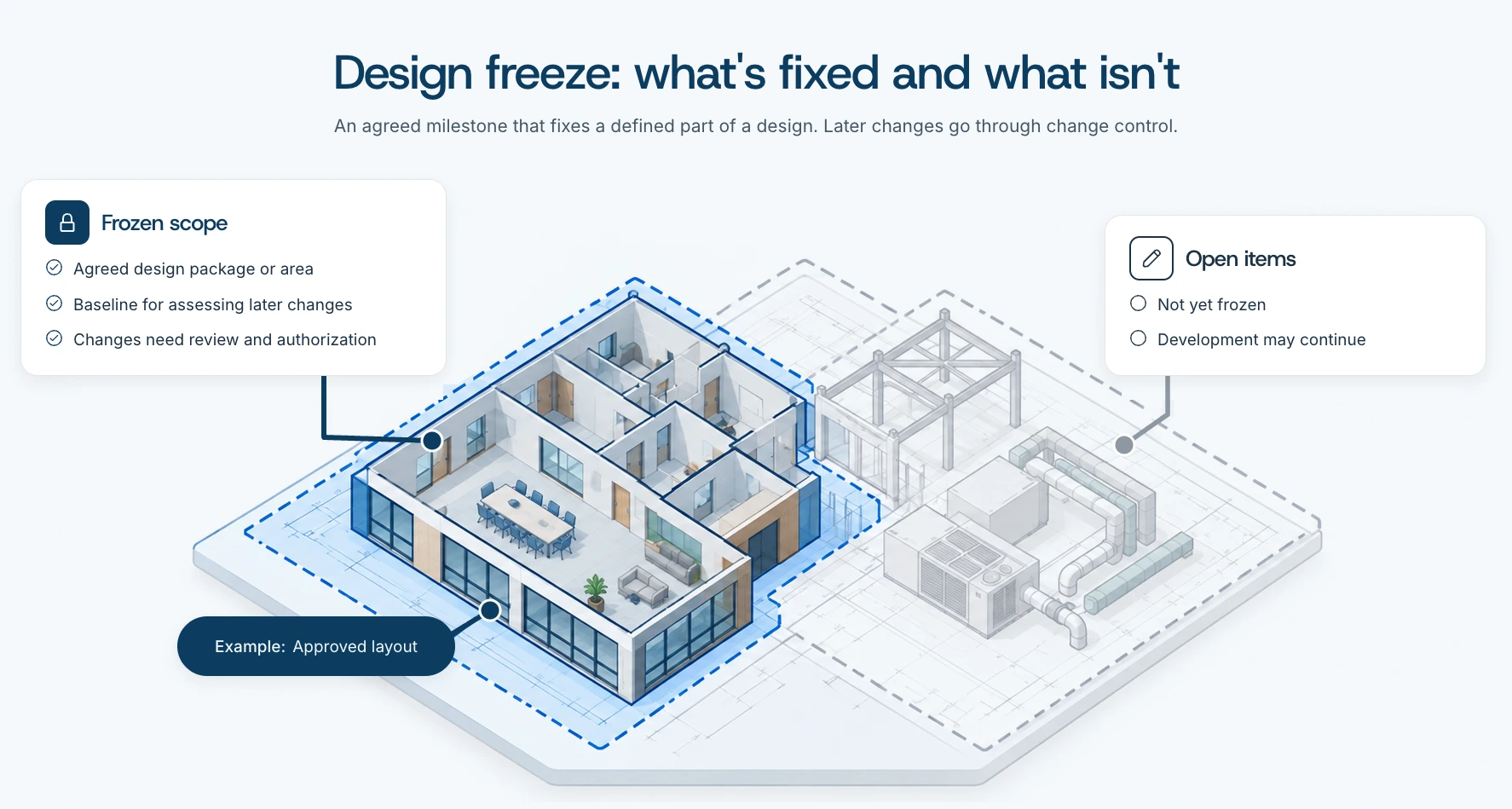
A design freeze is an agreed milestone at which a defined part of a construction design becomes fixed for a stated purpose. Changes to that scope afterward require review and authorization through the project’s change control process.
The scope might cover a building layout, structural arrangement, equipment selection, or a coordinated package of drawings and specifications. The freeze establishes the reference against which subsequent changes are assessed.
Its meaning needs to be clear to everyone using it. For example, AIA’s guide to volumetric modular construction documents explains a freeze covering the modules’ major components, configuration, and size. That definition applies to the modular work covered by those agreements.
When Should You Call a Design Freeze?
Call a design freeze when the defined scope is sufficiently resolved for the next activity to rely on it, and the appropriate decision-makers have approved it. Plan the date around the work it enables, allowing time for review and unresolved decisions to be closed.
The timing depends on the delivery method, package, procurement sequence, and remaining uncertainty. Use the project’s design phases to organize these decisions, then check the information needed at each point.
Before dependent design work proceeds
The relevant design decisions should be settled when another discipline needs them to progress its work. A confirmed room arrangement, for example, gives engineers a basis for coordinating services.
The RIBA Plan of Work 2020 recommends formal change control from the start of Stage 3, following approval of the concept design and final project brief. It distinguishes ongoing design development from functional changes, such as moving or resizing a space.
Before procurement or fabrication commitments
Set the freeze date ahead of the purchasing or fabrication commitment, allowing time for supplier review. Confirm dimensions, performance requirements, connections, and selections before authorizing that commitment.
AIA’s modular construction guidance places the freeze before module construction begins, generally after design development. For other construction packages, agree on the information required with the supplier or contractor before setting the freeze date.
Before an early work package is released
Call a package-specific design freeze before releasing an early work package for procurement or construction. Confirm that unresolved decisions elsewhere will not affect the package’s dimensions, loads, connections, or performance requirements.
For example, freezing a structural package while equipment selections remain open requires the team to resolve the loads and openings that could affect that structure. Assign dates for remaining selections and identify which changes would trigger another review.
A completion label such as “90% design” is insufficient on its own. Ask what remains unresolved and whether it could change the work being released.
What Should Be Checked Before a Design Freeze?
Before approving a design freeze, confirm that requirements, technical interfaces, and delivery assumptions are sufficiently resolved for the intended scope. Review the evidence with the people who will use, design, procure, and deliver the affected work.
Use the table below to structure that review.
Compare the design with the current design brief. Confirm that the requirements reflect how the finished facility will operate, including the needs of facilities and maintenance teams.
Changing workplace requirements need to be understood before design decisions are locked in. In my experience, ignoring how teams need to use a space risks delivering an office that no longer meets their needs.
The review should test whether the design still serves the intended use. During design development, document the trade-offs the owner has accepted, especially where space, performance, cost, and operations compete.
How Do You Establish a Design Freeze?
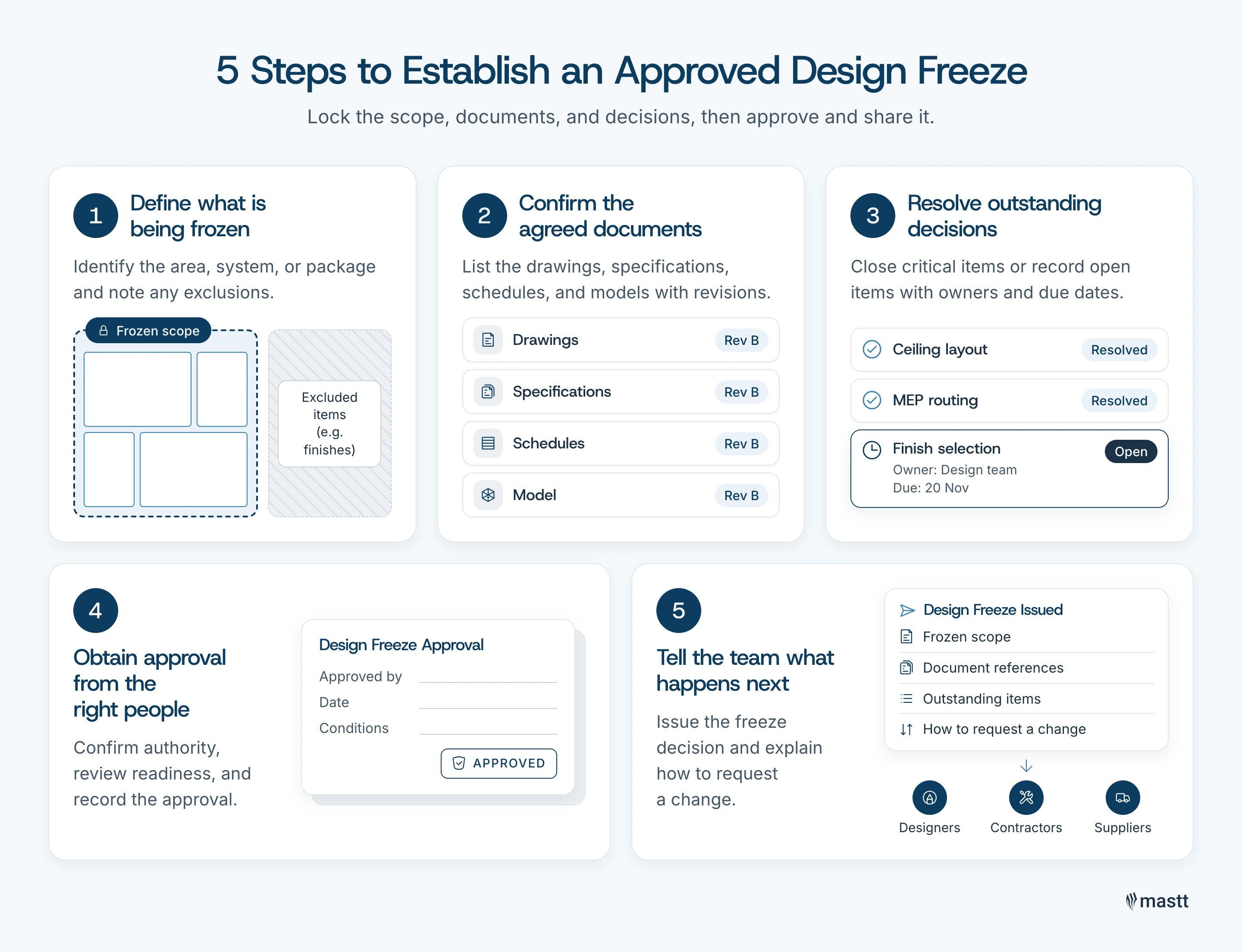
Establish a design freeze by agreeing on what is fixed, confirming the supporting documents, closing critical decisions, and securing approval. The goal is for everyone to understand which design they can rely on, what work can proceed, and how later changes will be handled.
Step 1: Define what is being frozen
Identify the area, system, or work package covered by the freeze. Explain which decisions are fixed and what the freeze allows the team to do next.
For example, “Level 2 room arrangement approved for services coordination” tells engineers what they can use to develop their designs. List anything excluded, such as finishes still being selected, and check whether those choices could affect the agreed layout.
Outcome: A clear description of the frozen scope, its purpose, and its exclusions.
Step 2: Confirm the agreed documents
List the drawings, specifications, schedules, and models that describe the design being approved. Include revision numbers and dates so the team can identify the correct versions.
Check that the documents agree with each other. For example, an equipment schedule should match the equipment shown on the drawings. Store the agreed set in the project’s document system and make it accessible to everyone who needs it.
Outcome: One identifiable set of documents that records the agreed design.
Step 3: Address outstanding decisions
Review open decisions with the people whose work they could affect. If an unresolved item could change the scope being frozen, resolve it first or reduce the scope of the freeze.
Some items may remain open if their effects are understood and contained. Record who will resolve each item, when the decision is due, and which work must wait. For example, a ceiling layout may be agreed while a finish color remains open, provided the choice will not change the material, dimensions, or installation requirements.
Outcome: Outstanding items have owners and deadlines, with clear limits on what can proceed.
Step 4: Obtain approval from the right people
Confirm who has authority to approve the freeze under the project’s governance and contractual arrangements. The PM coordinates the review, supported by designers and delivery specialists who assess whether the design is ready for its intended purpose.
Even when I had authority as the PM to approve or reject a change, I checked with the project team whether it was achievable. Approval needs to reflect what the team can actually deliver.
Record who approved the freeze, the date, and any conditions. Make clear whether separate authorization is still needed to purchase materials or start construction.
Outcome: A recorded approval with clear responsibilities and conditions.
Step 5: Tell the team what happens next
Issue the freeze decision with the agreed scope, document references, and outstanding items. Confirm that affected designers, suppliers, and contractors understand how it applies to their work.
Explain how to request a change after the freeze. Identify who reviews the technical effects, who assesses cost and schedule impacts, and who makes the approval decision.
Outcome: The team knows what it can rely on and how to handle further changes.
How Should You Manage Changes After a Design Freeze?
Manage a proposed change by recording the need, assessing the affected work, and obtaining authorization through the agreed process. Make the consequences visible before committing to revised work, subject to the project’s contract and urgent safety procedures.
A useful review covers:
- Reason: Explain why the change is needed and the consequence of leaving the design unchanged.
- Technical impact: Identify affected drawings, systems, interfaces, and approvals.
- Delivery impact: Check procurement, fabrication, site sequencing, and supplier availability.
- Cost impact: Assess redesign fees, altered orders, rework, and associated costs.
- Resource impact: Confirm whether consultants and contractors can complete the additional work.
- Decision: Record approval, rejection, or deferral and the conditions attached.
Use the review to assess relevant design change risks. When a change is authorized, issue revised information and update affected cost, schedule, and decision records. Use a change order where required by the contract.

Example: An equipment change after the freeze
Consider a hypothetical project where a plantroom arrangement has been frozen, and the owner requests a different air-handling unit before the order is placed.
The proposed unit may meet the capacity requirement but have different dimensions, weight, connections, or maintenance clearances. Ask the relevant designers and supplier to review those differences before accepting the substitution.
The outcome could be approval with revised drawings, selection of another unit, or retention of the original design. Record the decision and confirm any effect on procurement timing and installation.
Freeze the Design with the Finished Project in Mind
A design freeze should give the team confidence to proceed while protecting what the owner needs from the finished facility. Before calling one, consider whether the design will support the people who use, operate, and maintain it. Resolving those needs early gives the team a stronger basis for delivery and the owner greater confidence in the outcome.

Written by
Colin Podmore
Before Atlassian, Colin Podmore held transition management roles at Westpac Group and Puzzle Partners in Sydney, and earlier worked as a research manager at AMP. Over ten years at Atlassian, he worked on workplaces for the company across the Asia-Pacific region. Colin contributes interview insights and articles for Mastt on workplace strategy and project delivery.


Contributions by
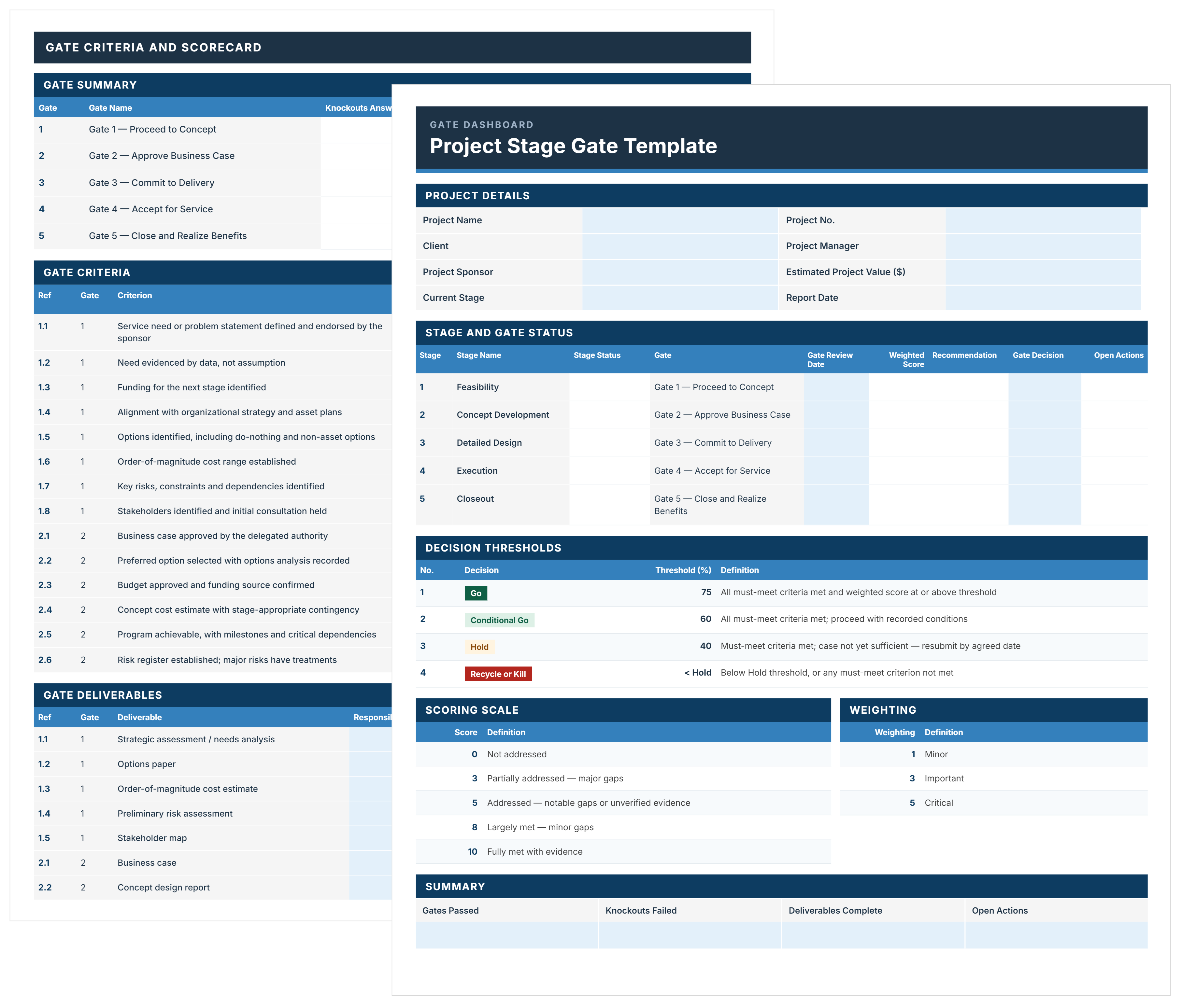
Project Stage Gate Template
Use this stage gate process template to structure decision gates, define evaluation criteria, track deliverables, and make confident go/kill decisions that protect investment and accelerate project approvals.

Walk Into Every Meeting With Confidence, Clarity, and Control
No one wants to look unprepared, blindsided, or uncertain in front of stakeholders — but that’s exactly what happens without Mastt.
Start for FreeTrusted by the bold, the brave, and the brilliant across governments, Fortune 500s, and the world’s best in delivering the future


