
.avif)

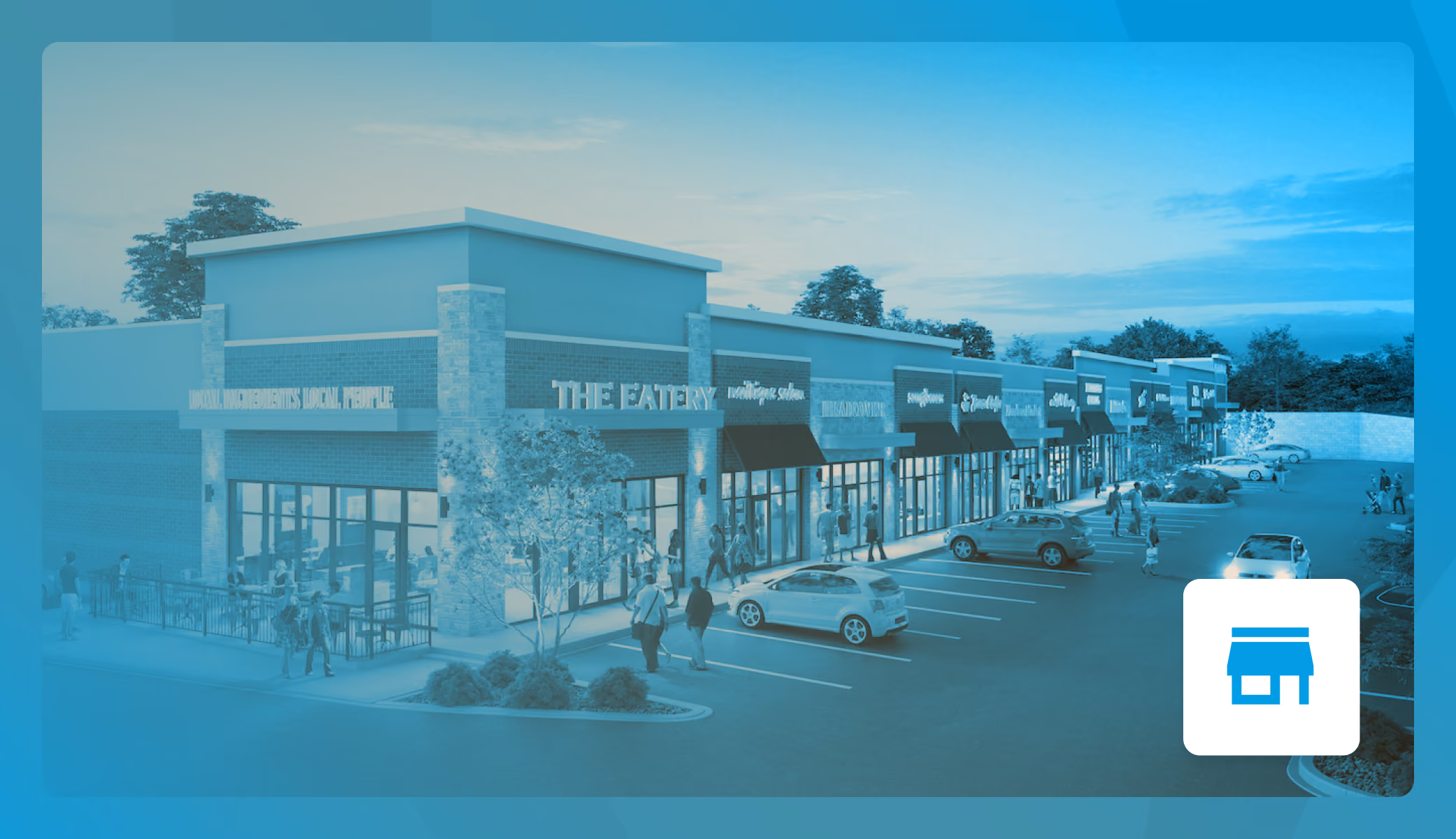
In retail construction project management, you often break ground before you know your tenants. On most projects, the leases aren’t signed when we start. We might have preferred operators in mind (food, specialties, medical), but the market decides who takes each tenancy.
This article covers how to manage a base build for unknown tenants and how retail differs from residential. It also covers how to deliver while a center keeps trading.
What Is Retail Construction Project Management?
Retail construction project management is the planning, coordination, and delivery of a retail building on behalf of its developer. The project manager runs the base build, services, and tenancy layouts so the center can take tenants as they sign. What sets retail apart is that you usually start before the leases are signed.
Most of my career has been in retail, from a family shopfitting business to tenancy delivery on a center redevelopment. Tenancies fill as leasing progresses. So you plan and sequence the work around a mix you can only estimate at the start.

Retail vs Residential Construction
Retail and residential projects differ on one thing that changes everything: certainty. In residential construction, you know the product before you build it. In retail construction, you don’t, so you build for change rather than a fixed design.
The gap between the two shows up across the whole delivery:
For retail development, the tenants are only half the picture. A shopping center only works if people keep coming through the door. Foot traffic drives sales, and sales drive the leasing rates a developer depends on. So you design for the shopper, not only the tenant.
How Do You Manage a Retail Base Build for Unknown Tenants?
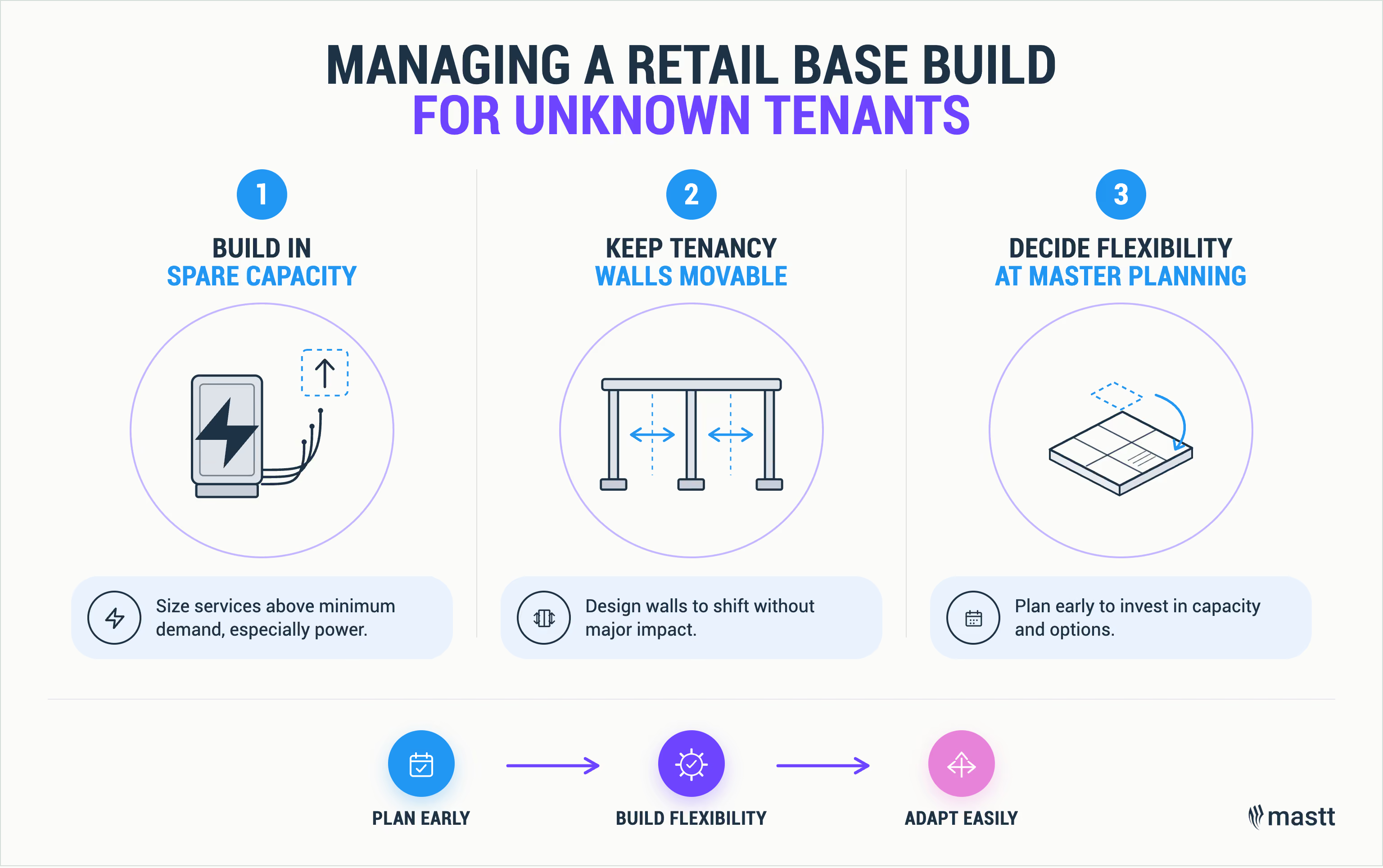
You manage a base build for unknown retail tenants by designing for flexibility. Then you control where change can happen later. The base build is the shell-and-core you commit to before leases exist. Every allowance in it decides whether a late tenant is a quick change or a redesign.
1. Leave spare capacity in the services
Size the services above the base case, especially power. A food operator may need a 100-amp three-phase supply, and that’s common across a center. Build to the minimum, and the first demanding tenant might force an upgrade you should have priced.
2. Keep the tenancy walls movable
Inter-tenancy walls will move. Leasing splits one tenancy in two, merges two into one, or resizes a space for a signed tenant. Detail these walls so they shift without touching the structure or major services.
3. Decide the flexibility in master planning
These calls belong at master planning, while you can still spend money on capacity or move things around. Come in after the master plan is set and you’re unwinding decisions instead of shaping them.
I have seen this play out with ALDI. They need around 10 kPa of floor loading, which means if you have a suspended slab, it would need significant structural upgrades. None of that is cheap to retrofit. So we price it into the base build early, while it is still just a line on the drawings.
💡 Pro Tip: Let the most demanding tenant you might land set the base for that zone. You can’t add floor strength or a dedicated supply after the pour without significant additional cost.

How to Manage Leases That Sign During Construction
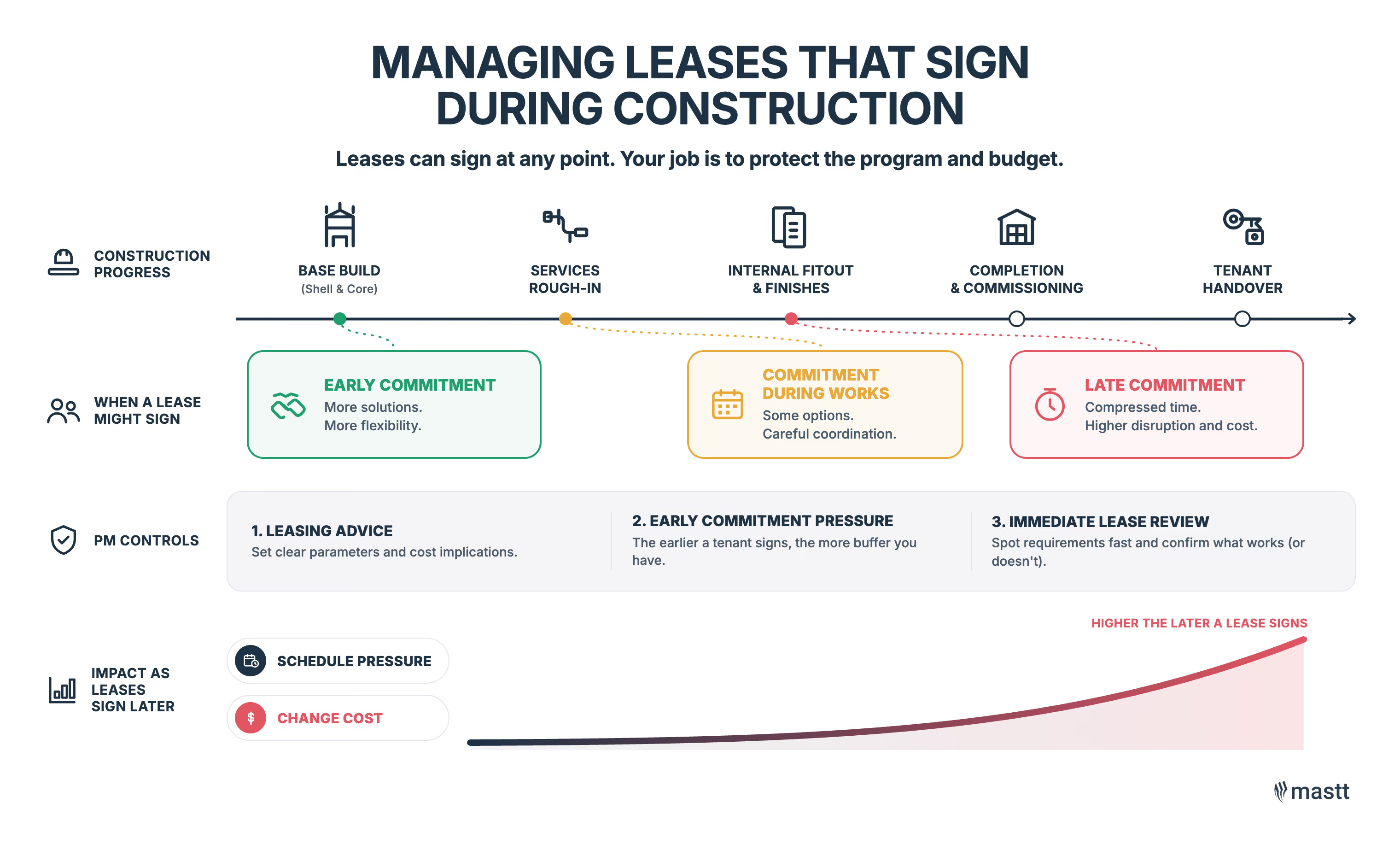
You manage it by getting ahead of the leasing process, because you can’t control its timing. Leasing is a sales process, so deals close when tenants commit, sometimes at the end of construction. Your job as project manager is to protect the program and budget against that uncertainty.
In practice, you manage leases as a PM with three levers:
- Advise leasing before signing. Tell the agent what a tenancy can and can’t have, and what a change will cost.
- Push for early lease commitments. The earlier a tenant signs, the more you can absorb without retrospective works. A late signer might give you only a week.
- Spot what a lease needs immediately. My business partner Oli and I both came from previous roles in tenancy delivery. We see straight away what a lease demands and whether it works.

How Do You Keep a Shopping Center Trading Through Redevelopment?
A shopping center can continue trading during redevelopment by treating everything operational as untouchable. Every shop that’s open has to stay open, so the sequence works around trading hours.
That rule shapes how you sequence the work:
- Move disruptive and noisy work to night shifts, out of trading hours.
- Plan every tie-in around a center that can’t go dark.
- Where there are several distribution boards, piggyback off one and keep the rest live.
- Stage the night tie-in fully, so power is on before the doors open.
Power tie-ins are the recurring problem here. Nobody wants to shut the whole center down to connect, and retailers want the lights on first thing.
Plan for Flexibility on a Retail Project
Retail delivery rewards the project manager who plans for the tenant mix to change. Set the framework early, and a late deal is routine, not a scramble.
If you’re setting up controls for a retail development, start where a late tenancy change hits first. That means variation (change order) management and contract management. Guides to both are a practical place to start.

Written by
Joshua Gamble
Joshua Gamble is a Director at Adaptis Project Developments, a Perth project management consultancy, with about a decade of construction experience, having started out in shopfitting and retail fit-outs. He specializes in delivering and superintending retail projects in live, trading environments. He contributes content on retail project delivery at Mastt.


Contributions by

Variation Register Template
Use this FREE Variation Register Template to track and document all changes to your project scope, budget, timeline, and terms. Stay organized, transparent, and in control of variations.

Walk Into Every Meeting With Confidence, Clarity, and Control
No one wants to look unprepared, blindsided, or uncertain in front of stakeholders — but that’s exactly what happens without Mastt.
Start for FreeTrusted by the bold, the brave, and the brilliant across governments, Fortune 500s, and the world’s best in delivering the future