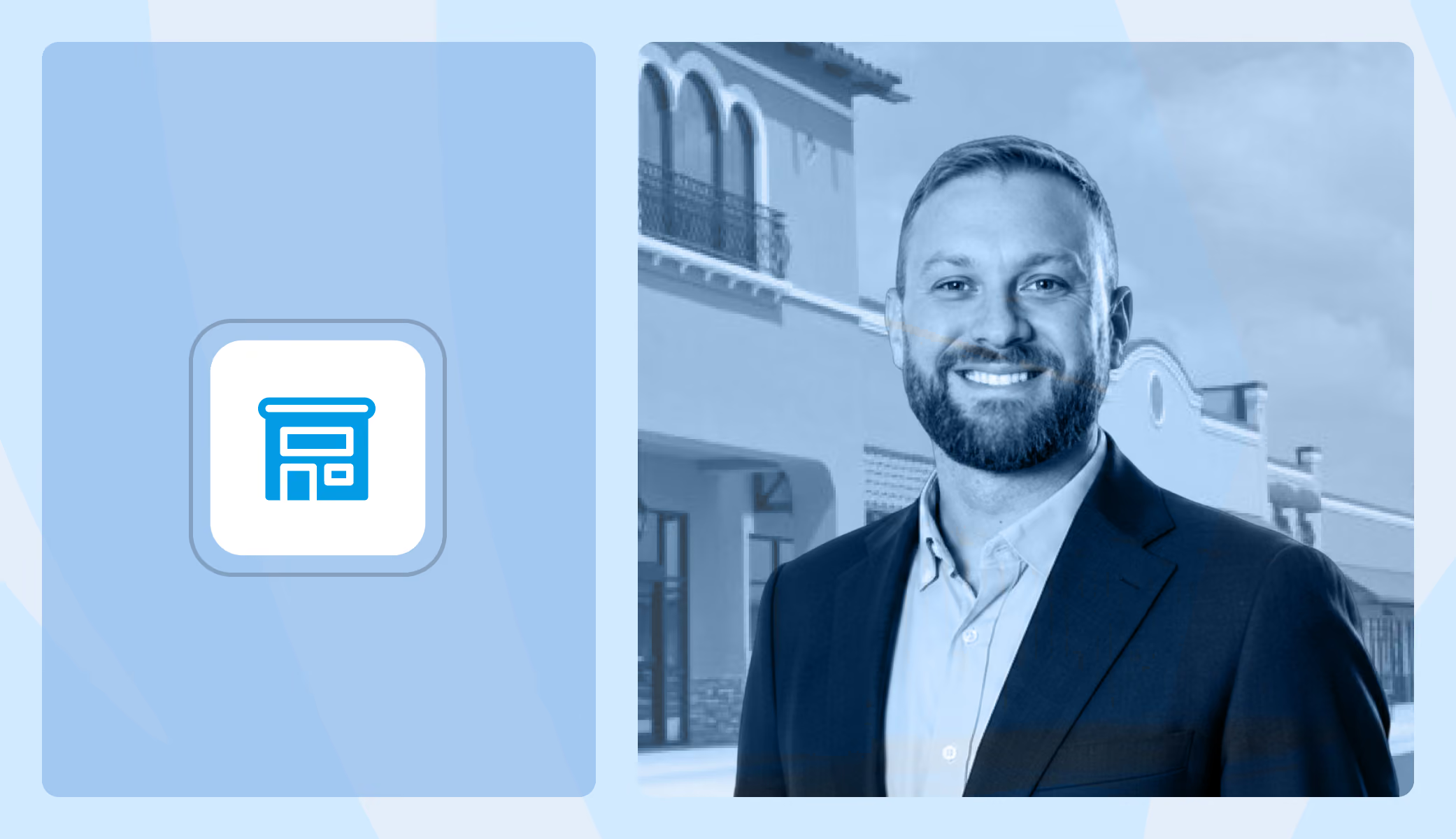


Joshua Gamble has worked across retail delivery, from shopfitting and landlord-side redevelopment to tenant-side projects. He is now co-founder of Adaptis, a Perth-based PM consultancy. Here are six retail development tips we learned from our recent conversation with him.
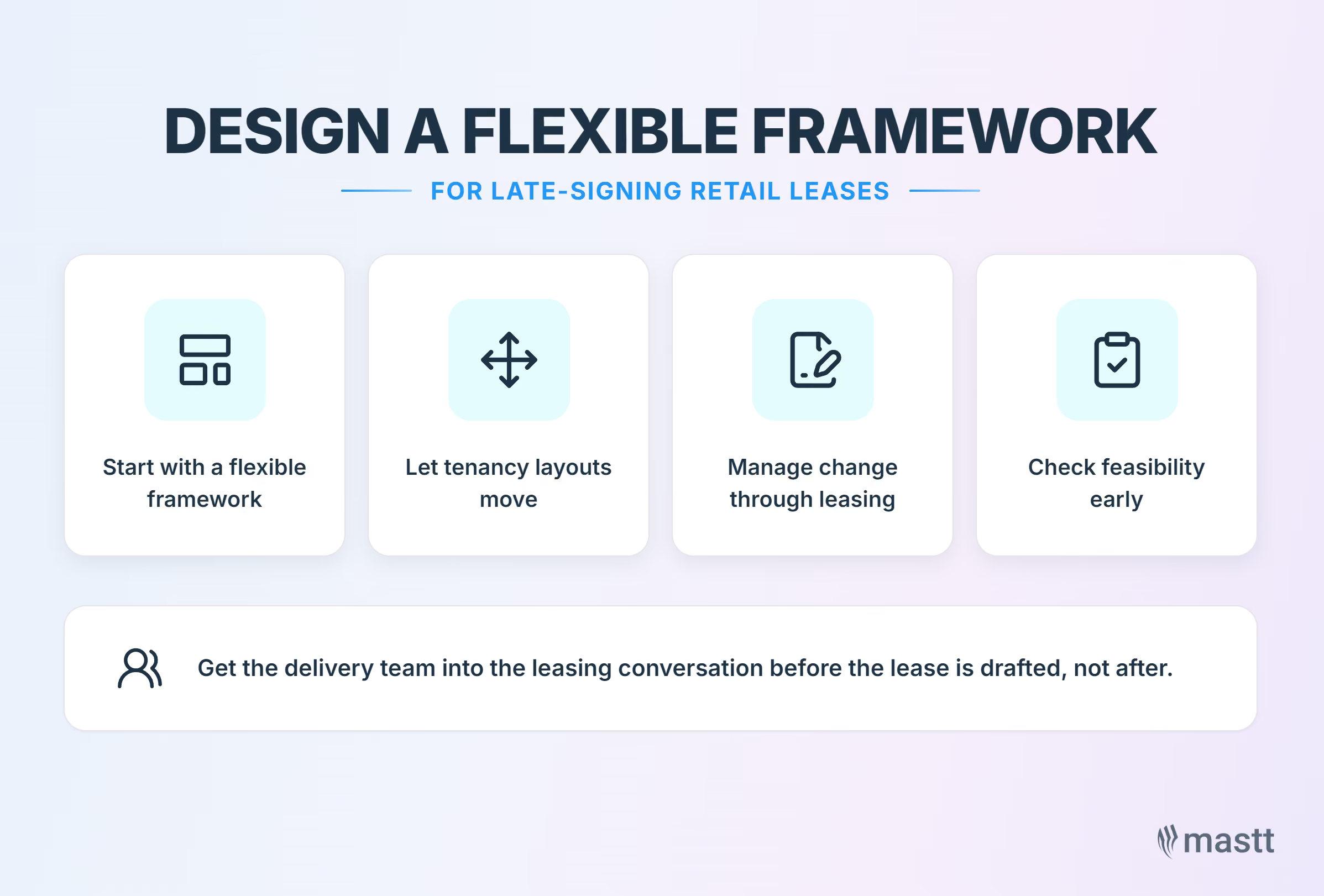
1. Design a Flexible Framework for Late-Signing Retail Leases
Multi-residential builds run to a rigid design, with most changes limited to soft finishes at the tail end. Retail works the other way. According to Josh, retail construction projects often start without any leases in place. The market decides who goes into each tenancy as the project unfolds, so the framework has to move with those decisions.
Walls between tenancies stay moveable, spaces get resized, and splits get redrawn as new tenants come in. Joshua described it as making a framework for the ideal situation while knowing the ideal will change.
You're making a framework for your ideal situation at the very start, knowing that it will likely change. And you need to be able to make sure that that's going to change.
- Joshua Gamble, Adaptis Co-founder
The leasing conversation is where flexibility is actually managed. Joshua mentioned working with leasing agents before leases are signed. He tells them what's feasible for a given tenant and what it will cost, which guides how they run the leasing process.
💡 Pro Tip: If your leasing agent is signing tenants without a feasibility check, you'll pay for it in retrospective work. Get the delivery team into the leasing conversation before the lease is drafted, not after.
2. Catch Retail Tenant Technical Specs at Master Planning
Tenant specs are what Joshua sees developers miss most often at master planning. His go-to example is ALDI, which typically requires around 10 kPa of floor loading. If the slab is suspended, that needs significant structural upgrades. Miss that at the design stage, and you're looking at a structural retrofit later.
Food operators are another one Joshua flagged. Most retail food tenancies need 100-amp three-phase power and dedicated boards, which he described as typical across retail. If the base build hasn't allowed for the load, the developer either turns tenants away or absorbs the retrofit cost.
If you're aiming for this type of tenant (commercial tenants) they're gonna want this type of space. ALDI, for example, is always looking for 10 kPa on their floor. If you've got a suspended slab, it would need significant structural upgrades. Have you considered the additional structural requirements of this?
- Joshua Gamble
Catching these specs at project planning takes retail experience. Someone who's worked on shop fit-outs or tenancy delivery has dealt with the specs before. They can see quickly what will and won't work when they come into a project.

3. Sequence Live Retail Redevelopments Around Trading Hours
Redeveloping a shopping center while it stays open drives most of the sequencing decisions. According to Josh, anything that's already operational needs to continually be operational. Noisy work gets pushed to night, and power shutdowns are timed so everything is back on by opening.
Sequencing is the defining challenge of live redevelopments. Joshua mentioned it's the reason he actually enjoys them, because you're planning around the bottlenecks and how to minimize the impact on the trading center.
How is the construction sequencing going to work? How are we going to minimize the impact on the trading centre? Anything that's already operational needs to continually be operational, whether that's night works or noisy works. It depends on what's around them.
- Joshua Gamble
Power is where the sequencing gets tightest. Joshua talked about looking for existing boards to piggyback off during a shutdown, so the whole center doesn't have to go dark. When power does come back on, the goal is to have everything back on straight away in the morning. Tenants need to turn the lights on and get customers through the door.
4. Lodge Power and Water Authority Applications Early
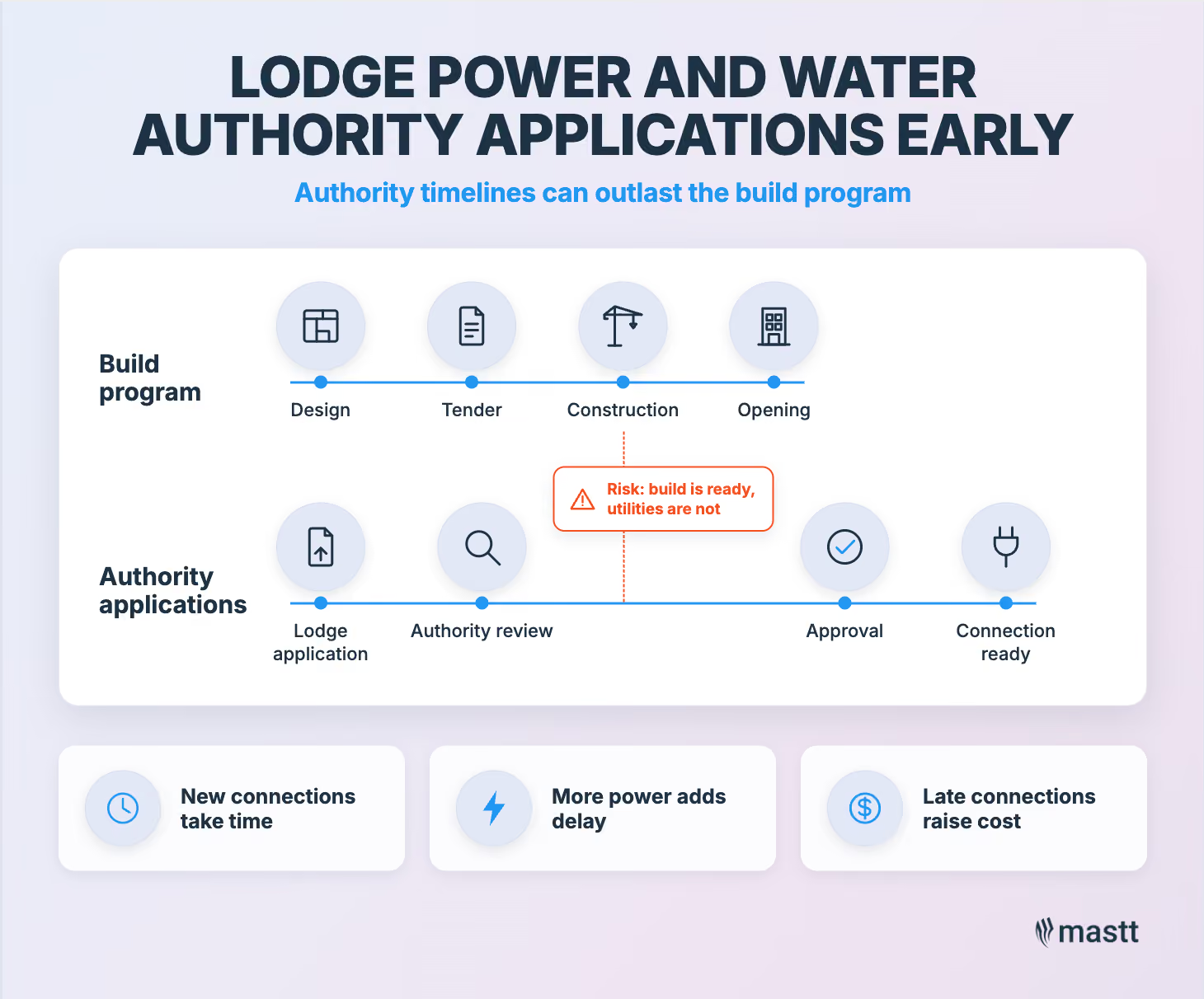
Authority delays for power and water are the single largest change Joshua sees on retail projects, especially in Western Australia. According to him, new connections can take anywhere from 3 to 12+ months. Nothing in the build program moves that timeline.
Authority delays. With power, you might not get power, you might not get water to your site for 3, 6, 12+ plus months. That's gonna have a big impact on what the builder has to allow for.
- Joshua Gamble, when asked which variation has the biggest impact on a project
The trade-off shows up in master planning. Joshua gave the example of a client wanting 4000 kVA instead of 2000 kVA. He said that it can add another 18 months to the process, on top of the years already required.
If the authority isn't ready when the builder needs to build, they have to allow for generators. Joshua flagged that it would come at a high cost compared to a real authority connection. He also mentioned that authorities move at their own pace, with a lot of work to do and any given project being one of many.
5. Design Retail Projects Within the Cost Feasibility Ceiling
According to Josh, cost drives the priority on about 95% of Australian projects. The market has a ceiling on rents and sale prices, especially in Perth, and that ceiling drops directly into the ROI calculation. If the numbers don't stack up, the developer walks.
I would say the priority is typically cost, in 95% of cases. In the end, we've got a limited market, especially in Perth. There's only so much that you can get back out of it. So you need to make sure that your return on investment is gonna work out.
- Joshua Gamble
For retail specifically, that ceiling is tighter because rent depends on customer traffic and leasing rates. If a center doesn't draw customers, sales fall, leasing rates soften, and the return unwinds. Value engineering is where the owner-side effort should concentrate when feasibility gets tight.

6. Bring Contractors In Early to Lock Cost
Given how tight feasibility runs, Joshua mentioned leaning towards bringing contractors in earlier through a Design and Construct (D&C) arrangement or early contractor engagement. Cost plus is the alternative, but it leaves the developer exposed to whatever the market does between design and construction.
I personally am leaning more towards getting contractors involved earlier, locking that price in. If you get a builder in early, you're going to rely on their expertise. These guys are boots on the ground, they see it every day.
- Joshua Gamble
According to Josh, the value of early contractor engagement runs beyond price. Contractors see trends faster than developers or consultants, and they've dealt with more problems on the ground than most of the team has. Bringing them in during design pulls that knowledge into the drawings before anything gets locked in.
They're also motivated in ways that help the project. As Joshua put it, if the development doesn't go ahead, the contractor doesn't have work either, so they push to make the numbers stack up.
💡 Pro Tip: For retail redevelopments where the scope is well-defined, but market conditions are volatile, a DNC engagement lets you lock in price without giving up design control.
Retail Development Comes Down to Flexibility and Trust
Retail development is one of the harder parts of construction to get right, because so many of the decisions sit outside the developer's control. The market picks the tenants, the authorities set the timeline for power, and the developer's real influence comes from who they have in the room when those decisions land. Get that right, and the rest of the delivery tends to follow.
For Joshua, that came down to the contractor relationship. The owner-side PM is in there pushing the project along, but the contractor is the one who actually gets the job done, and having a good relationship with them is key.
.avif)
Written by
Doug Vincent
Doug Vincent is the co-founder and CEO of Mastt, the AI capital-project management platform used by governments, Fortune 500 companies, and consultancies across APAC, North America, and MENA. Before founding Mastt in 2019, he spent a decade at RPS delivering more than $2 billion in capital works, including the $2.1B Defence Navy Infrastructure program, and holds a CPSPM certification with the AIPM. He contributes content and speaks on AI in capital project delivery at Mastt.


Contributions by
Joshua Gamble
Joshua Gamble is a Director at Adaptis Project Developments, a Perth project management consultancy, with about a decade of construction experience, having started out in shopfitting and retail fit-outs. He specializes in delivering and superintending retail projects in live, trading environments. He contributes content on retail project delivery at Mastt.
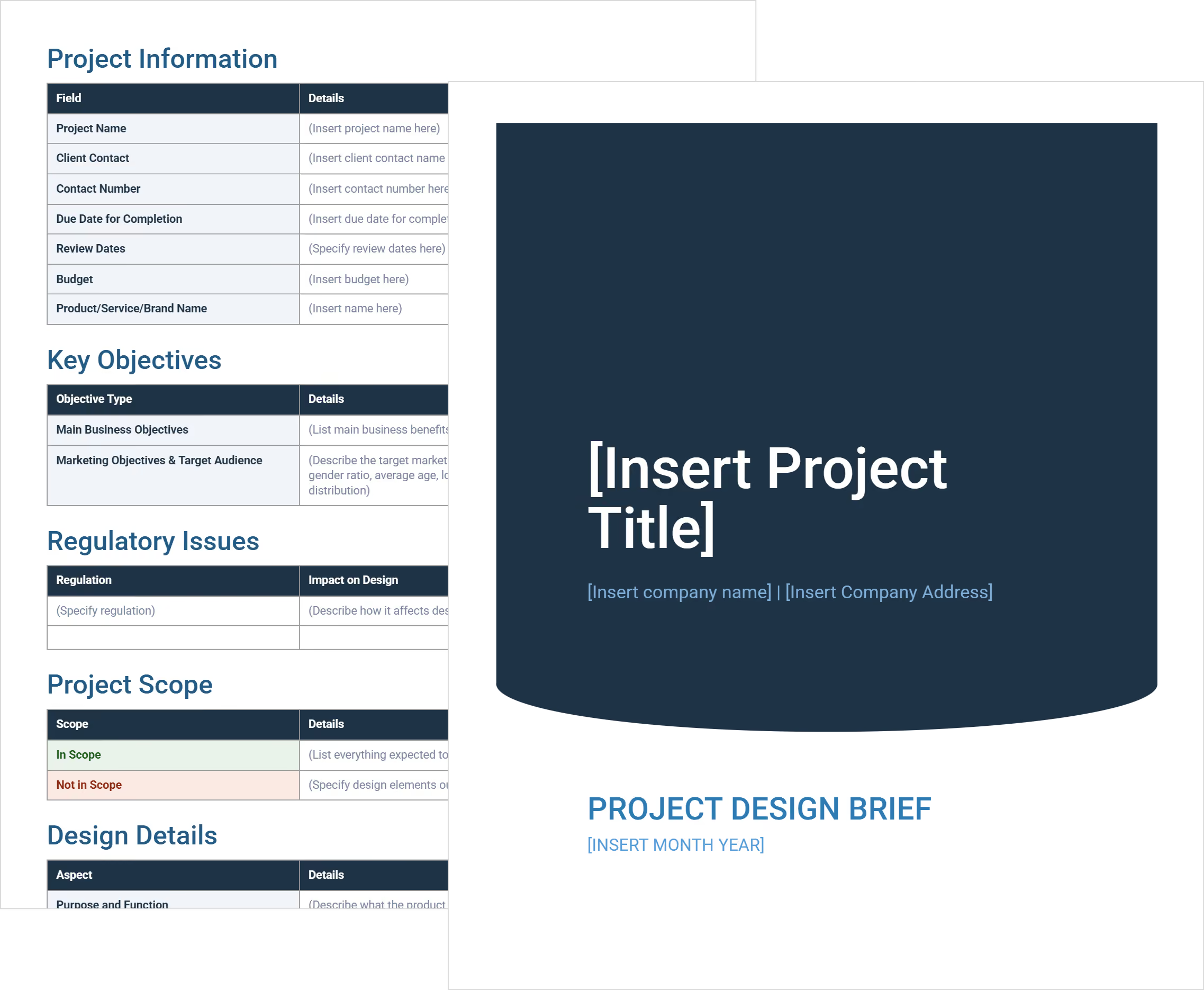
Design Brief
FREE project design brief in Word for setting a clear direction, locking in requirements early, and preventing design drift before construction begins.

Walk Into Every Meeting With Confidence, Clarity, and Control
No one wants to look unprepared, blindsided, or uncertain in front of stakeholders — but that’s exactly what happens without Mastt.
Start for FreeTrusted by the bold, the brave, and the brilliant across governments, Fortune 500s, and the world’s best in delivering the future