

Joshua "Josh" Gamble is the director of Adaptis Project Developments, a Perth project management consultancy. He came to construction through his family's shopfitting business and tenancy delivery on a major shopping center redevelopment.
We asked Josh how retail development project management differs from multi-residential delivery, what developers miss before engaging a client-side PM, and why authority delays are the costliest variation (change order). He also explains why he treats AI like a junior and what changed when Adaptis moved to Mastt.
From Extractive Metallurgy to Founding Adaptis
Josh didn't start out managing construction projects. His path ran through mine sites, a family shopfitting business, and a shopping center redevelopment before he became a business owner.
Q: You've got an interesting background. Walk me through what led you to Adaptis.
A: I originally started my career not looking at construction. I studied extractive metallurgy at uni, but I realized I wanted to get into project management and the development of new builds of processing plants. Creating something new is what interests me.
I was working on the mines for a couple of years, then the mine site I was on shut down, and I was made redundant. I went to Canada for a couple of years, met my now wife, and came back to Perth. I decided that fly-in, fly-out wasn't what I wanted to do. I wanted to be home more.
I looked at changing careers and tried a couple of things. My family runs a shopfitting company here in Perth, and they said, why don't you come over and give this a crack? I jumped in, and it turns out I loved it, even though I was trying to avoid it.
I eventually stepped up to project manager running fitouts and was there for about five years. Then I was picked up by a shopping center working on their very large redevelopment, helping with the tenancy delivery. That really broadened my horizons about what was out there.
I was always talking with the project managers on that job and decided that's what I wanted to do. I got a few names, cold-called my now business partner, Tony Metcalf, and joined Aria Projects. He gave me the opportunity to come in as an owner.
My other business partner, Olliver Haden, was running Attentus Consulting, doing the same thing. We decided a merger was the right thing for both companies, and that's where we created Adaptis.
Q: How has that mix of experience shaped the projects Adaptis takes on?
A: Given my background was shopfitting and retail, I definitely lean toward retail. I really love it. Retail developments, new builds, redevelopments.
I love the live environments, because it's just another challenge that keeps things exciting. Greenfield is a great opportunity as well to create something new from scratch without too many limitations, although there's always something.
Tony has been running his business for close to twenty-odd years and is heavy on the residential side. Oli has experience in a bit of everything, so he does quite a bit of commercial and industrial development. We're pretty wide-ranging. We each have our specialties, but we can also adapt as we go.
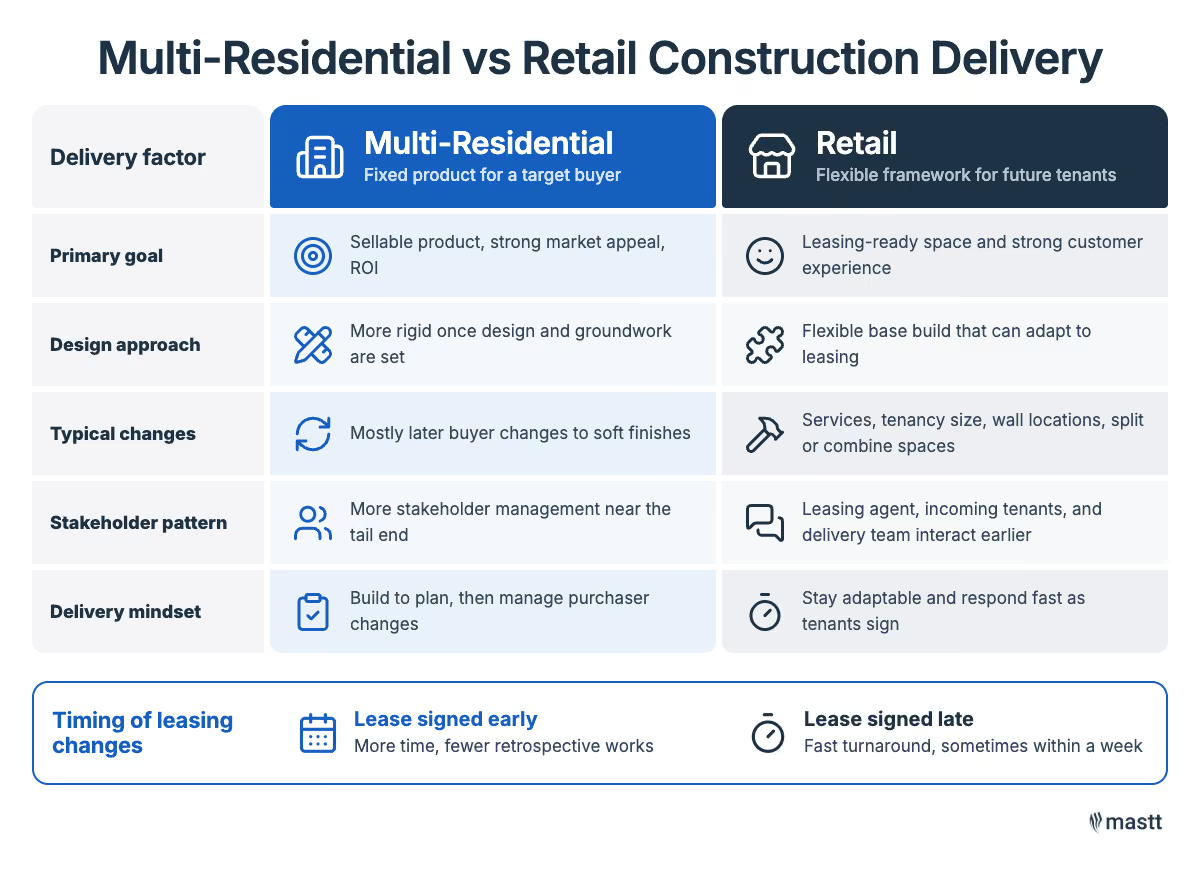
Retail vs Multi-Residential Construction Delivery
Multi-residential and retail construction run on different operating models. One builds a fixed product for a target buyer, while the other builds a flexible framework that leasing will keep reshaping until the end of the job.
Q: What's the key operational difference between a multi-residential job and a retail job?
A: Multi-res, you're often looking at what the final product is going to be. Is it sellable, will it present well to the market, and will the developer get their return on investment? You're catering to those buyers and usually picking a demographic that the market suits in that area.
Those builds, whether townhouses or apartments, are pretty rigid. You have your groundwork, you have your design, and you build to that until the purchasers come in and maybe want to make changes. So it's heavy on changes at the back end, mostly in soft finishes, and there are quite a few stakeholders to manage at the tail end.
Retail, quite often, you don't have leases in place when you start the project. You need to be flexible, because the market is going to determine who goes into each of those tenancies.
You might have tenants come in who want to change services drastically. You might have to move inter-tenancy walls, create a bigger space, create a smaller space, or split things up.
"You're making a framework for your ideal situation at the very start, knowing that it will likely change."
- Josh Gamble
You're also focusing very heavily on customer experience, because if you don't have customers coming into the center, your sales aren't there, and your leasing rates are lower.
Q: How ad hoc are those changes? Do you get a briefing in the morning and need an outcome by the afternoon?
A: It depends on how late in the project it is, and on whether the leases happen early. If they happen early, you've got quite a bit of time, and you might get it done without any retrospective work, which is always the goal.
But leasing is a sales process. You may have tenants that come in right at the very end, and you've got a week to actually get it done.
Oli and I both came from previous roles in tenancy delivery, so we understand what needs to be done. We can typically see it as soon as they sign the lease.
We'll also be talking with the leasing agent, hopefully before the lease is signed, saying this can happen, this can't, and this will come in at roughly this cost. That guides how they go through the leasing process as well.
Managing Live Retail Redevelopment Challenges
Redevelopments mean building around a center that has to keep trading through the works. Josh explains where the challenges sit, starting with power that catches teams most often.
Q: New builds versus redevelopments. Where does Adaptis sit, and what's the difference in process?
A: We like both. New builds give you an easier start from the design side. You don't have to work with whatever's around you. You're bringing in new services, which gives you more flexibility in what you can and can't do.
The redevelopments I really enjoy, because they get you thinking. What impacts are going to be there, what are our bottlenecks, how is the construction sequencing going to work, how do we minimize the impact on the trading center?
Anything that's already operational needs to stay operational. That might mean night work or managing noisy works, depending on what's around. There's a lot at play with redevelopments, and it makes them exciting.
Q: What's the biggest challenge you've had to overcome on a live redevelopment?
A: Connecting in for power, if you're not bringing new power into the site, is always a challenge. You're working with authorities that might be a lot slower than what we work with in the private sector. You've got food operators that might need 100-amp three-phase, and that's pretty typical throughout.
Then you're connecting to those existing systems. Do you have to shut down the whole center? Hopefully not. Hopefully, there are multiple boards, and you can piggyback off one and get that power through.
It's not always the case, but there's always going to be an impact, so you make sure you're only doing those works at night. You put everything in place so the power is on first thing in the morning, because they want to turn the lights on and get customers in the door.
Q: On new builds, how much client expectation do you manage between design intent and what's actually buildable?
A: There's always trying to squeeze the most out of the land you've got and the budget you've got. We could come in at a master planning point and say, do we want to spend money here, or move things around. Or we could come in after that master plan and ask whether anybody has considered what's going on here.
Right now in WA, power is just very hard to get. It takes a long time, and it's expensive.
A client might not understand the difference between getting 2,000 kVA to a site and getting up to 4,000 kVA. They may want the 4,000, but that's going to add another eighteen months to a process that's already a couple of years.
So it's trying to give them the outcome they want against the timeframe and the budget. It's always a balancing act, and whether they've considered it depends on whether they've had that experience. We have. We've dealt with the problems at the back end, the front end, and every other end.
Variations, Cost Pressure, and What Developers Miss
Cost decides whether a project proceeds in the Perth market. Josh covers what developers overlook before they engage a PM consultancy, and which variation does the most damage once construction starts.
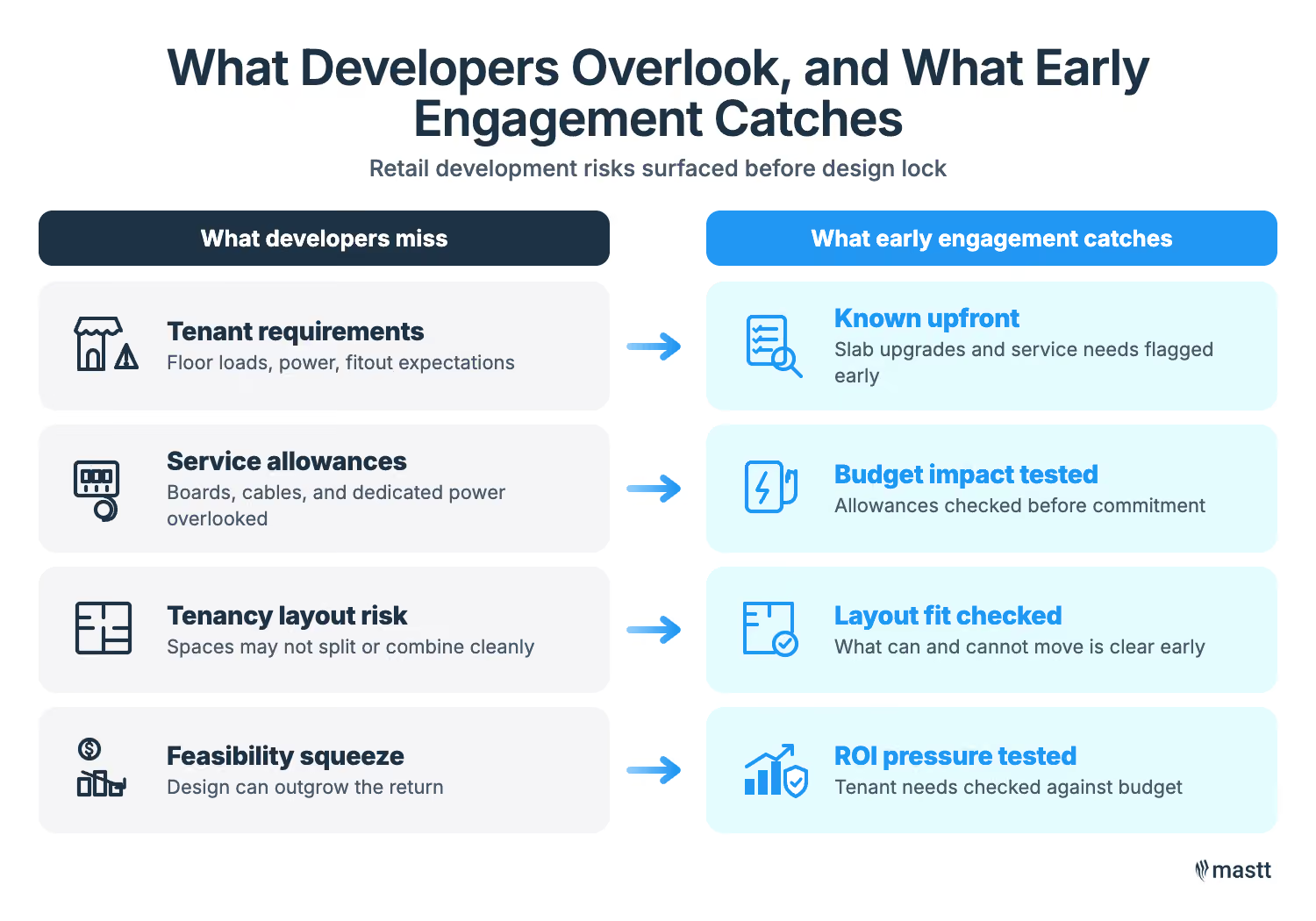
Q: What do developers typically miss before they engage you?
A: Definitely on the retail side, we can say, if you're aiming for this type of tenant, they're going to want this type of space. Have you considered that in ALDI they're always looking for ten kPa on their floor. If you've got a suspended slab, it would need significant structural upgrades.
Have you considered the additional structural requirements? We may not have their specs in front of us, but we've dealt with them before, and we know how rich they are with their requirements.
A lot of it is moving the spaces around for those smaller tenants. With our experience, you can see quite quickly what will and won't work.
Q: Cost, time, or quality. What do your clients prioritize?
A: I would say the priority is typically cost. That would be in 95% of cases.
In the end, we've got a limited market, especially in Perth. There's only so much you can get back out of it, so you need to make sure your return on investment is going to work out.
If it's not feasible, a developer is not going to do it unless there's some other motivation behind it, which is generally few and far between. Even in those cases, it's still got to stack up. If you're not going to get that return, why spend the money?
Q: Is there a specific variation that has the biggest impact on a project?
A: Authority delays. You might not get power or water to your site for three, six, twelve-plus months, and that's going to have a big impact on what the builder has to allow for. If they have to allow for generators, that comes at a significant cost compared to actually getting the connection from the authority.
It's very hard to pinpoint when you're actually going to get it. You can ask all the questions in the world, but a lot of authorities will work at their own pace.
They're not necessarily going to jump when you desperately need them. They've got a lot of work to do, and we're one of the piles.

What Clients Expect From a Client-Side Project Manager
The contract sets out what a client-side project manager must deliver, but that's not why clients come back. Josh explains what they actually expect when a project goes sideways, and why forewarning builds the trust that wins repeat work.
Q: If a project goes sideways, what do clients expect from you that isn't written in the contract?
A: We're often engaged to be their eyes and ears. We keep an eye on the day-to-day and make sure we're on top of everything that's going on, so they don't have to do that. They can work on their next project.
We will raise the larger issues that may have an impact and give them a heads-up. I think clients appreciate forewarning, rather than us keeping everything away from them.
But we are here to manage those problems as well. If we can fix a problem before it goes to the client, all the better. That's exactly what we're here for.
I've worked on the builder side, landlord side, consultant side, and tenant side now. So I know the problems that come up, and a lot of the time I know the way to fix them.
If a contractor happens to go under, which unfortunately happens from time to time, suddenly the main contractor doesn't have that subcontractor.
We had an apartment building where the glazier went under when they hadn't sealed up the building. The builder was very good at managing that, but we kept the client aware that it could very well have a time impact and, depending on the contract that was signed, a cost impact as well.
Construction Market Outlook and Early Contractor Involvement
Rising material and fuel costs have left many projects on a feasibility knife-edge. Josh's response is to move early, lock in prices, and bring the builder's expertise in sooner.
Q: What's your view on client development pipelines and the industry right now?
A: Costs are rising. The increase in fuel prices has a knock-on effect on all your plastics and materials, and rates for travel and deliveries.
Over the last few years, a lot of projects have been balancing on a knife-edge as to whether they're feasible or not. Rents aren't going up. So I do see a potential for things to slow down, just when developers are wondering whether they're going to get their return.
I do think the majority of people have learned from COVID that the rise in costs doesn't go down. If you want to get in there, get in now, because today's the best price you're going to get.
If it's going to be a long-term asset, it's going to continue returning that investment over a long time. So you might be able to spread that investment and get the return eventually. We still have developments going ahead, so there are motivated developers out there.
"If you want to get in there, get in now, because today's the best price that you're going to get."
- Josh Gamble
Q: How does Adaptis approach that uncertainty with clients?
A: We'll remind them of the trends of the market. It goes up, it doesn't typically go down. We ask whether there's somewhere we can look at some value engineering to make sure the project does stack up.
And we could look at locking in a contractor earlier. That might be a lump-sum design and construct (D&C) arrangement, or the client would prefer to take more of a risk-based approach and go cost-plus.
I personally lean toward getting contractors involved earlier and locking that price in. There will always be some clarifications, but you negotiate those as part of the contract and agreement process.
If you get a builder in early, you're going to rely on their expertise to make sure you get the best outcome. These guys are boots on the ground. They see it every day, they've dealt with more problems than what we all have in that sphere, and they see the trends quicker than we do.
In the end, if the development doesn't go ahead, they don't have any work either. So they're very motivated to assist and make sure the project does stack up.
How Adaptis Uses AI in Project Management
Josh tests AI against answers he already knows, and treats its output the way he would treat a junior's.
Q: Tell me about your experience with AI. Where is it working well for you?
A: I started dabbling in it as a search engine, rather than Google, and I'd be checking it against information I know from experience. I'm always testing it as I go on items where I already know the answer, because I think it's very hard to trust something new.
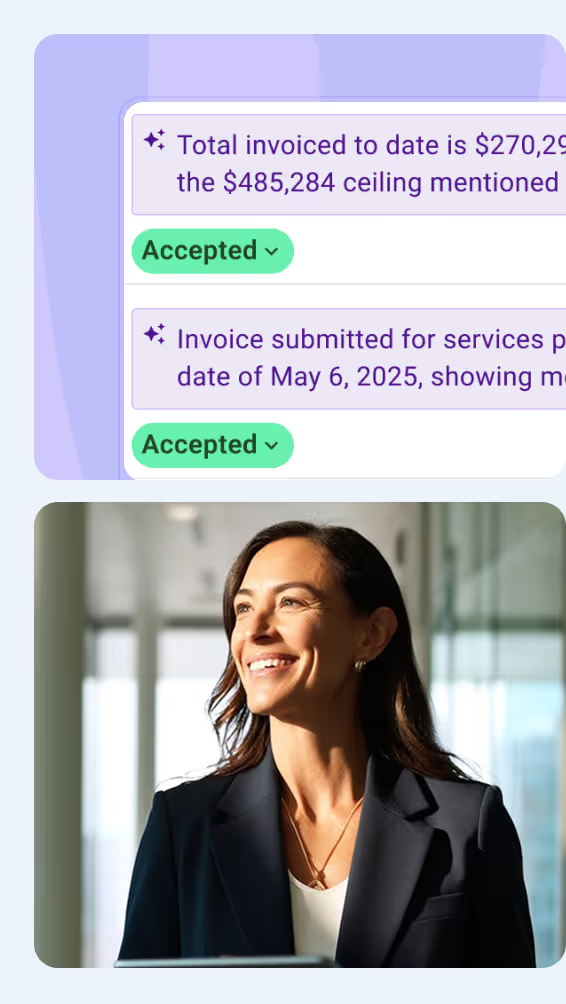
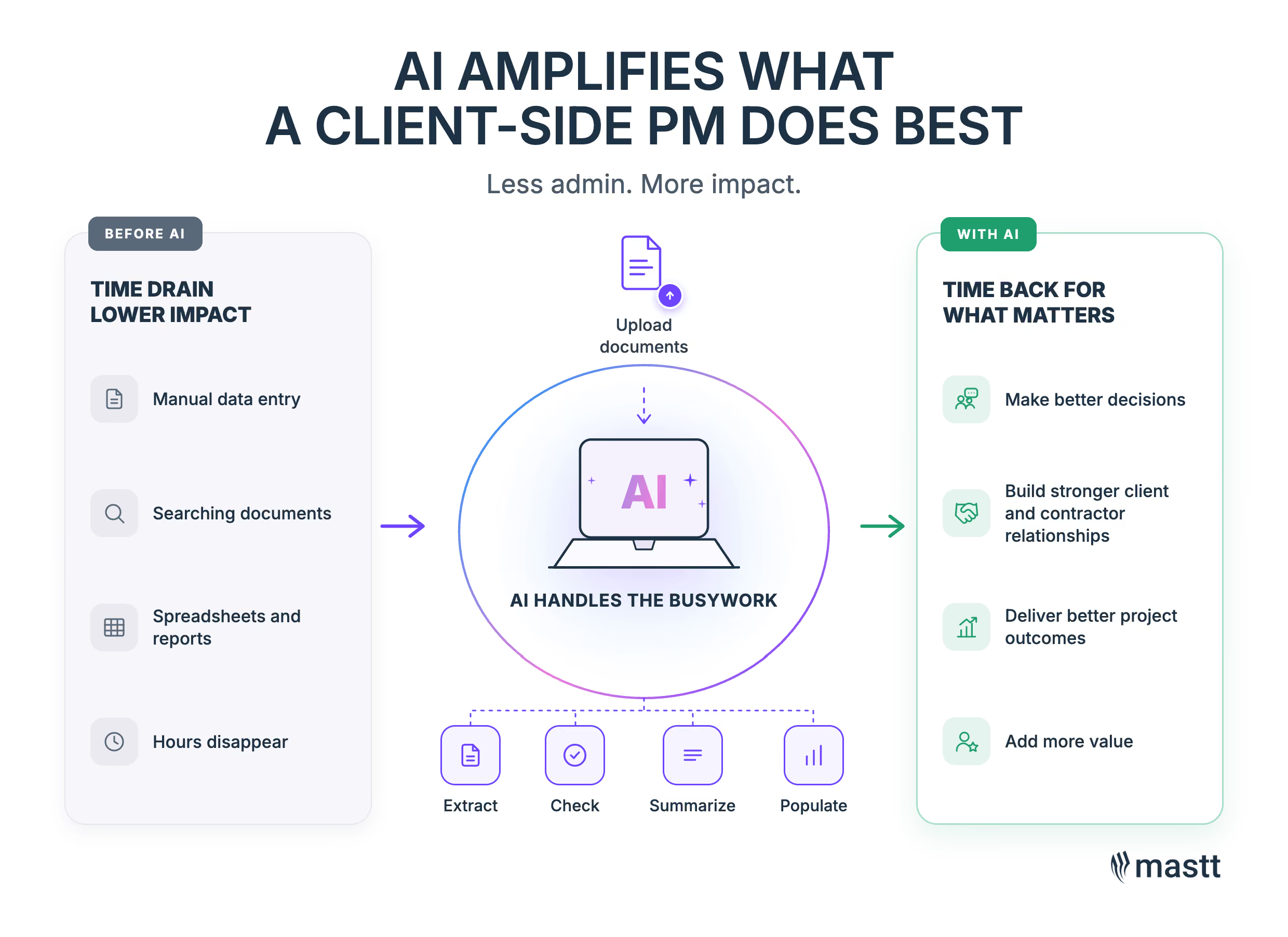
We're bringing it in for contract admin, and Mastt has got it in there as well. You drag and drop PDF files in, and it auto-populates. It's a huge time saver, it really is.
I have it going through documents to find specific items, which might take me half an hour to find, and it could take five minutes. Anything to improve efficiency is really good.
We've linked some AI platforms to specific project files we're okay working on. We're currently working with three different AI platforms and are still working through which one to use for which task.
I'll make a determination on a contract clause or a variation, then I'll throw it into AI and see what it comes up with. If you're giving it the right information, it's very, very powerful.
We're looking at bringing more in as well, so that we're not bogged down with the contract admin spreadsheets. Then we can be out there making decisions with the contractor and the client, and adding more value rather than purely recording numbers. It's much more enjoyable to be out there doing those things than doing the spreadsheets as well.
Q: For a junior client-side PM who's just downloaded Claude and punched in a few details, what's the biggest risk?
A: I definitely think if you're just blindly trusting it, that could really lead you down the wrong path.
If a junior comes in with a lack of experience and goes straight into AI, and they don't get the boots-on-the-ground learning from everything that's going on, they're not going to be able to work out if something is wrong. They're not going to learn, they're just going to blindly trust it. And it is wrong from time to time. It definitely is.
"I sort of treat AI as a junior. They've gone out, they've got that information, they've put it in one space, and they've made a determination of it."
- Josh Gamble
I'll be looking at the information, and given that I know a lot of the projects like the back of my hand, I'll say, you haven't picked up this, you haven't referred to this document, which is a key part. I was doing that just last night.
If we only use AI, we won't get a depth of experience in the industry, which I see as a big risk. You need to understand your role before you use it.
Q: AI is going to save you time internally. How does that actually translate to the client?
A: Definitely cost savings for the client. The more efficiency we can get out of it, the less time we're spending on projects, and the better off the client is going to be.
We're not going to add additional hours to a project when we don't need to. I don't think many PMs would, because otherwise you go out of business pretty quickly once people work that out.
They're also going to get updates a lot quicker. If that contract admin is automated, or the data entry is sped up, rather than being a day, it could be an hour, and then it needs some eyes to check over it.
And through Mastt, you've got live updates. They can log in, see what's going on, and there's a dashboard right there. That could be our direct report or somebody higher up. If they need a bit of info, it's right there and updated instantly, rather than taking a week or however long.

Digital Transformation From Access Databases to Mastt
Until about twelve months ago, Adaptis ran its contract admin on a Microsoft Access database. Josh describes what pushed the firm onto Mastt and what the platform replaced.
Q: Tell me about the digital transformation at Adaptis, and a key benefit or two you've had from Mastt.
A: It's probably been the last twelve months or so that we've gone through a bit of a digital transformation. Linking different folders together so they talk to each other, and bringing AI in to make that happen.
We dabbled in trying to make up a few apps here and there, decided it was too hard, and then went to Mastt, which did everything I needed it to do.
We were working off a Microsoft Access database, which was very useful for us. It kept us out of spreadsheets, maybe more than what others are in them. But it was just slow and very heavy on data entry.
With Mastt, everything is at your fingertips. It's right there in front of you, and it's very easy to read. It's got a lot of systems all in one, with your program, your dashboards, your templating, and definitely your contract admin. That is by far the largest thing we use it for.
It's low cost as well for the service it gives, so there's a monetary benefit, which is great for us, because that does equal time.
“It's a great platform, and I encourage other people completing roles similar to ours to embrace it.”
- Josh Gamble
The more of us that jump onto Mastt, the more it becomes how we operate. If we can get rid of the spreadsheets and get rid of repeating the same thing over and over, which costs us all time, money, and enjoyment, then the better. Just jump in and replace it.
Note: This Q&A article is part of Mastt's interview series featuring construction industry experts. Josh Gamble's responses have been lightly edited for readability.
.avif)
Written by
Doug Vincent
Doug Vincent is the co-founder and CEO of Mastt, the AI capital-project management platform used by governments, Fortune 500 companies, and consultancies across APAC, North America, and MENA. Before founding Mastt in 2019, he spent a decade at RPS delivering more than $2 billion in capital works, including the $2.1B Defence Navy Infrastructure program, and holds a CPSPM certification with the AIPM. He contributes content and speaks on AI in capital project delivery at Mastt.


Contributions by
Joshua Gamble
Joshua Gamble is a Director at Adaptis Project Developments, a Perth project management consultancy, with about a decade of construction experience, having started out in shopfitting and retail fit-outs. He specializes in delivering and superintending retail projects in live, trading environments. He contributes content on retail project delivery at Mastt.

Variation Register Template
Use this FREE Variation Register Template to track and document all changes to your project scope, budget, timeline, and terms. Stay organized, transparent, and in control of variations.

Walk Into Every Meeting With Confidence, Clarity, and Control
No one wants to look unprepared, blindsided, or uncertain in front of stakeholders — but that’s exactly what happens without Mastt.
Start for FreeTrusted by the bold, the brave, and the brilliant across governments, Fortune 500s, and the world’s best in delivering the future