
Post author:
Jackson Row

A project budget outlines every cost needed to complete the work. Explore budget components, estimating approaches, funding rules, and management steps.
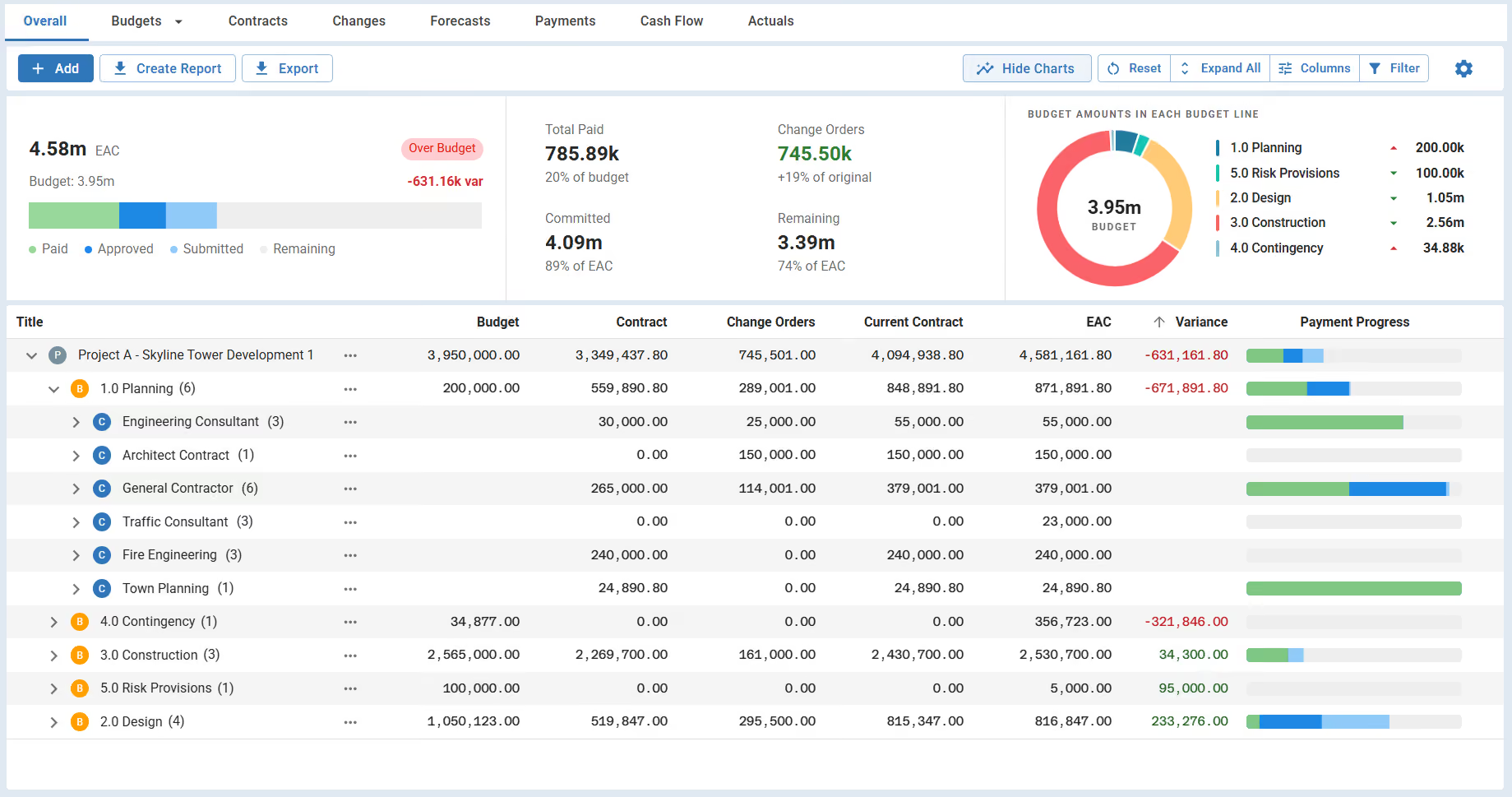
Use this FREE Project Budget Template to monitor and manage the financial performance of your capital project or program. Track costs with clarity and control.
A project budget is a clear financial plan that shows what a project will cost from planning to closeout. It lays out labor, materials, equipment, and every other expense needed to deliver the work. It also becomes the baseline teams use to track spending and keep decisions grounded.
In this guide, you’ll learn what goes into reliable project budgets, how they differ from a cost plan or forecast, and how budget management works across a project’s lifecycle. You’ll also see the methods used to build one and the steps to create, track, and manage budgets through each phase.
A project budget is the total amount of money needed to deliver a project, based on the planned scope, tasks, and resources. It outlines every expected cost and becomes the approved financial baseline for measuring spending and performance. In simple terms, budgets show how much the project will cost and when the money will be used.
A good project budget brings together labor, materials, equipment, subcontractors, and other costs into a single structured plan. It also reflects assumptions, limits, and known project risks so teams understand what was priced and why. This clarity helps project managers make decisions without losing sight of financial constraints.
Budget management shapes how teams control costs once project delivery begins. It guides variance tracking, validates spending, and links actual field conditions to financial performance. By comparing committed and actual costs against the baseline, teams can identify emerging risks, adjust forecasts, and keep the project aligned with approved funding.
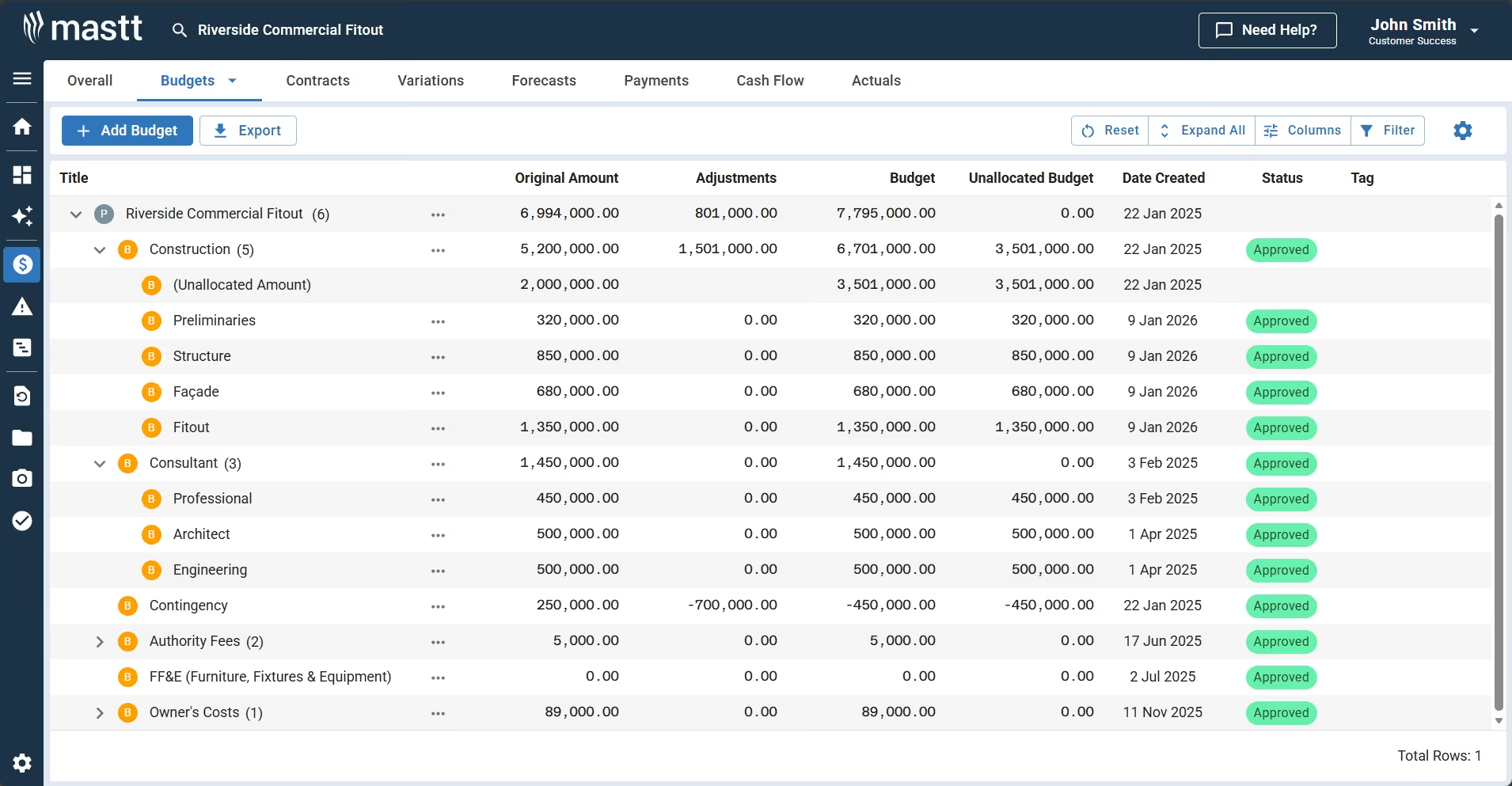

A project budget is the approved amount of money the team can spend to deliver the scope. A cost plan is the detailed breakdown of how those costs were estimated. A forecast is the updated projection of what the project will cost based on current progress and risks.
Here’s a clear view of how they differ:
In construction, these three often shift at different speeds. The project cost plan evolves as drawings mature, while the project budget tends to stay fixed unless leadership approves a change. The forecast moves the fastest, reacting to field conditions, procurement timing, subcontractor requests, and design clarifications.
A dependable project budget lists every cost tied to the approved scope and organizes them to support pricing, tracking, and decision-making. These components form the financial baseline that guides decisions, reporting, and funding approvals across the project life cycle.
A well-structured project budget typically includes the following elements:
These elements work together to form a single, reliable baseline that project teams can measure against. When structured well, they make variance tracking easier and help leaders understand not just how much the project costs, but why it costs that amount.
Projects use different budget formats depending on the scope, funding rules, and level of cost certainty. These formats shape how money flows through the project and how tightly teams can control spending. In construction, the choice often depends on project size, delivery method, and the maturity of the design.
Here are the most common kinds of project budgets:
In construction, capital budgets dominate large builds, while operating budgets help owners manage facilities and soft costs. Rolling budgets are common on fast-moving or design-maturing projects because they give teams a way to keep up with pricing shifts, design refinements, and procurement timing.
Project teams use several approaches to build a budget, each suited to different levels of design detail, available data, and required decision speed. Some give quick, directional figures, while others produce detailed, quantity-based accuracy.
Here are the common approaches used to develop a project budget:
Construction teams often shift between methods as design matures. An early analogous estimate may turn into a parametric model, then evolve into a bottom-up budget once drawings are sufficiently detailed. The key is choosing the method that matches the level of information available at each stage.
Building a workable budget starts with a clear project scope, a structured breakdown of the work, and the right estimating method for the level of information you have. The goal is to translate the project plan into a realistic financial baseline that teams can deliver against.
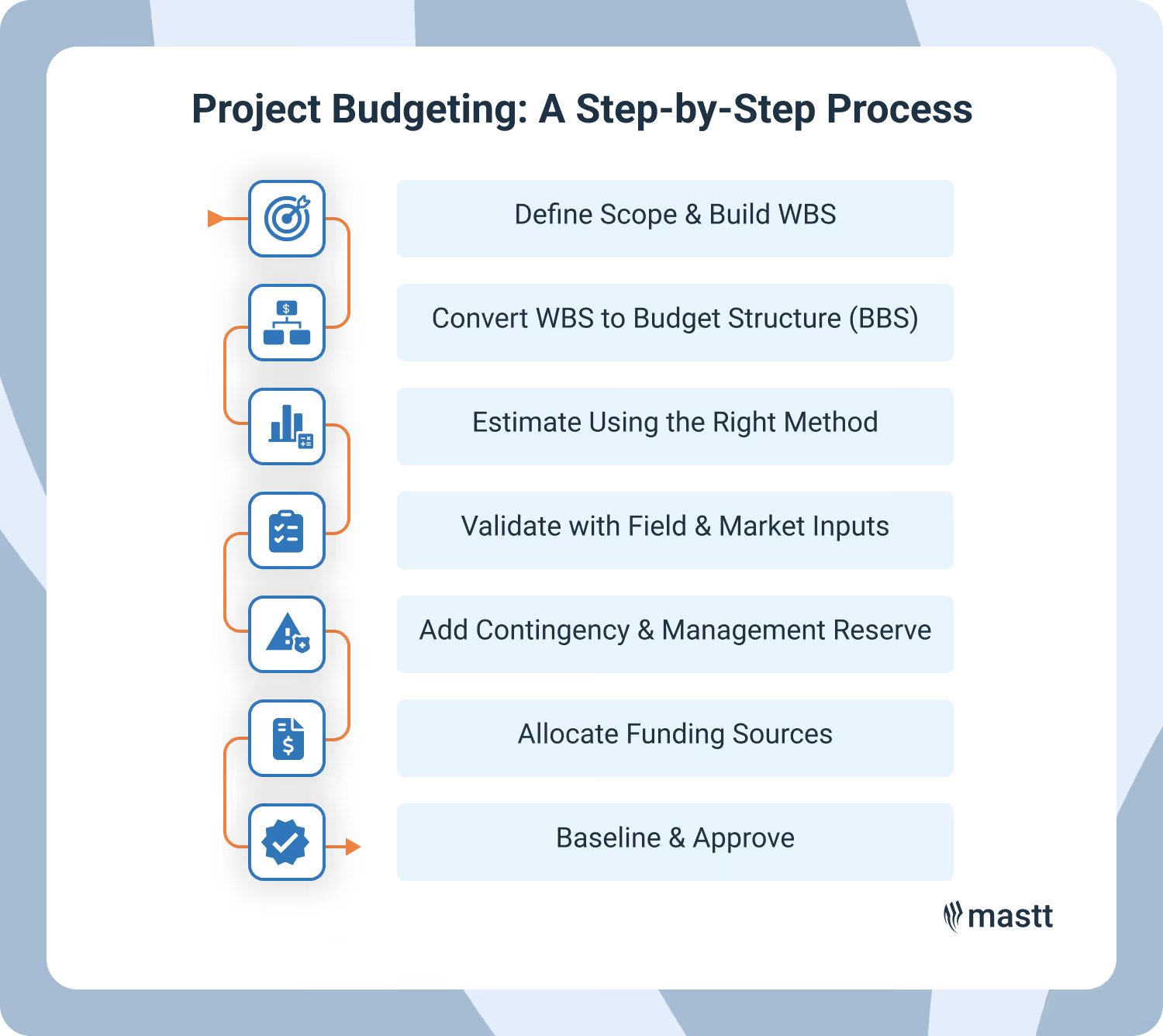
Break the project into work packages that reflect the real sequence of construction. Include enabling works, permitting, commissioning, and any owner-supplied items that require coordination. A complete WBS keeps teams from underpricing tasks that usually fall between disciplines.
Before finalizing the WBS, walk the sequence with the superintendent or construction lead. They often spot missing steps, overlaps, or temporary conditions that don’t appear in design documents but carry real cost. This quick review improves accuracy before any numbers are assigned.
Turn each work package into cost categories and budget lines tied to a coding structure. Keep coding consistent with your cost management system so data flows cleanly from estimating to reporting. This avoids the common problem of estimates that look good on paper but don’t track well in the field.
Add a “check code” for unassigned scope. This is a simple placeholder that catches loose ends during estimating. If the code still holds dollars by the end, you know something needs to be reclassified or clarified before the budget is approved.
Select an estimating method that matches the information available at that stage of project planning. Early in the process, when drawings are light and the scope is still forming, teams rely on high-level methods like analogous or parametric estimating. Mixing methods is normal, but document the logic so future updates stay grounded.
Before committing to a final budget, validate major cost drivers with people who know the work firsthand. This could be discipline leads, in-house estimators, or trusted suppliers who can confirm whether the assumptions, quantities, and production rates used in the estimate make sense.
Use contingency to cover known risks and predictable variability in design, productivity, or quantities. Align the amount with project complexity and scope maturity. Keep management reserve separate for unforeseeable events that leadership controls.
To size contingency well, track the “change drivers” that most often hit similar projects. Things like utility conflicts, unforeseen site conditions, or late design clarifications are predictable exposures. Quantifying them avoids guessing.
Assign each cost to its proper funding source, whether CapEx, OpEx, grants, or internal chargebacks. Funding rules often dictate what can be capitalized, what must be expensed, and which items need extra approvals.
Before locking allocations, verify spending restrictions with finance. Misclassified costs cause approval delays that slow procurement and fieldwork, especially on public or grant-funded projects.
Set the approved budget as the financial baseline once scope, quantities, coding, and assumptions are locked. This gives teams a stable point for tracking actuals, commitments, and forecasts throughout project execution.
Before baselining, recheck high-risk items with early procurement data. Materials like steel, electrical gear, HVAC units, and roofing often shift in price between estimate and buyout. Catching this early preserves budget integrity and prevents immediate variance.
💡 Pro Tip: Always compare the final budget against the schedule. Misalignment between durations, crew assumptions, or sequencing is one of the common causes of early cost overruns. Fixing these conflicts before approval saves more time and money than correcting them mid-project.

Several roles shape and control a project budget, but the project manager is the lead who brings all inputs together and steers the process. Other contributors support, approve, and validate different parts of the budget so the financial plan stays accurate as the project evolves.
On construction projects, strong communication between estimating, project controls, and procurement is what protects budget accuracy. Misaligned assumptions between these groups are a common cause of early overruns, especially when design and pricing develop at different speeds.
Projects draw on different funding sources, and each source comes with its own rules for how money can be spent and tracked. Understanding these sources helps teams structure the budget correctly and avoid approval delays once work begins.
Here’s a clear view of common funding models and how they’re used:
In construction, misallocating costs between CapEx and OpEx is one of the fastest ways to slow down approvals. Each source has limits on what qualifies, and reclassifying expenses late in the process can impact both accounting and scheduling.
Budgets mature as the project moves through its lifecycle. Early numbers rely on broad assumptions, while later phases sharpen costs using construction drawings, confirmed quantities, and actual pricing. Treating the budget as a phased process helps teams align expectations and prevent early numbers from being mistaken for final costs.
Here are the major phases and how the budget evolves in each one:
💡 Pro Tip: At every phase gate, compare the new estimate to the previous version and review the top five cost movements. Large swings usually reveal scope changes, missed quantities, or shifts in market pricing long before they appear in the field.
Project budget management centers on keeping spending aligned with the approved baseline while responding quickly to real conditions in the field. Good management practices help teams spot issues early, protect the contingency fund, and maintain confidence with owners and executives.
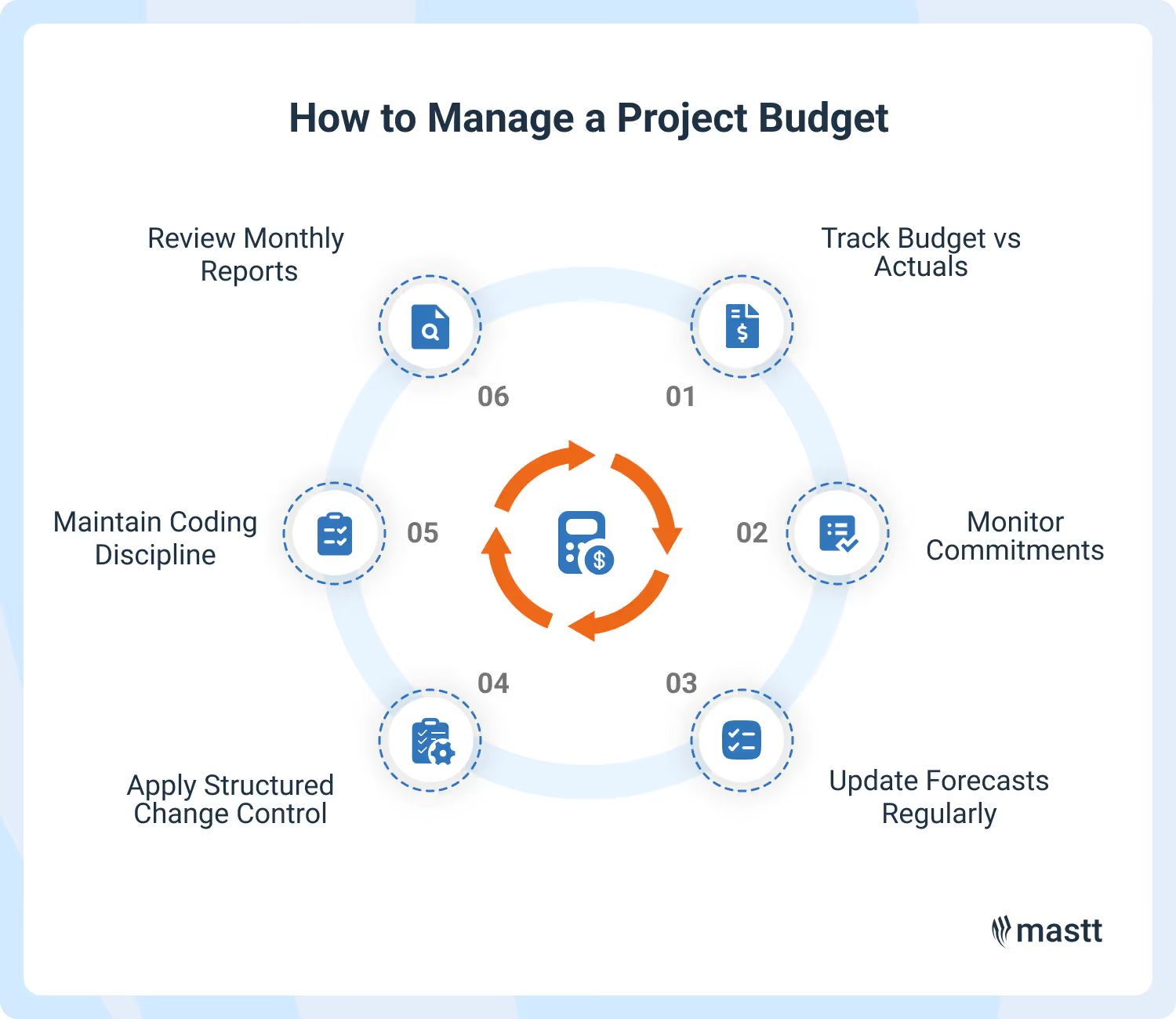
Compare actual costs and committed costs against the baseline every reporting cycle. Look for early signals, not just large overruns. Small drifts in labor hours, unit rates, or quantities often reveal trends that will grow if left unchecked. Clear coding and timely data entry make these comparisons far more reliable.
Use simple variance categories such as “scope change,” “productivity,” or “pricing movement” to explain differences. This keeps the discussion focused on root causes instead of raw numbers.
Monitor purchase orders, subcontracts, and any pending awards to understand future cost exposure. Tracking committed cost often reveals budget pressure long before invoices arrive, helping the team identify which packages need intervention.
Ask the procurement team for early warnings on long-lead or highly volatile items. Price shifts in steel, mechanical equipment, or specialty trades can erode the budget before fieldwork even begins.
Update the forecast monthly using actuals, commitments, and expected changes. Cost forecasting should not simply repeat the budget; it should reflect where the project is actually heading. This gives leaders time to take corrective action before costs exceed available funding.
Always document the drivers behind forecast changes. A clear explanation builds trust and reduces friction during approvals.
Use a formal change process to evaluate any proposed change in scope, design, or sequencing. This ensures the team understands the cost impact before work moves ahead. Change control management also protects the baseline by preventing unauthorized changes to the budget.
Keep a running log of pending and approved changes. This helps teams understand the full financial picture, not just the items already priced.
Use accurate cost codes for all transactions so you can track where money is actually going. Mis-coded charges distort variance reports and weaken decision-making. Clear coding rules make the entire project budget easier to analyze and defend.
Periodically audit coding accuracy, especially early in the project. Catching mistakes sooner means cleaner reports later.
Review monthly cost reports with discipline leads and key stakeholders. Use the meeting to validate assumptions, highlight risk areas, and align on corrective actions. Consistent reporting routines provide visibility and reduce surprises as the project moves through delivery.
Encourage a “no surprises” culture. Issues shared late are harder and more expensive to fix. Open cost reporting and early conversations help prevent avoidable overruns.
Effective project budget management requires discipline, clear communication, and early action. Teams that track trends, not just totals, protect budgets far more effectively throughout delivery.
The most frequent budgeting mistake is vague or shifting scope, and it affects construction projects of every size. Many budget overruns can also be traced back to a small set of recurring mistakes. These issues show up across construction projects of every size.
Most cost blowouts don’t happen overnight. They happen gradually because drift in scope, pricing, or productivity goes unnoticed. Proactive budget discipline means watching the trends, not just the totals, and acting early when something looks off.
Effective project budget management across the lifecycle requires consistent discipline, strong communication, and early visibility into cost pressures. One of the most effective practices is aligning technical, financial, and procurement teams so decisions stay connected to real conditions, not outdated assumptions.
Here are proven disciplines for project budget management:
☑️ Hold phase-alignment reviews: Bring estimating, controls, design, and procurement together at each project phase gate to confirm that scope, quantities, and assumptions still match the budget.
☑️ Use a single source of truth: Keep all budget, forecast, and cost data in a capital project management software to avoid conflicting numbers and reduce reporting errors.
☑️ Flag high-impact risks early: Track the top risks that could shift cost or schedule and tie each one to a named owner who updates the exposure monthly.
☑️ Link schedule changes to cost impacts: Evaluate how shifts in sequencing, durations, or crew plans affect labor, equipment, and general conditions.
☑️ Set thresholds for early escalation: Define variance triggers that require a review before the issue grows, such as a percentage budget overrun on a key work package.
☑️ Validate assumptions with field feedback: Check productivity expectations, crew sizes, and installation rates with site supervision to keep the budget grounded in reality.
☑️ Protect contingency with clear rules: Assign usage criteria so teams don’t erode contingency with non-risk items or avoidable changes.
☑️ Keep buyout intelligence flowing: Share awarded pricing, market shifts, and vendor capacity updates across teams so forecasts reflect real procurement conditions.
💡 Pro Tip: Ask the project controls team to maintain a “cost outlook dashboard” inside the project budget tracking software. A live dashboard highlighting the next three risks or upcoming cost decisions keeps leadership focused on what is coming.
Executives rely on budget reporting that shows where the project stands today and where costs are heading. The most reliable reporting focuses on forward-looking KPIs and presents them in dashboards, so trends are easy to understand.
Executives use these KPIs to test cost stability, pressure-check forecasts, and confirm whether the project is staying within approved funding. When all indicators flow from a consistent coding system, the dashboard becomes a reliable decision tool rather than a collection of disconnected charts.
💡 Pro Tip: Build every dashboard section from the same coding logic as your project budget template. This makes variance tracking far easier, speeds up monthly reviews, and gives executives confidence that every number in the report ties back to the approved financial baseline.

A dependable project budget keeps teams focused on the right decisions and exposes risks before they grow. It gives everyone a clear financial path from budget planning through closeout. When scope, funding, and reporting stay aligned, the budget becomes a practical control tool rather than a static document. This discipline builds trust, reduces surprises, and helps projects move forward with confidence.
Written by
Jackson Row joined Mastt's founding North American team in 2023, implementing the platform for US government agencies and Fortune 500 organizations. He holds a Bachelor of Engineering in civil and mining engineering from UNSW and began his career as a construction cadet on civil projects in Sydney. At Mastt, he contributes articles on payment and client-side project management.


Contributions from

Cut the stress of showing up unprepared
Start for FreeTrusted by the bold, the brave, and the brilliant to deliver the future
![What is a Contingency Budget and How to Use It [Construction Program]](https://cdn.prod.website-files.com/607f739c92f9cf647516b37b/673325d5081116fdb02c07df_66fe088871eaac42a86d93e9_What%2520is%2520a%2520Contingency%2520Budget%2520%2526%2520how%2520to%2520use%2520it.avif)
![What is a Contingency Budget and How to Use It [Construction Program]](https://cdn.prod.website-files.com/607f739c92f9cf647516b37b/61b7e99d10d746762895ef70_Mastt_headshots_%20(98).avif)

.avif)


