

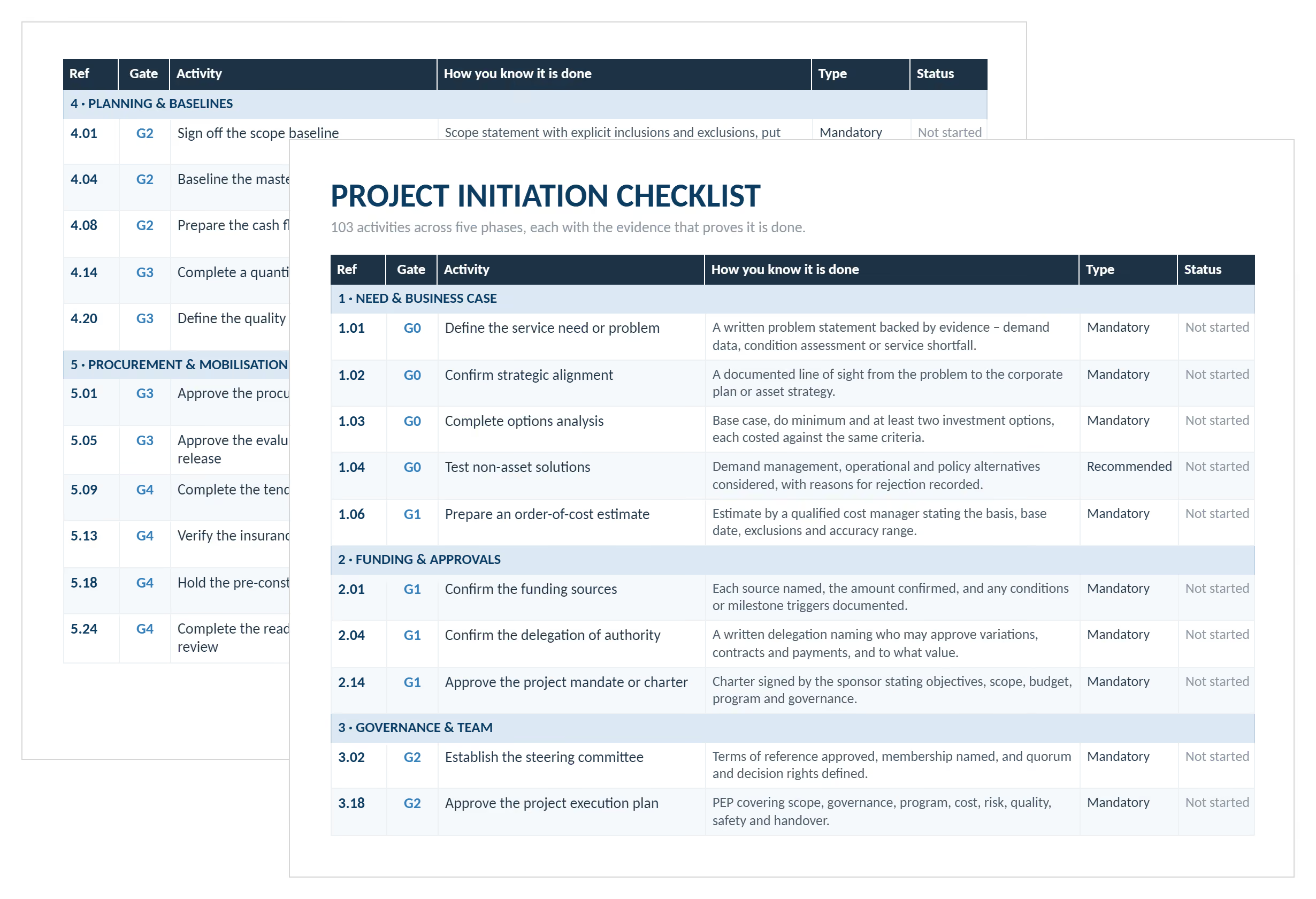

What is a Project Initiation Checklist?
A project initiation checklist is a formal verification document in construction project management. It confirms tasks, approvals, and documents are in place before project planning begins.
The Project Management Institute (PMI) defines project initiation as the first project lifecycle phase. The PMBOK Guide and ISO 21500 both treat it as a distinct gate. PRINCE2 names this stage "Starting Up a Project."
In every framework, nothing advances until initiation items are formally closed.
In construction, this means verifying the business case, scope, budget, and permits first. The project initiation process spans from concept approval through formal authorization. The checklist is not the project charter. The charter authorizes. The checklist confirms you're ready for that authorization.
What a Construction Project Initiation Document Checklist Should Include
A construction project initiation checklist covers nine core categories. Together, they form the project initiation document. Your sponsor and PMO sign off before planning begins.
Every field maps to a specific approval, assessment, or formal authorization. Miss any one, and gaps emerge as disputes, delays, or redesigns during delivery.
A well-built project initiation checklist template covers these nine fields across governance, scope, risk, and procurement:
- Project Charter: Signed authorization confirming the authorized sponsor, project scope, and PM assignment. AIA and ConsensusDocs contracts typically require this before work begins.
- Business Case: Documented justification covering investment rationale, expected outcomes, and cost-benefit analysis.
- Feasibility Study: Verified site, technical, financial, and regulatory assessments, all reviewed and approved.
- Stakeholder Register: Identified project stakeholders, their roles, authority levels, and communication requirements.
- Project Budget: Approved funding with an order of magnitude estimate and contingency reserve authorization.
- Scope and Deliverables: Documented project objectives, milestone schedule, inclusions, and explicit exclusions.
- Risk Identification: Preliminary list of potential risks with initial severity ratings and named risk owners.
- Permits and Regulatory Checks: Secured environmental approvals, building permits, and zoning clearances required before mobilization.
- Procurement Strategy: Selected contract delivery route, whether design-bid-build, design-build, or construction management, with rationale on record.
💡 Pro Tip: Add a "Version" header and "Last Updated" date to your checklist file. Initiation items often change mid-process. Without version control, disputes about what was agreed at gate review are hard to resolve.
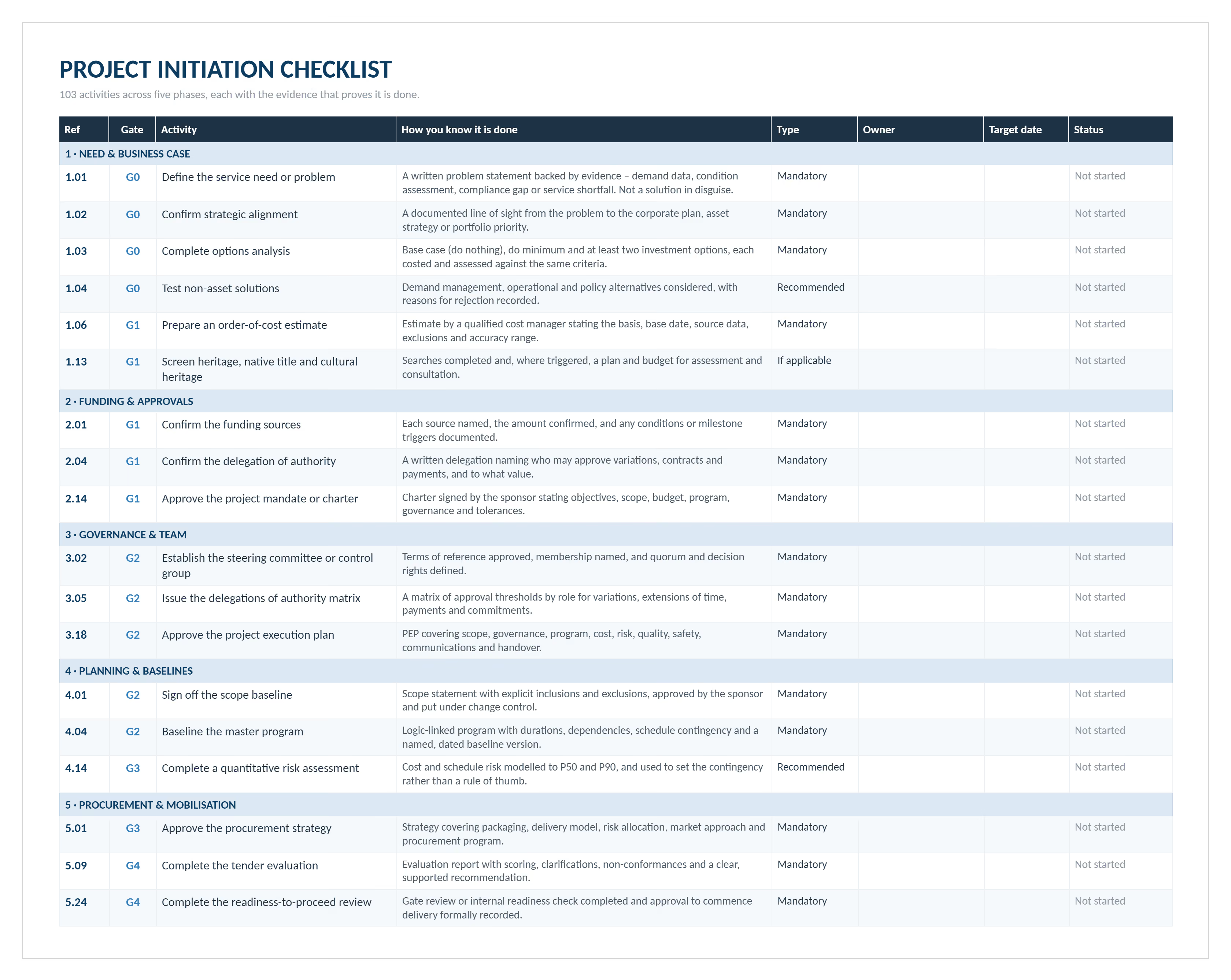
Why Every Project Needs an Initiation Phase Checklist
Projects that skip formal initiation run over budget. They miss scope boundaries and face stakeholder disputes during delivery. The initiation phase is where misalignment is cheapest to fix. Once design is underway, changes cost far more.
A project management initiation phase checklist protects your project because it:
- Prevents scope creep: Documented project goals and exclusions block unapproved additions later.
- Secures project approval on record: Signed sign-offs create accountability that survives team or leadership changes.
- Reduces rework during design: Confirmed feasibility data prevents changes after drawings are complete.
- Aligns key stakeholders early: Upfront agreement eliminates conflicting expectations during project execution.
- Establishes a risk management baseline: Identifying threats at initiation allows time to plan responses.
- Supports project control from day one: Approved baselines give the PM a clear reference for every decision.
- Satisfies PMO compliance requirements: Frameworks aligned with the PMI and the PMBOK Guide require formal initiation sign-off before funds release.
Without a completed checklist, project success depends on memory and verbal agreements. Both evaporate under pressure.
💡 Pro Tip: Date-stamp every sign-off on your initiation checklist. If a sponsor disputes scope later, a signed and dated checklist is stronger evidence than a charter document alone.
How to Work Through Your Construction Project Initiation Checklist
Start with the sponsor. Work forward through authorization, scope, assessments, and then procurement. Each step depends on the one before it. Skipping funding approval makes every downstream step unverifiable.
Here's how to complete your construction project document checklist in the right order:
- Confirm the sponsor: Identify who holds financial authority and approves the funding proposal.
- Define success outcomes: Write specific, measurable targets with clear criteria for completion.
- Define scope boundaries: List inclusions explicitly. State exclusions with equal clarity.
- Complete site and technical assessments: Establish site access, geotechnical data, utility locations, and regulatory requirements.
- Map all parties: Identify owners, consultants, authorities, and end users with their specific roles and authority levels.
- Secure funding approval: Document the order of magnitude cost estimate and confirm contingency reserve with the sponsor.
- Identify risks early: List top threats to scope, schedule, and budget. Assign a named risk owner to each item.
- Select a procurement route: Lock in the delivery method: design-bid-build, design-build, or CM. Begin pre-qualifying consultants. Consider how each route affects the project lifecycle.
- Obtain formal project authorization: Get the sponsor and oversight body to sign off on the initiation documents and approve commencement.
- Check permits are lodged: Verify all applications are submitted with expected approval timelines on record.
💡 Pro Tip: Never treat your checklist as a rubber stamp. Incomplete site assessments or an unsigned charter means the project should not advance. Regardless of schedule pressure, hold the gate.
When to Use a Project Initiation Checklist in Construction
Deploy a project initiation checklist at the start of the project initiation phase. Use it before design, procurement, or planning begins.
- New capital project authorization: When a project case is approved and the initiative moves from concept to initiation.
- Pre-construction gate review: Before preconstruction starts, validate all initiation items are closed. The project plan can then start.
- Portfolio or program intake: When a PMO evaluates projects for a capital program, consistent initiation evidence is required.
- Re-initiation after major scope change: When scope or budget revisions require formal re-authorization before delivery continues.
- Delivery method change: When the procurement route shifts, especially to design-build under DBIA guidelines, updated approvals and a refreshed risk profile are needed.
- Government or infrastructure project start: Funding bodies require formal initiation documentation before releasing capital. This applies across AGC-affiliated programs in the US and CCDC-governed contracts in Canada.
💡 Pro Tip: Don't wait for a formal kickoff meeting to start your checklist. Begin as soon as the project case is approved. Permit applications and feasibility studies have long lead times. Starting them late delays the entire initiation gate.
Best Practices for PMI-Aligned Initiation Checklist Management
Effective initiation checklist management goes beyond completing line items. These practices keep records audit-ready. They apply whether you're heading into project closure or an early controls review.
☑️ Separate initiation from planning tasks: Never include work breakdown structure (WBS), scheduling, or procurement timelines on an initiation checklist. Mixing project phases blurs which gate you're actually closing.
☑️ Assign one owner per item: Shared responsibility creates gaps. Each line needs a single named person, not a department or role.
☑️ Set a hard completion deadline: Without a close date, initiation drags on indefinitely. Lock the gate date before issuing the checklist.
☑️ Version-control every update: Record who changed what and when. A clean audit trail resolves disputes faster.
☑️ Cross-reference your RAID report: Every risk item on the checklist should appear in your Risks, Assumptions, Issues, and Dependencies register.
☑️ Revalidate after a pause: If initiation stalls for 30+ days, recheck permits, contact lists, and budget approvals.
☑️ Archive the signed checklist separately: It's a project controls record. Store it where auditors can retrieve it independently from working project documents.
💡 Pro Tip: Build a two-column checklist: "completed" and "verified by." Only the sign-off authority can tick "verified." This mirrors the PRINCE2 principle of separating completion from authorization. It stops rubber-stamping at the gate.
Challenges with Generic Excel-Based Planning Checklists for Construction
Generic Excel checklists for planning a construction project create real accountability risks. Built for any project type, they're optimized for none.
⚠️ Missing construction-specific permit items: Generic downloads skip approvals like environmental clearances, heritage assessments, or utility relocation consents.
⚠️ No delivery method differentiation: Design-build initiation differs from design-bid-build. Generic checklists treat all procurement methods identically.
⚠️ Mixed initiation and planning tasks: Free templates blend early-phase gates with scheduling activities. Real oversight items get skipped.
⚠️ No sign-off tracking: Excel files rarely include named approvers, dates, or version history. Audits become nearly impossible.
⚠️ Can't read your actual contract: Static templates can't extract items from your PDF. Teams transcribe manually and miss critical requirements.
⚠️ Version conflicts across the project team: Multiple copies create confusion about which version is current and authoritative.
⚠️ No escalation path for blocked items: Spreadsheets don't flag overdue items. Stalled approvals go unnoticed until it's too late.

Written by
Jefbeck Eje
Jefbeck Eje is Mastt's SEO Specialist, working on how its construction guides earn visibility in Google and in AI answer engines such as Perplexity and ChatGPT Search. Earlier, at the language-learning app Ling, he carried out technical SEO audits with an external agency and reviewed work from a team of more than five writers.

Use this FREE project initiation checklist to verify every approval, scope boundary, and risk item before planning begins. Skip it, and you're committing resources to a project that isn't ready.

Top Performers Don’t Guess. They Deliver.
Cut the stress of showing up unprepared
Start for FreeTrusted by the bold, the brave, and the brilliant to deliver the future