



Construction budget control is the process of tracking, forecasting, and controlling costs so they remain aligned with the approved budget. It gives project teams visibility into actual spending and future exposure, which helps protect margins and reduce financial risk.
This article explains how budget control works in practice and outlines practical strategies to protect profitability and manage costs in construction projects. It also clarifies how it operates within construction budgeting, so planning and cost control work as one system.
What is Construction Budget Control?
Construction budget control is the structured process of monitoring and adjusting project finances so spending stays aligned with the budget. Teams compare current performance against the approved budget and update forecasts when scope, pricing, or risk exposure shifts.
This discipline relies on a clear project baseline and financial oversight. The objective is to maintain cost certainty throughout the project. Strong budget control allows leaders to act before small changes turn into material cost overruns.
Budget Control vs Budget Tracking in Construction
Budget tracking shows how much of the approved budget has been spent to date. Budget control manages remaining funds and updates projections to keep the project aligned with its financial plan. Tracking reports past performance, while control directs future outcomes.
For example, subcontract commitments may exceed their allocated budget line. Budget tracking records the variance. Budget control updates the estimate at completion and triggers corrective action before margin declines further.
Why Budget Control is Important in Construction Projects
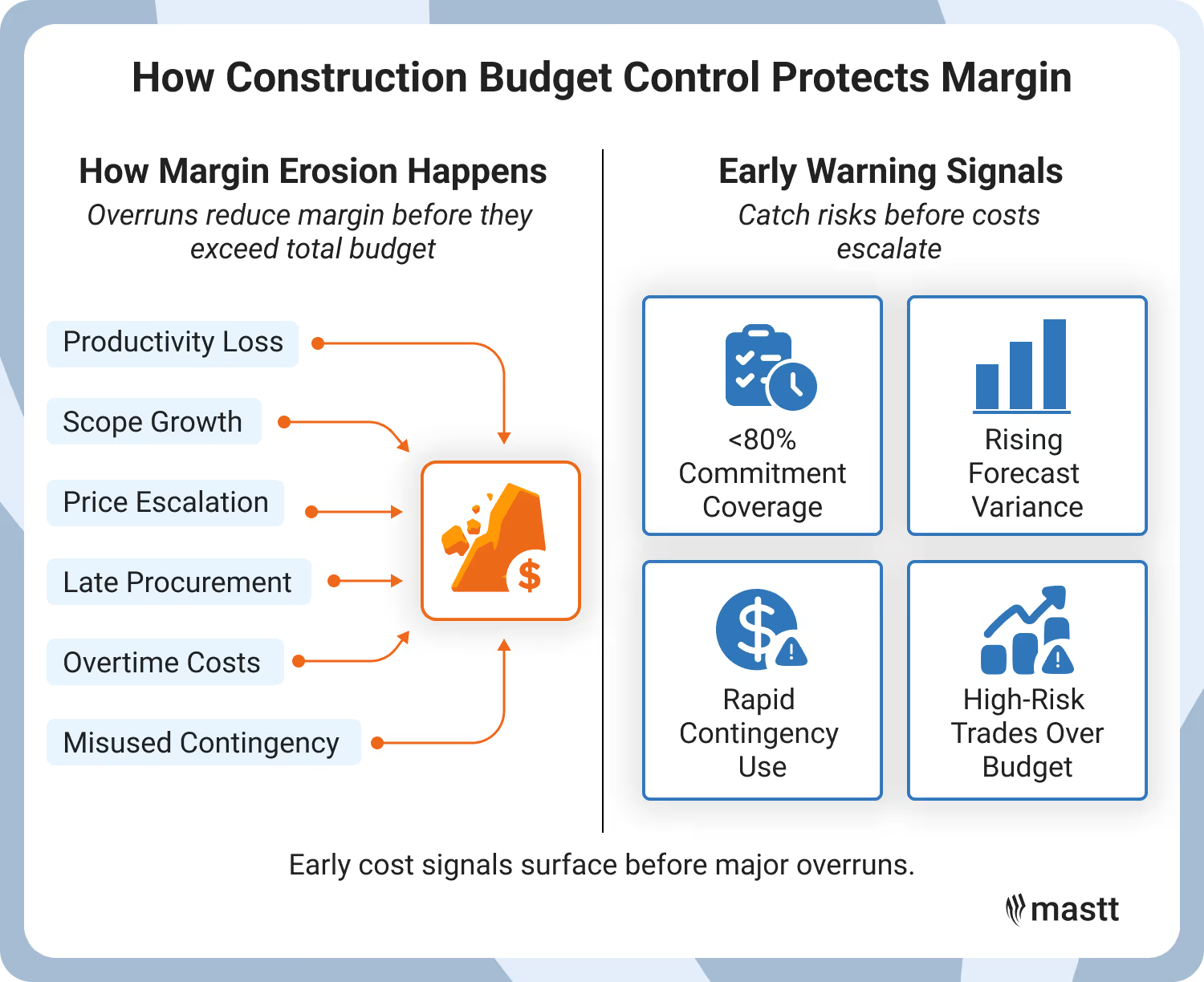
Budget control matters because it keeps spending in line with set limits and protects expected profit. Even minor cost shifts can grow quickly if no one monitors them. Active financial oversight keeps the project grounded in real numbers.
Budget control is important for construction projects in many ways:
- Profit Protection: Ongoing cost review helps preserve margins by catching unfavorable trends early.
- Cash Flow Stability: Controlled spending supports predictable payment cycles and reduces funding strain.
- Change Order Discipline: Formal review of change orders limits unapproved cost growth and protects the baseline.
- Risk Visibility: Regular cost analysis highlights exposure before it escalates.
- Stakeholder Confidence: Clear cost reporting improves transparency between project teams and owners.
Good budget control sharpens financial judgment at every stage of the project. It ties spending decisions to current performance data instead of assumptions. Reliable cost visibility reduces uncertainty and supports steady project delivery.
How to Manage Construction Budget Control Across the Project Lifecycle
Teams must actively manage budget control from planning through closeout. Leaders apply structured financial decisions at each stage of the project. Each phase demands specific financial controls to keep the project within its approved framework.
Step 1: Define scope and build a defensible cost estimate
Define the project scope clearly and develop a cost estimate using current pricing and reliable historical data. Apply risk-adjusted assumptions to reflect realistic exposure. Structure the estimate using cost codes that align with future cost tracking.
Step 2: Structure and lock the baseline budget
Convert the approved estimate into a formal project budget organized by work breakdown structures (WBS). Allocate direct costs, indirect costs, and contingency based on defined criteria. Lock the baseline and manage revisions through formal approval workflows.
Step 3: Control commitments and record actual costs accurately
Track subcontract and supplier commitments against approved budget lines before invoices are processed. Monitor commitment coverage to identify pricing exposure early. Record actual costs consistently within the established cost code framework.
Step 4: Manage forecasts and change impact
Update forecasts when productivity, procurement results, or scope conditions shift. Track approved and pending change orders separately to maintain forecast accuracy. Revise the estimate at completion as soon as confirmed cost impacts arise.
Step 5: Conduct structured closeout review
Compare the final cost to the approved baseline and perform structured variance analysis. Identify root causes tied to estimating assumptions, procurement timing, or change management decisions. Apply those findings to strengthen future construction budget control.
💡 Pro Tip: Start every project with a construction budget template and lock it before procurement begins. Controlling revisions through structured approval workflows in Mastt prevents quiet budget shifts that undermine cost certainty.
Who is Responsible for Construction Budget Control?
The project manager is primarily responsible for construction budget control. This role owns day-to-day cost performance and ensures the project budget reflects current commitments and forecasts. Financial responsibility is distributed across key stakeholders.
Reliable budget control depends on clear responsibility across the project team.
- Project Manager: Tracks cost performance, reviews variance, and updates forecasts to maintain alignment with the approved project budget.
- Construction Project Manager or Site Lead: Monitors field productivity, resource use, and scope changes that directly affect construction cost.
- Cost Engineer: Manages cost data, ensures accurate cost coding, and updates forecasts, including the estimate at completion.
- Project Owner or Project Sponsor: Approves major budget revisions, governs contingency use, and sets financial expectations.
Clear accountability reduces delays in forecast updates and strengthens construction cost control. When each role understands its financial responsibilities, budget decisions reflect real project conditions and remain aligned with governance standards.
Common Budget Control Mistakes and How to Avoid Them
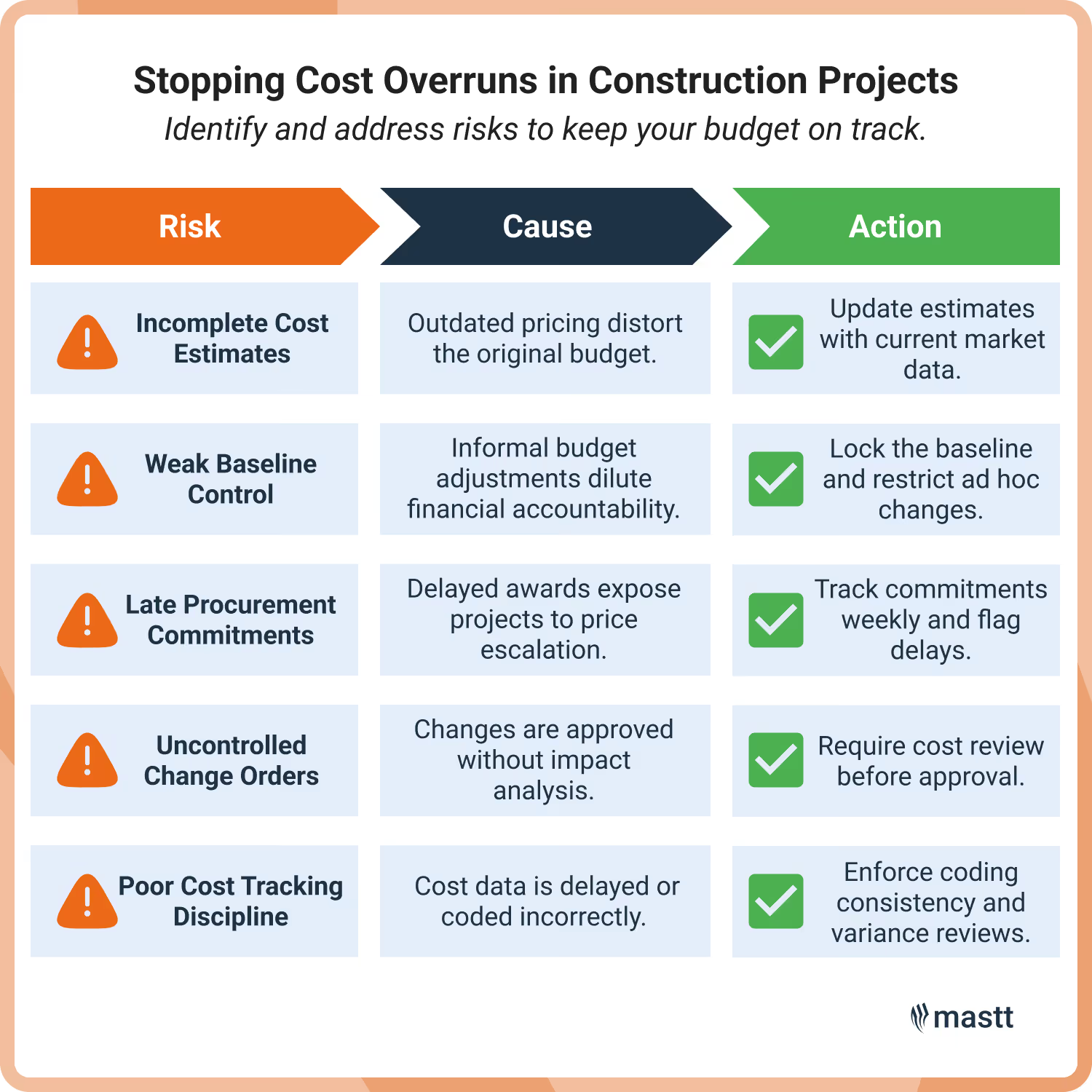
Budget control often breaks down due to process gaps rather than a lack of data. Many construction projects collect cost information but fail to apply disciplined financial controls, which increases the risk of overruns. Below are common breakdowns and how to address them.
Most budget overruns develop over time. They stem from minor control lapses and slow financial responses. Budget management improves and becomes effective when teams use current cost data to guide operational decisions in real time.
Best Practices for Effective Budget Control
Strong budget control relies on disciplined financial habits applied consistently across the project lifecycle. Projects protect profitability when cost decisions are deliberate and supported by current data.
Use these practices to strengthen budget control beyond routine tracking:
✅ Link procurement schedules to cash flow forecasts: Align subcontract awards and material purchases with planned draw schedules to avoid liquidity strain.
✅ Track commitment coverage ratio: Measure the percentage of the total project budget that is contractually committed to expose pricing risk early.
✅ Monitor labor productivity against cost benchmarks: Compare planned production rates to actual field output to detect margin erosion before payroll compounds it.cl
✅ Separate approved and pending change exposure: Maintain distinct tracking for approved change orders and unresolved scope changes to preserve forecast clarity.
✅ Perform rolling risk-adjusted forecasting: Apply probability weighting to known risks instead of treating contingency as a flat reserve.
✅ Audit cost-to-complete assumptions monthly: Revalidate remaining scope quantities and subcontract balances to prevent optimistic projections.
✅ Control indirect scope creep: Track site overhead and general conditions separately to prevent slow accumulation outside core trade budgets.
✅ Tie executive reporting to forecast variance: Present forward-looking cost projections so leadership decisions reflect expected final cost, not past expense.
Budget management depends on connecting financial indicators to operational timing and risk exposure. Teams that apply these practices maintain clearer visibility into project cost dynamics and respond before profitability is compromised.
💡 Pro Tip: Build a shared construction project dashboard software that tracks commitments, contingency, and the final cost forecast. Review it weekly with project and executive leads. Early visibility prevents small variances from escalating.
What Tools Can Be Used in Construction Budget Control?
Construction budget control relies on structured tools that support accurate tracking, forecasting, and financial reporting. The right tools help teams maintain visibility into project cost and reduce manual errors. They should reinforce governance rather than replace it.
The most commonly used tools include:
- Construction budget control software: Centralizes the project budget, commitment tracking, forecast updates, and change order integration in one system.
- Cost estimation software: Generate detailed cost estimates using historical data and quantity takeoffs to support accurate baseline development.
- Budget dashboards: Display variance, forecast exposure, and contingency usage in real time for project managers and executives.
- Construction change order software: Route approvals, document financial impact, and automatically update the project budget when variations are approved.
- Cost coding and accounting systems: Record actual costs accurately and align field spending with structured cost categories.
- Cash flow forecasting software: Project draw schedules and funding requirements to prevent liquidity pressure during peak construction phases.
- Project scheduling software: Connect timeline changes to financial impact to anticipate delay-related cost growth.
Tool selection should align with the project's complexity and risk profile. Systems that integrate cost tracking with forecasting and reporting provide clearer financial control than disconnected spreadsheets. Consistent use across teams ensures construction cost control remains structured and reliable.
Build Stronger Financial Control Into Every Project with Mastt
Construction budget control delivers results when financial data drives decisions in real time. Locked baselines, timely forecast updates, and enforced approval workflows prevent slow budget drift that erodes margin.
Projects remain financially stable when leaders act on variance early. Mastt strengthens this by centralizing project budgets, commitments, forecasts, and change tracking in one structured system. Tighten those controls, then build consistency across every project.

Written by
Stephanie Flores
Stephanie Flores was a Construction Content Writer at Mastt, producing long-form guides and research articles on cost management, contract management, and risk. She holds a Bachelor of Arts in Political Economy from the University of Asia and the Pacific.


Contributions by
Construction Budget Template
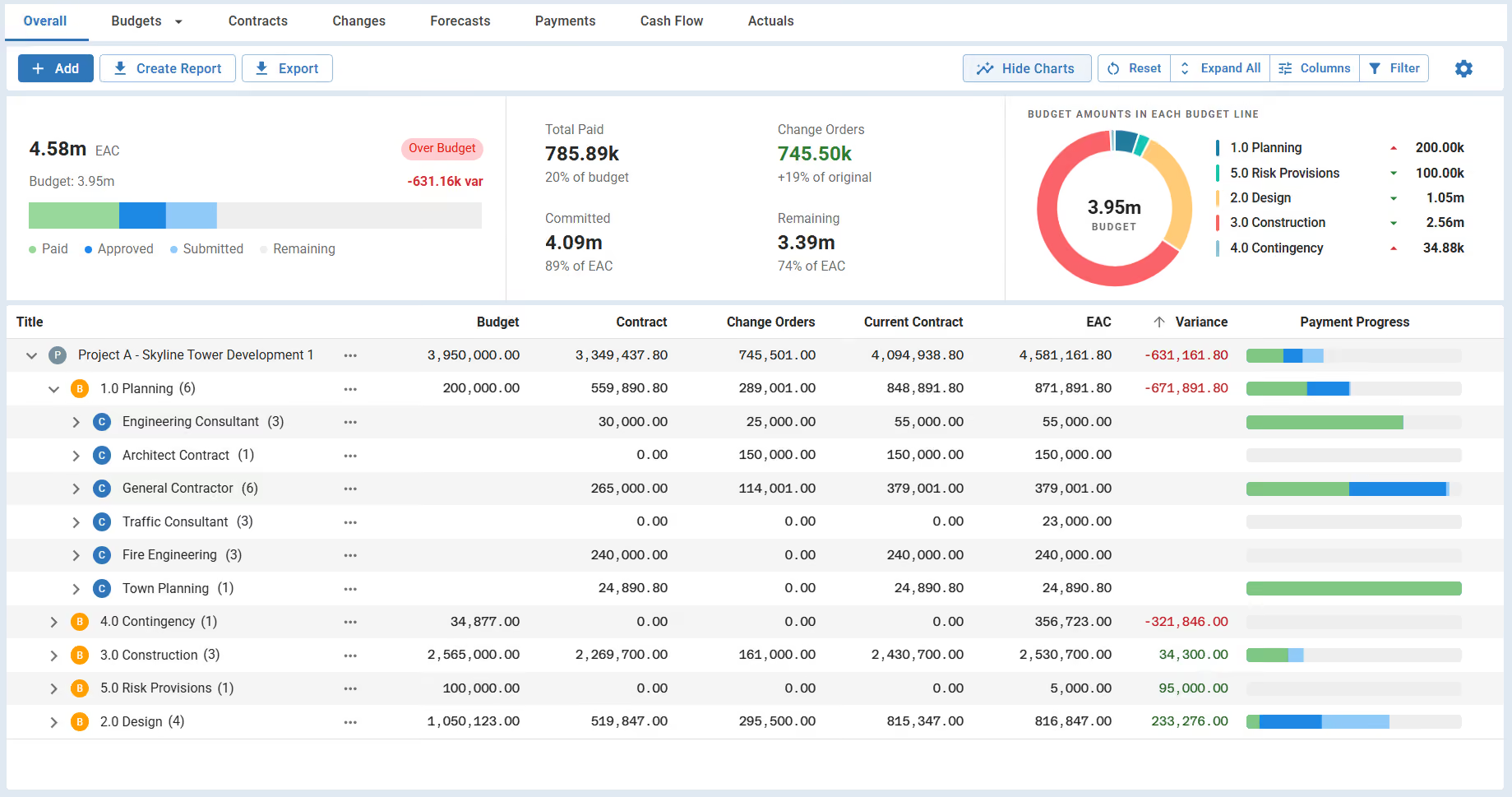
Use this FREE Construction Budget Template to estimate and manage project costs with confidence. Track direct and indirect expenses, monitor actual vs planned spend, and maintain clear financial oversight.

Walk Into Every Meeting With Confidence, Clarity, and Control
No one wants to look unprepared, blindsided, or uncertain in front of stakeholders — but that’s exactly what happens without Mastt.
Start for FreeTrusted by the bold, the brave, and the brilliant across governments, Fortune 500s, and the world’s best in delivering the future

.avif)

