

.avif)
A real estate developer is a professional who turns land or existing property into new real estate projects. The work includes acquiring land, evaluating feasibility, securing financing, and coordinating a construction team. Their projects may include residential buildings, commercial real estate, or mixed-use developments.
In this article, we’ll talk about what a real estate developer does and how the development process works. We’ll also outline the steps professionals take to enter the field, the skills the role requires, and how earnings typically work in real estate development.
What is a Real Estate Developer?
A real estate developer is a professional who plans and delivers new property projects. The developer identifies land or existing property with development potential. They also assess whether a project makes financial sense and manage the process leading to construction and completion.
In practice, the developer serves as the project organizer. They work with lenders, investors, architects, engineers, contractors, and local planning authorities to move a project from concept to finished building.
Real estate developers also work on many types of projects. Some developers focus on residential projects such as apartments or housing communities. Others work on commercial real estate, including office buildings, retail centers, and mixed-use developments.
Difference Between a Real Estate Developer, Real Estate Investor, and Real Estate Agent
A real estate developer leads the process of creating new property projects. A real estate investor mainly provides capital and earns returns from property ownership or project profits. A real estate agent focuses on buying and selling property on behalf of clients.
Although these roles often work together on real estate development projects, each serves a different function within the industry.
Real estate developers often work with both investors and agents during a project. Investors may provide equity or financing, while agents help market or sell the completed property.
What Does a Real Estate Developer Do?
A real estate developer manages the process of turning land or existing property into a new real estate project. The work starts long before construction begins and continues until the property is sold or leased. Their main goal is to create a property that meets market demand and generates long-term value.
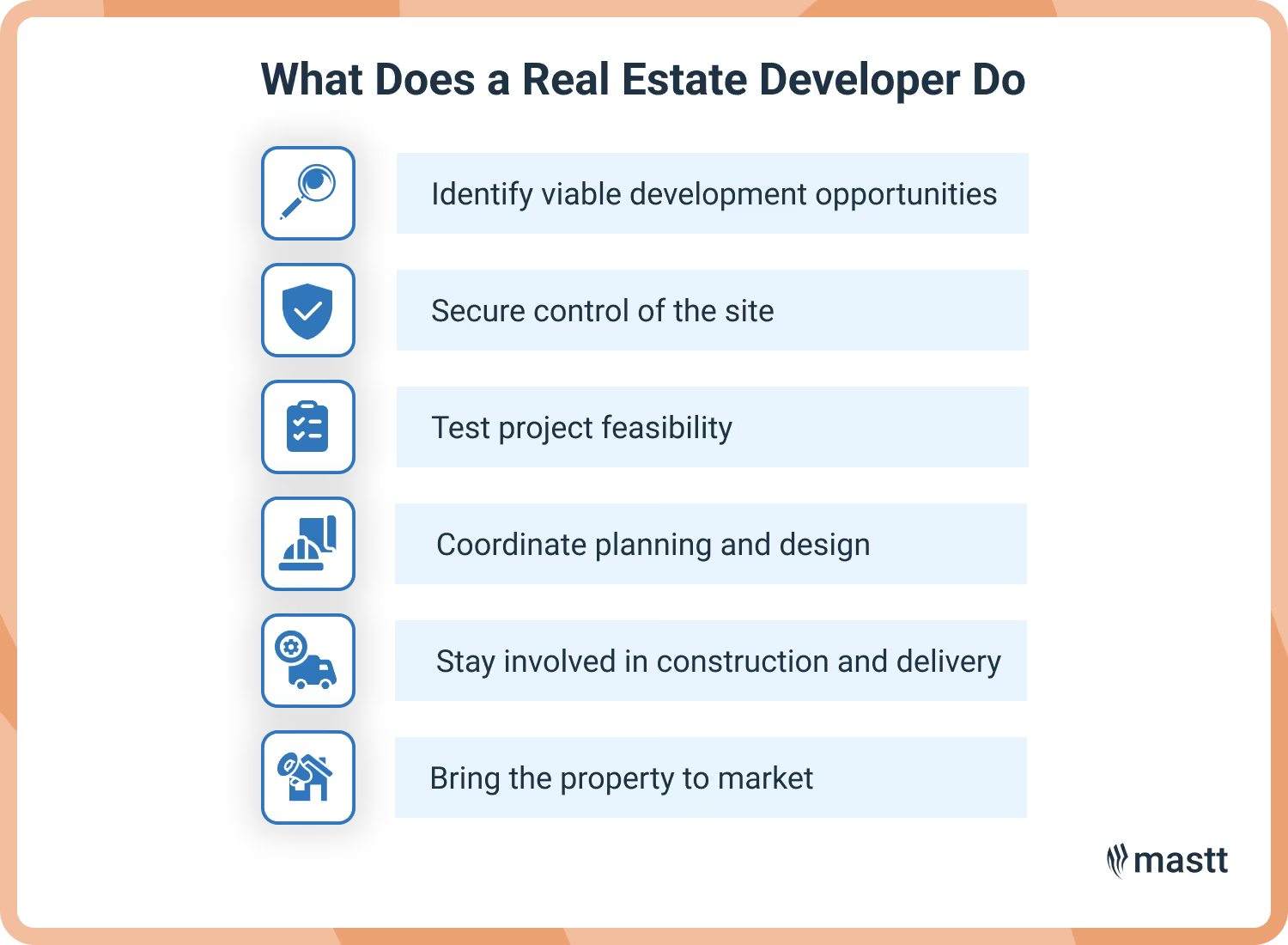
The role covers several responsibilities across the real estate development process:
☑️ Identify viable development opportunities
A developer starts by evaluating whether a site has real potential. That means considering local demand, land-use rules, and whether the location supports the proposed project. A site may look attractive at first. But the real question is whether it can support a project that is both buildable and financially sound.
☑️ Secure control of the site
Once a site looks viable, the developer works to secure it through a purchase or an option agreement. This stage typically includes due diligence, including title review, zoning checks, environmental review, and utility access. These early findings often determine whether the project should move forward.
☑️ Test whether the project is feasible
Developers assess whether the deal is financially viable. They review expected costs, likely income, and current market conditions to see if the project can support the risk. If the numbers do not hold up, the project may stop before design begins.
☑️ Coordinate planning and design
Developers work with architects, engineers, and consultants to shape the project. The design must meet market demand while also complying with zoning rules, code requirements, and budget limits.
☑️ Stay involved through construction and delivery
After approvals and financing are in place, the project moves into delivery. The developer continues to guide key decisions affecting cost, schedule, and commercial viability. After completion, the focus shifts to performance.
☑️ Bring the property to market
Once construction is complete, the property must generate a return. Developers may lease the space, sell the asset, or hold it as a long-term investment, depending on the business plan.
In most projects, the developer does not perform every task directly. Instead, they lead the process and keep the project aligned from early site review through final delivery.
How to Become a Real Estate Developer
Entering real estate development usually happens through industry experience rather than a single formal path. Most professionals build knowledge in real estate, construction, or finance before taking responsibility for development projects.
1. Build experience in real estate, construction, or finance
Start by working in a role that exposes you to property transactions or construction projects. Common starting points include real estate brokerage, construction management, property investment, and development analyst roles.
Focus on learning how deals are structured and how projects move from concept to completion. If you work in construction, pay attention to project controls and cost management. If you work in brokerage or investment, focus on deal structuring and market evaluation.
2. Learn the real estate development process
Start by studying the typical development cycle used in commercial real estate projects. This includes site identification, land acquisition, feasibility analysis, entitlement approvals, design development, financing, construction, and property leasing or sale.
Learn how these stages connect and influence each other. Pay close attention to development feasibility and financial modeling. These tools help developers estimate costs, evaluate risk, and determine whether a project will produce acceptable returns. Use our property development feasibility calculator to test costs, profit, and margin.
3. Study local markets and zoning regulations
Every development project depends on local regulations and market demand. Developers must understand what can legally be built on a site and whether the market will support it.
Zoning regulations determine what type of development is allowed on a property. Market conditions determine whether the project will attract buyers or tenants. Developers who understand both zoning and market demand can quickly spot viable development opportunities.
4. Build relationships with investors and lenders
Real estate development requires significant capital. Developers rarely fund projects alone, which makes strong financial partnerships essential. Strong relationships with capital partners make it easier to finance future development projects.
Start building connections within the real estate industry early. Attend local real estate events, industry associations, and development conferences. Many deals begin through professional networks rather than public listings.
5. Start with smaller development projects
Most developers gain experience through smaller projects before pursuing large commercial developments. Smaller residential or redevelopment projects allow developers to learn the development process while managing lower financial risk.
Common entry projects include small multifamily buildings, residential subdivisions, property renovations, or mixed-use redevelopments in growing neighborhoods. These projects still require development planning, financing, and contractor coordination. But they involve lower capital requirements.
6. Expand into larger development projects
As developers gain experience and complete successful projects, they can move into larger residential or commercial developments. Larger projects often involve more complex financing structures and longer development timelines.
At this stage, developers rely heavily on partnership structures and capital stacking to fund projects. Joint ventures with investment partners or development firms allow access to larger capital pools while sharing project risk.
Real estate development requires time to master. Each project improves a developer’s ability to evaluate sites, manage risk, and coordinate the professionals involved in delivering complex real estate projects.

Essential Skills for a Successful Real Estate Developer
Real estate development requires a combination of financial judgment, market awareness, and project oversight. Strong technical and business skills help them manage risk and guide projects through the development process.
Here are skills that separate effective real estate developers from the rest:
- Development feasibility analysis: This skill determines whether a project will produce acceptable financial returns before capital is committed.
- Project management: Strong coordination keeps architects, contractors, consultants, and lenders aligned with the project schedule and budget.
- Market analysis: Understanding local real estate demand helps developers choose projects that buyers or tenants will actually support.
- Financial structuring: Knowledge of development financing allows developers to assemble the capital needed to fund land acquisition and construction.
- Regulatory awareness: Understanding zoning regulations and building codes helps prevent costly redesigns, delays, or project rejections.
- Negotiation: Effective negotiation helps developers secure better land prices, financing terms, and construction contracts.
- Risk evaluation: Careful risk assessment allows developers to identify financial or construction issues before they threaten project profitability.
These skills work together throughout the development process. Financial analysis helps determine whether a project should move forward.
As a project progresses, construction knowledge supports better project controls throughout the build. At the same time, market insights guide decisions on property type, pricing, and demand.

How Much Does a Real Estate Developer Make?
In the U.S., the average real estate developer salary is about $84,748. Entry-level roles typically pay around $50,000, while top earners exceed $130,000. In Australia, property developer roles commonly range from AU$50,000 to AU$150,000. Compensation is generally higher in cities such as Sydney, Melbourne, and Adelaide.
Compensation in real estate development often extends beyond salary. Developers involved in projects may earn development fees, profit participation, or equity stakes tied to project performance. These structures can significantly increase total income when a development is successful.
Education and Career Paths Into Real Estate Development
There is no single degree or job title required to enter real estate development. Most developers come from business, finance, construction, architecture, brokerage, or project management. Then, they build the technical and market knowledge needed to lead development projects.
Common paths into the field include the following:
1. Business, finance, or real estate education
A background in business, finance, or real estate helps future developers understand underwriting, capital planning, and deal structure. These programs are useful because development decisions often hinge on whether a project can cover land, financing, and construction costs.
2. Construction or architecture backgrounds
Professionals with construction, architecture, or engineering experience often enter development with a strong grasp of how projects get built. This background is especially useful for understanding scope, cost control, project scheduling, and constructability before a project reaches the field.
3. Real estate brokerage or investment roles
Many developers start in brokerage, acquisitions, or investment analysis. These roles build skills in market evaluation, site selection, and property valuation. They also help professionals understand what drives demand in residential projects, commercial real estate, and mixed-use development.
4. Project management and development firm roles
Working for a development firm gives professionals direct exposure to the real estate development process. Roles in project management, development analysis, or construction oversight help future developers learn how projects move through due diligence, entitlement, financing, and delivery.
5. Smaller projects and owner-led development
Some professionals enter the field by taking on smaller projects such as infill housing, small multifamily properties, or light redevelopment work. This path can quickly build practical experience, especially when the project involves direct responsibility for budgeting, permitting, and contractor coordination.
What matters most is building useful knowledge in finance, market analysis, land use, and construction management. Then, you have to apply that knowledge to real development projects.
Developers who understand both project economics and project execution are usually better prepared to evaluate risk and move projects forward.
Tips for Becoming a Successful Real Estate Developer
Success in real estate development comes from making sound decisions early and managing risk throughout the project. The strongest developers know how to protect margin and keep the development process grounded in real construction and financing constraints.
These tips can help you move into the field with a stronger foundation:
✅ Choose roles that close your skill gap
If your background is in construction, consider moving into underwriting or acquisitions. If your background is in finance or brokerage, move toward predevelopment and project execution.
✅ Learn to read a development budget
Study how land cost, hard costs, soft costs, financing, and contingency affect project feasibility. This helps you understand why some deals look promising at first but fail under real pricing.
✅ Get comfortable with zoning and entitlements
Learn how local land use rules shape density, height, parking, and permitted uses. A strong developer knows that site value depends on what can actually be approved and built.
✅ Build relationships with lenders and investors early
Development depends on capital, so start building trust with financing partners before you need funding. Strong relationships often matter as much as the deal itself.
✅ Start with projects you can control
Smaller infill, light redevelopment, or small multifamily projects can teach the development process without the complexity of a large commercial build.
✅ Stay close to predevelopment work
Early decisions on design, pricing, permits, and utility constraints often determine the project's success. This is where many future developers build real judgment.
The fastest way to grow in this field is to build experience across both deal analysis and project delivery. Strong developers know how the numbers and the construction work connect. That helps them make better decisions before delays and cost increases take hold.
💡 Pro Tip: Development deals involve shifting budgets, schedules, and approvals that are easy to lose track of across multiple stakeholders. Real estate development software helps centralize project data, monitor costs, and keep teams aligned as projects move from feasibility through construction.
Your Next Step Toward Becoming a Real Estate Developer
A real estate developer turns opportunity into a finished project. The work requires market awareness and financial discipline. It also requires a clear understanding of construction, approvals, and project delivery.
For most professionals, the path into real estate development starts with experience in adjacent roles. From there, they build a stronger understanding of feasibility, zoning, financing, and how development projects move from planning to completion.

Written by
Jackson Row
Jackson Row is the Growth & North American Market Lead at Mastt. With a background in risk modeling, cost forecasting, and integrated project delivery, he helps capital project owners work smarter and faster. Jackson’s work supports better tools, better data, and better outcomes across the construction industry.


Contributions by
Project Controls Dashboard
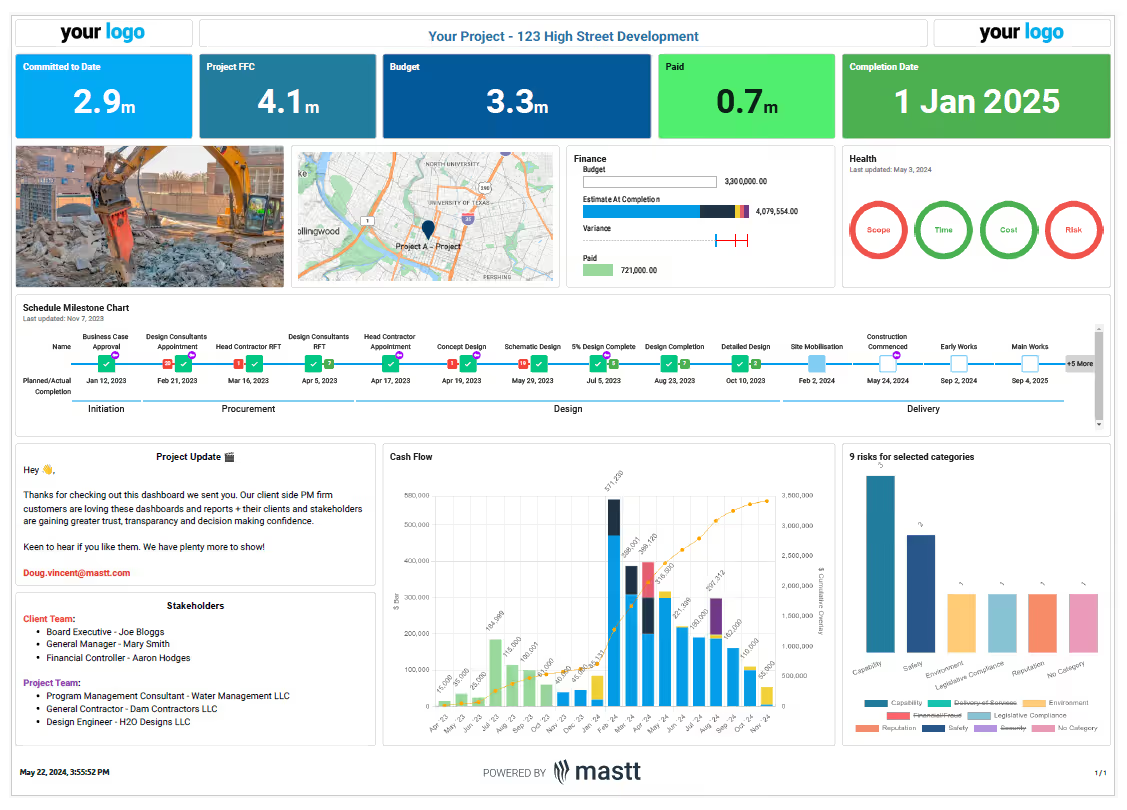
Use this FREE Project Controls Dashboard to oversee cost, schedule, risks, and performance with precision. Track key metrics in one connected view, supported by live project control charts and real-time reporting.

Walk Into Every Meeting With Confidence, Clarity, and Control
No one wants to look unprepared, blindsided, or uncertain in front of stakeholders — but that’s exactly what happens without Mastt.
Start for FreeTrusted by the bold, the brave, and the brilliant across governments, Fortune 500s, and the world’s best in delivering the future