


Sustainable real estate development means creating property that performs well over the long term. It focuses on reducing environmental impact while improving how a building uses energy, water, materials, and land over time.
This article explains what sustainable real estate development is, why it matters, how it shapes project planning, and the trends driving it forward.
What is Sustainable Real Estate Development?
Sustainable real estate development is the process of planning, designing, building, and operating real estate in ways that reduce environmental impact and support long-term value. It focuses on how a project uses energy, water, land, and building materials across the full life cycle of the development.
Why Does Sustainable Real Estate Matter?
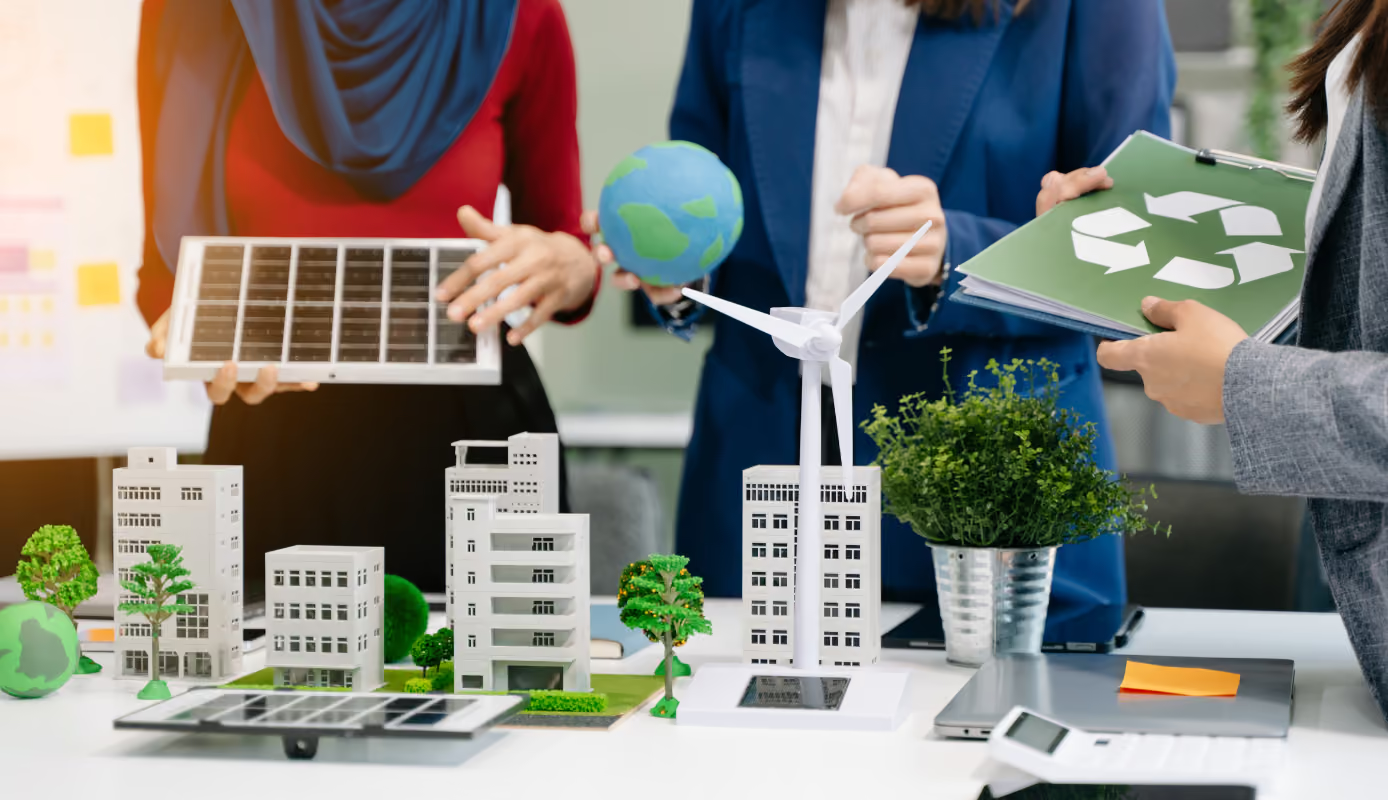
Sustainability in real estate is important because it affects project performance, cost control, and long-term asset value. For project owners and project managers, it also shapes how well a development holds up against rising operating costs and growing market pressure for better-performing buildings.
Sustainable practices in real estate create value in several ways:
- Better life-cycle performance: Sustainable development looks beyond construction costs and focuses on how the asset will perform over time.
- Lower operating costs: Sustainable properties often use less energy and water, reducing utility and operating expenses in the long run.
- Stronger long-term value: Buildings with better performance and lower resource use are often in a better position to stay competitive as market expectations change.
- Better risk management controls: Sustainability helps teams respond to stricter building standards, climate-related risks, and growing pressure to reduce carbon emissions.
- Higher tenant and investor appeal: Many tenants, buyers, and investors now pay closer attention to energy efficiency and environmental impact when making decisions.
- More resilient assets: Sustainable development improves long-term performance and helps properties withstand rising energy costs and inclement weather.
- Less environmental strain: Projects that reduce waste, use sustainable materials, and conserve water place less pressure on natural resources throughout the asset's life.
Sustainability affects how projects are underwritten, designed, delivered, and operated. A property that performs well on paper but struggles with sustainability can become more expensive to run and harder to position in the market.
What are the Key Principles of Sustainable Real Estate Development?
The core principles of sustainability focus on energy efficiency, water conservation, material selection, carbon reduction, and long-term building performance. These principles guide early decisions to improve efficiency and long-term value.
💡Pro Tip: Turn each principle into a measurable project requirement before schematic design starts. It is much easier to protect targets for energy use, water demand, material selection, and carbon performance when they are written into the brief, cost plan, and consultant scope early.
How to Plan for Sustainability in Real Estate Development
Planning for sustainability starts with early project decisions. Real estate developers need to set clear performance goals, test them against cost and site conditions. They also have to carry them through design and delivery. When sustainability is added late, it usually turns into a redesign problem instead of a project strategy.
Step 1. Set priorities before design starts
Start by deciding which outcomes matter most for the asset. Think lower energy use, lower water demand, better resilience, or stronger indoor environmental quality. Keep the list short. Too many goals usually create weak trade-offs and mixed directions.
The best way to do this is to turn each priority into a project requirement. For example, if resilience matters, define the site risks the building needs to respond to. Once priorities are written into the design brief, they become much harder to ignore.
Step 2. Test the site before choosing solutions
A sustainability strategy should grow from site conditions. Local climate, sun exposure, drainage, flood risk, and utility limits all affect what will work well. A project that addresses those factors early usually avoids costly design changes later.
Start with a site review during feasibility. Examine how the site handles water and where heat accumulates. Also, look at whether utility infrastructure can support electrification and what local conditions may drive long-term operating risk.

Step 3. Link each sustainability goal to a business outcome
A goal is easier to protect when the value is clear. Developers should know what each measure is expected to do for the asset. This could mean lower operating cost, better tenant retention, less exposure to future retrofit work, or stronger long-term value.
One useful approach is to ask a simple question for every major decision: What problem does this solve after turnover? If the team understands why a design choice matters, it is easier to protect it. A goal tied to asset performance will hold up better than a goal that sounds good in a presentation.
Step 4. Align the right people early
Better outcomes usually come from earlier coordination. Bring the owner, architect, engineers, contractor, and operations team into the conversation before key decisions are locked in.
Review the priorities, likely trade-offs, and any items that could affect constructability or long-term operations. Early alignment helps project teams catch conflicts while there is still time to fix them cheaply.
Step 5. Compare options using whole-life value
Do not judge major decisions on upfront cost alone. A system that saves money during procurement can create years of higher utility use, more maintenance, and earlier replacement.
Focus on a few practical checks. How long will the system last? How often will it need service? What does it do to energy demand? How hard will it be to replace? Looking at whole-life value leads to better decisions than looking at bid price in isolation.

Step 6. Choose systems and materials that can hold up
Long-term performance matters just as much as installation cost. Systems and materials should be efficient, durable, and realistic to maintain.
Before locking anything in, ask a few practical questions. Will the facility team be able to operate it easily? Are replacement parts available? Will the product still make sense in five or ten years? Good project decisions usually come from simple questions asked early.
Step 7. Build the targets into project controls
Sustainability goals only survive if they appear in the documents and reviews that govern delivery. If the targets stay in presentation slides, they usually disappear once cost checks, substitutions, and value engineering begin.
Put key targets into the basis of design, consultant scopes, and procurement packages. Assign ownership for each major item. That makes it easier to track what is protected and what should not be changed without review.
Step 8. Check performance through handover
A project can lose significant value during procurement, installation, and closeout. Substitutions may weaken performance. Controls may be installed but not tuned properly. Operations teams may receive incomplete training or poor documentation.
Track key metrics as the project progresses. Then make sure handover includes the training, documents, and commissioning support needed for the building to operate as intended. A strong design can still underperform if the closeout process is weak.
💡 Pro Tip: Before design development ends, create a short register of the items that should never be cut without approval. Include the target, the owner, and where it sits in the drawings or specs. This gives project managers a clear way to protect long-term performance when substitutions and value engineering start to roll in.
Challenges in Sustainable Development in Real Estate and How to Overcome Them
Sustainable development in real estate often faces cost pressures, delivery gaps, and competing project priorities. The main challenge is usually not the idea itself. The real challenge is maintaining sustainability goals once the project moves into design, procurement, and construction.
A project can start with strong goals and still lose them through unclear scope, rushed decisions, or weak review controls. Define the targets early, assign responsibility, and check major cost, design, and procurement decisions against the original performance intent.
Trends in Sustainable Real Estate for 2026
In 2026, the real estate market is moving toward projects that can prove lower energy use, lower carbon impact, stronger resilience, and better operating performance. Current global building data show that buildings still account for around 30% of global energy demand, putting pressure on the sector to improve quickly.
☑️ Retrofits are getting more attention
A larger share of sustainability work is now centered on existing assets, not only new construction. Recent energy efficiency analysis points to faster retrofit rates as a key part of progress in advanced economies, especially for older buildings with weak envelopes, outdated systems, and high operating costs.
☑️ Energy as a strategic asset in commercial real estate
Energy is no longer only an operating issue. In 2026, it is becoming a strategic part of real estate planning, site selection, and asset value. Developers need to consider power availability, grid constraints, energy reliability, and their impact on site selection, project feasibility, and long-term asset performance earlier.
☑️ Whole-life carbon is moving into real project decisions
Carbon reviews are expanding beyond operational energy and into embodied carbon from materials and construction. A 2025 whole-life carbon assessment of 30 buildings in California found that embodied carbon made up a large share of total building emissions.
In many cases, embodied carbon exceeded operational carbon, with concrete, metals, and structural systems among the largest contributors. That is why whole-life carbon is becoming a more practical part of early design, material selection, and procurement decisions.
☑️ Climate resilience is being treated as a core requirement
Climate resilience is becoming a bigger priority in the real estate industry. Research on resilience opportunities for 2026 shows that investors are paying closer attention to assets that can withstand environmental pressures and shifting market conditions. That is pushing resilience further into real estate strategy, asset planning, and long-term value decisions.
Sustainability Starts with Better Project Decisions
Sustainable real estate development is no longer a niche idea or a future goal. Sustainability now belongs in core project planning. The strongest projects will be those that treat it as part of the asset strategy, design decisions, and long-term performance from the start.

Written by
Anna Marie Goco
Anna is a seasoned Senior Content Writer at Mastt, specialising in project management and the construction industry. She leverages her in-depth knowledge to create valuable content that helps professionals in these fields. Through her writing, she contributes to the company's mission of empowering project managers and construction professionals with practical insights and solutions.


Contributions by
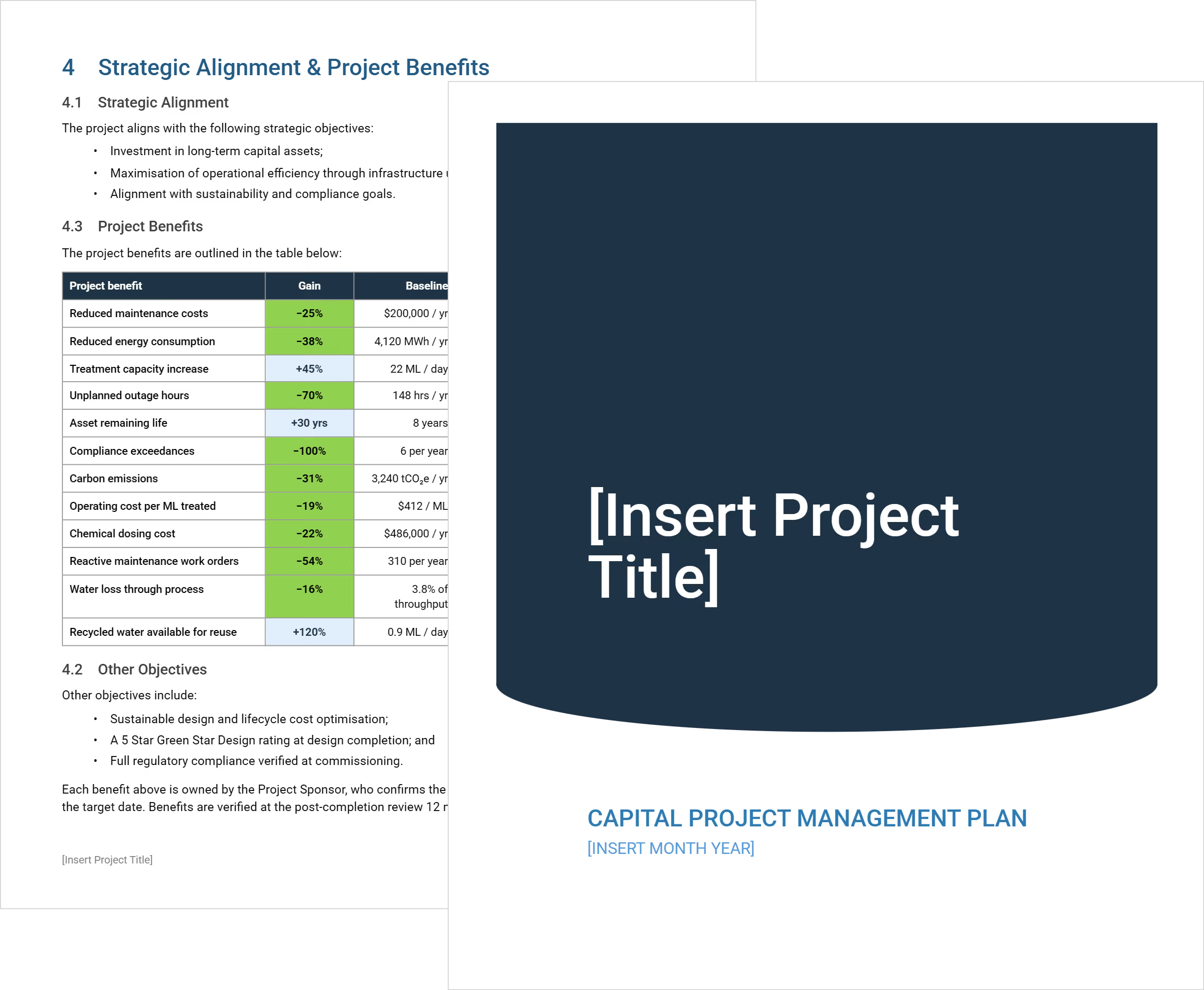
Capital Project Management Plan Template
FREE capital project management plan template in Word. Eighteen ready-to-edit sections built for CapEx control, funding governance, and asset handover.

Walk Into Every Meeting With Confidence, Clarity, and Control
No one wants to look unprepared, blindsided, or uncertain in front of stakeholders — but that’s exactly what happens without Mastt.
Start for FreeTrusted by the bold, the brave, and the brilliant across governments, Fortune 500s, and the world’s best in delivering the future
.avif)
