


What is a Basis of Estimate Template?
A basis of estimate template is a structured document construction professionals use to explain how project cost estimates were developed. It provides standardized sections for documenting estimating methodology, data sources, assumptions, and calculations supporting proposed pricing.
The template organizes the written narrative behind estimate numbers. Contractors submit BOE documentation with client proposals, budget requests, and bid submissions. Project owners use them to validate contractor pricing and justify funding decisions to stakeholders.
Construction cost estimating requires transparency that builds client trust. A standardized template for basis of estimate ensures methodology, pricing rationale, and supporting data get documented systematically. This reduces disputes and demonstrates professional capability throughout the project life cycle.
What's Included in a BOE Template?
A BOE template contains essential sections construction estimators need to justify costs and demonstrate estimate credibility. Each component documents specific methodology aspects and supporting calculations.
Standard sections in basis of estimate templates include:
- Estimating Methodology: The approach used such as analogous estimating from similar past projects, parametric modeling using cost relationships, or bottom-up detailed calculations.
- Project Scope Definition: Clear boundaries showing what work the estimate covers including deliverables, performance requirements, and site conditions.
- Historical Data References: Specific past projects, vendor quotes, equipment rates, or cost databases used with dates and relevance explanations.
- Assumptions and Constraints: Documented conditions affecting costs including labor availability, material pricing, weather allowances, site access, and performance period.
- Pricing Basis Documentation: Unit costs, crew production rates, equipment costs, material quantities, and markup percentages with calculation formulas.
- Risk Analysis and Contingency: Identified uncertainties, probability assessments, and reserve calculations supporting contingency amounts included.
- Exclusions and Clarifications: Explicit scope items not included preventing misunderstandings about what the estimate covers or excludes.
- Supporting Documentation: Attached vendor quotes, subcontractor pricing, benchmark data, or labor agreements validating estimate inputs.
💡 Pro Tip: Include actual quote numbers and dates from suppliers in your pricing basis section. Clients can verify pricing independently, and this transparency builds trust during budget negotiations.
How to Use This BOE Template Sheet
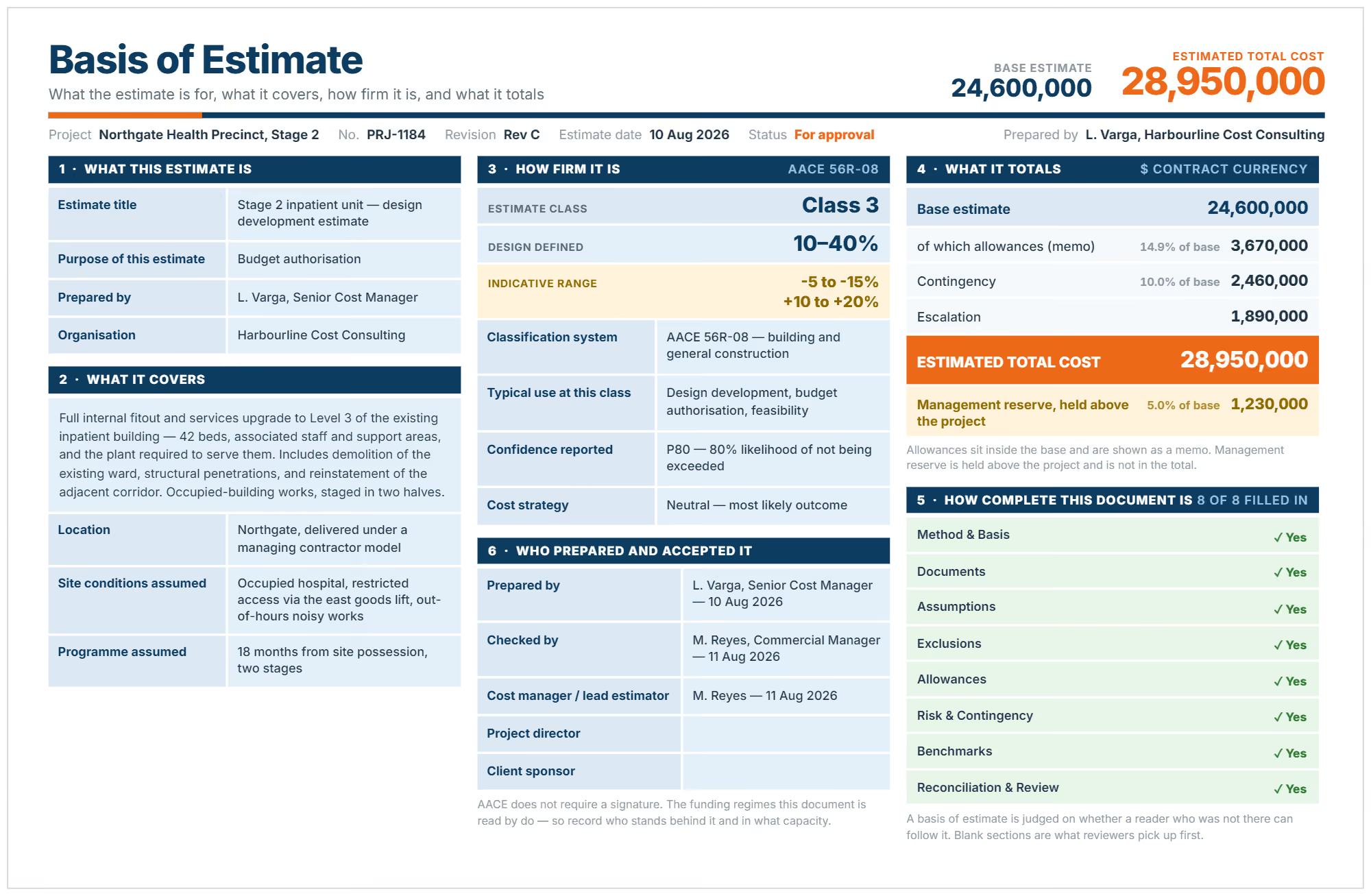
Start on the Estimate Summary, which is the front page, then work outwards through the sheets that support it. Every other sheet exists to answer a question a reviewer will ask about the number on that first page.
A worked example runs through every sheet, and the banner clears once you type your own project name on Estimate Summary.
- Complete Estimate Summary with what the estimate is for, what it covers, its class and confidence level, and the base, contingency, escalation and reserve figures
- Name the classification system alongside the class, since Class 3 means different things under the building, road and rail, and process systems
- Record the estimate base date on Method & Basis, along with method, units, currency, rate sources and which rates are judgement rather than evidence
- List every drawing, specification and report you priced from on Documents, each with its revision, date and status when priced
- Write each assumption with what it rests on and the value at risk if it turns out wrong
- Write exclusions against what a reader will look for and not find, naming who carries each one instead
- Split the money three ways: allowances inside the base on the Allowances sheet, then contingency, management reserve and escalation kept apart on Risk & Contingency, each with its own drawdown authority
- Normalize your comparators on Benchmarks, then reconcile every movement from the previous estimate line by line on Reconciliation & Review
Fill this in while the estimate is being built, not afterwards from memory. The base date and the document revisions are the two things nobody can reconstruct later.
Why Use a Template for Basis of Estimates?
Using a basis of estimate template ensures construction proposals contain complete cost justification that clients can understand and trust. Standardized formats prevent documentation gaps that trigger budget questions or pricing disputes.
Templates strengthen estimate credibility because they:
- Accelerates estimate documentation: Pre-structured sections eliminate formatting work, letting estimators focus on calculations rather than document organization.
- Builds client confidence: Systematic methodology documentation demonstrates professional capability and thoroughness clients expect from qualified contractors.
- Prevents cost disputes: Clear pricing rationale and assumptions reduce disagreements when actual costs differ from estimates during construction.
- Supports budget approvals: Complete justification helps project owners secure funding from boards, investors, or lenders reviewing project feasibility.
- Creates defensible audit trails: Organized documentation helps contractors defend estimate accuracy if clients question pricing during negotiations.
- Improves team consistency: Multiple estimators applying identical structures produce comparable documentation quality across different projects.
- Enables owner validation: Project owners can independently verify contractor estimates against their own data when methodology is transparent.
- Facilitates estimate reviews: BOE templates help clients and consultants find required information quickly during technical and commercial evaluations.
For government contractors, templates satisfy Federal Acquisition Regulation (FAR) and agency requirements mandating detailed cost justification. Consistent documentation also reduces estimate preparation time, freeing estimators to focus on winning competitive work.
When to Use a Template for BOE?
A basis of estimate template should be used whenever project teams submit pricing requiring justification to clients or stakeholders. Templates apply at specific moments throughout bidding and project development.
- Competitive bid submissions: Document cost justification when clients request detailed estimate support with pricing proposals during formal procurement.
- Budget development phases: Support early estimate accuracy during feasibility, schematic design, or design development when owners need funding approvals.
- Client proposal presentations: Provide pricing rationale when negotiating contracts, explaining methodology that builds confidence in proposed amounts.
- Value engineering analysis: Document cost impacts when proposing alternative materials, methods, or design solutions requiring client approval.
- Change order pricing: Justify additional costs for scope changes, showing calculation basis that supports requested contract modifications.
- Independent cost verification: Enable owners to validate contractor estimates by providing methodology transparency supporting informed decision-making.
- Stakeholder budget approvals: Support funding requests to boards, investors, or lenders requiring documented rationale behind project cost projections.
- Estimating system audits: Demonstrate company capability when clients review estimating procedures before prequalification or contract awards.
💡 Pro Tip: Prepare your BOE framework during estimate development, not after numbers are final. Documenting methodology whilst calculating costs produces more accurate narratives than reconstructing logic later.
Related Articles and Templates

Written by
Jackson Row
Jackson Row joined Mastt's founding North American team in 2023, implementing the platform for US government agencies and Fortune 500 organizations. He holds a Bachelor of Engineering in civil and mining engineering from UNSW and began his career as a construction cadet on civil projects in Sydney. At Mastt, he contributes articles on payment and client-side project management.

Use this basis of estimate template to justify project costs and strengthen client confidence. Pre-structured sections document methodology, assumptions, and pricing rationale with complete traceability.

Top Performers Don’t Guess. They Deliver.
Cut the stress of showing up unprepared
Start for FreeTrusted by the bold, the brave, and the brilliant to deliver the future