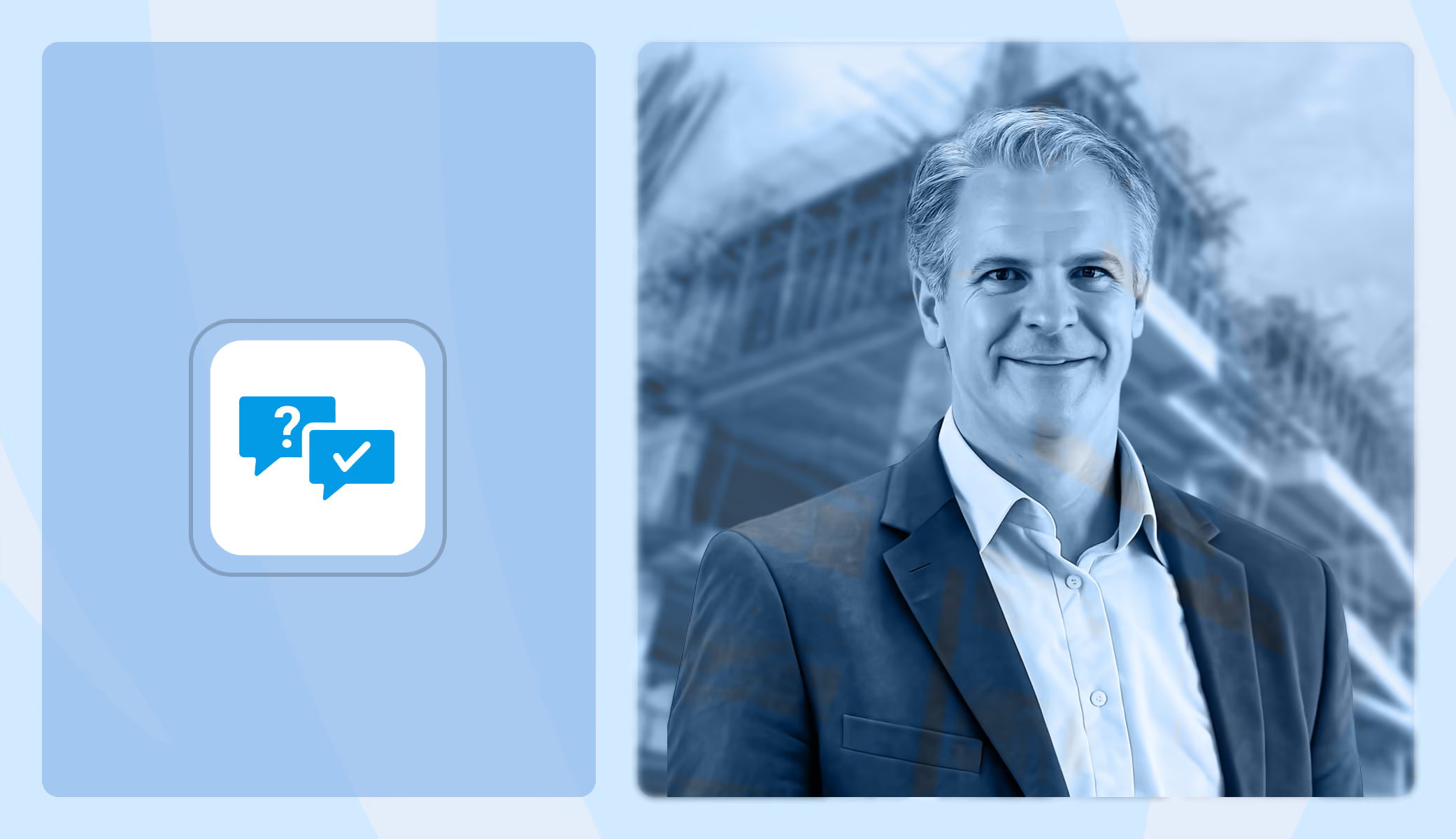


Iain Davidson is State Chief Executive for Colliers ACT, where he runs an outsourced project management team for private and institutional clients. He came up through civil engineering and client-side project management, then built Colliers' ACT business from scratch in 2020.
Iain joins Rebecca Thomas on Mastt's Thought Leadership Series. They cover why he built the business organically, why an external team beats hiring in-house, and where reporting and AI fit in.
From Civil Engineering to Client-Side Project Management
Iain did not set out to run projects. He came up through civil engineering and moved into client-side project management early, then spent about a decade there before joining Colliers.
Q: What drew you to capital project management, and what keeps you in it?
A: Yeah, sure. At the beginning, I wasn't necessarily drawn to project management. I actually started in civil engineering, and my first job was as a CAD drafter in a civil engineering office.
But one thing led to another. It was probably a couple of friends and colleagues, and my first real job was in a client-side project management firm. That's where the client-side project management career started for me, and that was the foundation.
About 10 years later, I made the shift out of that project management discipline to Colliers, and I've been at Colliers ever since.
Building an Outsourced Project Management Business at Colliers
When Iain joined Colliers, the ACT had no project management capability, and the company was weighing a bolt-on acquisition. He argued for building it organically instead, and ended up running it himself.
Q: Colliers considered buying a local firm. Why build the business organically instead?
A: Yeah, well look, just before the challenges, let me go back to how it all came about. When I joined Colliers, within the ACT they didn't really have a project management capability.
They had acquired some businesses around the country that were up and running and very successful, across Sydney, Melbourne and Brisbane. Within the ACT, there were discussions when I joined around a bolt-on acquisition, buying the local firm and bringing it in.
At the time I'd come from a very successful project management business that had recently sold. I had the feeling that the numbers they were talking about were a lot, and I thought, hang on a second, I think we could build this organically.
I felt the networks and the position Colliers is in, within the property, real estate and professional services space, meant there were enough connections and projects to lay the foundations and build it organically.
So when the business was looking at those acquisitions, I remember the paper coming across my desk, and, what do you think of this one? I had a look and went, oh, they're not that good. Why don't we just build it anyway? They went, cool, alright, you can do it.
It was interesting, because at that point I'd actually moved across to Colliers to not be a project manager. My career goal was to move into leasing and become a leasing agent. That's why I made the shift.
Sure enough, after a couple of months, I was saying, hang on, you can start up a project management business. So I had to go back internally and ask, is that actually what I want for my career? Do I want to go back into the project management space?
I remember having the conversation with the state chief executive at the time, saying, yeah, I'll do this, but I want to stay in office leasing. So I'm going to do this 50-50 role and see if we can make it work. And that's what I did.
Q: What were the biggest challenges in those early days?
A: There were challenges everywhere. The year we kicked this off was 2020. That was the first year.
Starting a project management business effectively at the end of 2019, straight into 2020 when things were changing, and everything was kicking off, you just didn't know what was going to happen.
But what I did know inside Colliers was that we had some really strong business lines doing a lot of capital works projects for private clients in all the capital cities around the country.
If I could tap into that network and deliver a really good project management service, I was confident I could build a team. And that's what happened.
Q: How do you sell a new service like that inside the business?
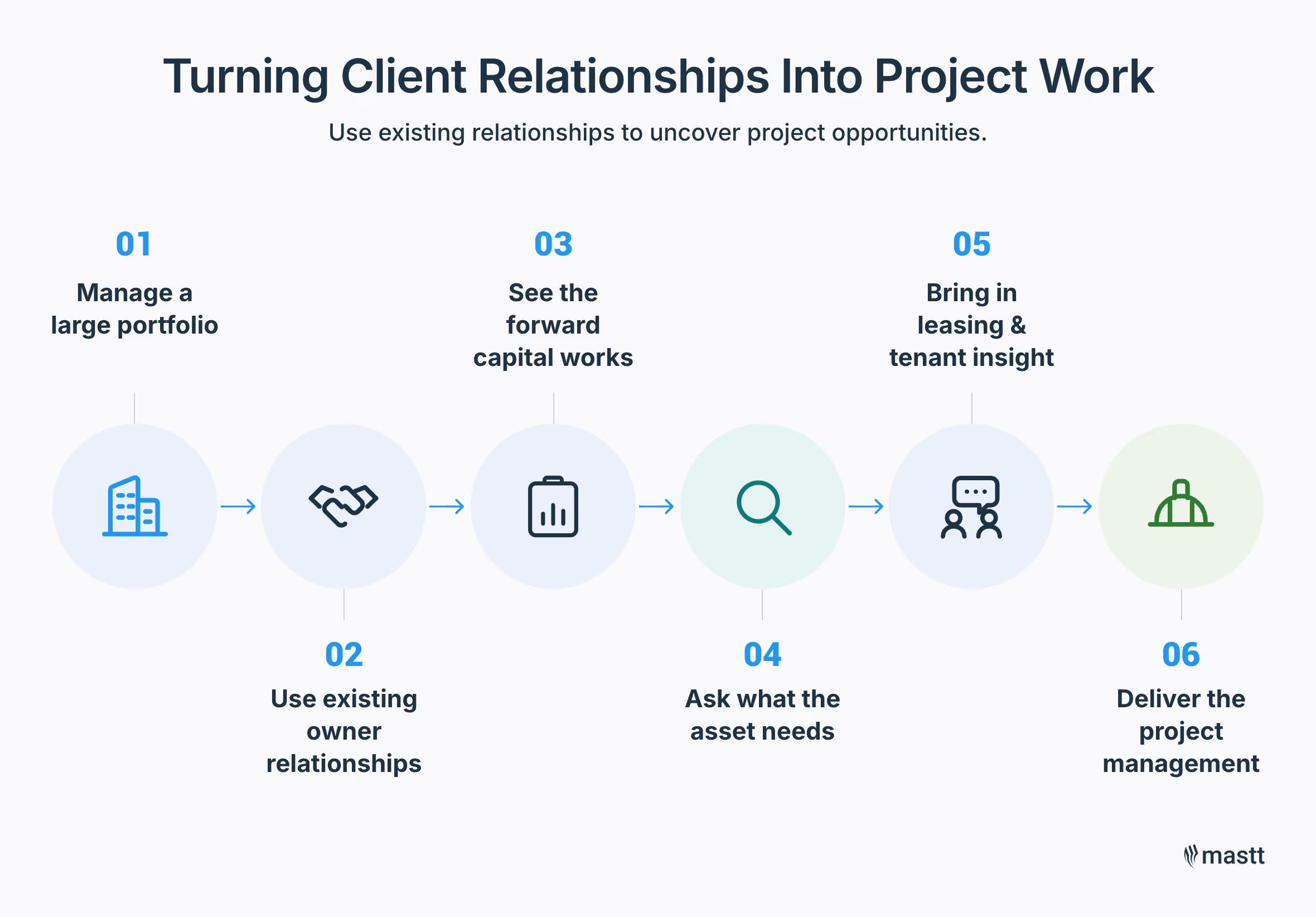
A: Yeah, absolutely. From the outset, it was always an additional service offering. The start of it for us came out of property management and facilities management, what we call our real estate management services arm at Colliers.
They look after a huge amount of commercial office and industrial space across the country. Here in the ACT, at the time, they probably had 30 to 40% of the commercial office under management, which was a huge number.
Working closely with that team, getting introductions to all the building owners around town, and looking at what the forward capital works book looked like, I had the chance to ask what building upgrades they needed. Was it a repositioning? A new end-of-trip facility? A new foyer? Tenants moving in?
Then you're working with the leasing team and delivering fit-outs. It was always about having that bolt-on service to our core business of real estate management and leasing, and offering project management as the add-on.
Yes, you had to sell the service, and selling it was about providing value. I knew I could provide value at every step, from my background in the straight project management discipline, then overlaying the bit of leasing and tenant advisory I'd learned coming into Colliers. That made it a more holistic service, rather than just the straight project management discipline.
Q: Taking that on was entrepreneurial. Did you have to build new skills?
A: Colliers is a very enterprising company. It encourages everyone, and it doesn't matter if you're a first-year starter or you've been in the business for 15 years. They want all of the operators to have that enterprising nature.
That's what we like to think sets us apart a little bit. Go and find the client that's out of the box. Go and find the project that's very unique and introduce it to the other people and experts we have in the business.
For me, I'd come into an environment that was very much go and uncover, go and meet, go and learn, go and grow, and be enterprising. There was no ceiling. It was just, if you can make it happen, we'll back you and support you.
And look, the business was in a great spot across the country, so they were more than happy to take the chance. Yes, it was slow, and it was hard, but for me it was always good to succeed.
"It was never about being the biggest. It was never about being hundreds and hundreds big in Canberra. It was always about just building a really solid team that could do a really good job and complement our other businesses."
- Iain Davidson, State Chief Executive, Colliers ACT
Winning Work in Canberra's Government Market
The Commonwealth sets the tempo in Canberra, and its approach swings between insourcing and outsourcing. Iain explains why Colliers built its business on the private side of the market instead.
Q: The ACT is a government-driven market. What does it take to win and deliver work there?
A: Good question. Look, it is very much a different place. The Commonwealth Government has changed over the years too. We're at the whim of the government of the day, whether it's an insourcing or an outsourcing model.
Back then it was definitely insourced under the Coalition. From a project management service offering, you could go and hunt the variety of Commonwealth entities and either get on their panels or make the right relationships to get involved in the projects.
Today it's much more reduced consulting across the board, anywhere you can. It's only really those specialized panels, like the Defense Infrastructure Panel and some of the big ones, Home Affairs and the AFP and Services Australia, that have those opportunities still.
But from Colliers' perspective, while there's a lot of project management in Canberra working for the Federal Public Service, we've never really played in that space. We've always worked more on the private enterprise side.
We are on the panels, and we do get the tenders, but a lot of the time we go, look, we're not there to make up the numbers. We'd rather work within our private clients. A lot of them are Commonwealth projects, but we're working on the private side of that Commonwealth project, not necessarily the Commonwealth side, if that makes sense.
It helps growing up in the town and understanding how it works. From my former life, back in project management and RPS, it was very much the opposite. It would have been 75% of their work was Commonwealth projects, big panels, Department of Defense, AFP, Home Affairs.
It was all those big Commonwealth government projects. Whereas shifting across to Colliers, it's been none of that. It's all been private, whether that's private local, private national, institutional or not-for-profit. It ranges across, but it's still not coming out of that government procurement model.
Winning Repeat Business and Long-Term Partnerships
Repeat clients carry the model. Iain says the way to keep them is to keep adding value beyond the core project management role, and he points to one partnership that changed the trajectory of the business.
Q: How much of your work is repeat business and referrals?
A: Yes, without a doubt, particularly in a professional service division like project management. Across our project management business in Australia, it would be 50 to 60% of clients as repeat business.
Q: What does your team do differently in delivery to hold those long-term relationships?
A: Well, it's always about providing value to the client. If you're providing value in a service and you're in partnership with them, they will come back. If you're not providing that value or any expertise within the project, they'll eventually go to someone else who will, or they'll insource it.
There's a variety of models. When you provide the value, it might not necessarily be in just the straight project management discipline. It might be introducing them to the next project, the next source of capital, the next investment, or the next site.
That's the benefit of Colliers, and where we see it in the marketplace. We've got a wealth of property and real estate across Australia. The network is such that I can have a project happening in one place, and if I know someone wants to do something else somewhere else, you connect them. You become the concierge.
That often leads to repeat business and the introduction to the next project. For me it's always about providing value, and recognizing where you sit for the client and where you can bring that additional X factor at some stage in the project.
"If you're providing value in a service and you're in partnership with them, they will come back."
- Iain Davidson
Q: Was there one decision that had the biggest impact when you were establishing the business?
A: Yes, there was. It was a particular client, and that changed it for us. It really made that growth happen.
At that point, it was about forming a strategic partnership with them, becoming their incumbent and doing that portfolio work. Three or four years on, I don't remember exactly how long it's been, but we would not be in the position we are in that service line if we hadn't done it. That was the big decision point that changed it.
We'd also been able to deliver and provide value to that client, so I'm really proud of going down that path and working it up with them. It's been a longstanding strategic partnership, and I hope it continues. There are other clients who'd like to come in and be involved, and that incremental growth can happen in the team.
For that particular business, their core activities aren't managing projects or real estate. They've got a different mission and purpose. But being able to have a relationship and trust with Colliers, that Colliers will do right by them, bring them opportunity and look after that non-core business, is what we do. That's why it's been enduring, and hopefully into the future too.
Portfolio Reporting for Board-Level Decisions
Iain does not sit in the software day to day, but he reads what comes out of it. He uses Mastt to roll portfolio work into consistent reporting for boards and directors, and to cut the errors that came with spreadsheets.
Q: How does the reporting you get from Mastt serve you in your role?
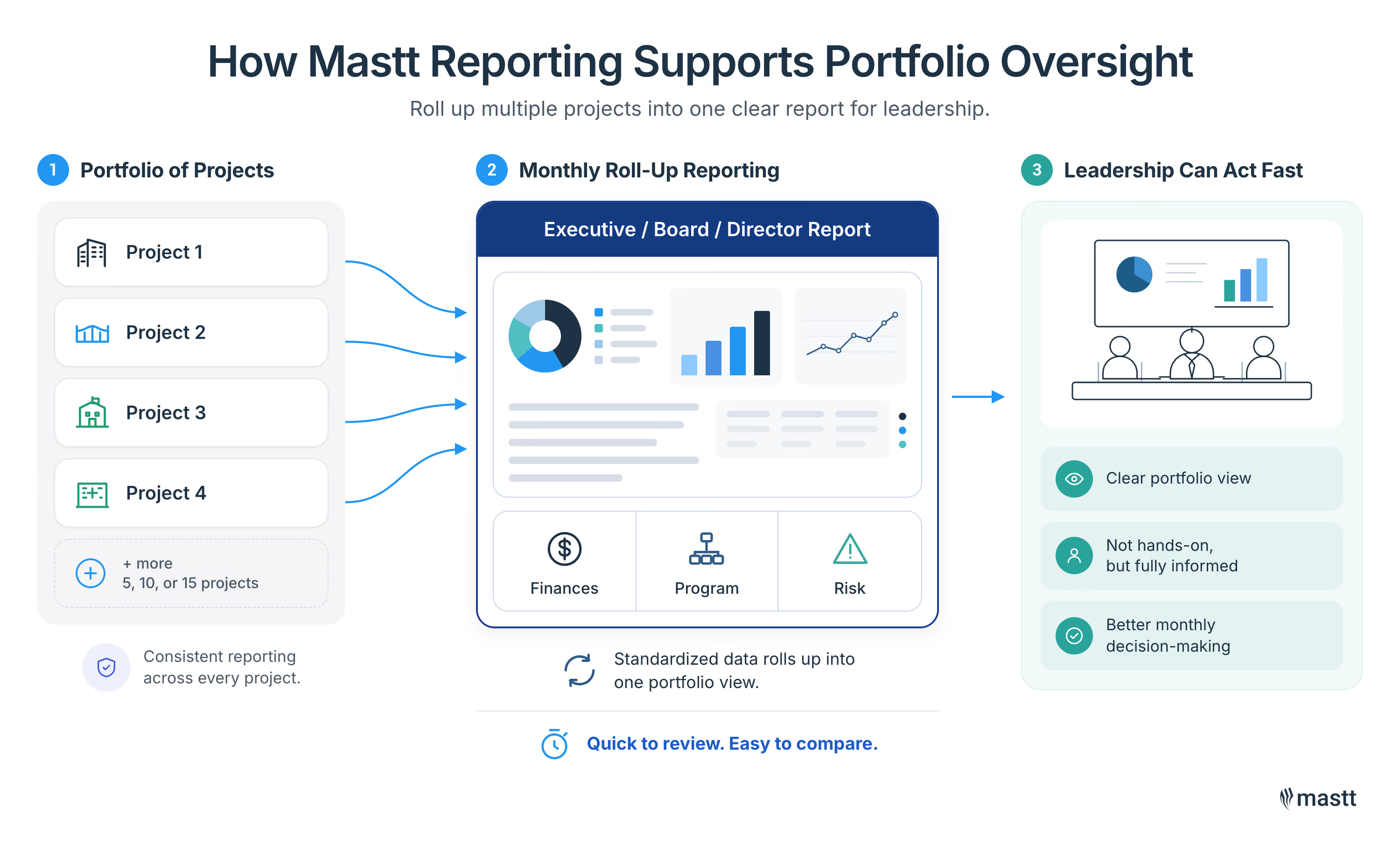
A: Well certainly. When you have a lot of repeat clients and clients with larger portfolios, that reporting is critical. The discussions around bringing Mastt into our project management capability were really about portfolio reporting.
When you're delivering a portfolio of five, 10 or 15 projects, it has to be consistent, and it has to roll up into an executive report, a board-level report or a director's report, so someone who isn't hands-on can digest the information quickly. What are the finances looking like? What's the program looking like? What's the risk looking like?
Mastt was software that could do it, and I knew it could. From the discussions we had during the investigations, it was designed in that manner, and it was exactly what we needed.
There was a short time of testing and getting across what it all looked like, but shortly after, we were rolling it across our portfolio works, whether that was state governments or local government authorities, and then our private clients, particularly where we had multiple projects and needed that monthly reporting ability.
Q: Clients often talk about the reliability of the data. Does that matter when your name is on a board report?
A: Yeah, look, the Mastt platform takes away the ability to make simple errors. Back in the day, when you were creating monthly reports and dragging one Excel spreadsheet after another, incorrect numbers could multiply and become a huge mistake.
If you're in a decision-making period and looking at numbers, those mistakes are serious. Mastt platform takes the numbers set up on the project from day one and turns them into a report at that point in time.
It's rigid enough that you don't have those mistakes, but flexible enough to tailor to the project you need, whether it's a large-scale project, a small project, an infrastructure project, or a building project.
It has that flexibility, but it cuts out the simple mistake that, back in the old Excel days, could be a big issue from one small error.

How AI Is Changing Project Management
Iain sees AI as early and unsettled. His team is testing where it helps and where it doesn't, and he's clear that the output still needs an expert to check it.
Q: Are you facing any constraints on how your team can use AI?
A: We haven't had any clients put constraints on AI at the moment. I think we're still in the discovery and investigation phase. We're still learning where we can use it and where we can't, and I think everyone's in that same boat.
We're trying to work out within our teams where we can get the efficiencies, where we still need the expert piece of advice, and where we can streamline processes that have duplications or are really inefficient.
We haven't yet got to the point where it's all been implemented, and clients have said, actually no, that's not what we want as a service. No one has said, “Right, this is what we can do, and this is what we can't.” Everyone's gone, “Alright, where are the opportunities? Let's discover, let's use, let's test, let's work it out.” So we're finding benefits in some areas and negatives in others, and no one's really landed on it yet.
The simple example is meeting minutes. When I grew up, you had to learn how to write meeting minutes, get the conversation onto paper, and pull out the actions. That's automated now with AI, but there's still the review and the finesse that needs to go into it.
It's made it way more efficient, but it still needs the review, because whenever you review something like that, it doesn't always get it right. It's like the Excel spreadsheet. That significant error, if you don't do the review, can be a critical issue down the line in six months if you haven't gone through and corrected it at the time.
So there are a lot of lessons in getting it right, and I don't think it'll be quick. We're forever going to be learning, with continuous improvement and continuous discovery on how we integrate it into all of our businesses.
Q: Is there anything about AI that excites you?
A: Yeah, look, with all these things there are benefits, and there are also negatives. Some of it scares me a little bit in certain areas. But what's really exciting?
Rendering and seeing imagery that AI can create, without the time and expense we used to go through to picture what something was going to look like. The ability for AI to scrape those drawings and turn them into render-like imagery, and it doesn't necessarily need to be a fit-out or an apartment, just anything. I think that's pretty astronomical.
Those little things that used to take a long time and cost a lot of money can now happen, and anyone can access it really quickly.
But also just the day-to-day administration of my life, where there's huge amounts going on, and you can never get to the bottom of your to-do list. AI can sort some of that out and get it in order quite efficiently.
It means I can do more in a day, make more phone calls, meet more people, be closer to the team and ask questions. Whereas five years or a decade ago, you were doing all that manually and couldn't get to as much. So that's exciting.

Outsourced Project Management vs Hiring In-House
Organizations delivering big capital projects have to decide whether to manage them in-house or bring in a consultancy. Iain lays out the case for an outsourced team and the career pull it creates for his people.
Q: What are the advantages of bringing in an external expert rather than managing projects in-house?
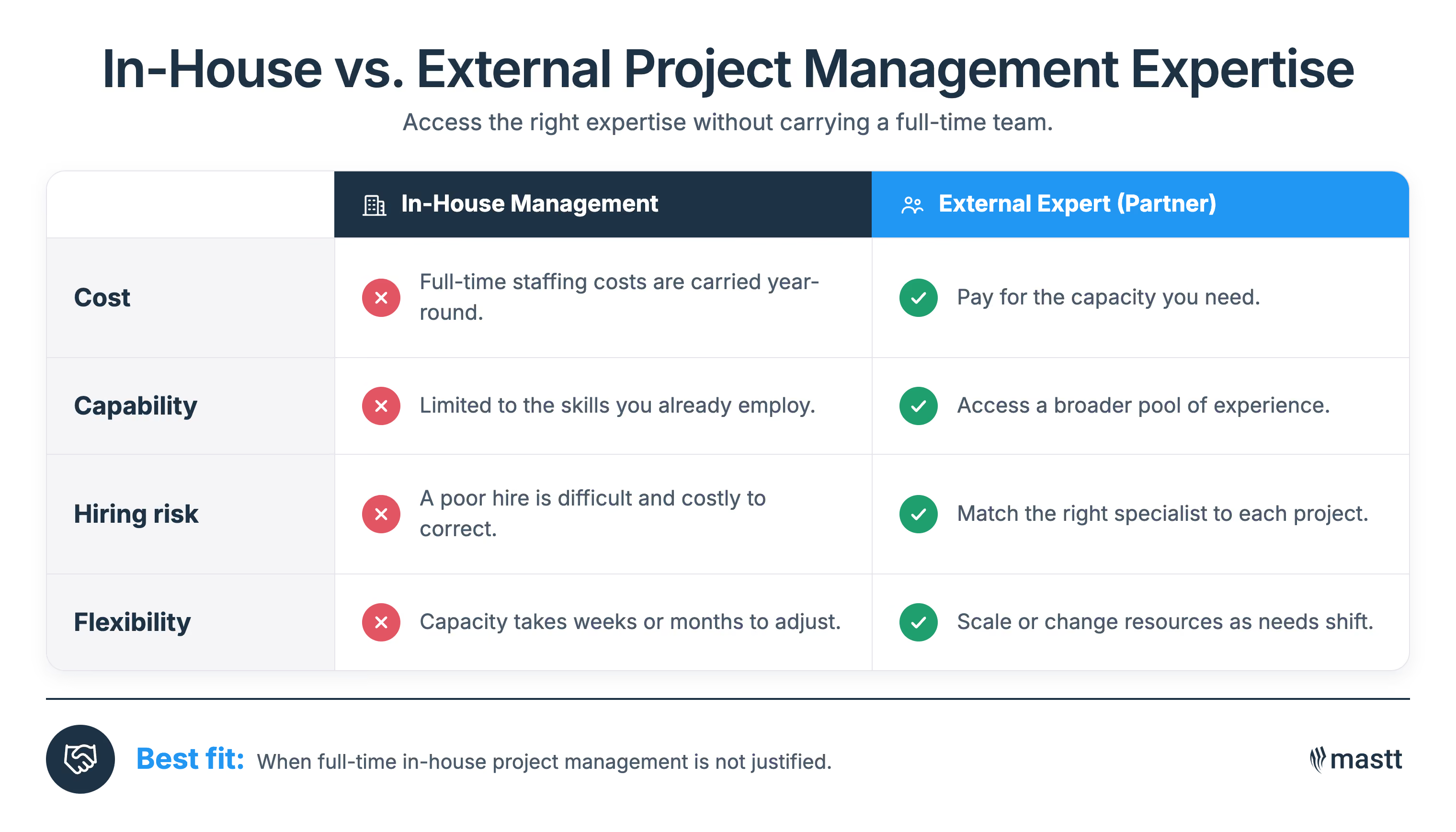
A: Well, from my perspective, there's cost efficiency, on the basis that we can have a team running multiple projects at once. You might not need a full-time operator, or multiple full-time operators, doing that role.
It depends on the size and scale of the organization and what their commitment is to it. What I mean is that I can offset costs and provide a more efficient service, because I've potentially got eight of those types of clients. You can put the right person in the right position for that particular client and that particular type of work.
If they go out and just hire, they run the risk that they get the wrong person, put them in the wrong spot, and the project fails. To get a good one with the experience you need, you're probably paying a higher dollar.
Whereas for us, we've got a whole team to pick from. We can put people in when we need and move them out when we need, move to the next person, and that doesn't cost the client. That's the benefit of a subcontracted service or a partnership like that. You can have the conversation, move the people around, and move forward.
It's not for everybody, but for some it really works, because they can do it really cost-effectively. The benefit of a strategic partnership is providing a lower cost for a higher level of service, because you've got security on both sides.
Q: You can also give clients access to talent they might not reach otherwise.
A: That's it, yeah, exactly. With the Colliers brand, the clients we have, and the relationships and networks, we can provide a platform where you can be working on a $300 or $400 million project for a year here, but then move in and work on the $10 million not-for-profit project on this side that's grant-funded by the government.
There's absolutely a benefit and a reward for someone's career in having the diversification that Colliers has. We're a very diverse business and becoming more diverse with our offerings, which means you're not strapped in as a project manager every day. You get opened up to different projects, and internally to a variety of other service lines and offerings.
Your general property and project knowledge expands, because you're exposed to leasing, to capital markets and investments, to town planning and engineering design, and all our residential projects.
It becomes more holistic knowledge. You might not be sitting there learning every day, you learn it via osmosis, because they're the people you go into team meetings with, have lunch with in the breakout, and have those general discussions with about what clients, tenants and builders are doing. So you're much more well-rounded, and that's the benefit of a brand and a place like Colliers to come and work at.
Advice on Capital Project Reporting
Iain's closing advice is for any organization or government agency weighing whether to manage capital project reporting themselves.
Q: What advice would you give an organization or government agency thinking about managing capital project reporting themselves?
A: Well, you need to set up your framework. It needs to line up with your overarching governance, whether that's government governance, business governance, or project governance. So set it up.
What's the tempo like? What's the stakeholder level like? What are the core areas that need to be reported on? Set up that framework and work through it.
You need experience to understand what to look out for, what's going to come down the line, what's happening in the market, in the construction space, in design, and in utilities.
Once you understand all that and you've got your framework, you decide what platform you're going to use.
Am I going to create this myself? Am I going to do it manually? Or you can shift through to automation, as we discussed, whether it's an AI model or a Mastt model. There's plenty out there.
For us, it's having the confidence that it's a consistent report, and simple for the operators to use. The data is already coming from our system regularly, so whether you're discussing it with the builder, the design team or the client, it's coming from the same spot.
It's really consistent, it's trustworthy, and ultimately that reduces the risk. If I was advising someone, I'd give them all those points and let them make the decision themselves. Hopefully it steers towards a platform like Mastt that gives them that regular reporting and dashboard tool, so they can get the correct information out to make the right decisions and reduce the risk.
.avif)
Written by
Doug Vincent
Doug Vincent is the co-founder and CEO of Mastt, the AI capital-project management platform used by governments, Fortune 500 companies, and consultancies across APAC, North America, and MENA. Before founding Mastt in 2019, he spent a decade at RPS delivering more than $2 billion in capital works, including the $2.1B Defence Navy Infrastructure program, and holds a CPSPM certification with the AIPM. He contributes content and speaks on AI in capital project delivery at Mastt.


Contributions by
Iain Davidson
Iain Davidson is the State Chief Executive for the Australian Capital Territory at Colliers and a member of the firm's Australian Executive Leadership Team. Holding a degree in land economics and a Certified Practicing Project Manager credential, he built Colliers' Canberra project management and government property businesses and has transacted more than 170,000 square meters of property, much of it for the Commonwealth Government. At Mastt, he contributes content on client-side project delivery and the Canberra property market.
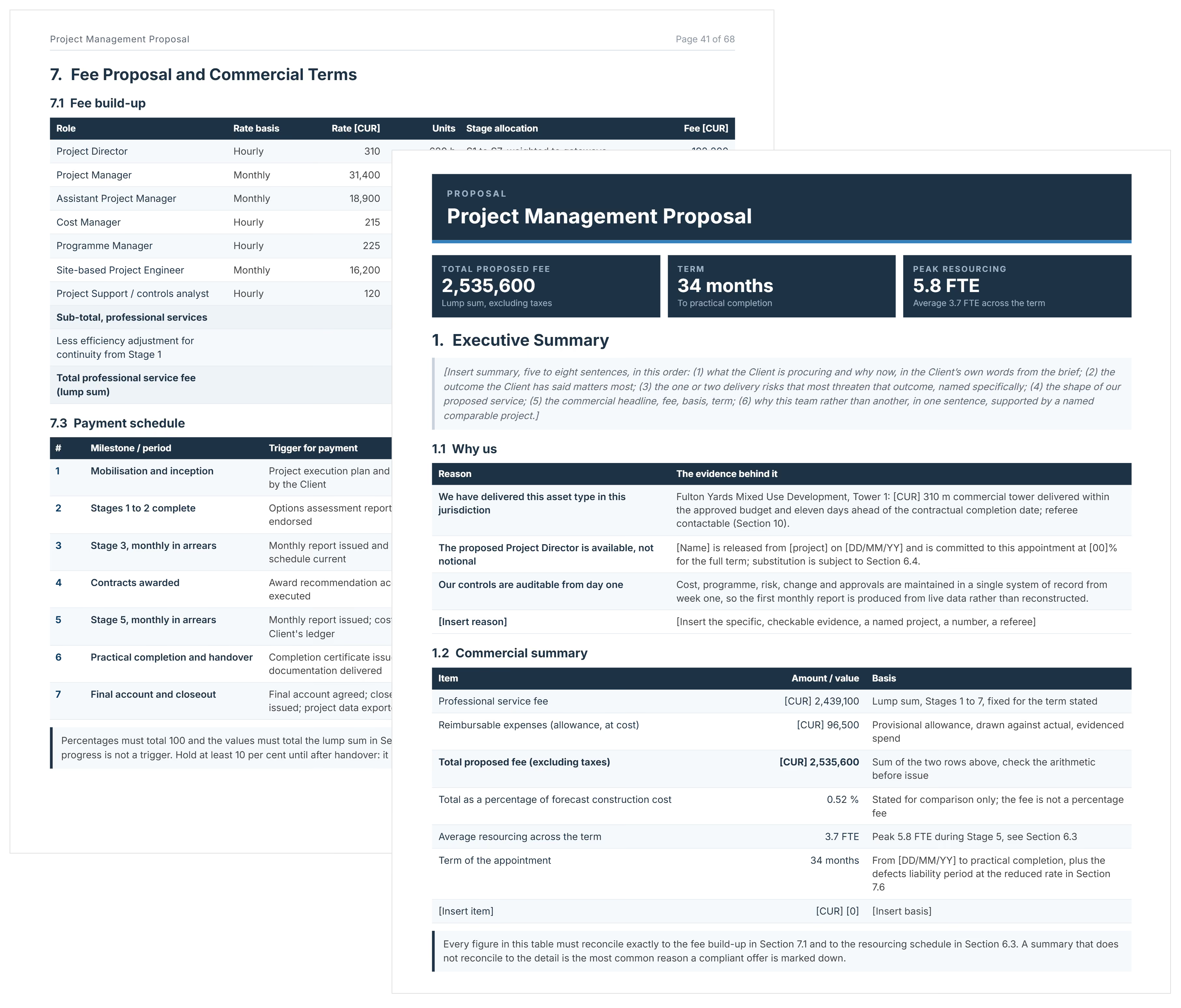
Project Management Proposal Template and Example
FREE project management proposal template in Word, with a worked example. Thirteen sections, including the exclusions most proposals leave out.

Walk Into Every Meeting With Confidence, Clarity, and Control
No one wants to look unprepared, blindsided, or uncertain in front of stakeholders — but that’s exactly what happens without Mastt.
Start for FreeTrusted by the bold, the brave, and the brilliant across governments, Fortune 500s, and the world’s best in delivering the future