

Most people can describe what a contractor's project manager does. Ask what client-side project management involves, and they guess. That gap costs owners money, because the person meant to protect their interests often arrives halfway through the mess.
Dr. Greg Usher did his PhD on client-side project management, has more than 24 publications, and wrote a book on where the discipline goes next. He is an Adjunct Research Fellow at the University of Southern Queensland and Company Manager at Beca.
From Drawing House Plans to Running a Consultancy
Greg didn't plan a project management career. Like most people in the industry, he had one thrust at him, and it ended at the top of a project management consultancy.
Q: How did you get into project management, and what's kept you there?
A: I think one of the first things you might expect from a project manager is that I had a very clear career plan, and I've worked that plan from start to finish, and nothing could be further from the truth, to be honest.
I think like many in the industry, we get into project management because it makes sense at the time, and generally because someone thrusts a project at us and says, congratulations, you're now a project manager.
My background is engineering and design. I had a business doing house plans, and working with Clarendon Homes, their design manager. I got given a project and said, can you run that? And I found I really enjoyed it. It fit with the way I viewed the world.
As a discipline and a profession, project management's only about 70 years old. Before that, things got done, but no one ever documented how they were doing it.
So I bought into that, and I got involved in building the Gantt charts and following through the Iron Triangle and all this stuff we're told to do as project managers. And as my career progressed, I found more and more that a lot of that didn't quite fit.
It makes sense to talk about these things, and it certainly does help in terms of building frameworks and guiding people through, but a lot of the foundational principles were not correct. They were based around production management for factories, and it doesn't work in an environment like project management, where things happen all over the place that you weren't expecting, you can't plan for.
So we've got all sorts of tools to help us manage that. It's not a dark art. We do have systems and frameworks. But I think it's the challenge that you never know what comes next. I wouldn't be in project management or consultancy if I didn't like living on the edge.
Client-Side vs Contractor-Side: Who the Project Manager Protects
Greg's PhD examined the lived experience of client-side project managers in the Australian construction sector, partly because nobody had properly defined the role before. His definition starts with a single word: protection.
For the full picture of the discipline, start with Mastt's guide to client-side project management.
Q: What is client-side project management, and why does it matter so much?
A: For probably ten years, when I was with Point Project Management and then RPS, where Doug and I met, we were client-side project managers. And if I told people I was a client-side project manager, they had no idea what that meant.
So for me, the role of client-side project manager is quite a strategic role. It's quite critical in making sure projects achieve what they were designed to achieve. But there was no research out there, and no definition of what that was.
So the basis for my PhD was to try and clarify that. And to show how a client-side project manager is different to, say, a project-based project manager or a contractor-side project manager.
But if I could put it in simple terms, a client-side project manager, their core function is to protect the client. Whereas a contractor project manager, their core function is usually to maximize profit for a contractor.
We'll often refer to the contractor's project managers as the dirty boot contractors, because they're the ones on site doing what we would say is the real work. Anybody who works on the contractor project management side and is good at it, I take my hat off to them, because it's a really tough gig.
And now that I've been through the role of firstly an executive general manager and then into the CEO role, I would look back on my research and say:
"In many ways a client-side project manager is almost like, for want of a better word, a CEO of a project."
- Dr. Greg Usher
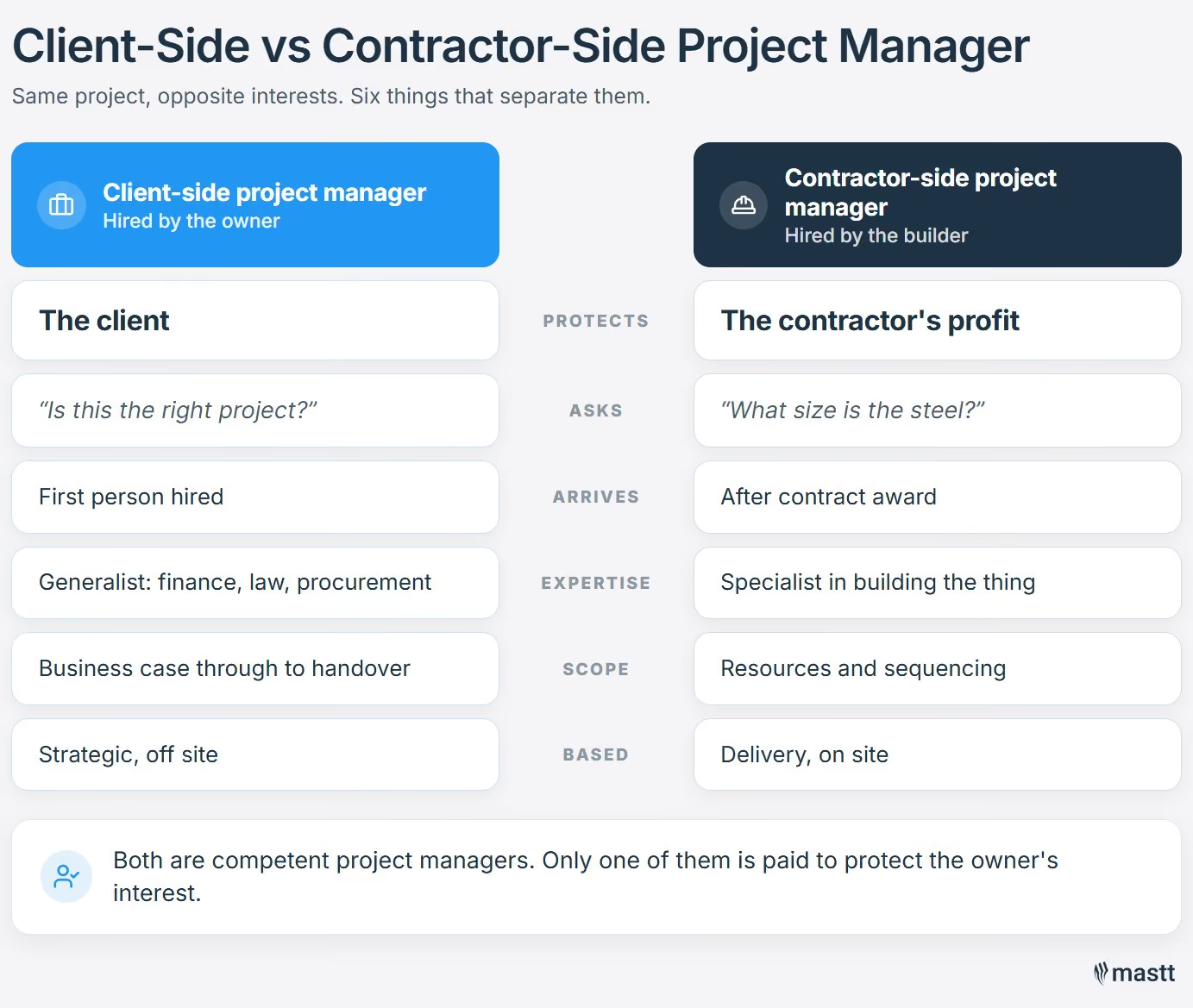
So they need to understand strategically what's trying to be done. They need to bring the right people in at the right time. They need to have an understanding of finance. They need to have an understanding of law. I've had projects where I've needed an understanding of marketing.
So I explain it like this. If someone was to come to me and say, I want to build a pipeline, it's not because there's a business out there that says, we really need to own a pipeline. No, they're trying to do something with it. They're trying to get water from one end to the other.
So a client-side project manager is thinking about, is this project delivering the benefit that you wanted to get out of this? Whereas a contractor project manager would say, what size is the steel? When do I need to connect it up? Who does this?
The client-side project manager is saying, is the pipeline the actual best way to do this? So the client-side project manager really needs to be across everything. Like, it's not unusual for a client-side project manager to be the first person employed.
What Happens When the Client-Side Role Is Skipped
The line Greg draws between protecting the client and protecting the contractor's margin is the same one that separates a construction manager from a client-side project manager. Owners who miss that distinction tend to find out the expensive way.
Q: Have you ever been brought in too late?
A: Many. Many, many. And I think in some cases it does come from a place where people don't understand the role of a client-side project manager, and sometimes they don't understand the value they're paying for.
It's a sort of role that if you try to explain it to someone, they would say, no, I can do all that myself. Until they start doing it. Until they get about halfway through the process and realize they've totally made a mess of this, and then you have to come in and try and fix it.
You might submit a tender to do the job and then people say, no, no, we've decided to do it ourselves. And they call you back six months later and say, can you do it now? And you say, yeah, but it's gonna cost you twice as much, because I've got to unstuff everything and start again.
But that's the challenge, right? To jump in the middle of something, to understand what's gone wrong, why it's gone wrong, where do we go from here. That's part of the excitement of being in the role.
The Project Management Yin Yang
Two projects convinced Greg the discipline was measuring the wrong things. One was a textbook success nobody celebrated. The other was a blown budget that won 13 new jobs. He turned the idea into peer-reviewed research on the project management yinyang.
Q: Can you talk about the project management yin yang?
A: Yeah, it was almost accidental coming up with that. I have two examples that really drove this home to me. One I call the disappointing success, and the other one is the exciting failure.
The disappointing success is a classic example. I had a project. We had done everything right. We've got the cost plan, we've got the program, we've got everything set up. At that stage we had already gone out to tender and we had a contractor on site.
This is a Defence project, back during one of the semi recessions we had. Julia Gillard decided that she was going to cut millions and millions of dollars out of Defence construction. But we're already underway.
So we had a project we had developed for about twelve and a half million dollars that got cut down to eight million dollars in flight while we were building it. It took a heck of a lot of work to get that over the line. We ended up coming in under budget and, I think, two days ahead of the program that was revised with the new scope.
And at the end of it, the feedback that we got was, wow, this is really disappointing. This project does nothing like what it was supposed to do. I haven't got any of the stuff I thought I was going to do at the start.
And we're sitting there as a project manager saying, do you have any idea how hard we had to scramble to even get this across the line? Everything in the project management world tells me I should be walking away from this, patting myself on the back, saying this is successful. But I've got stakeholders telling me that they're really unhappy with the outcome.
And the other one, I won't name the company. They brought us in to do a feasibility study. They wanted to create an intergenerational development site, so it was aged care and childcare and commercial and all that sort of stuff.
So from memory, I think they had given us about one point two million to develop up the feasibility, and they'd given us six months to do it. So due to my really good project management skills, that thing ended up costing us three million dollars and took over a year and a half to do.
So if I was to take the hardcore project management viewpoint, that was a complete failure. Way over budget. Way too long. The clients absolutely loved it. Ended up giving us thirteen new projects on the back of it. So I'm sitting there thinking, what the hell is going on here?
And that's when I twigged to this idea that there is a yin and yang going on. So I'm probably gonna get these wrong, it's a while since I wrote it, but the yang is, in the philosophy, a masculine term. It's the hard, objective sort of stuff.
And then the yin is the feminine. It's the understanding of what we would now call non-intrinsic value. So the value that we give to something, that it can't be measured.
So this whole concept of yin and yang is around balancing those. Doing everything right according to the project management framework, driving people hard, getting them all the way through, they can still be very upset even though you're successful.
The other side of it, and in my understanding far more important as I go through this, is bringing your stakeholders along for a journey. So it's no longer about, did I objectively deliver what you asked me to? It's, have you enjoyed the experience on the way through, and have I made you an integral part of that experience?
So it aligns with some research I did called the final convergence theory, which is, I don't actually need to deliver what a client's asked me to deliver. What I need to deliver is what they need at the end, even if they didn't know what it was at the start.
Now, the flip side of that is people say, you've just got hands off the wheel and let it roll through, and whatever happens, happens. But that's not true. Project managers, their core function, I now believe, is to create that path through obstacles that no one knew existed when you started.
And to do it in such a way that people don't feel afraid or frightened or overly surprised at what's happened. It became sort of a core idea that we're trying to balance both project success and client satisfaction. And client satisfaction is probably one of the least understood and least documented in the whole process. And in my mind it's probably the most important.
Bringing Stakeholders Along the Journey
Bringing people along the journey is not a soft skill in Greg's account. It is the mechanism, and it is why stakeholder engagement decides whether a delivered project reads as a win or a disappointment.
Q: So it comes back to the strategic role, and bringing people along the journey?
A: Yeah, absolutely. And I wrote a book called Project Management in the 21st Century, and one of the key things I talk about in that is, in the client-side project manager role, one of the worst things you can do is try to insulate your client from all the challenges that you're facing.
What you do is you strategically bring them into the conversation. You say, this is what's happened. There are three options for us to go down. This one will take us here, but we'll be this late. This one will go over here, but it'll cost you an extra million dollars. And this one over here we'll deliver on time, but you won't get the outcome that you wanted.
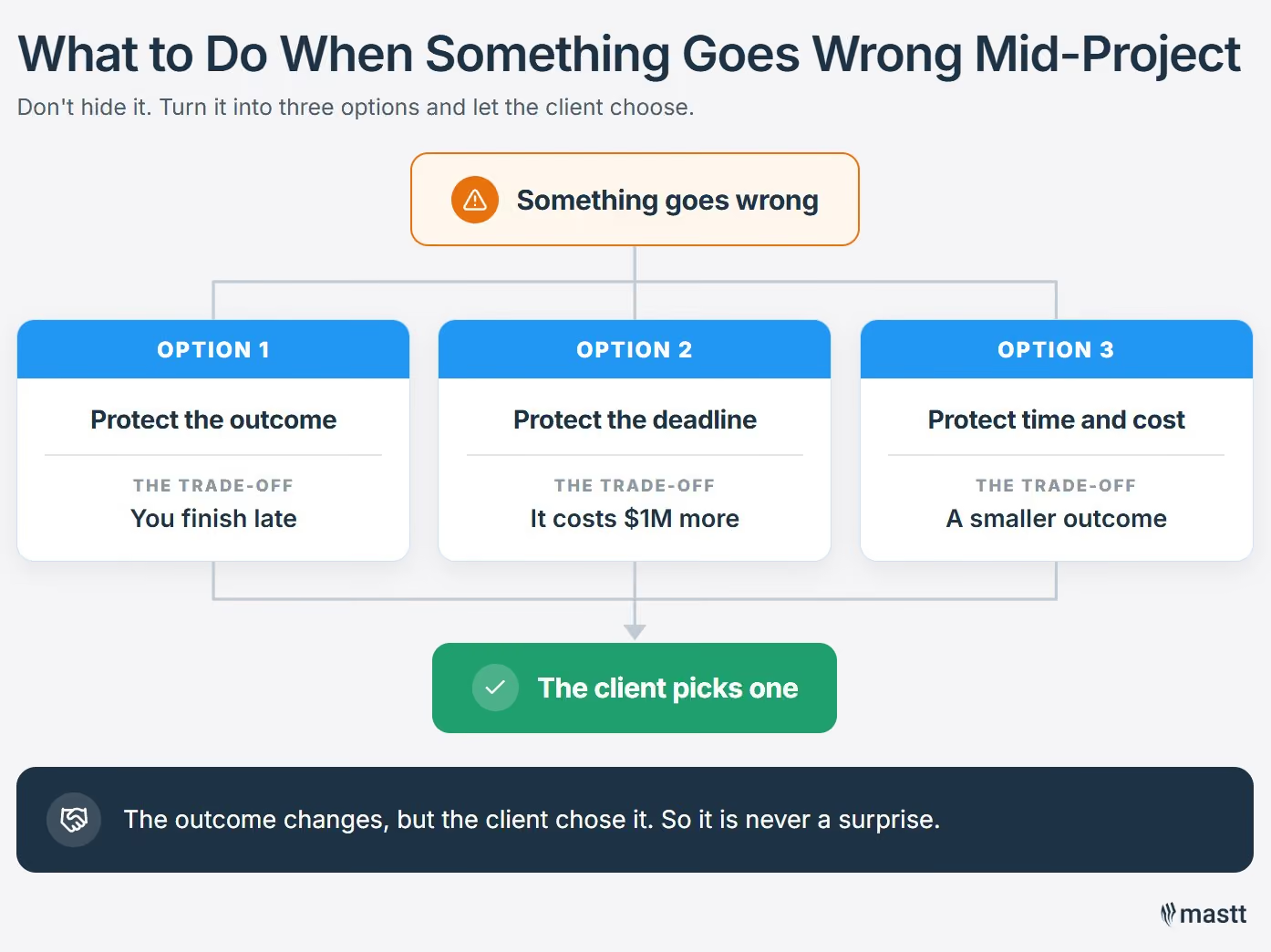
And I use the term optioneering. You create the options in a scientific way, or a disciplined way, to get them to where they're going. So when you deliver them a different outcome at the end, they're not surprised by it. And they feel that these have all been their decisions on the way through.
Because if you don't tell what you're doing, and you end up delivering something completely different, or even marginally different, they can get really upset. Because they don't know why they've got this outcome.
So that, to me, is a core role in client-side project management. And one that we don't really understand. I think it's the most underwhelming superpower we have. You know, just that idea that I don't need to protect you from everything here. I just need to guide you through it.
The Most Common Mistakes When Projects Go Sideways
Greg has published on how project managers respond to disruption and unexpected events. His diagnosis of what goes wrong, and of what a better response looks like, starts with what universities teach and with the Gantt chart everyone builds on day one.
Q: What are the most common mistakes when things go sideways?
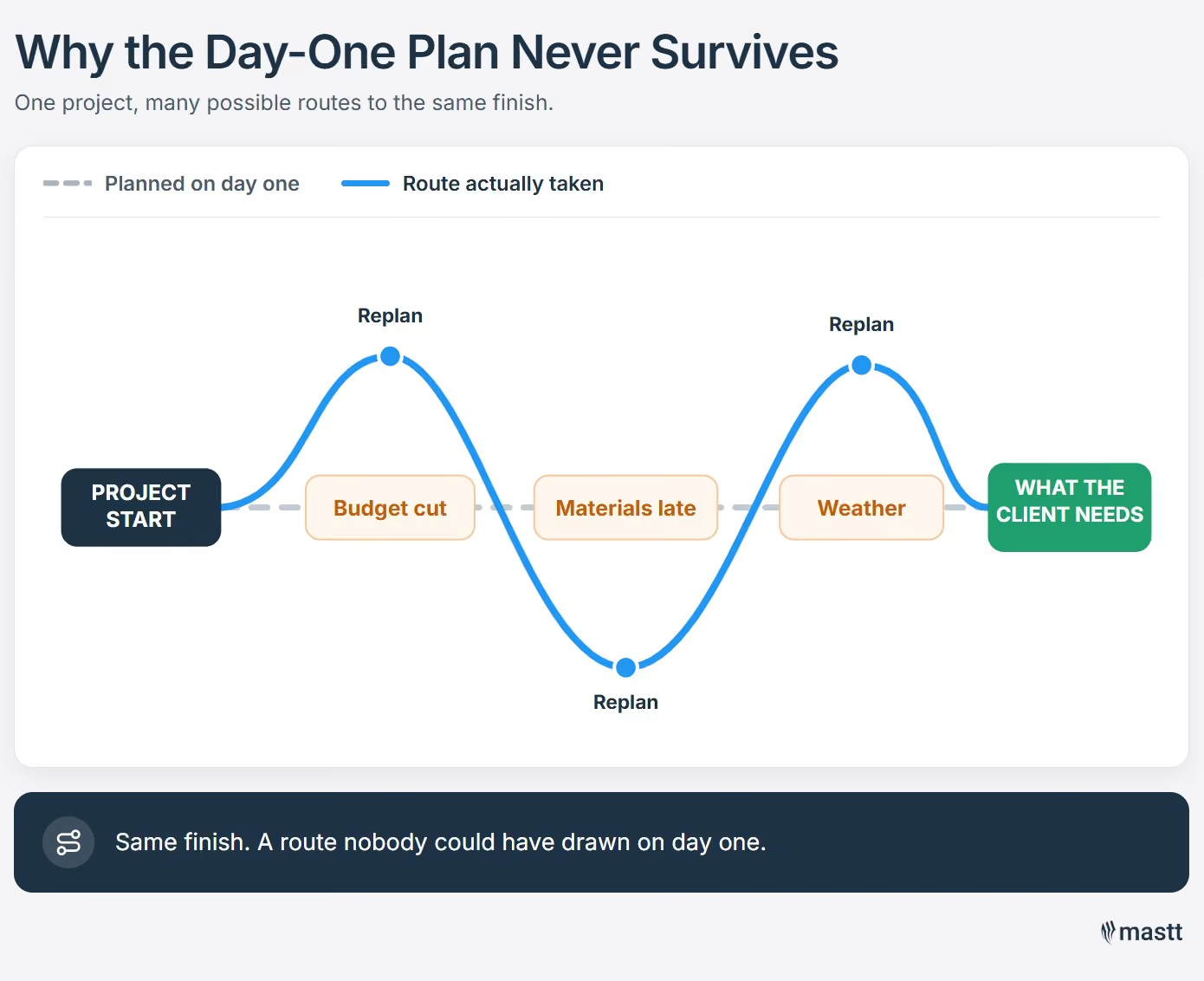
A: I think one of the most common mistakes that we make is we believe what they taught us in uni about project management. So when we're talking about projects, I use the term equifinal, which means there is multiple ways to get to the end.
What we do, and it's one of the things that project management told they should always do, is one of the very first things we put together is a Gantt chart. And it'll be as detailed as we can possibly make it, to show that we've thought about everything.
"The Gantt chart that you draw on the day is the biggest work of fiction that you'll ever create."
- Dr. Greg Usher
I think it was Dwight Eisenhower that said planning is everything, but plans are useless. So the biggest mistake we make is we think if we've done planning up front, that that is the only way this project can go.
And then we make our second mistake, which is thinking that somehow we can control the project. Well, we don't control the project. All we do is manage a project on the way through.
So time and time again, you'll see project managers. This was part of my research. When I said to them, do you create a Gantt chart? 100%. Yes. Every single time. Do you change that Gantt chart? Yes. A hundred percent, every single time. So why do you think that Gantt chart is the most important artifact in the process?
I think the biggest mistake we make is we think we can predict the future. And then we try to drive everybody according to one possible way to achieve an outcome. Whereas the reality is that there is any number of ways to deliver a project. There's no right way to deliver a project.
So stop trying to plan this thing from start to finish, and stop trying to control it as if you're working in a stable environment. We're not. We're in a dynamic, what they call a VUCA environment, volatile, uncertain, complex and ambiguous. That's the nature of projects.
So we need to be very much agile in our thinking, and our focus needs to always be, how am I going to get what I want with the information I know today? And then I replan every day as new information comes in.
That doesn't go down well in current project management academia, because they keep relying on systems and frameworks that developed back in the 1950s to work out how best to put a production factory together.
But in a project I get one shot while we're moving. I'm literally building the plane while we're flying it. So the fundamental theories are problematic in what we do. That's not suggesting we throw quality out.
Same with the Gantt chart, same with programming. All this stuff is built for static environments, but delivered in dynamic environments. And so we have to think differently about what we're doing.
Q: What characteristics do you look for when you're hiring?
A: I think it depends entirely on where I want to put them in the organization, for starters. But first and foremost, and this might sound strange because it's not really what you would think of the project manager, I'm looking at how well they communicate.
I'm looking at how can they explain complex issues, not dumb it down, but explain it in such a way that they communicate to people in their framework.
Yes, I need to know if they've done projects before, because that's generally the coal face in delivering. But are they flexible in their thinking? How do they handle the new challenge or the new information that's just come in? How resilient are they?
So it's that attitude of, yes, I can get this done. One of the things I do in a presentation on project management is that one of the very first steps in project management is that, crap, I don't know what to do. And every project manager's the same.
I was gonna say don't advertise this to everybody, but one of the things I tell young project managers:
"You don't need to know how to deliver this whole project. You just need to be two weeks ahead of your client."
- Dr. Greg Usher
So when they say, this has just happened, you say, yeah, no, I know about that. Here's the Gantt chart to get you through that. This is the impacts of that.
How can I possibly know what's going to be happening in six months from now on a multi-million-dollar build? But I can foresee what could happen in the next two weeks. And so I need to be there before the client, and tell them that it's a possibility it's gonna happen, and show them the plan that I've got to get them through if it does happen.
And most of the time they're like, yeah, great, keep going. But if that happened and I didn't have a plan, they'd be like, what am I paying you for?
Why Risk Includes Opportunity, Not Just Hazard
In practice, construction risk management treats the register as a list of things that might go wrong. Greg points back at the formal definition, which is broader than that.
Q: Does that tie back to the yin and yang, and balancing risk?
A: Absolutely. Yeah, so the definition of risk is the impact of uncertainty. So we always think in risk in terms of the hazards, but the definition of risk also entails opportunity.
And this goes to a couple of the most recent papers I've written around this concept of anti-fragility, which is Nassim Taleb's theory of anti-fragility. It's that I didn't know this was going to happen. I didn't plan for that. This has now given me new information. What if I started today with that information, what could I do?
And if we reverse that, and we're always only thinking, no, it's a risk, and no, it's a hazard, and what do I do here? We get into this defense mentality, where what could be happening is you could be being presented with new information that creates the biggest possibility that ever happened in this project.
But you need to be in the right mindset to say, hang on, this is actually not devastating. So that's the mindset, I think, that goes with a good client-side project manager.
It's not to put a positive or negative value on the information that you've just got that you didn't have yesterday. It's to be open minded as to what that could mean.
Where Reporting and Visibility Made a Real Difference
Asked for a project where visibility changed the outcome, Greg picks one where the modelling talked his own firm out of the job. He then explains why disciplined construction reporting is really fear management.
Q: Where has better reporting or visibility made a real difference?
A: I can tell you one where we did the modelling and business case, and I don't know if it was better for the client or not. But what happened is, and I won't name names, it was a transport project, and they had a very specific outcome they wanted to deliver, and so they wanted to build this facility.
And in doing that, the project team came to the point where we said, you don't actually wanna do this project. This is not what you want to do.
And in terms of reporting and visibility, we hadn't got to the point of putting that reporting and visibility in, but it's the same sort of process, right? It's that quantifying, it's the data, it's the visualization of that data.
And what we said was, you told me the true outcome is this, and you jumped straight to this facility to be the outcome. You can do that with these three things, that'll cost you about half. And you don't need to build anything.
Which, great from a client point of view, great from a project management point of view, terrible from a consultancy point of view, because I just talked myself out of a job.
But the other part of project management that we can't forget is, we have been entrusted with people's money and time. And we need to be able to report on that very, very clearly.
And the reporting for me also goes back to this whole idea that we are there to protect our clients, and the client-side management role. So we need to be giving them clear information, clear reports that says, I've got this under control. I know what I'm doing. You don't need to worry about this.
If you don't do that, and if you don't have those reports in place, and I have done a number of projects on this recently where I have come in and they've been going for months with no reporting, the clients are at the point of saying, you're out the door, we're sick of you.
And something as simple as doing a monthly report that says, we did this last month, we're going to do that next month, we're at this place with our costs, we've got that much risk, and we've got this much time left to go. And they're like, okay, you've got this, I don't need to worry about it anymore.
But fundamentally what our job is, is to remove the uncertainty and the fear from what is going on in that project, and to give you the sense I've got this under control. Now, whether or not we do is completely different discussion, but I give you the sense that I've got it under control.
That's why having that information at hand is so important. When a client rings and you can answer the question straight away. Yes, I knew that was coming. Yes, it's going to cost you about this. It'll take you an extra three weeks, did you want to do that? It's fundamental.
Where AI Adds Value for Project Managers Today
Greg has been researching and writing about AI for years. Few people with that background open an answer on AI in project management the way he does here, and that honesty is what makes the rest of it worth weighing.
Q: Where does AI genuinely add value today, and where should we be cautious?
A: Short answer is I don't know. I'm a bit of an AI disciple, to be honest. I'll use it for anything I can use it for. Mad keen on ChatGPT, used it so much this morning.
For me, where I use it is to synthesize big amounts of information very quickly, and say, what are the three things I should be worried about here? Or, all these reports have just come in, is there anything in these reports that is inconsistent?
So I think, where is it going to be useful? It's going to be useful in areas that I would currently use an assistant project manager in.
You know, can you get those minutes ready? Can you read that report for me? Can you summarize this? So that's going to be challenging moving forward into the future, because that's the training ground in the industry.
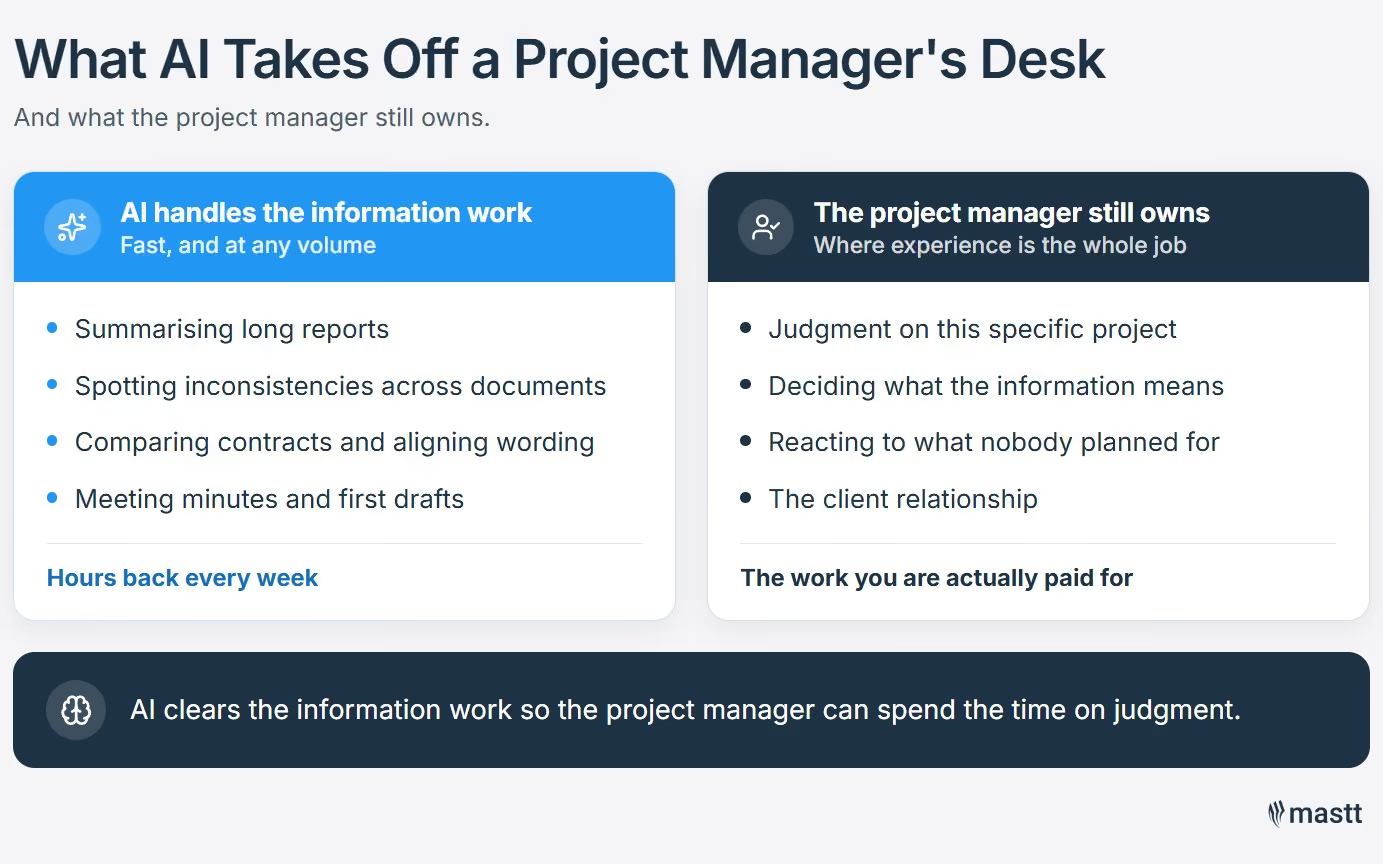
And I would be very hesitant to use AI in anything that does actually require some good knowledge about your domain, in your particular area. So for me, it's construction, but IT or whatever.
In the way that I have seen it used, it can come up with information that looks, to someone who don't know anything about the industry, it looks credible. But the moment you put it in front of someone who's had some experience or got some background, you just go, they're so far wrong, I don't even know where to start.
So great, great for synthesizing information. I don't think we get as far along in the project management space in the next five years as people had thought.
And I actually did a research paper with a guy by the name Lachlan Nimmo, who was also ex-RPS, and we looked at what the universities were teaching in the project management space in and around artificial intelligence, and how quickly that was being taken up, and whether or not we thought the construction industry would get on board.
And we found it was close to like seventy two, seventy three percent of what was being said about what AI could do was probably five to ten years away in the industry. And this was written probably three or four years ago.
We are starting to see some stuff. We talked in the construction industry about the use of robotics, remote monitoring in buildings and in waterways and all that sort of stuff. We are starting to see that now.
But I don't see it doing the intellectual heavy lifting in the domain around what a project manager can do, because, as I said right at the start, project management is about reacting to the new information you got today that you didn't have yesterday. And I don't know that AI is at the point where it handles that sort of ambiguity well.
The Most Underwhelming Superpower
Strip this conversation back, and one idea keeps surfacing. Clients don't buy Gantt charts, and they aren't really buying certainty either, because nobody can honestly sell it.
They're buying someone who can find a path through obstacles nobody predicted, hand the decisions back as options, and take the fear out of the process. Greg's name for it, the most underwhelming superpower, says more about the job than most textbooks manage.
If you want the day-to-day version of the role, Mastt's breakdown of the client-side project manager covers scope, skills and salary. William Hodge and Ella Hiles also answer 12 real client-side project management questions from their own delivery experience.
Greg's full interview is on Mastt's YouTube channel if you'd rather hear the stories told than read them.
Note: This Q&A article is part of Mastt's interview series featuring construction industry experts. Dr. Greg Usher's responses have been lightly edited for readability.
.avif)
Written by
Doug Vincent
Doug Vincent is the co-founder and CEO of Mastt, the AI capital-project management platform used by governments, Fortune 500 companies, and consultancies across APAC, North America, and MENA. Before founding Mastt in 2019, he spent a decade at RPS delivering more than $2 billion in capital works, including the $2.1B Defence Navy Infrastructure program, and holds a CPSPM certification with the AIPM. He contributes content and speaks on AI in capital project delivery at Mastt.

Contributions by
Dr. Greg Usher
Dr. Greg Usher is a company manager at Beca and an Adjunct Research Fellow at the University of Southern Queensland, holding a PhD in project management and a Fellowship of the Australian Institute of Project Management. Over a 20-year executive career, he has led major construction and defense programs, including a $1.96 billion naval capability infrastructure sub-program, and has authored a book and peer-reviewed research on project complexity and resilience. At Mastt, he contributes content on project management and client-side project delivery.
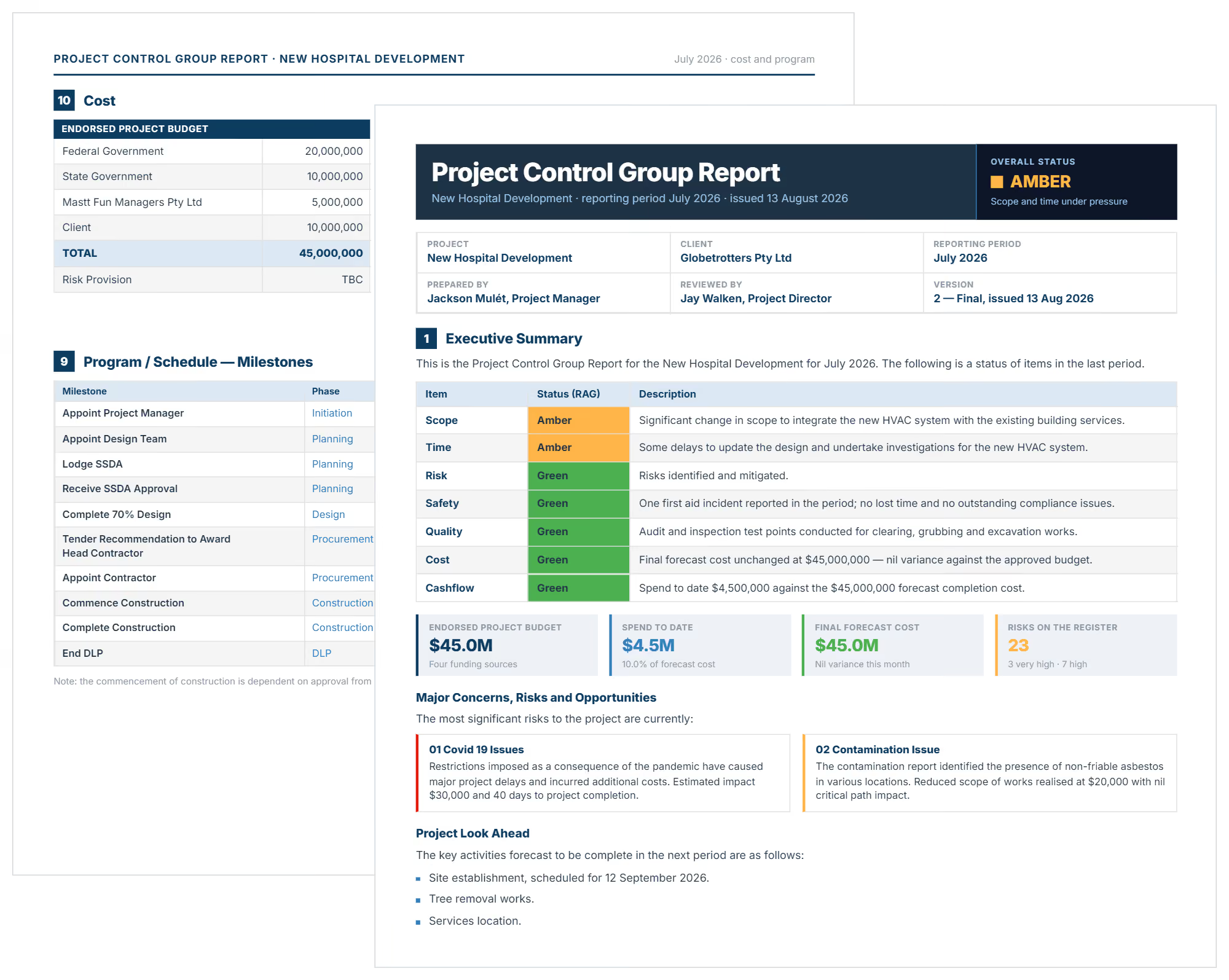
PCG Report Template
The PCG Report provides a comprehensive overview of the progress, status, and performance of a capital project on a monthly basis

Walk Into Every Meeting With Confidence, Clarity, and Control
No one wants to look unprepared, blindsided, or uncertain in front of stakeholders — but that’s exactly what happens without Mastt.
Start for FreeTrusted by the bold, the brave, and the brilliant across governments, Fortune 500s, and the world’s best in delivering the future