

Construction communication is a skill quietly disappearing across the industry. COVID pushed everything online. Now, too many teams send emails, update platforms, and sit in back-to-back online meetings when they could get around the table and look at the problem together. Construction still runs on people working out physical problems on site, and that work happens out loud.
In this article, we'll talk about what construction communication really is and why it's fading. It also covers where software helps, where it hides poor practice, and what an owner can do when the talking stops. If your project is already stuck, skip to what project owners should do.
What Is Construction Communication?
Construction communication is the exchange of information among everyone who shapes a project: the owner, the designers, the builder, and the trades. On a client-side project, it is less about technical detail and more about helping experts explain themselves in plain English. That keeps the whole team working from the same picture.
The project manager does not need to be the technical expert in the room. In construction project management, the job is to help the experts get their work done correctly, then translate it so the client understands what they are getting.
According to Lorne McClurg, in an interview with Mastt, Plain English is the best test he knows. If an architect, engineer, or builder can explain an issue clearly, the client can actually judge whether the answer meets their needs. If the explanation is buried in jargon, the client can't, and the job carries hidden risk from that point on.
Why Construction Site Communication Is Getting Lost
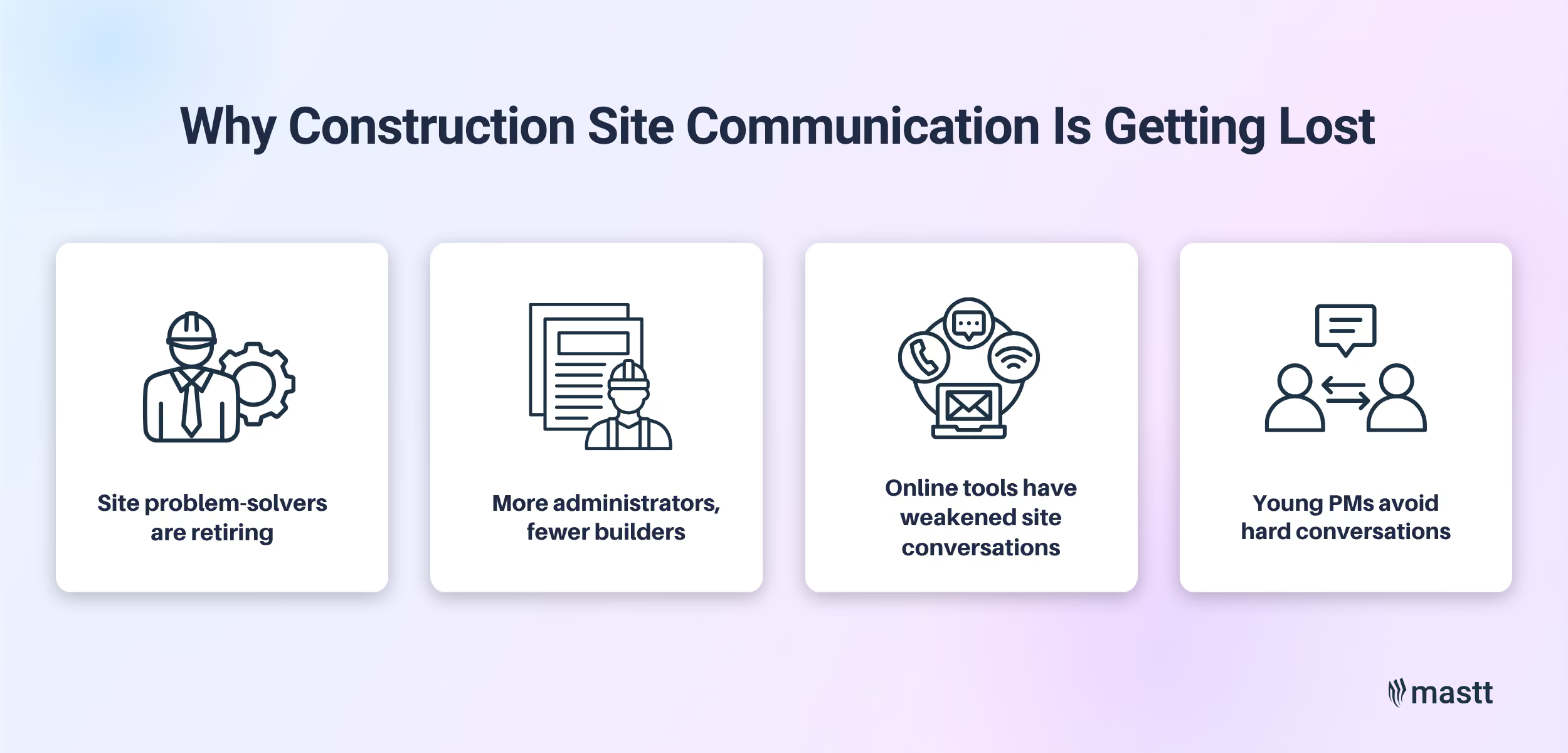
Construction site communication is fading because the industry has moved away from how problems actually get solved on the ground. More of the work now sits in administration, software, and written trails, and the construction communication workflow has drifted toward admin over conversation while fewer people learn to stand in front of a problem and talk it through. Four shifts are driving it.
1. The old site problem-solvers are retiring
The people who used to work things out on site are leaving the industry. These were the site managers and builders who could talk to a trade, call the architect or engineer, and resolve a detail before it became a problem. That skill set is retiring or gone, and Lorne mentioned that he don't see a clear mechanism bringing it back.
2. The industry is producing more administrators than builders
The path from qualified tradesperson to site manager is fading fast. More site leadership now comes up through administration than through the tools, so hands-on build knowledge is thinner than it used to be.
Meanwhile, the head contractor, the main builder who runs the site and hires the trades, has a harder job than ever. Coordinating those trades and managing the program (the construction schedule) takes more time than it used to.
The design side has thinned too. Less detail gets carried through to construction than it used to, while trades increasingly depend on complete documentation to assemble their work.
For an owner, that means design responsibility and documentation completeness are things to confirm and contract for up front, not assume. Disciplined construction administration matters more, not less, as that hands-on knowledge thins out.
3. Online tools have weakened face-to-face problem-solving
COVID accelerated the move to online meetings, email, and project platforms. Those tools help, and a video call beats nothing when people cannot be in the same place. But no one on a screen is looking, pointing, and touching the same thing at the same time.
A platform can record correspondence, manage documents, and track decisions. It can't replace the conversation that creates the solution.
4. Younger professionals are avoiding the hard conversation
There is a wider shift away from verbal communication, and it shows most in younger professionals dodging the hardest conversations a client-side PM has. A message feels easier than a phone call. But construction needs language, emotion, and the cues that never show up in writing.
The big problems still get solved by people speaking, listening, and finding an outcome they can all live with.
Common Barriers to Communication on a Construction Project
A handful of barriers trip up communication on almost every job. Most of them are predictable, so naming them early lets you plan around them instead of reacting later.
- Jargon loses people: Technical language from designers and engineers leaves the client and the trades guessing, and plain English is the only reliable fix.
- People retreat into their corners: Governance starts to break down when the team cannot get clear decisions or direction, so each party falls back into protecting its own position.
- Too many parties and no clear owner: Large organizations and public-sector projects often involve too many people and lack a clear decision-maker.
- The detail is missing: Contractors rely on clear documents to assemble the work, and the project carries risk when that detail is thin.
- Distance and screens: Online meetings help when people cannot be together, but they do not replace pointing, looking, and solving the problem in front of the work.
These show up on nearly every job, not just the difficult ones. A little planning around them up front saves a lot of chasing later.
How Poor Communication Breaks Project Governance
Project governance is just the system of who decides what and when. Good governance depends on communication that is transparent, timely, and easily understood, with clear lines of responsibility and decision-making. When that is missing, the project cannot work through its problems, and the breakdown shows up in a few familiar ways.
- Nobody clearly owns the decision. Plenty of projects have people involved without a clear decision-making matrix, an agreed list of who is responsible, who approves, and who is accountable for each call. Everyone has an opinion, but no one knows who can give direction.
- Decisions stall. Projects hit hurdles, which is normal. The damage starts when people cannot get the information, direction, or approval they need to move through them.
- There are too many people in the decision-making process. Large organizations and public-sector projects often struggle because there are too many fingers in the pie, and the chain of responsibility gets tangled.
- Trust erodes. When people sense that a decision served one participant rather than the project, communication turns defensive.
- Time becomes money. Architects, engineers, project managers, and contractors all sell or price time, so every slow decision quickly becomes a commercial problem.
External research puts numbers around the same problem. The 2018 FMI and PlanGrid Construction Disconnected report linked poor communication and bad project data to major rework costs in US construction, worth more than $31 billion a year. Poor communication on its own accounts for about $17 billion of that.
The deeper problem is behavioral. Instead of working through the issue together, the team retreats into corners and protects its own position. Strong construction management practice exists to stop that drift before it hardens.
Where Construction Software Helps and Where It Hides Poor Practice
Construction software helps when it keeps communication flowing and supports efficient decisions. It becomes a problem when people use a platform to avoid the conversation, cover themselves, or replace the human work of solving the issue. The line between the two is worth drawing clearly.
The tools themselves are mostly neutral. Document control and project platforms, building information modeling (BIM) for design coordination, and construction reporting software all do real jobs. Lorne mentioned that his concern is how they get used.
A lot of people hide behind a platform to avoid the conversation, and to avoid really understanding their role on the project. In Lorne's experience, roughly 80% of what project managers do should come out of their mouths. The other 20% is the written trail that records what was agreed. That 20% matters more than it sounds. A solution agreed in a room and never written down is the classic source of a dispute six months later.
A good record is specific: the decision, who approved it, the date, and who needs to know, which is what formal change orders are built to capture. Talk creates the solution, the record makes it enforceable, and the conversation has to come first.
What Belongs in a Communication Plan
A construction communication plan sets out who talks to whom, through which channel, how often, and who gets to decide. It is the core of any construction communications strategy, but it does not solve problems on its own. What it does is stop the team guessing about how to reach each other, so the real conversations actually happen instead of getting lost in someone's inbox.
I’m not interested in the process for its own sake. What matters is keeping communication flowing and decision-making efficient.
The communication plan should name the people who can make decisions, set clear rules for how tools and channels are used, and make it obvious where a stuck issue needs to go next. A formal construction RFI process sits inside this, as the channel for requesting information that you cannot get any other way.
A plan also needs to make ownership clear. The owner gives final approval, the project manager translates and coordinates, the head contractor coordinates the trades, and the designers carry out the design intent. Track the open actions from each meeting with an owner and a date against everyone, so nothing falls through the gap between conversations.
The simplest version of a communication plan is a shared understanding of which channel fits which conversation.
How to Build Effective Communication in Construction
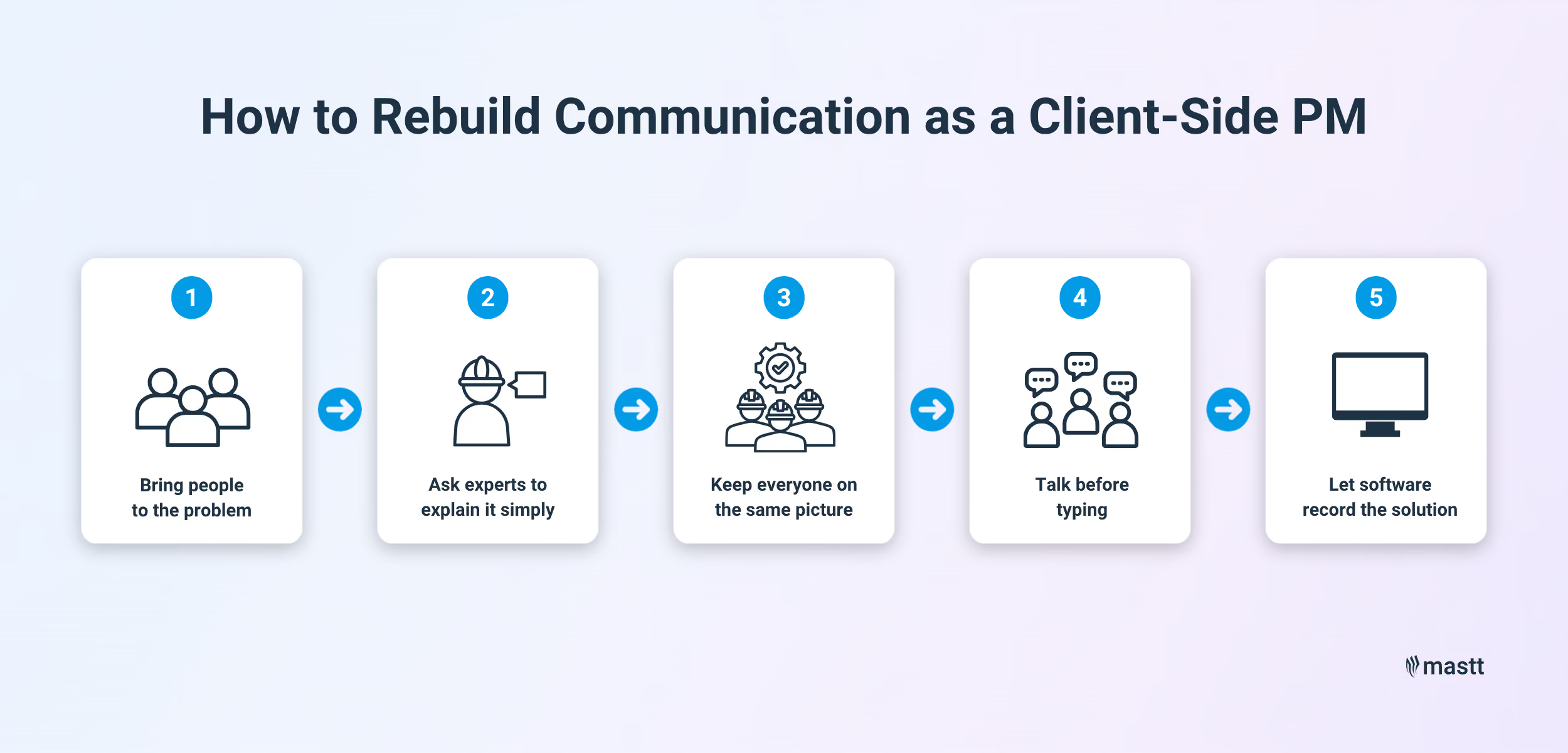
Effective communication in construction starts with getting back to basics. A client-side project manager has to put people in front of the problem. The rest is making the experts explain it in plain English and keeping the team focused on the same picture. These five steps are how to work through it from the project manager's chair.
Step 1: Get people around the table in front of the problem
When a project starts to drift, the instinct is to send another email or push the problem into the platform. That rarely fixes the real issue, because most problems need people looking at the same thing at the same time.
The architect is thinking about design intent. The builder is thinking about sequence, the trade about how the detail gets assembled, and the client about whether the outcome still meets their needs.
Getting those views around the table early is what stops them hardening into positions, and Mastt's guide to running effective project meetings is a practical starting point.
Step 2: Make the experts explain it in plain English
The project manager's job is to make technical people explain themselves clearly enough for the client to understand. If the architect, engineer, or consultant cannot do that, the project is already carrying risk.
Plain English lets the client say whether the proposed answer matches what they actually need. When they do not understand, the project keeps moving while everyone quietly pictures a different outcome.
Step 3: Keep everyone working from the same picture
Everyone starts a project with their own version of the finished result, and those versions rarely match. The project manager's role is to align them and keep refining that shared picture as the work evolves.
The final result may shift from the original concept, and that is fine. Success is when everyone looks at the finished job and says, that is what we set out to build.
Step 4: Use your mouth before your fingertips
Talking is how problems get solved. Writing is how you record what was agreed. Emails, minutes, and system updates still matter because projects need a clear record, but the writing should follow the conversation, not replace it.
When people type before they talk, the issue gets heavier than it needs to be. The tone drifts toward defensiveness, and a quick conversation turns into a long written back-and-forth.
Step 5: Let the software record the solution
Software has a real role once the decision is clear. Put the agreement in the system, keep the record clean through good contract document management, and make sure everyone knows what happens next.
The trouble starts when people lean on the platform to avoid accountability, and the project ends up with a detailed paper trail but no real clarity. Use the tool to capture the outcome, not to dodge the conversation that produced it.
What Project Owners Should Do When Communication Breaks Down
If you are the owner, the first move when communication breaks down is to ask whether you are part of the blockage. Good construction client communication runs both ways, so struggling projects usually need fewer assumptions and more direct questions about what is stopping people from moving forward. The work happens in four steps.
1. Ask whether you are the roadblock.
Run through your own list before pushing anyone else. The questions are uncomfortable because the answers often point back at you, and they take five minutes:
- Do I have the information I need to make the decisions on my desk?
- Have I asked for anything I did not flag at the start of the project?
- Am I answering the questions other parties are sending me?
- Is anything I am doing creating problems for someone else?
If any answer is yes, clear it before you ask anyone else to clear theirs.
2. Find out what people need from you.
Once you are clear of your own contribution, put the same question to everyone else. This is how Lorne frame it: How are you going? Have you got a problem I can help you fix? That pulls the conversation back to the issue and makes the problem human again.
A platform can record the answer, but it cannot build the trust that gets someone to say what is really going on.
3. Keep worry from taking over.
A lot of energy on a struggling project gets burned on worry, and almost all of it is worry about time. Deadlines are real, but worrying rarely buys back a single day. Working the problem does.
Lorne mentioned that struggling projects work themselves out the old way, with people in a room until the problem moves.
4. Use contingency for its real purpose.
Some problems on a project won't be solved by a conversation. A major weather event is an example Lorne used. These are problems no one caused; they just exist, and contingency is what programs carry to absorb them.
According to Lorne, owners compressing the project schedule or stripping the budget contingency (the money buffer held against the unexpected) to chase speed is the mistake he sees the most.
When conditions change, there is no allowance left in time or money. Contingency also buys room to re-sequence and recover on the other side, which is where the work then goes.
What This Means for the Next Generation of Project Managers
The next generation entering client-side project management needs to get better at the part of the job that does not come out of a system. The skill to focus on is simple. Less scrolling, more talking.
Verbal communication carries the tone, emotion, and cues that a message cannot, and those are what move a hard problem to a resolution everyone can live with.
A really big problem gets solved by people in a room agreeing on an outcome that none of them fully love, but all can live with. That is human work. It won't come out of a keyboard, and Lorne said that he haven't seen the tool that changes it yet.
Good Communication Still Holds the Project Together
Communication in construction project management is not a soft skill. It is how people understand the problem, make decisions, manage risk, and keep trust from breaking down. The industry can keep adding software, systems, dashboards, and AI tools, but none of them replace the conversation that gets people to an agreed outcome.
The direction is less about hiding behind platforms and more about talking to the people who can actually solve the issue. Pick up the phone, get around the table, and let the system record the agreement once the real work is done.
.avif)
Written by
Doug Vincent
Doug Vincent is the co-founder and CEO of Mastt, the AI capital-project management platform used by governments, Fortune 500 companies, and consultancies across APAC, North America, and MENA. Before founding Mastt in 2019, he spent a decade at RPS delivering more than $2 billion in capital works, including the $2.1B Defence Navy Infrastructure program, and holds a CPSPM certification with the AIPM. He contributes content and speaks on AI in capital project delivery at Mastt.


Contributions by
Lorne McClurg
Lorne McClurg is the Director and co-founder of Moto Projects, an Adelaide-based independent project management consultancy with 25 years in client-side delivery. He specializes in contract superintendence, procurement strategy, and risk management, delivering projects across commercial, education, health, and public infrastructure in South Australia. Lorne contributes content on construction project delivery and risk management at Mastt.
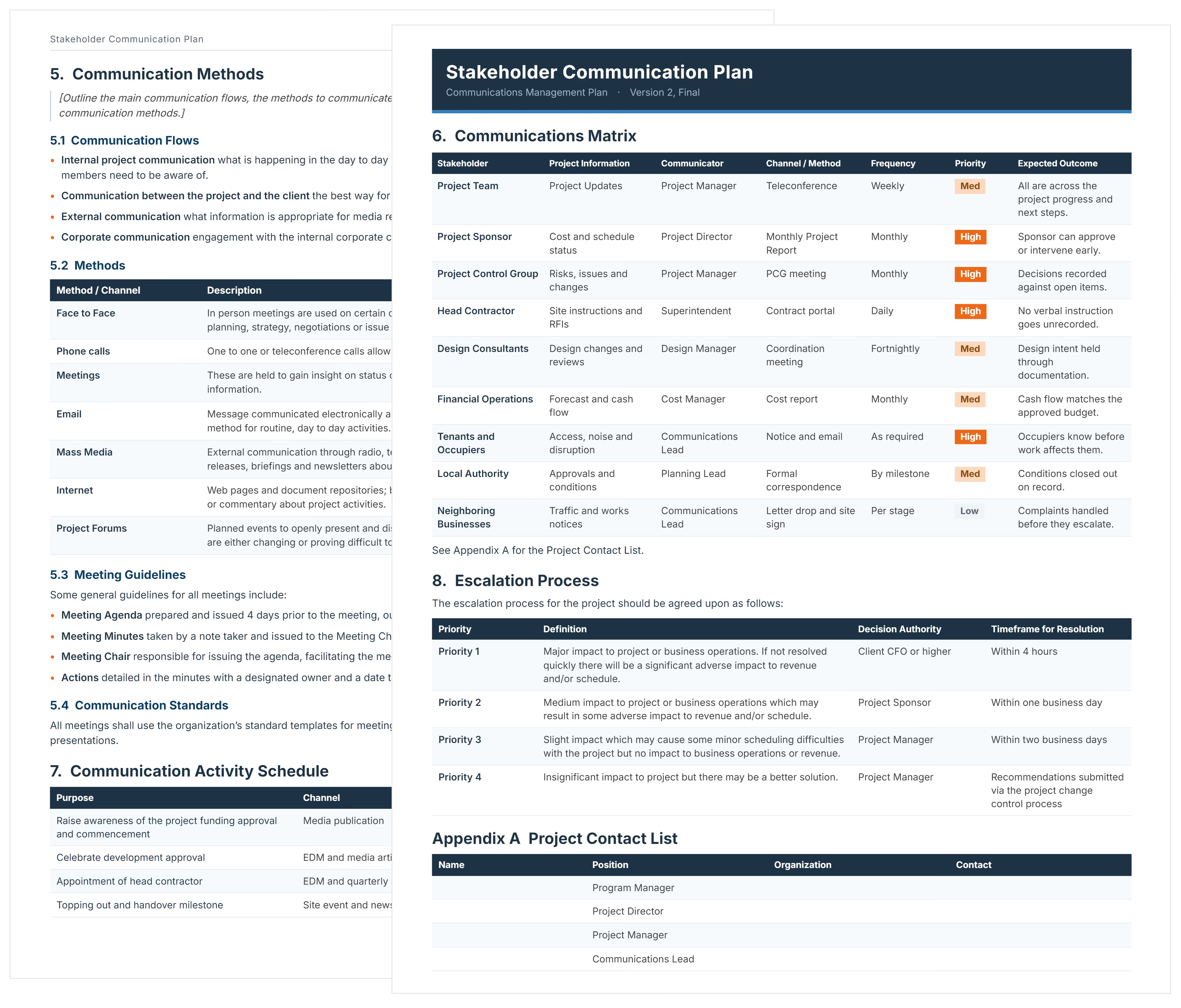
Stakeholder Communication Plan Template
FREE stakeholder communication plan template in Word format. Set who gets what information, through which channel, how often, and who sends it.

Walk Into Every Meeting With Confidence, Clarity, and Control
No one wants to look unprepared, blindsided, or uncertain in front of stakeholders — but that’s exactly what happens without Mastt.
Start for FreeTrusted by the bold, the brave, and the brilliant across governments, Fortune 500s, and the world’s best in delivering the future