
.avif)

William Hodge and Ella Hiles are practising client-side project managers at Essence Project Management, with a combined ten years in the construction industry. In this interview, they explain what the client-side project manager role looks like day-to-day, how they ended up in it, and the most common reasons construction projects run over time and budget.
Getting Into Client-Side Project Management
Almost nobody sets out to be a client-side project manager. William came from structural engineering, Ella from architecture, and that accidental path is exactly what the job rewards.
Q: How did you guys end up in client-side project management specifically? What was the moment you realised you actually wanted to be a client-side project manager?
Ella: My dream was always to be an architect. I knew I wanted to be in the built environment, so I started an architecture degree, but I found myself not enjoying it. I thought I'd try the project management pathway because I knew I'd still be across all the key deliverables. Gave it a go, and haven't looked back.
William: Similar story. I studied Commerce and Civil Engineering with the dream of becoming a structural engineer. In your final year, you need 400 hours or so of practical experience, and I left my run too late, missed all the exciting structural engineering jobs, and landed in a project management role at GHD.
Like Ella, I haven't looked back. I much prefer the client-side PM role over being in the engineering detail. I get to see the whole project lifecycle and be involved in some of the key decisions.
Q: How do you explain what a client-side PM does to someone who's not in the industry? Like if your mum asks, what do you do?
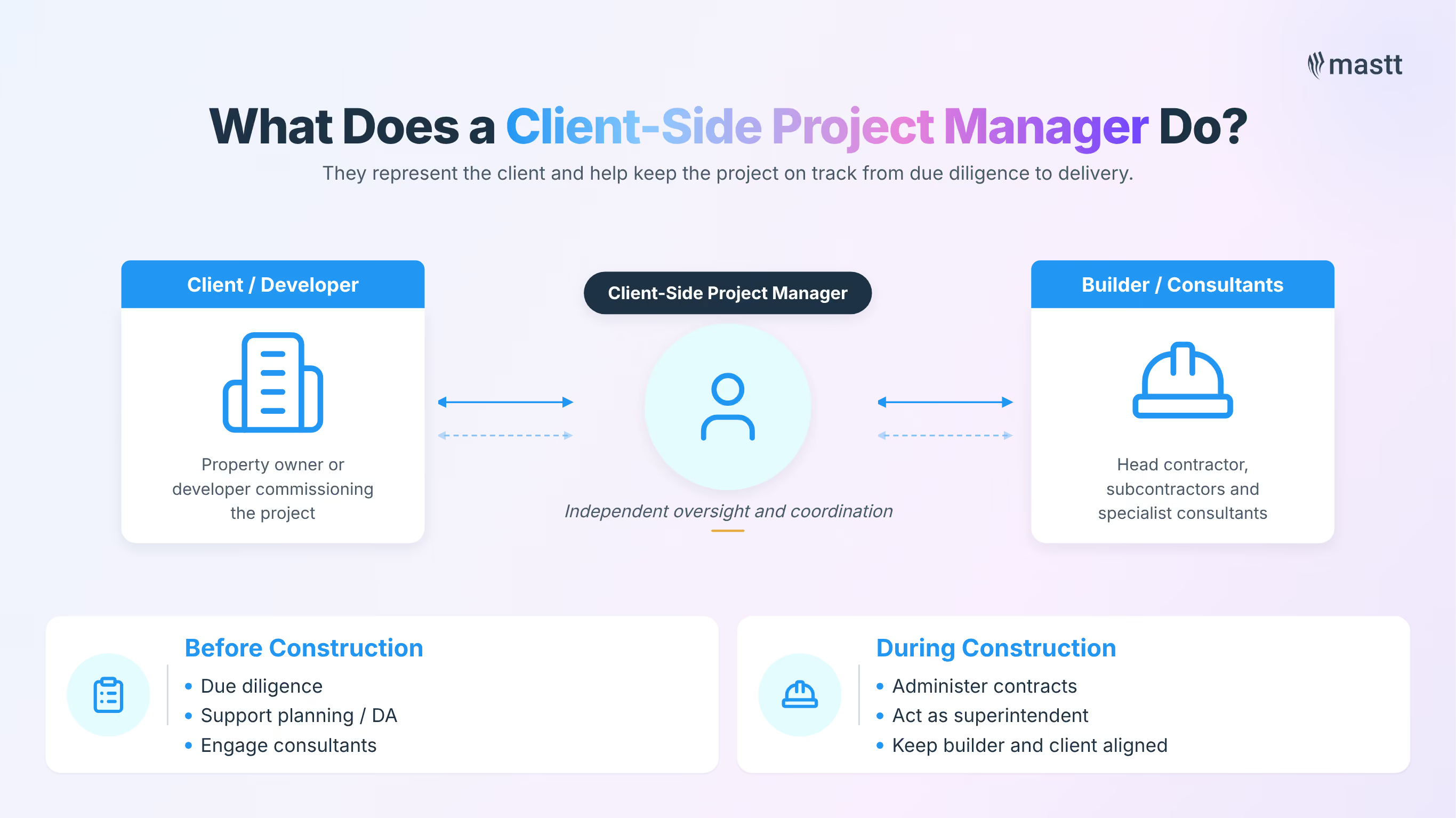
William: The simplest way to put it is we're not developers, we're not builders, we sit in between. We're engaged by developers to represent them, whether that's helping get a DA (Development Application) over the line, doing due diligence before a site acquisition, or engaging all the consultants on their behalf.
Once we move into construction, you usually move into the superintendent role, which is basically sitting between the builder and the developer and keeping them both honest.
Someone in our office describes the most uncomfortable but best spot to be as a superintendent as where you've got the builder angry at you and the client angry at you, because you've got to play it with a straight bat and make sure contracts are being administered fairly.
Ella: I get this question a lot, and I always used to struggle with giving an answer because every day is different. You're never coming into the office doing the same thing.
At the core of it, it's about managing key stakeholders, risks, time, cost, program, and quality. On an average day, you're doing meetings, reviewing design packages, taking minutes, and chipping away at what the client needs and what the consultant needs at that point in the project.
Q: Why would a client come to you as opposed to an architect, a contractor, or an internal team? What do you bring to them that they can't get anywhere else?
Ella: We're acting as that middleman. We're not specific to one package of work. We manage all the consultants. And the key thing is the communication between all parties. We get to be that middle ground where you've got the client, the consultants, and the contractor all coming to you. Communication is really just key.
William: A lot of why clients come to a specific client-side PM is for relationships. We've got strong relationships with some of the best architects and engineers in the industry, whether it's structure, services, civil, acoustic, or sustainability. We've built those relationships across a lot of projects, and the client knows we can drive the outcomes they need.
Having relationships with builders is just as important. If you went around and asked ten people in our office which builders they're currently working with, they'd probably all name different ones. If a client wants to understand what's happening in the market, we've got feet on the ground. We know who's performing well and who to steer clear of.
And the other thing, I hate to say it, but it's flexibility for the client. We often have small roles where we just help clients procure consultants. They get us in, pay us a month's fees to get the consultants on board, and then they pick it up.
How a Client-Side PM's Role Changes Across Construction Project Phases
A client-side project manager wears different hats in design, procurement, and construction. Here's how the job actually shifts phase by phase.
Q: Does your day-to-day change over the entire period of the project? Have you noticed it evolves significantly from when you first go in planning through to handover?
William: Your day-to-day definitely changes. Some people in our office are specialists upfront, doing the planning phase, getting development approval, working on SSDAs (State Significant Development Applications) and DAs (Development Applications). Others are focused almost entirely on construction and superintendency. Each requires a different skill set.
One of our directors is just the DA King. His bread and butter is getting a DA approved, and then he'll pass it on to other project members to lead design development and construction.
In construction, you're not necessarily dealing directly with the designers and consultants as much. You go straight to the builder, and the builder comes back to you with solutions from the design team. Whereas in pre-construction, you're dealing directly with the engineers and architects, in the design detail, a lot more.
Ella: It's really dependent on where the project's at within its phase.
Why Construction Projects Go Over Budget and Run Into Delays
No project finishes on its original budget. The damage is usually done before the builder turns up, with authorities, latent conditions, and client changes doing most of it.
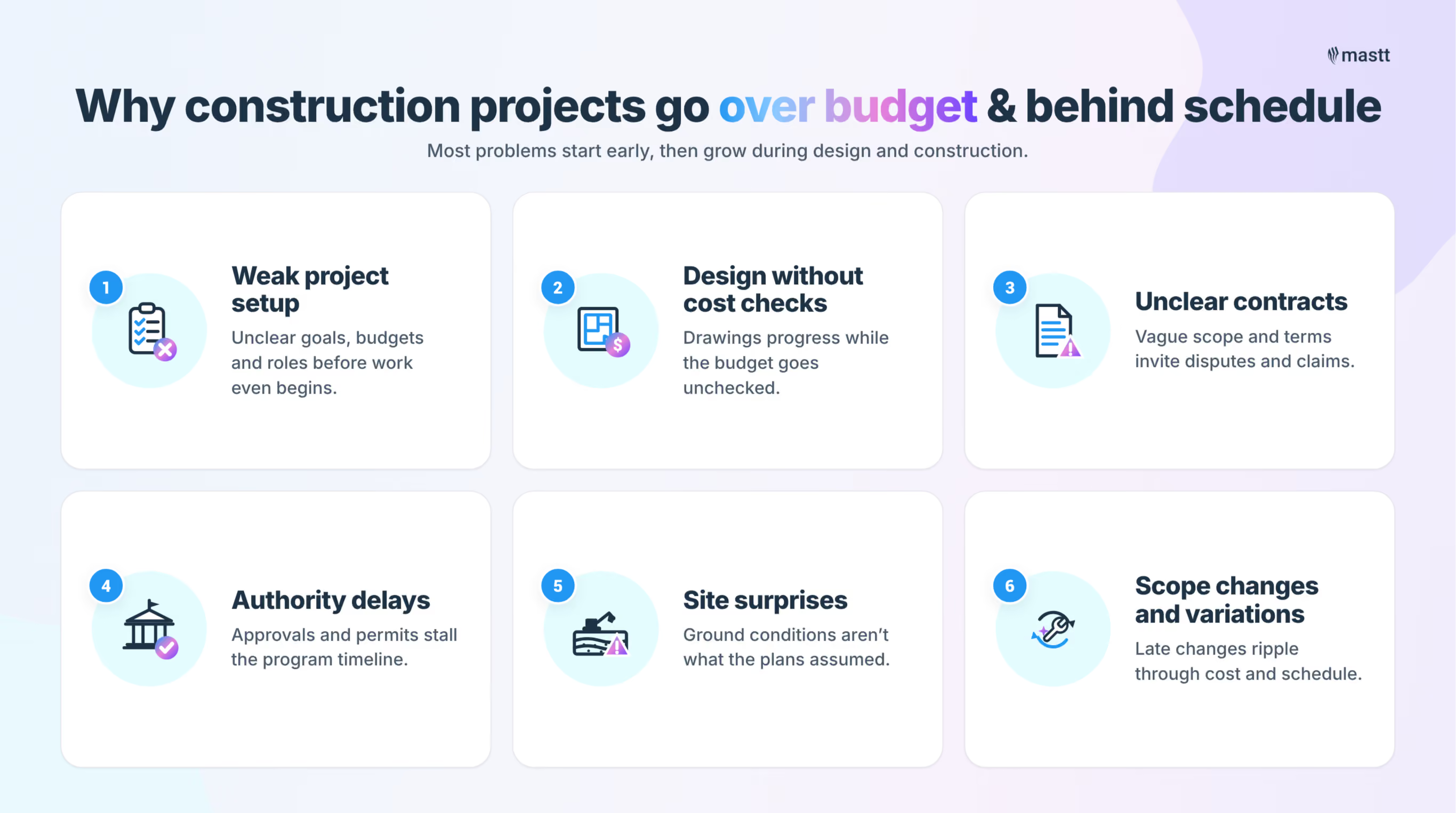
Q: Looking at all the projects you've done over your years as PMs, is there a certain point where the problems actually start? Delays, over budget, disputes, something really wrong. Is there a certain point where that started and was the root cause?
William: I'm a believer that if you don't get to the right starting point, the problems build from day one. Having a clear budget upfront is really important, and having a quantity surveyor in the room from day one, working through cost plans.
If the architect suggests something that's going to look amazing, but no one in the room appreciates the cost of it, you find out too late. Often, the designs progress quite far and to undo certain things takes time.
Once you move into construction, the biggest issues I've had are from unclear construction contracts. If the contract isn't clear, or it's ambiguous, or documents are missing, or the builder and client haven't spent the time upfront reviewing everything in detail, that's what leads to arguments and variations during construction.
And then there are authorities, and that's consistent across projects. If I go and ask five different people in our office which authority they're having trouble with, they'd each say a different one, whether it's Sydney Water, Endeavour Energy, Ausgrid, Transport for New South Wales, or Sydney Metro.
So understanding your authorities upfront is going to save you a big headache during construction. Same goes for testing. Get as much done on site before builders start pricing it so there are no surprises, whether that's contamination, geotech, or whatever studies you need upfront.
Ella: Variations and provisional sums when the contractor comes on board are definitely a turning point. That's when you really start to notice the cost implications coming through, especially on design-and-construct contracts.
Q: Cost blowouts happen pretty regularly on construction projects. But how much of the cost blowout do you see is actually genuinely unforeseeable, as opposed to people not testing enough, or decisions made earlier where the price comes back too high?
William: There's a cost blowout, and then there's a budget blowout. If you've got a contract sum with a builder, clients need to make sure they've got a contingency in place, whether that's a nominal 5% or 10%, especially on a DNC contract. There'll always be things that weren't foreseen.
The three biggest drivers I've seen are authority-driven costs (Ausgrid might suddenly say you need to do a brand new substation instead of tapping into an existing one, and they might backflip throughout the project), latent conditions (contamination, unexpected geotech, or an archaeological finding in the ground), and client-driven changes.
As you build, more things get uncovered, and more people get involved. A classic example is an operator coming in later into the project, wanting to tweak a few things for how it'll run once delivered. That results in redesign and additional costs.
Ella: No project from the get-go is going to be at its original budget. It's more than likely going to increase. So it's about ensuring the client's aware of that and that you prepare for those changes if and when they arise.

Q: Let's say you've got a brand new client who's never built anything major before and doesn't understand variations. Can you walk me through what they're walking into, what variations are, how they work, and why they matter?
Ella: To explain a variation, if it's a request, we'd send that to the contractor, a design change, for example, and the builder would give us that price. We'd go back to the client and explain the price that's come back. We'd have our QS assess these costs, and you'd hopefully get a line-by-line breakdown to support that variation and show why this change has resulted in these costs.
William: There are two kinds of variations. There's contractor-driven, where they've found something they believe wasn't captured in the contract and needs to be built. These are usually the most complicated because there's a question of entitlement. Are they entitled to extra costs, or should they have allowed for that in the contract? Is it in a drawing somewhere? Is it in a design brief they should've reviewed before signing?
Under AS4902 design-and-construct contracts, if a design isn't compliant, once the builder signs that contract, they own that design. If they need to change something to make it compliant, the cost is on them to bear, which can lead to some pretty high costs. That's why they have their own contingency when they price these lump sum projects.
The other kind is client-driven. The client might want to add something, remove something, or change a silver tap to a gold tap. If the client wants to change something, you always ask the builder for the implications. Is there a cost impact? A time impact? Do we need any new approvals?
Even something as simple as changing a washing machine spec, if it's got a different energy rating, you may need to go back to the council to update your BASIX certificate. Even little things like that.
How Construction Project Managers Handle Builders, Consultants, and Hard Conversations
The client pays the PM, but as superintendent the PM has to call it down the middle. The hardest part isn't the impartiality. It's telling people no.
Q: How do you manage the dynamic between the client, the builder, and the consultants?
Ella: Communication is really the number one skill you need, along with having the relationships and building on those. Acting as the middleman, you'd want the client, the consultants, and the builder to feel comfortable coming to you and raising any issues, communicating openly to ensure it's not only benefiting the client, but everyone benefits from the job.
William: It comes down to communication and building trust. I'm not going to say to a client, yes, I'll get that done for you on Friday, if I know I'm going to have to put an unreasonable request to the architect to get it done by the end of the week. You have to manage the client's expectations, the consultant's expectations, and the contractor's expectations, and work with everyone.
The superintendency role is where it gets interesting. Under a DNC contract, it often says the superintendent must act reasonably, or make best endeavours to act reasonably. So you're working in between the client and the builder.
If you get a variation, an extension of time, or a latent condition claim, you've got to put your impartial hat on, and sometimes that involves difficult conversations with the builder, sometimes with the client.
Everyone says you're paid by the developer, so how can you act impartially? My response is that if you agreed to go 50-50 on our fees, the developer's going to end up paying for it anyway, because the builder is just going to up their construction contract by whatever our fees are.
The developer's always paying us, whichever bucket it comes from. Especially in the construction phase, being impartial as a superintendent is absolutely critical.
Q: Working as a superintendent or just as a client-side PM, what's the hardest kind of conversation you have to have?
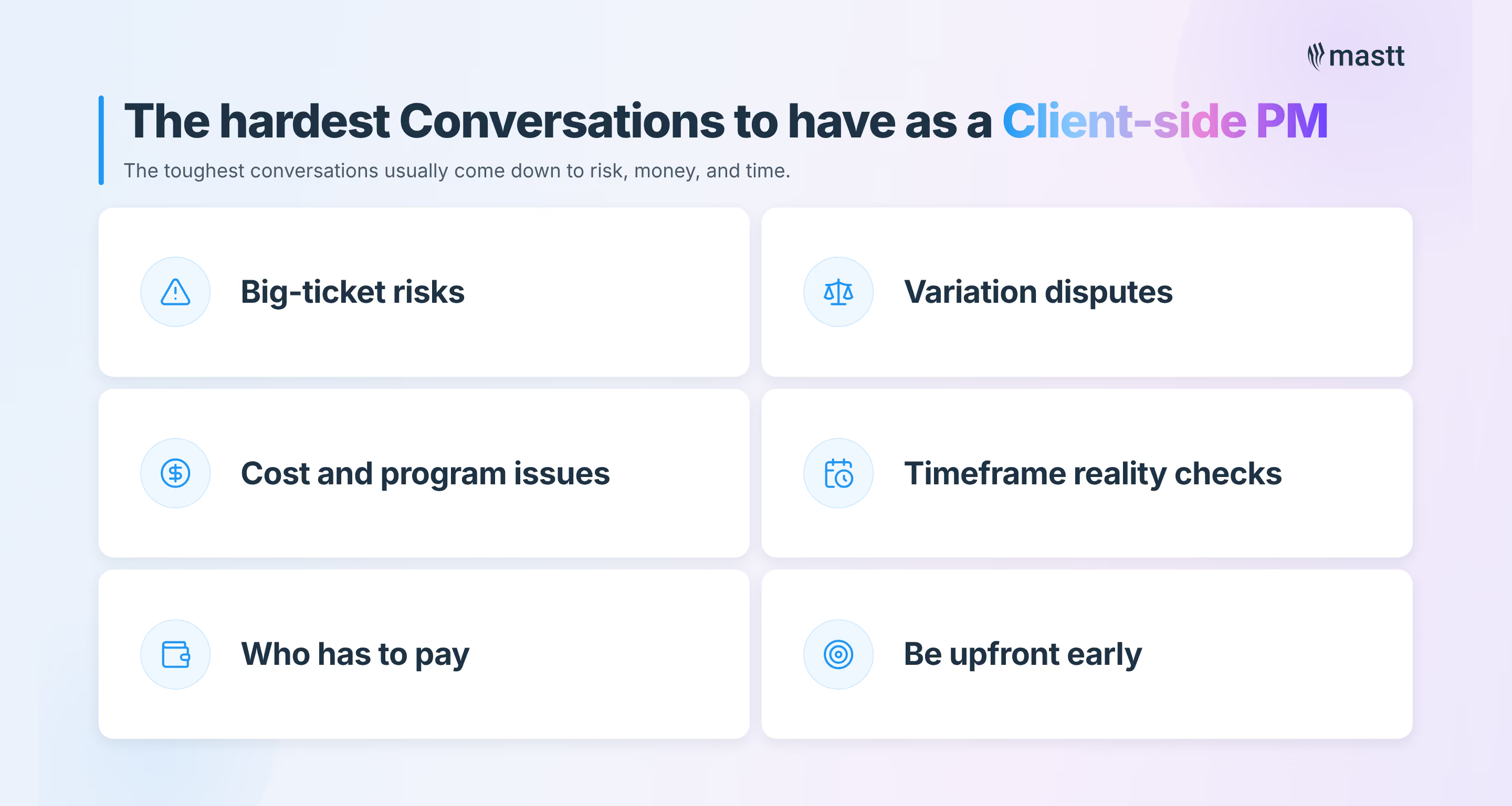
Ella: For me, it's the big-ticket risk items. Cost, program. If a client's got their mind set on how they thought a part of the project was going to go, and you have to call them up and explain this risk or this challenge, that's never really easy. You never really want to let your client down.
But it comes down to that relationship, that trust, that communication, and just being comfortable with being uncomfortable. It's our job. You'll always come up with a resolution, but it's really important you identify issues early so you can get everyone involved to tackle them.
William: The hardest conversation is when someone has to pay for something. Whether that's saying to a contractor, "No, you're not entitled to that variation, it's coming out of your pocket," and they don't agree with your position. Or saying to a client, "The contractor is entitled to a variation, and you've got to cover it." If either party doesn't agree with your position, it can be quite a difficult conversation. But that's part of our role.
The other difficult one is telling a client that something's not possible in the timeframe they want. You've got to be upfront and say, I hear your goal, but we've got to do a bit more digging, put together a program, talk to the right consultants, see what's realistic, and come back with a realistic date. We'll push to get you to your target. It's just not feasible by that date.

Q: What do you wish clients understood before engaging you?
William: I've been really fortunate that the clients I've worked with are pretty commercially savvy. The key thing they don't always see is the flow and effects of a change. I've had a project where they decided to knock out a wall. We had to do a full structural redesign. It ended up saving about $2,000 worth of construction costs, but it cost $90,000 to do the redesign. Those are the flow and effects of changes. That's the main thing.
Ella: All the clients I've worked with have been really great. But sometimes it's just being a bit more understanding of all the parties that have to be involved to get to that final output. One change isn't as simple as making one phone call. It's realising the amount of work, effort, and people that goes into really getting that end result.
Advice for Aspiring Project Managers and First-Time Clients
For new PMs: ask when you don't know, nobody expects you to. For clients: read the contract before you sign it, because everything you let slide becomes a variation later.
Q: What advice would you give someone who wants to become a project manager?
Ella: If someone wanted to become a project manager, I'd say do it, 100%. It's a really great job. You don't have to know everything, but you get to experience everything all at once.
Build relationships, reach out, build connections, and really understand the processes of it all. Make sure things are organised and set up properly. Prepare for risks, identify things early, and speak to people when you don't know. Just understand as much as you can.
William: The main thing is asking when you don't know. A big part of our role is having the confidence to lean on and trust the people who know what they're doing, but being able to point them in the right direction and balance everyone's different needs.
I have no qualms walking around on site and pointing to something and saying to a builder, "What's that? I haven't seen that before." Or calling a structural engineer and saying, "I didn't understand your email, can you explain that to me?" Especially building services. Building services get me every time.
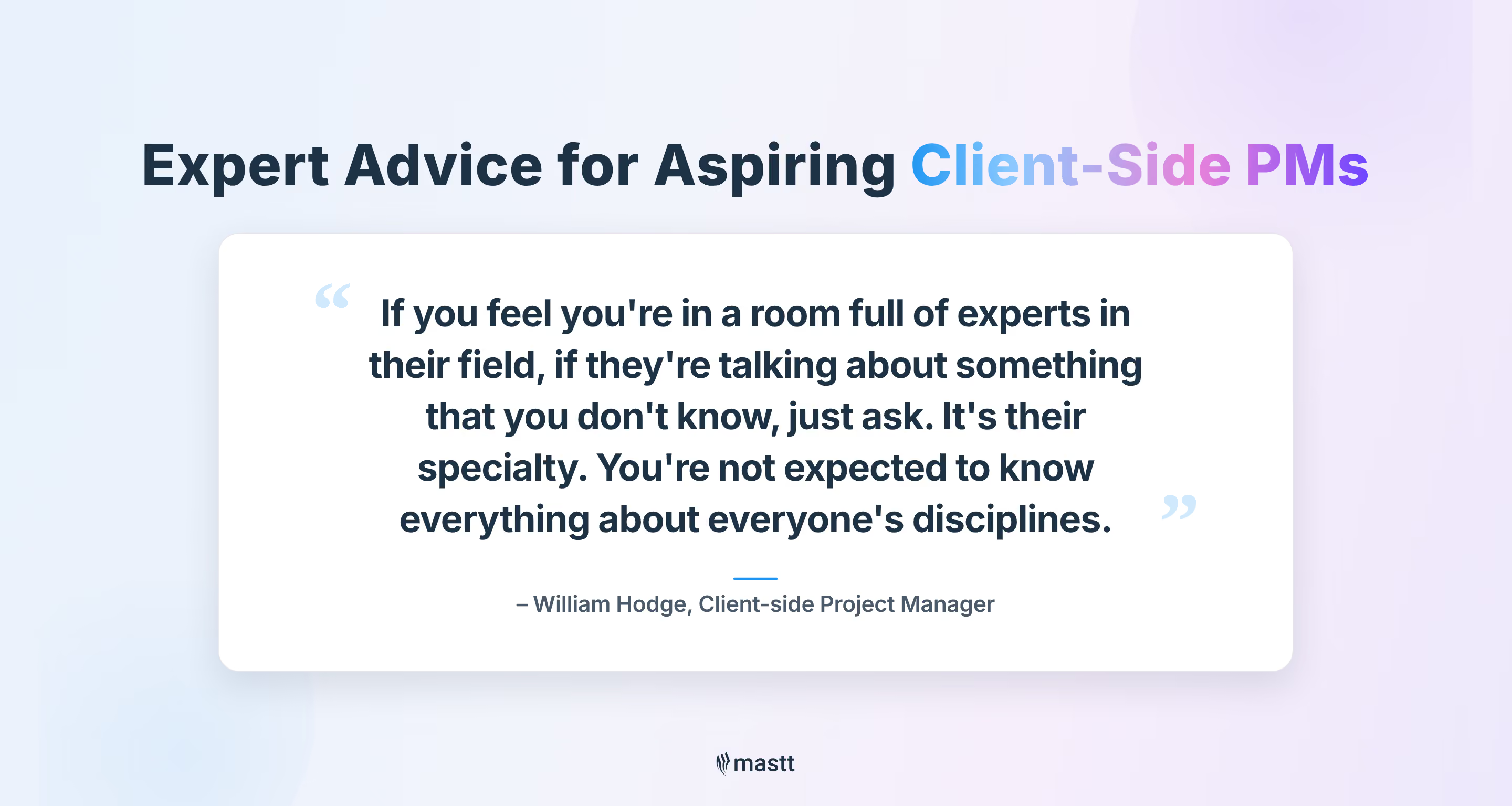
Be confident in yourself. If you're in a room full of experts in their field and they're talking about something you don't know, just ask. It's their specialty. You're not expected to know everything about everyone's disciplines.
Q: If you could give one piece of advice to someone who's about to start a major construction project, what would it be?
Ella: Prepare for the worst and hope for the best.
William: If you've got two parties, a principal and a contractor, about to sign a construction contract, make sure both parties have read and understand what their risks and responsibilities are. Have that open conversation with the builder. This is what's going in your contract, this brief is going in your contract, you've got to own that. Please review it. If there are any issues, we need to talk about them now and not talk about variations in six months.
Clients need to understand what risks and responsibilities they have when they sign on the dotted line. Also, make sure you get a client-side project manager.
Note: This Q&A article is part of Mastt's interview series featuring construction industry experts. William Hodge and Ella Hiles' responses have been lightly edited for readability.

Written by
Jacob Gibbs
Before Mastt, Jacob Gibbs worked in customer success at Cisco, MongoDB, N-able, and Vendr. At Mastt, he contributes articles on construction contracts and client-side project management.


Contributions by
William Hodge
William Hodge is a Senior Project Manager at Essence Project Management with 6 years in client-side construction PM across hospitality, commercial, and build-to-rent in Sydney. He holds a Bachelor of Civil Engineering Honours Class 1 from the University of Sydney and guest lectures in UTS's Master of Project Management program. At Mastt, William contributes content on construction project management and contract administration.

Variation Register Template
Use this FREE Variation Register Template to track and document all changes to your project scope, budget, timeline, and terms. Stay organized, transparent, and in control of variations.

Walk Into Every Meeting With Confidence, Clarity, and Control
No one wants to look unprepared, blindsided, or uncertain in front of stakeholders — but that’s exactly what happens without Mastt.
Start for FreeTrusted by the bold, the brave, and the brilliant across governments, Fortune 500s, and the world’s best in delivering the future