
.avif)
Contract management reporting is the process of turning contract data into insights that show how agreements are performing, where risks sit, and what actions are required. It brings financial exposure so teams can manage contracts with control rather than hindsight.
This guide breaks down how contract reporting works in practice, what a complete report includes, and which metrics actually influence decisions. It also highlights how organizations use reporting to monitor performance and act on issues early.
What is Contract Management Reporting?
Reporting for contract management is a system for turning contract activity into clear outputs that show how agreements are progressing. It tracks changes, dates, and gaps between agreed terms and actual delivery. This gives a reliable view of performance at any point.
In contract management, reporting connects contract data with day-to-day decisions. It helps teams detect delays or missed terms early and respond before issues grow. Over time, consistent reporting strengthens how agreements are managed across the portfolio.

Why Contract Reporting Matters for Organizations
Organizations rely on reporting to understand how agreements are performing and where action is needed. It brings clarity to ongoing work, reduces missed terms, and supports faster, more informed decisions. Without it, contract data stays fragmented and difficult to use.
This leads to several practical outcomes:
- Clear view of contract activity: Reporting shows which agreements are active, delayed, or approaching key dates so teams can stay on top of what is happening across the portfolio.
- Ongoing compliance tracking: It helps monitor whether terms, conditions, and regulatory requirements are being met as work progresses.
- Financial oversight: Reporting highlights contract value, payment timing, and cost-related issues so teams can track financial performance more accurately.
- Early risk detection: It surfaces missed deadlines, underperformance, or potential disputes before they affect delivery or cost.
- Better decision support: Reports provide current data that helps teams decide whether to renew, renegotiate, or close agreements.
Reporting becomes critical in environments where multiple agreements move at different speeds and require close coordination. For example, a construction team can use contract reports to flag a subcontractor nearing a missed milestone. This allows them to intervene before it delays the project schedule.
How Does Contract Management Reporting Work?
Reporting works by capturing contract data, turning it into reports, and using those outputs to guide decisions. It connects day-to-day activity with real-time oversight so issues can be identified and addressed early. Each step builds on the last, from data entry to action.
A simple reporting flow looks like this:
This process turns reporting into a working control system rather than a static record. Data updates as work progresses, and each reporting cycle reflects the latest status.
Teams review outputs, act on issues, and feed updates back into the system to keep reporting accurate and aligned with actual conditions.
💡 Pro Tip: Standardize how data is captured at the start. Inconsistent inputs lead to unreliable reports, which can result in missed risks or delayed responses.
What Should Contract Management Reports Include?
A contract management report should include a summary of performance, current contract status, key metrics, financial data, risk signals, and required actions. A well-structured report will contain:
- Executive summary: A brief overview of current performance, key issues, and actions that require attention.
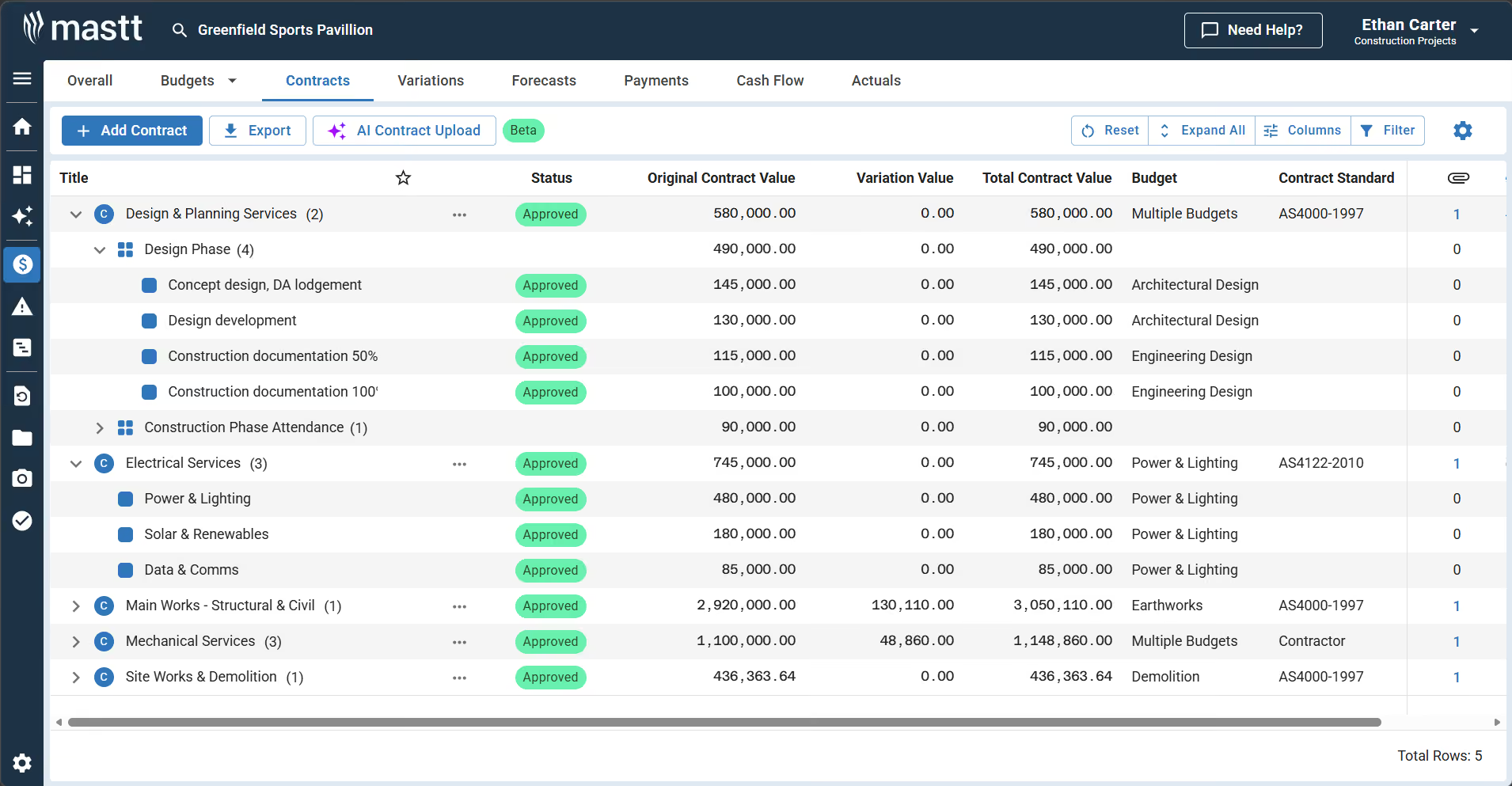
- Contract portfolio status: A snapshot of active agreements, upcoming deadlines, and items that may need review or escalation.
- Contract lifecycle metrics: Data showing progress across stages such as drafting, approval, execution, and completion.
- Financial performance metrics: Information on contract value, payments, and cost-related trends that affect overall performance.
- Compliance and risk indicators: Signals that highlight missed terms, potential breaches, or areas that may lead to disputes.
- Renewal and termination tracking: Visibility into expiring agreements, renewal timelines, and contracts that are ending or under review.
- Recommendations and actions: Clear next steps based on current data, such as resolving delays or initiating renewals.
Each section should stay consistent across reporting cycles so performance can be compared over time. Gaps become easier to spot when the same structure is used across agreements. It also makes reports easier to review and act on without reinterpreting the data each time.
Key Metrics for Tracking Contract Performance
Contract performance is measured through a set of metrics that track timing, value, compliance, and delivery against agreed terms. These metrics surface where performance is stable and where corrective action may be required.
Common indicators include:
- Contract cycle time: Measures how long it takes to move from initiation to execution, helping identify delays in approvals or negotiations.
- Contract value and revenue impact: Tracks the financial contribution of agreements and highlights gaps between expected and actual returns.
- Renewal rates: Shows how often agreements are renewed, which can indicate consistency in performance or issues with delivery.
- Compliance rates: Measures how well terms and conditions are being met during execution.
- Risk exposure: Identifies areas where delays, disputes, or cost overruns may occur.
- Obligation completion rate: Tracks whether agreed deliverables and milestones are being fulfilled as planned.
For instance, an increase in cycle time can point to approval delays that slow execution and affect revenue timing. This allows teams to address bottlenecks early and keep performance aligned with expectations.
💡 Pro Tip: Map risk exposure against a structured risk assessment software instead of reviewing it in isolation. This helps prioritize issues based on likelihood and impact, so teams focus on the risks that can materially affect cost, timelines, or delivery.
Types of Reports Used in Contract Management
Managing contracts use different report types to monitor performance, obligations, and upcoming actions across agreements. Each type supports a specific decision and is used based on what needs review.
Each report type should be tied directly to how decisions are made. Renewal reports inform timing and planning, while performance reports highlight where intervention may be needed. Without this link, reporting remains descriptive and does not influence outcomes.
How to Create a Contract Management Report
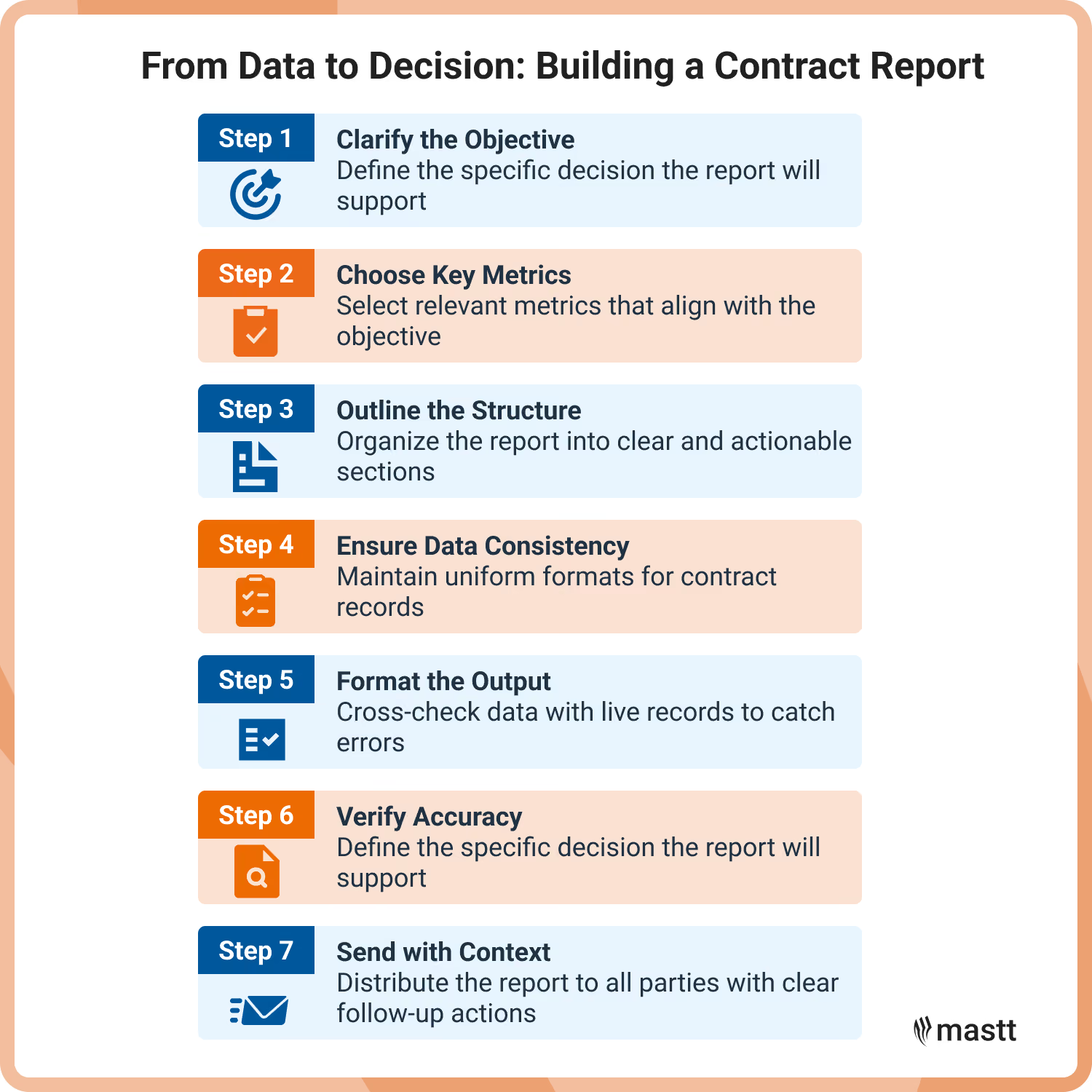
Creating a report to manage contracts begin by defining the decision it needs to support and building the content around that outcome. The process focuses on selecting the right inputs, organizing them clearly, and presenting results that can be acted on without delay.
Step 1: Define the purpose of the report
Start with a specific decision, not a general objective. For example, instead of “track performance,” define it as “identify contracts at risk of delayed delivery this month.” This keeps the report focused and prevents unnecessary data from being included.
Step 2: Select the right metrics and data points
Choose metrics that directly support the decision. If the goal is renewal planning, include renewal dates, performance history, and current status. Remove any data that does not influence the outcome to keep the report usable.
Step 3: Structure the report into clear sections
Group information into sections that match how decisions are made, such as summary, current status, performance signals, and flagged issues.
Each section should answer one question so readers do not need to interpret raw data. Keep the same structure across reporting cycles to make comparisons easier.
Step 4: Ensure data accuracy and consistency
Standardize how key fields are captured, such as dates, contract values, and status labels. For example, use one format for renewal dates and a single definition for “active” or “at risk.” This avoids confusion and prevents incorrect conclusions.
💡 Pro Tip: Use construction contract management software to extract critical data directly from agreements instead of relying on manual entry. This improves accuracy at the source and reduces the risk of gaps in reporting.
Step 5: Build the report output for quick review
Use tables or structured layouts so stakeholders can scan the report in seconds. Highlight only what needs attention, such as delays, upcoming renewals, or missed milestones.
For instance, a report table may show one supplier marked “at risk” due to missed delivery dates and low completion rates, prompting immediate follow-up before delays affect the project.
Step 6: Review and validate before sharing
Cross-check the report against live contract records or system data. Confirm that flagged issues still apply and that timelines reflect current progress. This step prevents outdated information from driving decisions.
💡 Pro Tip: Use AI for reviewing contract to validate data against source agreements before reporting. This helps catch inconsistencies between contract terms and reported data before they affect decisions.
Step 7: Distribute to the right stakeholders with context
Send the report to the people responsible for action. Add a short note where needed to clarify what requires follow-up. This ensures the report leads to action rather than passive review.
Who Manages Contract Reports?
Contract managers are primarily responsible for using reports to maintain control over agreements. They use these outputs to stay on top of timelines and surface issues that need action. Other teams rely on the same reports based on their role in execution and oversight.
These reports are used across multiple functions:
- Contract Manager: Track status, manage timelines, and follow up on performance issues.
- In-house Counsel or Legal Advisor: Monitor compliance, assess risk, and support contract review activities.
- Procurement Manager: Evaluate supplier performance and manage contractor agreements.
- Finance Manager: Review payment activity, revenue alignment, and cost impact.
- Project Manager: Stay aligned with delivery schedules and execution requirements.
Shared reporting creates a single reference point for decisions across teams. This reduces conflicting interpretations of performance and helps issues move faster from identification to resolution.
Contract Reporting Challenges and How to Fix Them
Gaps in contract reporting often stem from control gaps in how information is captured, stored, and reviewed. These problems reduce reliability and slow down action on contract risks.
For example, if contract reporting is not linked to a contract repository, renewal dates or obligation status may be missed. This can lead to expired agreements continuing unnoticed or obligations not being enforced, which directly affects contract outcomes.
Best Practices for Effective Contract Management Reporting
Effective reporting depends on how well it supports real decisions and fits into daily workflows. Outputs should be reliable, easy to review, and tied to clear actions. When done well, reporting becomes part of execution rather than a separate task.
☑️ Align reporting cadence with operations: Match reporting frequency to how decisions are made, such as weekly for project execution or monthly for renewals.
☑️ Separate summary from detail views: Provide a high-level view for quick decisions and a detailed layer for deeper contract analysis. This prevents overload while still supporting investigation.
☑️ Set thresholds for action: Define clear limits for delays, cost changes, or missed milestones so issues are flagged automatically.
☑️ Track trends over time: Compare results across reporting periods to identify patterns such as recurring delays or declining performance. This helps prevent repeated issues.
☑️ Standardize key definitions: Use consistent terms like “active” or “at risk” to avoid misalignment when reports are reviewed by different stakeholders.
☑️ Reduce manual inputs: Reduce reliance on manual updates and connect reporting to source systems to improve accuracy and save time.
☑️ Include clear next steps: Add brief context where needed so stakeholders understand what action is required.
☑️ Review reporting quality regularly: Remove outdated metrics and adjust reports to reflect current priorities.
💡 Pro Tip: Use contract management dashboard with built-in reporting triggers so actions can be linked directly to flagged issues. When a report identifies a risk, the system can assign automatic follow-ups, reducing the gap between insight and action.
Tools and Software Used for Contract Reporting and Analytics
Reporting and analytics use systems that collect, connect, and present data in a usable format. These tools reduce manual effort and help teams act faster. The right setup depends on portfolio complexity and how closely these systems need to work together.
Common tools include:
- Contract repository software: Centralizes agreements and provides structured access to contract data needed for reporting. It ensures key terms, dates, and obligations are consistently captured and easy to retrieve.
- Contract analytics software: Transforms contract data into dashboards and summaries that highlight performance trends and issues. This supports faster interpretation and decision-making.
- Construction project cost management software: Provides data on payments, cost tracking, and contract value. This supports reporting on financial performance and alignment with budgets.
- Project milestone software: Tracks progress, key dates, and delivery status, which feed into reporting for performance monitoring.
- Construction reporting software: Connects data across systems and consolidates it into a single reporting view. This reduces inconsistencies and improves reliability.
For instance, a project team may use a contract repository for agreement terms, project milestone software for delivery tracking, and cost management software for payments.
These feed into project management reporting software, creating a single view. This helps teams spot delays or cost issues early and act before they affect delivery.
Turn Contract Data Into Concrete Action
Contract management reporting translates contract activities into signals that guide decisions. Well-structured outputs make performance easier to assess and actions easier to prioritize. This allows teams to address issues earlier before they affect outcomes. Build each contract report with a clear purpose so every output leads to the next step.

Written by
Stephanie Flores
Stephanie Flores was a Construction Content Writer at Mastt, producing long-form guides and research articles on cost management, contract management, and risk. She holds a Bachelor of Arts in Political Economy from the University of Asia and the Pacific.


Contributions by
Contract Management Dashboard
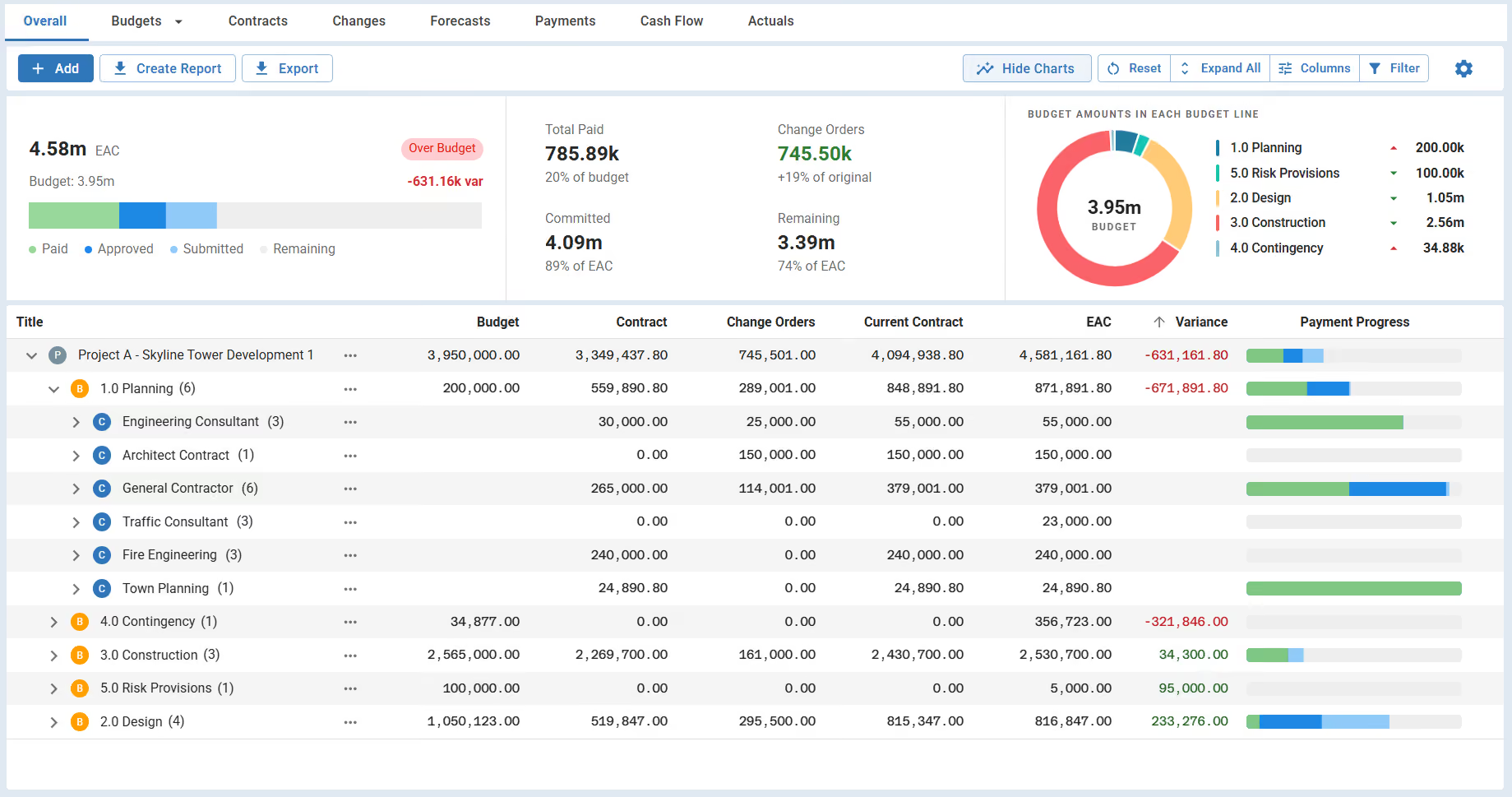
A free contract management dashboard for owners and client-side teams. Track contract values, change orders, payments, and compliance in one live view.

Walk Into Every Meeting With Confidence, Clarity, and Control
No one wants to look unprepared, blindsided, or uncertain in front of stakeholders — but that’s exactly what happens without Mastt.
Start for FreeTrusted by the bold, the brave, and the brilliant across governments, Fortune 500s, and the world’s best in delivering the future

.avif)