


A contract management workflow is how contracts move from request and drafting through review, approval, execution, and tracking. It defines the steps, responsibilities, and approvals required to manage agreements efficiently.
This article explains how contract workflows are built and how organizations structure approvals to keep agreements moving. It also highlights the operational advantages of using a defined process, including improved visibility and fewer delays across industries.
What is a Contract Management Workflow?
A workflow for contracts is the process of overseeing how agreements are created, reviewed, approved, executed, and tracked inside an organization. Each stage assigns responsibility to specific roles, so contracts do not stall between departments.
This workflow forms the operational backbone of contract management. Work continues after signature as teams track obligations and manage amendments. Contract records are maintained so agreements remain enforceable and aligned with operational needs.

Benefits of Implementing Contract Management Workflows
Using a workflow improves how agreements move through review and approval stages. Teams process contracts more consistently and reduce delays caused by unclear responsibilities. These benefits strengthen operational coordination across departments.
Key advantages of using a contract workflow include:
- Faster contract cycle time: Agreements move through review and approval without waiting for manual follow-ups.
- Better coordination across teams: Legal, finance, procurement, and operational units follow the same workflow and review sequence.
- Reduced contract value leakage: Obligations and renewal dates are monitored so the agreement performs as intended.
- More reliable vendor onboarding: Supplier contracts move through approvals quickly, so work can begin sooner.
- Improved contract tracking: Teams can see where agreements sit in the workflow and who must act next.
- Stronger audit readiness: Approval records and amendments remain documented for compliance checks.
For instance, a construction firm hiring a subcontractor may require procurement, legal, and finance reviews before signature. A contract workflow routes the agreement to each team in the correct order. The contract progresses while the project schedule stays on track.
How Contracts Move Through the Contract Lifecycle
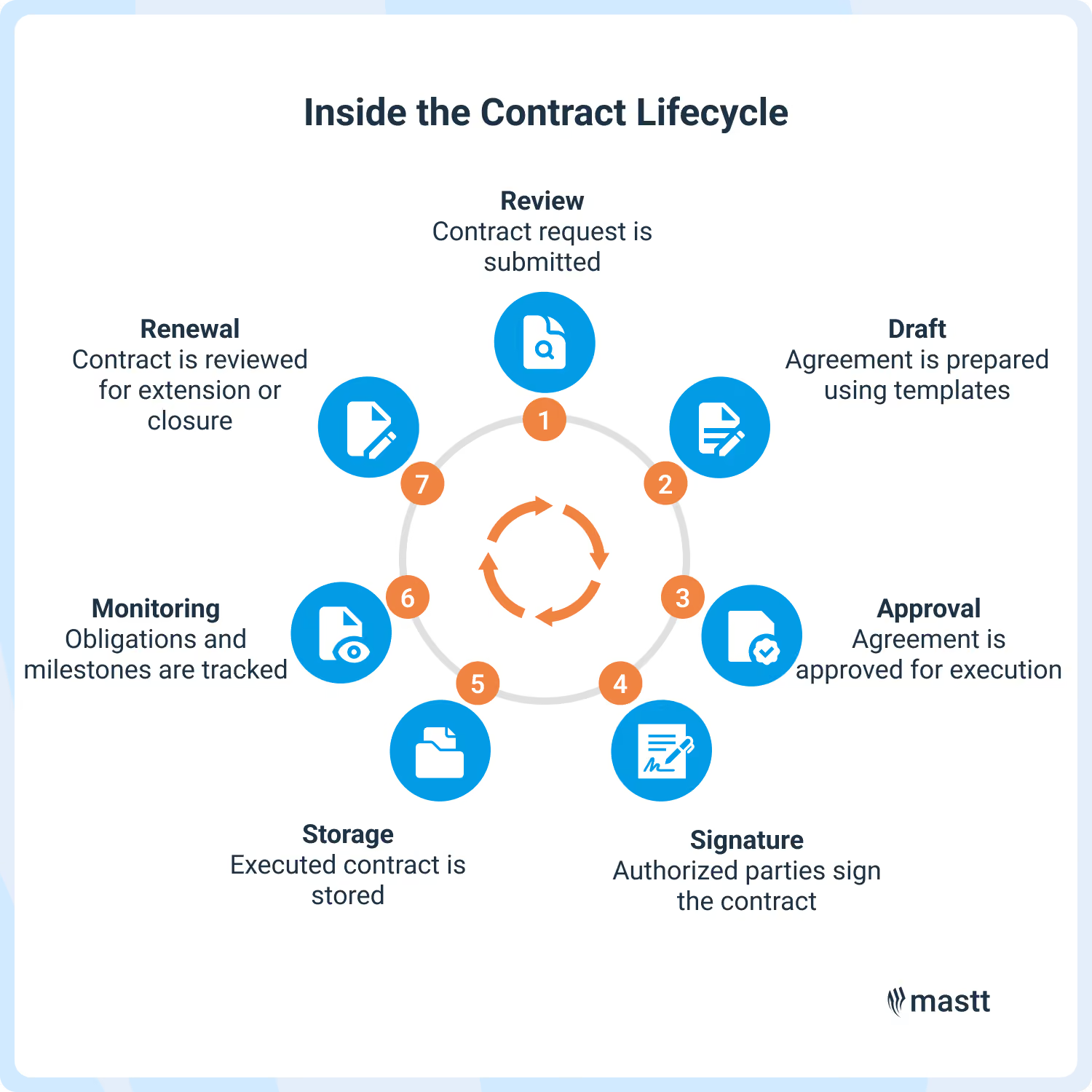
Contracts pass through specific stages, from the initial request to execution and post-signature management. The vendor agreement example below shows how accountability is maintained from request through contract tracking, so teams stay on track.
The workflow ensures contracts move through the right reviews before commitments are finalized. Each stage assigns responsibility, so reviewers know when their input is required. This keeps vendor onboarding, procurement, and project work moving without approval delays.
💡 Pro Tip: Link your workflow system to a centralized contract repository software immediately after execution. Capture renewal dates and key obligations as metadata. This prevents missed deadlines and makes contracts easier to retrieve later.
Contract Approval Structure: Who Reviews and Signs
Senior leaders or designated contract signatories approve and sign contracts on behalf of the organization. Before the agreement reaches them, internal reviewers examine the contract. These checks ensure the agreement meets legal, financial, and operational requirements.
Typical reviewers and signatories include:
- Legal Counsel: Reviews contract terms and confirm the agreement complies with applicable laws and company policies.
- Finance Manager: Evaluates payment terms and verifies that financial commitments match approved budgets.
- Project Manager: Confirms the contract supports delivery requirements and operational needs.
- Procurement Lead: Validates vendor selection, pricing structure, and commercial terms.
- Executive Approver: Signs off on contracts that exceed defined financial or risk thresholds.
- Contract Owner: Confirms the final version reflects negotiated terms before signature.
Approval structures vary by organization, but high-performing teams align approvals to contract value and risk level. Lower-risk agreements move through fewer reviews, while higher-risk contracts receive additional scrutiny before signature.
How to Build an Effective Contract Workflow
Building a contract management workflow starts with understanding how agreements move through your organization. The goal is to assign responsibility at each stage and remove approval uncertainty. The steps below outline how teams establish a reliable workflow.
Step 1: Map the contract lifecycle in your organization
Document how contracts move from request to post-signature management using a simple flow diagram or process map. Capture where requests start, who drafts agreements, and which roles review them.
Identify delays, duplicate reviews, or unclear handoffs that interrupt the process.
Step 2: Define ownership for every stage
Assign a single accountable role to each stage of the workflow and document it in a responsibility matrix or workflow tool. This ensures every contract always has a clear next owner.
For example, a procurement manager submits the request, legal counsel reviews terms, and a finance manager approves commercial details.
Step 3: Establish approval rules and escalation paths
Set approval thresholds based on contract value, risk level, or contract type within your workflow system. Define escalation triggers, such as automatic reminders or reassignment if a reviewer does not respond within a set timeframe.
For example, high-value contracts may require legal and finance approval before moving to signature.
Step 4: Standardize templates and contract language
Create approved contract templates and store them in a shared system accessible to all users. Build clause libraries with preapproved language so teams can assemble contracts without drafting from scratch. Update templates regularly to reflect current legal and commercial standards.
Step 5: Implement tracking for obligations and renewals
Configure your system to capture key contract data at execution, including renewal dates and deliverables. Set automated reminders for upcoming obligations and renewal decisions.
Track contract status in a central system so agreements remain active and do not expire without review.
💡 Pro Tip: Build workflow triggers that activate after contract execution. Automatic reminders for obligations, deliverables, or renewal reviews keep contracts active within the workflow instead of disappearing after signature.
Common Contract Workflow Challenges and How to Fix Them
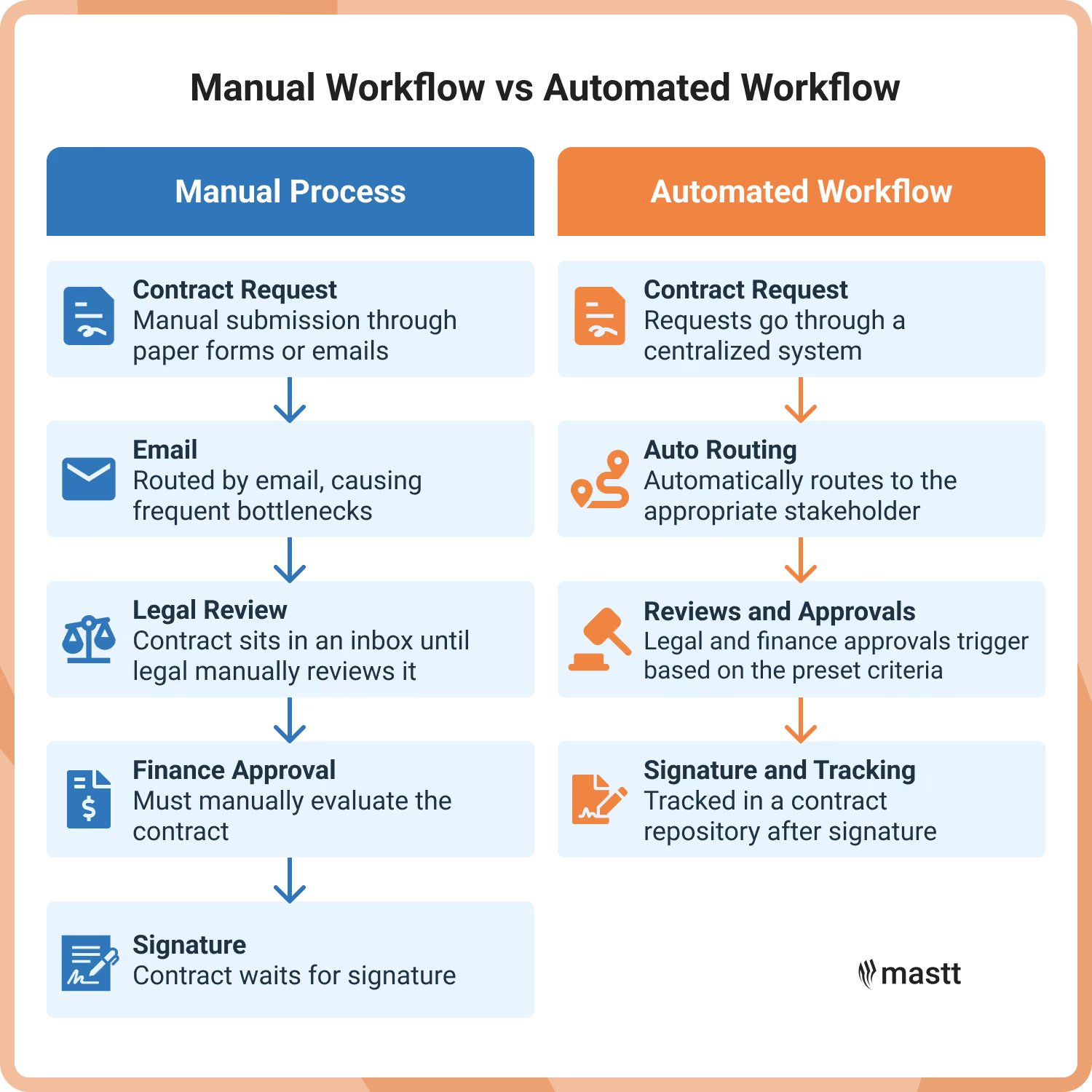
Contracts often stall when approvals sit unattended or when contract requests arrive without the required information. These risks slow agreement execution and create operational risk. Addressing the specific step causing the delay helps teams restore contract flow.
For example, if legal review sits pending for several days, a supplier contract may remain unsigned while the vendor waits to start work. The delay can push back onboarding or procurement activities tied to that agreement.
Teams often fix these issues faster with construction contract management software that standardizes approvals, tracks versions, and stores signed agreements in one place.

Best Practices for Designing Contract Workflows
Effective contract workflows rely on clear routing, controlled approvals, and consistent contract data. These practices help organizations maintain reliable contract operations as volume and complexity increase.
☑️ Segment workflows by contract type: Vendor agreements, client contracts, and subcontracts often follow different review paths. Separate workflows prevent low-risk agreements from passing through unnecessary approvals.
☑️ Capture contract data at intake: Require key information before drafting begins. Contract value, counterparty, and scope allow the system to route the agreement to the correct reviewers.
☑️ Use approval thresholds: Configure approvals based on contract value or risk exposure. Routine agreements move faster while higher-risk contracts receive additional scrutiny.
☑️ Limit reviewers: Each reviewer should have a clear responsibility in the approval path. Removing unnecessary reviewers prevents contracts from sitting idle.
☑️ Record contract metadata: Capture details such as value, renewal dates, and responsible parties when the contract is signed. This enables tracking and reporting later in the lifecycle.
☑️ Separate workflows for negotiation-heavy contracts: Route contracts with extensive redlining through a dedicated review path to avoid delaying routine agreements.
☑️ Review workflow performance: Monitor cycle time and stalled approvals to identify delays. Adjust routing rules when bottlenecks appear.
💡 Pro Tip: Connect workflow data to a contract management dashboard that tracks approval times and contract status. Teams can identify where agreements are waiting. This allows managers to address delays before they affect operations.
What Tools Support Contract Workflow Management?
Contract lifecycle management (CLM) platforms support workflow automation by routing agreements through review and approval before execution. Other tools support specific stages of the process. These systems reduce reliance on email chains or spreadsheets.
- Contract lifecycle management software: Manages the full contract lifecycle within one platform. Routes contracts through drafting, review, approval, and storage.
- Contract management system: Store executed contracts in a central location. Track key details such as renewal dates and contract owners.
- E-signature platform: Enable authorized parties to sign agreements digitally. Execution occurs once approvals are complete.
- AI contract review software: Analyzes contract language during review. Flags risky clauses and deviations from approved terms.
- Workflow automation tool: Route contracts to the correct reviewers. Reduce manual coordination between teams.
- Contract analytics platform: Track approval time and contract status. Help teams identify delays in the workflow.
These tools often connect within the same contract process. For example, a contract may be drafted in a CLM system, reviewed using AI contract review software, signed through an e-signature tool, and stored in a contract repository for tracking.
From Contract Chaos to Controlled Flow
A well-designed workflow ensures contracts move through review, approval, and delivery without delays or unnecessary friction. Each stage assigns responsibility so teams can focus on managing commitments instead of chasing approvals.
Over time, this consistency improves how organizations handle agreements across projects, contractors, and partners.

Written by
Stephanie Flores
Stephanie Flores was a Construction Content Writer at Mastt, producing long-form guides and research articles on cost management, contract management, and risk. She holds a Bachelor of Arts in Political Economy from the University of Asia and the Pacific.


Contributions by
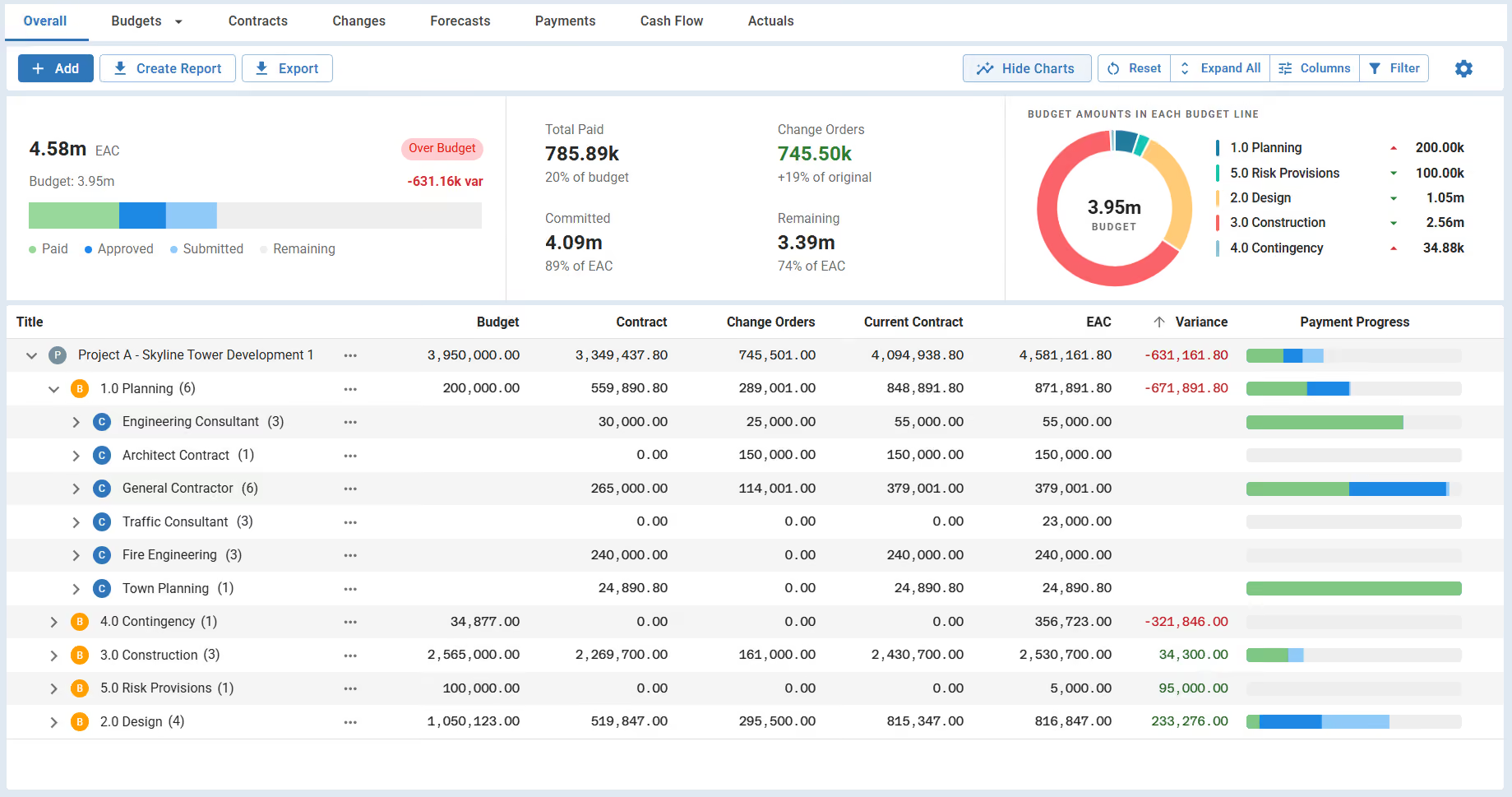
Contract Management Dashboard
A free contract management dashboard for owners and client-side teams. Track contract values, change orders, payments, and compliance in one live view.

Walk Into Every Meeting With Confidence, Clarity, and Control
No one wants to look unprepared, blindsided, or uncertain in front of stakeholders — but that’s exactly what happens without Mastt.
Start for FreeTrusted by the bold, the brave, and the brilliant across governments, Fortune 500s, and the world’s best in delivering the future

.avif)
.avif)