
.avif)

I’ve been a client-side project manager for three and a half years. I started as an undergraduate PM and mostly deal with commercial and fit-out projects. The textbook answer to what the job involves is managing key stakeholders, risks, time, cost, program, and quality. What that answer leaves out is that much of the managing happens through conversations nobody enjoys.
In this article, I’ll cover the hardest of them: the cost increase call, the variation (change order) walkthrough, and the early risk conversation. I’ll also share what makes those conversations workable.
Cost Conversations Are the Hardest Part of Client-Side Project Management
The hardest conversations in client-side project management come down to cost and the big-ticket risk items that sit behind it, things like cost and program. Those are the areas that dictate how a client views whether the job was a success.
Often, a client has their mind set on how a part of the project is going to go. Then something shifts, and you have to call them and explain the risk or challenge you’re now facing. That call is never easy. You never really want to let your client down.
But the conversation is the job. Every project changes, and someone has to put the change in front of the client honestly.

Variations and Provisional Sums: Where Tough Discussions Begin
The turning point on most jobs is when the contractor becomes involved, and variations and provisional sums start to land. Managing scope changes, client requests, and design changes is when the cost perspective really comes through. On a design and construct (D&C) contract, that pressure arrives even faster.
No job is going to hold its original budget from the get-go. More than likely, the number is going to increase. The real question is whether the client hears that early from you, or late when the contractor’s prices come in.
That’s why the budget conversation belongs at the very start of the project. If the client knows that and has spare buckets ready, a variation becomes a process instead of a crisis.
How a Variation Conversation Works
For a client who has never built before, a variation can feel like an ambush. The process behind it is more structured than it looks:
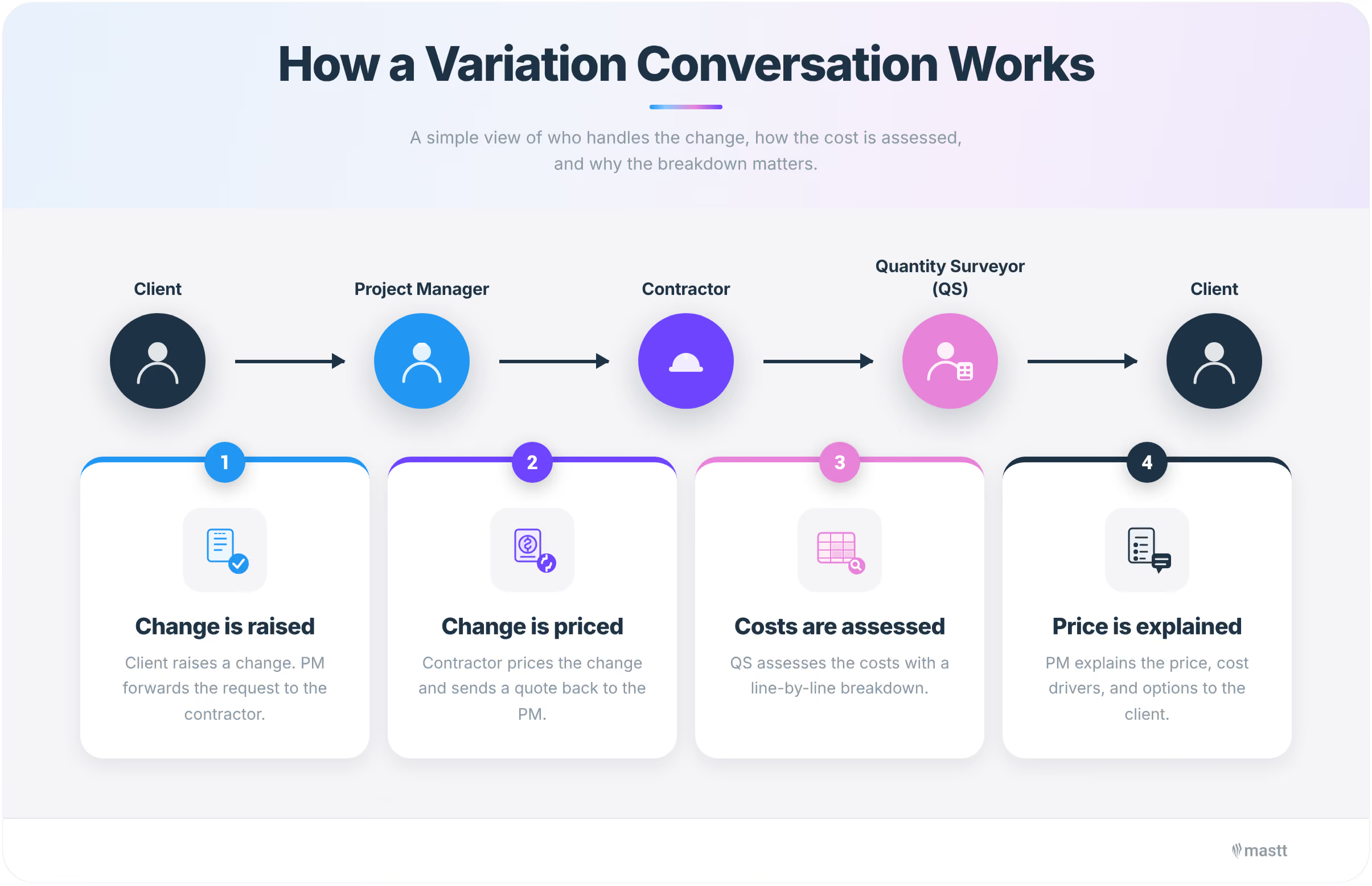
- A change is raised. Say the client requests a design change. As the project manager, I send that request to the contractor.
- The contractor prices the change and returns it to us.
- Our quantity surveyor (QS) assesses the costs, ideally with a line-by-line breakdown showing what’s driving the numbers.
- I take that assessment back to the client and explain the price, what’s driving it, and the options.
The line-by-line breakdown is what turns the conversation from “trust me” into “here’s the evidence”. Without it, you’re asking a client to accept a number on faith.
How a Client-Side PM Raises Project Risks Early
Sometimes you feel scared to bring an issue up. You might hope it resolves itself, or wait until you have perfect information. In my experience, that instinct is the one to fight.
Identifying an issue early means the right people can start working on it while options still exist. Authorities are a good example. How long an authority takes to respond is out of your control. So you factor it into the program and tell the client what it means. That beats explaining a delay after the fact.
I think of it as being comfortable with being uncomfortable. At the end of the day, it’s our job. Clients don’t expect a project with no problems. They expect to hear about problems while something can still be done. More than likely, you’ll come up with a resolution together.
What Makes Difficult Client Conversations Easier for a PM
Communication is the number one skill as a client-side project manager, and it does its work long before any hard conversation happens. A client-side PM sits in the middle of the client, the consultants, and the contractor. You want every one of them to feel comfortable coming to you and raising issues. That way, the job benefits everyone, not only the client.
That comfort is built on relationships and trust. If a client trusts that you’ll always give them the real picture, a difficult phone call doesn’t damage the relationship. It reinforces it.
Preparation does the rest. The right testing done upfront gives you a rough idea of what’s to come. Authority timeframes built into the program mean fewer surprises. The conversations still happen. They’re just smaller.
Prepare for the Worst, Hope for the Best
My one piece of advice for anyone starting a major construction project: prepare for the worst and hope for the best. Costs will move, and designs will change. None of it has to derail a project if it’s raised early and handled openly.
Remember that one change is never as simple as making one phone call. The amount of work, effort, and people behind getting a change to a final result is bigger than it looks. The more a client understands that, the easier every conversation becomes.
If you’re about to start a project, pressure-test your budget and the spare buckets behind it before you sign anything. And make sure whoever represents you is willing to make the uncomfortable call early.

Written by
Ella Hiles
Ella Hiles is a Project Manager at Essence Project Management with 3 years delivering client-side construction projects in Sydney. She is completing a Bachelor of Construction Project Management at UTS, building technical depth alongside hands-on project delivery. Ella contributes content on construction project management and delivery at Mastt.


Contributions by

Variation Register Template
Use this FREE Variation Register Template to track and document all changes to your project scope, budget, timeline, and terms. Stay organized, transparent, and in control of variations.

Walk Into Every Meeting With Confidence, Clarity, and Control
No one wants to look unprepared, blindsided, or uncertain in front of stakeholders — but that’s exactly what happens without Mastt.
Start for FreeTrusted by the bold, the brave, and the brilliant across governments, Fortune 500s, and the world’s best in delivering the future