
.avif)

Capital projects struggle for reasons most owners only see in hindsight. What goes wrong is usually money, communication, and the relationships that hold the team together. Lorne McClurg, Director of Moto Projects, has spent nearly 15 years on the client side of capital projects. In a recent conversation, he shared the seven patterns he sees behind projects that struggle.
1. Nobody Knows How to Build Anymore
Construction has lost a generation of people who knew how to build, and capital projects feel it. For decades, skilled tradespeople worked their way up to site managers who could solve a buildability problem in front of the work. That generation has retired, the pipeline that produced them has closed, and nothing is replacing it.
Head contractors, they don't know how to build. They know how to administer trade contracts and manage a program to get trades on site. Trades don't know how to build, they know how to assemble. And designers don't know how to design or how to document anymore.
- Lorne McClurg, Director of Moto Projects
Lorne says there’s no solution for it yet and treats it as the industry's new baseline. It is now a structural feature of the industry, and capital project owners should plan for its outcomes. That means problems mid-construction, cost pressures past the bidding or tendering phase, and a greater reliance on the PM to navigate it all.

2. Project Success Depends on Aligned Expectations
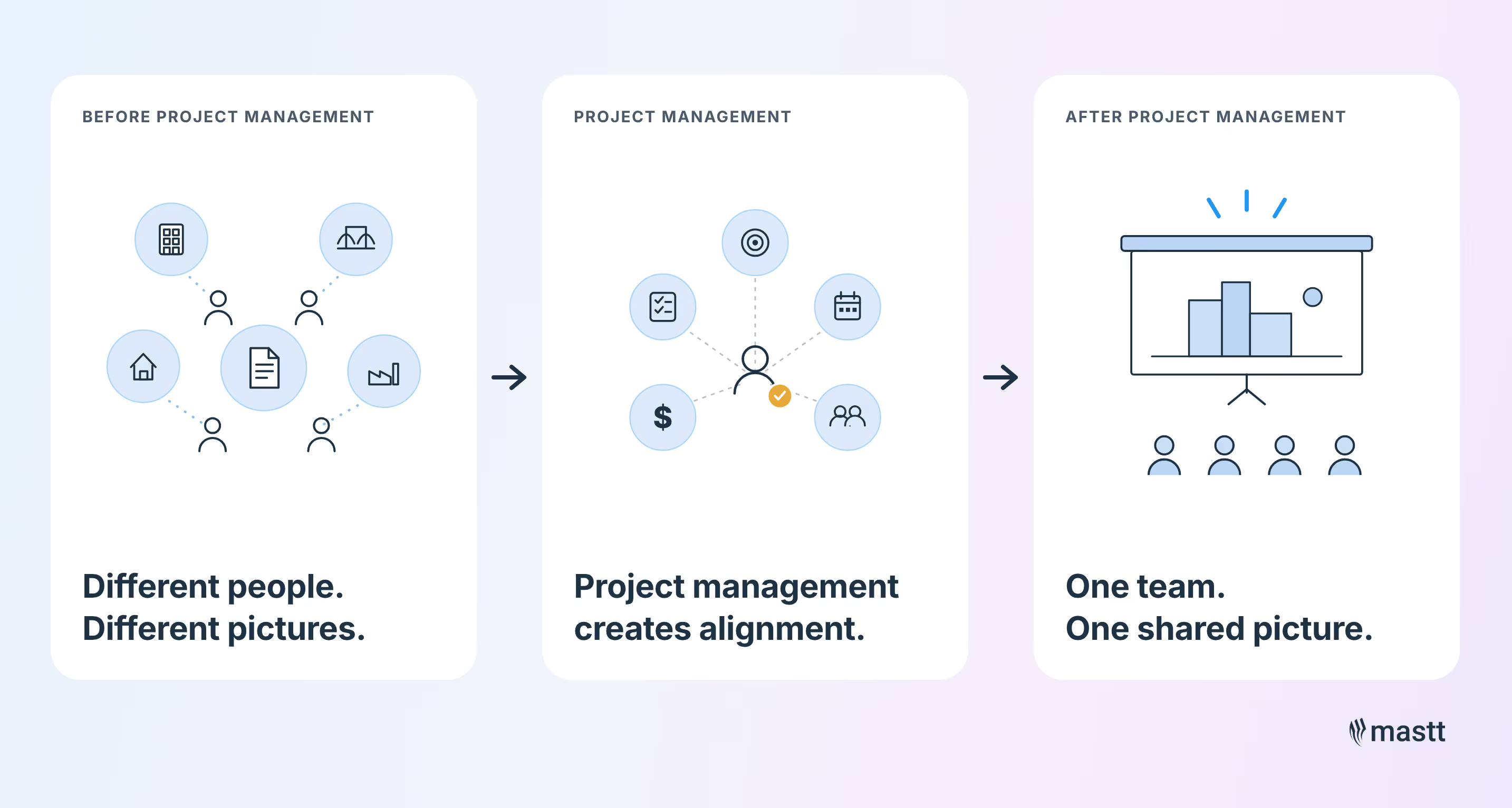
Every project exists as a mental picture before it exists in concrete form, and almost no two people's pictures match. Owners imagine one thing, designers another, builders another again. Lorne treats keeping those pictures aligned as the entire job of a client-side PM.
If I describe a project to a group of people, pretty much everyone in the room will have a different picture in their head of what that project's going to look like at the end. Our job as a project manager is to make sure that the picture becomes the same picture.
- Lorne McClurg
The picture is allowed to evolve, as long as everyone evolves with it. Lorne's job is to make sure everyone's picture changes together as decisions and setbacks land. A successful project ends with everyone agreeing that the end matches what they expected, even if it looks nothing like the original brief.
3. Project Governance Is Communication Plus a Clear Decision Matrix
Project governance is the system that lets a capital project move forward when problems arise. Lorne defines it as two things working in tandem. There must be communication that's transparent, timely, and easy to understand.
And there must be a decision matrix that, in writing, names who owns each call. If either is missing, problems pile up while the program slips.
Communication needs to be transparent, timely, easily understood, and backed by the ability for people to take responsibility and provide direction and decisions. If you've got good communication and a good decision-making matrix, that leads to good governance.
- Lorne McClurg
Governance breaks down when people aren't listened to and aren't given decisions or direction. They retreat into their corners, and problems sit instead of moving.
Lorne identifies public-sector and large-organization projects as the most vulnerable. They tend to have too many people consulted and not enough with the authority to decide.
4. Trust Breaks When Decisions Favor a Party Over the Project
The construction industry runs on commercial relationships, and capital projects only work when those relationships hold. Lorne's view is that they hold when everyone is making a fair margin and respects that the others need to as well.
When one party starts making decisions that serve their own interests at the project's expense, trust erodes. From there, everything else follows.
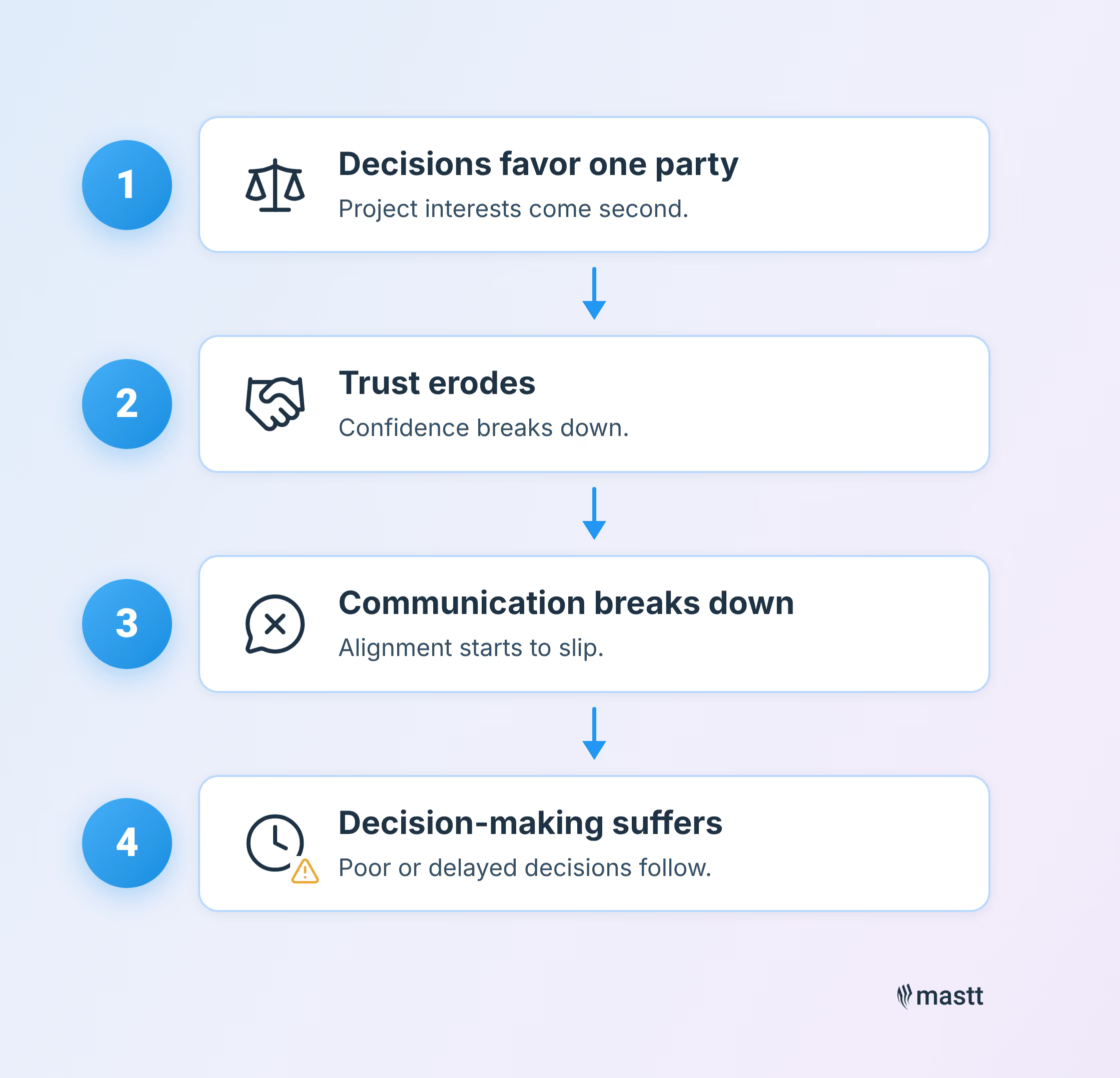
Trust is eroded because decisions aren't done in the best interest of the project, they're done in the best interest of a participant. We have breakdown trust issues, which then leads to breakdown in communication, which then leads to poor decision-making or unwieldy, untimely decision-making.
- Lorne McClurg
Lorne describes the cascade in order. Trust breaks down first, communication breaks down next, and then decision-making becomes poor or untimely.
He calls the construction industry notoriously adversarial, usually around money. The projects that go well are the ones where everyone is making a margin, and everyone respects that the others need to as well.
5. Software Captures Solutions, It Doesn't Solve Problems
Construction project management software is a fixture on capital projects, and Lorne thinks owners overestimate its capabilities. It's useful for recording decisions, transferring documents, and keeping a contractual paper trail. It doesn't make the decision happen, and it doesn't fix what's broken between the people on the project.
The software doesn't solve the problem. Software just captures the solution that everyone agreed to. It's a tracking tool. It's a document management tool.
- Lorne McClurg
Lorne is specific about what software should do. It should keep communication flowing and decisions moving, with firm rules on how the team uses it.
He sees most teams doing the opposite. They flood inboxes with documents and use the platform to cover themselves instead of solving problems.
6. The 80/20 Rule: Talk First, Writing Second
Project management is verbal work, but the industry has drifted from treating it that way. Many teams now default to email and calls for problem-solving that used to happen in a room.
Lorne argues big problems can't be solved this way. They still need people looking and pointing at the same thing at the same time.
Eighty percent of what we do as project managers should come out of our mouth. Twenty percent comes out of our fingertips. The fingertips really is just documenting to make sure we've got a contractual paper trail. The rest of it should come out of your mouth.
- Lorne McClurg
Lorne is specific about how big problems get solved on a construction site. Pick up the phone, arrange the meeting, and, where possible, get the team around a table in front of the problem.
The process of construction hasn't changed in thousands of years, and problems still get solved by people working through them together. The writing comes after, to document what was agreed.
7. Protect Your Contingency
Capital projects carry contingency because problems happen that nobody on the project can control. Lorne sees teams stripping that buffer to meet feasibility hurdles. The risk doesn't disappear when the contingency does. It just moves to a place where nothing can absorb it.
Too many times these days people strip out contingency and program. It's get it done faster, get it done tomorrow. It's like, yeah, but it's raining today. I can't do it tomorrow. I have to draw down on some contingency.
- Lorne McClurg
Australian capital projects are typically delivered through feasibility studies built on minimum cost and maximum return. That model creates the pressure to strip contingency from project planning.
Lorne is clear that time is money on a construction site. A program slip without contingency becomes a cost overrun. The project ends up paying for the buffer that wasn't there.

How Struggling Capital Projects Get Unstuck
Lorne's view is that very few projects stay stuck forever. They get through by humans working together to solve the problem and move it forward, and the owner has the biggest lever to make that happen.
The owner's job is to make sure they're not the obstacle. That means asking whether decisions are sitting with them and whether anyone else needs help moving past a problem.

Written by
Jackson Row
Jackson Row is the Growth & North American Market Lead at Mastt. With a background in risk modeling, cost forecasting, and integrated project delivery, he helps capital project owners work smarter and faster. Jackson’s work supports better tools, better data, and better outcomes across the construction industry.

Contributions by
Lorne McClurg
Lorne McClurg is the Director and co-founder of Moto Projects, an Adelaide-based independent project management consultancy with 25 years in client-side delivery. He specializes in contract superintendence, procurement strategy, and risk management, delivering projects across commercial, education, health, and public infrastructure in South Australia. Lorne contributes content on construction project delivery and risk management at Mastt.
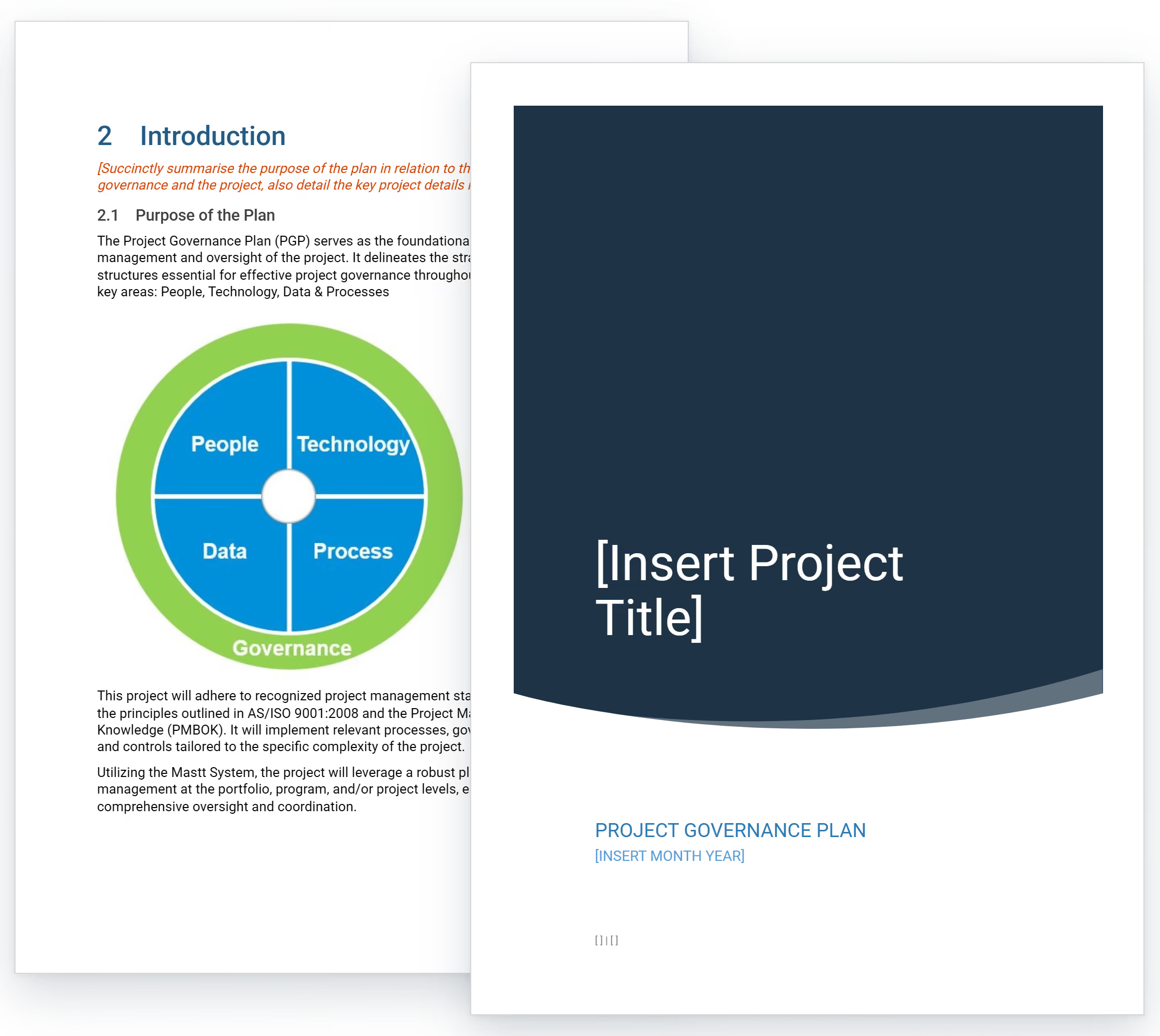
Project Governance Template
Use this FREE project governance template to establish decision authority and prevent scope disputes. Define approval hierarchies, escalation paths, and stakeholder roles before execution begins.

Walk Into Every Meeting With Confidence, Clarity, and Control
No one wants to look unprepared, blindsided, or uncertain in front of stakeholders — but that’s exactly what happens without Mastt.
Start for FreeTrusted by the bold, the brave, and the brilliant across governments, Fortune 500s, and the world’s best in delivering the future