

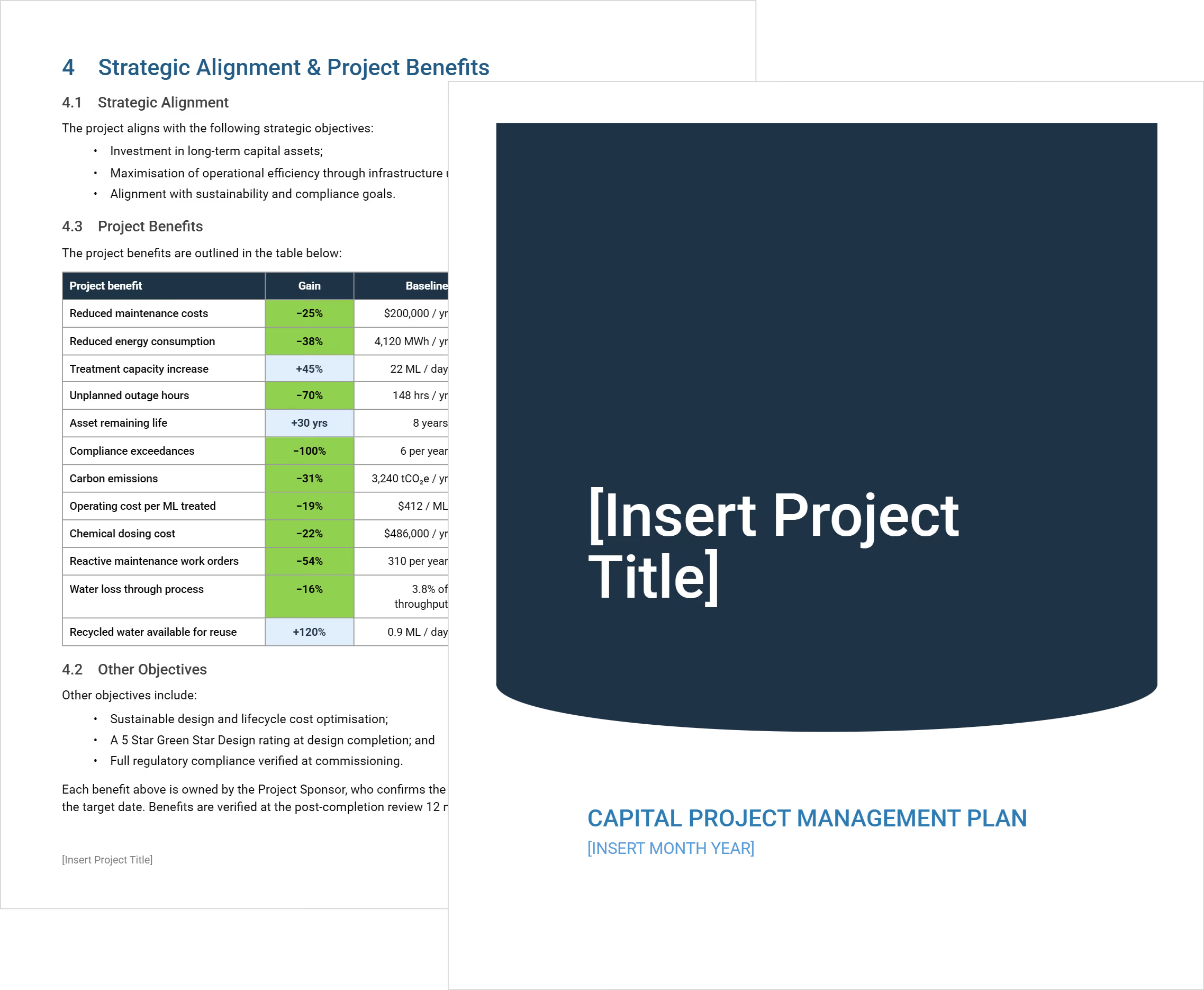

What is a Capital Project Management Plan?
A capital project management plan, shortened to CPMP, governs the delivery of a single capital project from funding approval through to asset handover. It records how capital expenditure will be controlled, who approves what, and what condition the asset must be in when it changes hands.
Capital projects answer to money that was approved somewhere else. A funding body allocated it, usually across several financial years, and usually after ranking this project above others that did not get funded. The plan is the document that proves that money is being spent the way it was approved. Where funding sits in a single budget under one sponsor, the standard project management plan is the lighter fit.
What's Included in This Capital Project Management Plan Template
Eighteen sections in Word, with guidance notes throughout and nine appendices for the supporting plans.
Appendices A to I carry the detail:
- Stakeholder register
- Stakeholder and communications plan
- Change management plan
- Schedule management plan
- Cost management plan
- Quality management plan
- Risk management plan
- Project risk register
- Procurement plan
Capital Project Management Plan Example
A regional water authority upgrading a treatment plant, completed using this template.
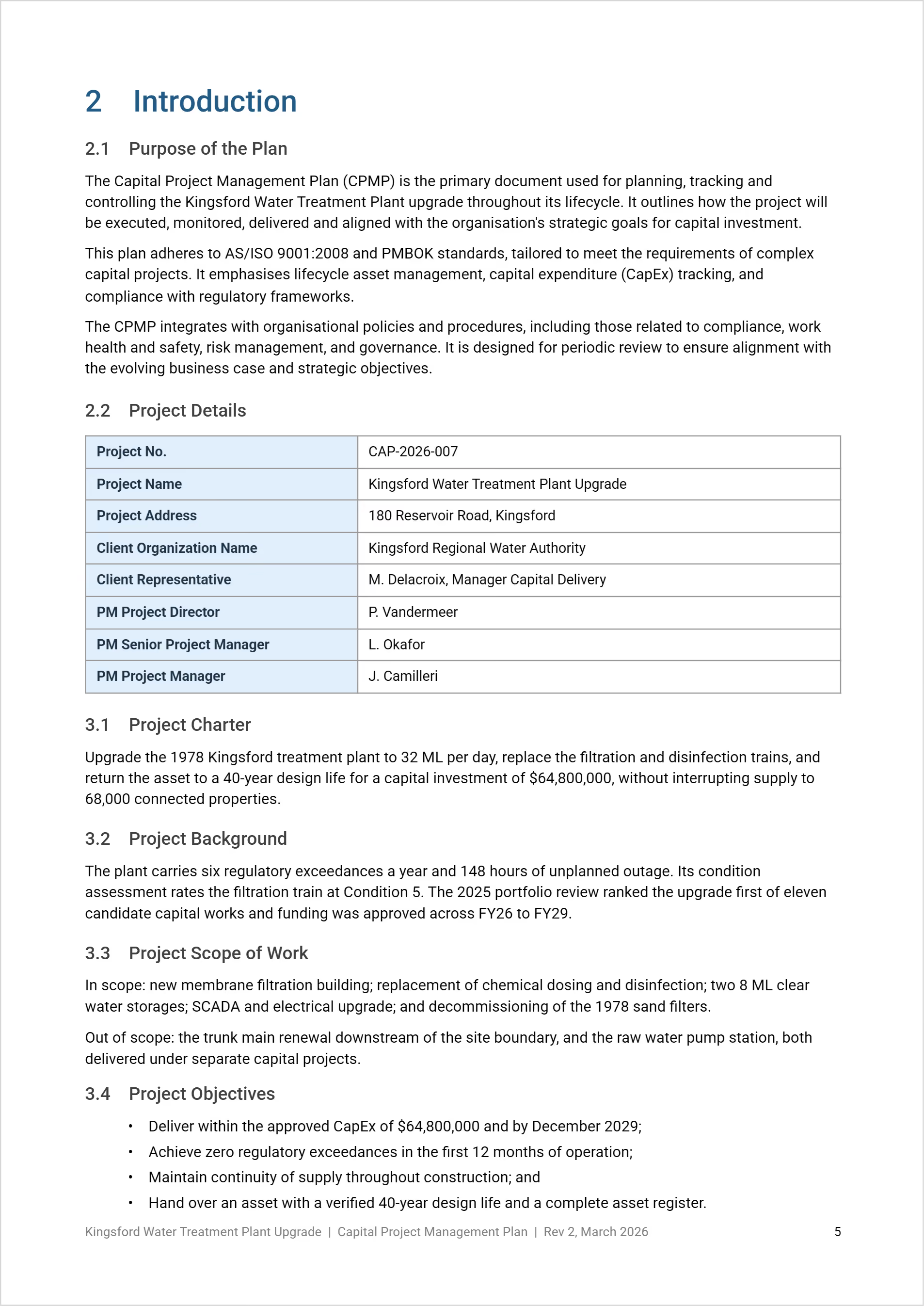
The background makes the case with asset condition, not opinion: six regulatory exceedances a year, 148 hours of unplanned outage, a filtration train rated Condition 5. Then the funding line, ranked first of eleven candidate capital works and approved across FY26 to FY29. Four years of committed allocation, and a position eleven projects competed for.
The objectives are what separate a capital plan. Two are delivery measures. Two are not: zero regulatory exceedances in the first year of operation, and a verified 40-year design life. Both get assessed after the project team has gone.
How to Write a Capital Project Management Plan Using This Template
Settle funding and classification first. Every other section inherits its level of detail from those two decisions.
- Name the funding source, the approved CapEx and the financial years it spans, before writing anything else.
- Set the project classification and record why that class applies.
- Write the charter as one sentence carrying the capital value, the asset outcome and the operating constraint.
- Build the background from condition data, portfolio ranking and the approval decision.
- Write objectives that survive handover, using design life, compliance and operating cost alongside time and budget.
- Split the CapEx estimate by design and construction, then profile cash flow across each financial year of the allocation.
- State which baseline changes need funding body approval and which the governance group can settle.
- Name adjacent capital projects delivering parts of the same asset, and where the boundary sits.
- Attach each supporting plan as an appendix once it is approved in its own right.
The cash flow, budget allocation and milestone tables go stale faster than anything else in the document, because they are snapshots of figures that move every month.
Teams reporting drawdown to a funding body between revisions keep those figures in capital project management software and let the plan point to the live position rather than restate it.
How Capital Funding Changes the Plan
Most of what makes this document different comes back to one thing: the money arrives with conditions attached.
- Funding is committed year by year. That is why the cash flow table runs by financial year. Underspend hurts too, because unspent allocation often gets reclaimed.
- Approval sits outside the project. Section 11.2 sends baseline changes to the governance group or funding body, so the plan must name which changes cross that line.
- CapEx is measured against approved funding, not the contract. The envelope also covers design fees, client-side costs and contingency.
- Your project sits in a queue. It was funded ahead of other candidates, and that ranking is the reference point if it slips.
- The asset outlives the project. Benefits are written as life cycle cost measures: design life, annual maintenance, avoided outage.
How to Classify a Capital Project and Set the Right Governance
Section 5.1 asks for a project classification and leaves Class 1, Class 2 and Class 3 blank. The thresholds belong to your organization, not the template. It is also the first real decision in the document, because classification determines how heavy everything after it becomes.
The class drives meeting frequency, reporting depth, approval limits, and how far a change travels before someone outside the project has to sign. Organizations usually set it on some combination of:
- Capital value. The most common trigger and the easiest to defend.
- Asset criticality. A modest upgrade to an essential asset can outrank a larger discretionary build.
- Funding source. Grant funding and public money normally force a higher class regardless of value.
- Regulatory exposure. Statutory approvals or license conditions attached to the work.
- Delivery complexity. Staged handover, multiple interfaces, or operations continuing throughout.
Write the reasoning into the plan rather than recording a number. Somebody reviewing the project in two years needs to know why Class 2 applied and what obligations came with it.
Common Mistakes in a Capital Project Management Plan
Capital plans fail in ways ordinary project plans do not. Almost all of them trace back to the funding relationship.
- Spend tracked against the construction contract. The approved envelope includes design, client-side costs and contingency, so contract-only tracking hides consumption.
- Cash flow shown as a single total. Funding is allocated year by year, and a lump sum tells the funding body nothing about drawdown.
- Underspend treated as good news. Unspent allocation is frequently reclaimed, and a project running under in FY27 may find FY28 reduced.
- Baseline changes approved internally. If the funding body has to sign and the plan does not say so, the approval will not hold.
- Benefits without a whole-of-life measure. Design life, annual maintenance cost and avoided outage are what the business case promised.
- Portfolio position left out. A project ranked first of eleven is judged differently from one that scraped in, and neither is obvious later.
- Boundaries with adjacent capital works left vague. When two funded projects deliver parts of one asset, each plan assumes the other covers the gap.

Written by
Jackson Row
Jackson Row joined Mastt's founding North American team in 2023, implementing the platform for US government agencies and Fortune 500 organizations. He holds a Bachelor of Engineering in civil and mining engineering from UNSW and began his career as a construction cadet on civil projects in Sydney. At Mastt, he contributes articles on payment and client-side project management.

FREE capital project management plan template in Word. Eighteen ready-to-edit sections built for CapEx control, funding governance, and asset handover.

Top Performers Don’t Guess. They Deliver.
Cut the stress of showing up unprepared
Start for FreeTrusted by the bold, the brave, and the brilliant to deliver the future