

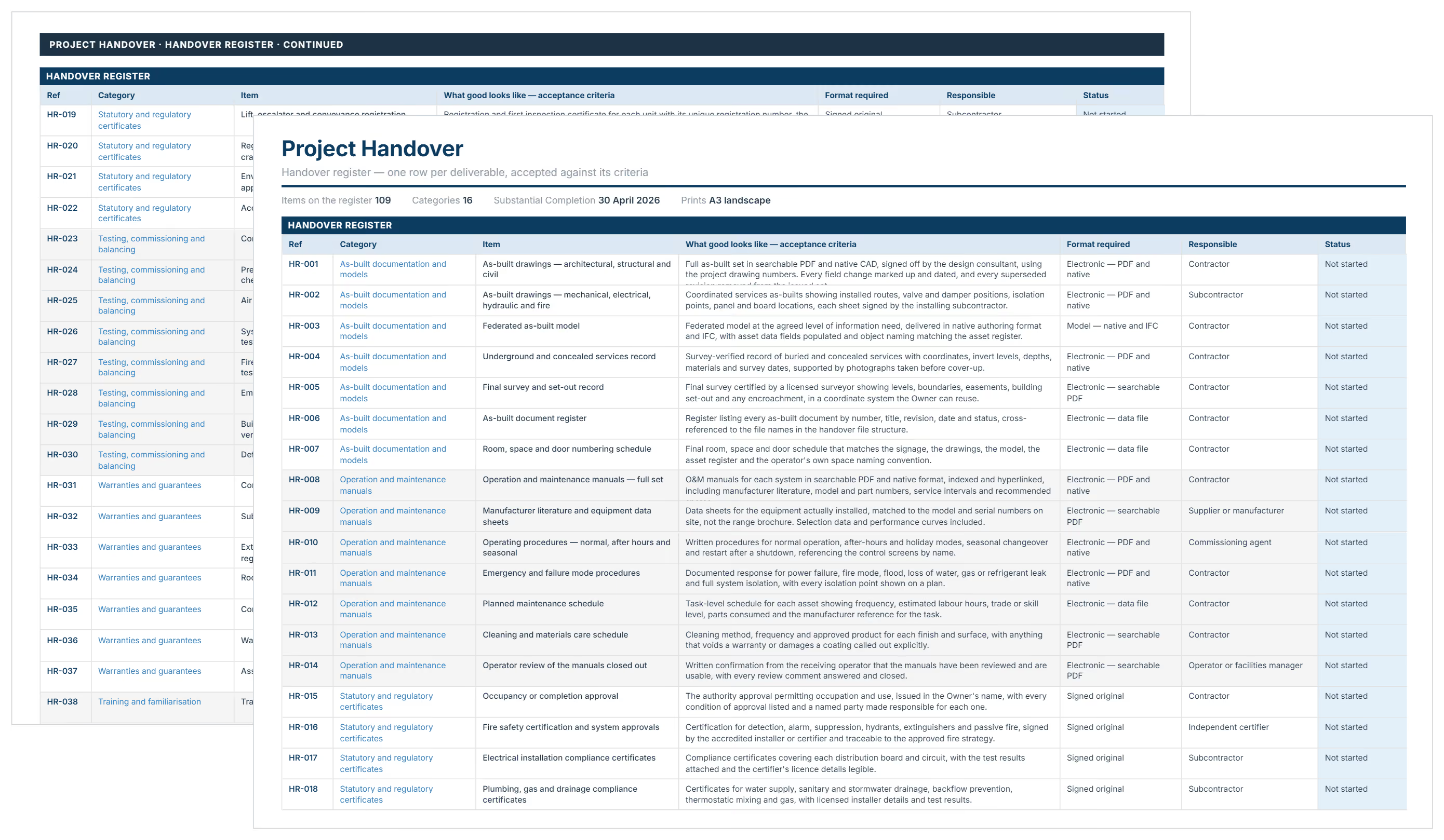

What is a Construction Project Handover Template?
A project handover template is a document framework for transferring project control and responsibilities between construction teams. It captures project status, deliverables, open tasks, and critical information needed for smooth transitions.
Project managers use handover templates to transfer knowledge when leaving projects mid-stream. Contractors rely on them when delivering completed buildings to owners. The handover process ensures continuity when responsibilities change hands.
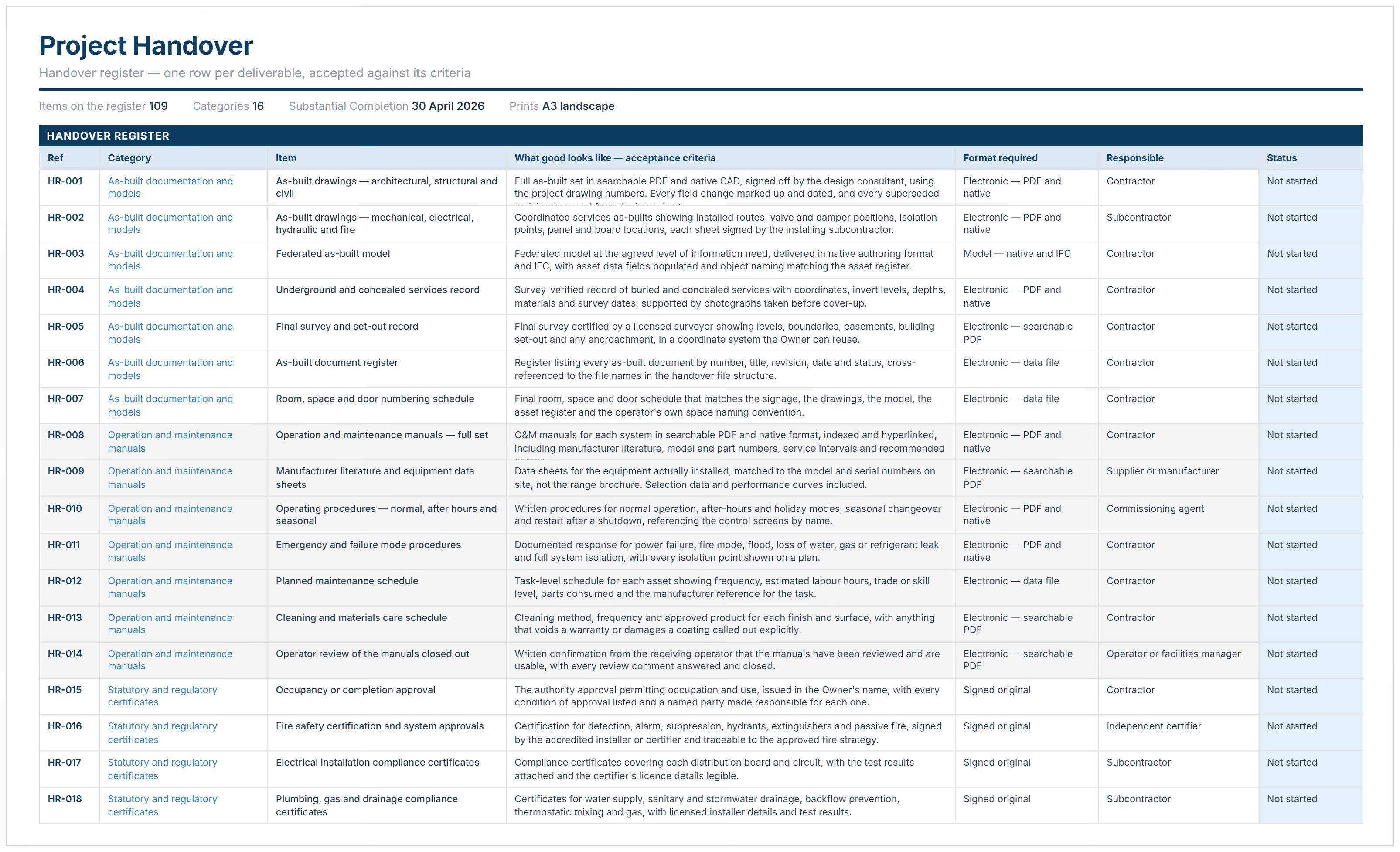
Construction project handover templates organize as-built drawings, O&M manuals, warranties, and permits. They track punch list items and defects liability periods.
What's Included in a Capital Project Handover Template?
Construction handover documentation contains critical fields required for complete knowledge transfer and smooth responsibility transition to receiving teams.
Core components included in handover templates:
- Project Overview: Contract details, scope summary, delivery method, and completion status for context.
- Key Stakeholders: Contact list for owner representatives, project team members, consultants, and vendors.
- Deliverables Status: Completion tracking for design documents, construction drawings, permits, and final submittals.
- Outstanding Tasks: Open punch list items, pending approvals, unresolved RFIs, and change order requests requiring resolution.
- Financial Summary: Budget vs actual costs, approved change orders, retention amounts, and final payment status.
- Critical Documentation: As-built drawings, O&M manuals, warranties, certificates of occupancy, and lien waivers.
- Compliance Records: OSHA safety documentation, International Building Code approvals, permits, and regulatory inspections completed.
- Risk Register: Active risks, mitigation strategies, and issues requiring attention from the receiving team.
- Lessons Learned: Project insights, what worked well, challenges encountered, and recommendations for future work.
💡 Pro Tip: Separate handover documents by audience. Give owners building-specific details like warranties and O&M manuals. Give incoming PMs project management files like budgets and schedules.
Why Use a Handover Template for Project Transitions?
A handover template for project transitions prevents knowledge loss and ensures continuity when responsibilities transfer between construction teams.
Templates improve project outcomes because:
- Eliminates knowledge gaps: Documents critical decisions, vendor relationships, and project history enabling smooth transitions without information loss.
- Accelerates onboarding: New project managers get complete context within days instead of months piecing information together.
- Reduces miscommunication: Clear responsibility assignments prevent confusion about who maintains systems or manages vendor contracts.
- Protects legal interests: Complete closeout documentation supports warranty enforcement and final payment processing for seamless project closure.
- Improves stakeholder confidence: Professional handover processes demonstrate competence and reduce client concerns about personnel transitions.
- Prevents payment delays: Organized final submittals and closeout documents enable faster retainage release for contractors.
- Supports facility operations: Operations teams receive training documentation, maintenance schedules, and vendor contacts for successful handovers.
- Ensures compliance tracking: Documents regulatory approvals, safety certifications, and permit conditions requiring ongoing monitoring.
Professional handoff documentation transforms what's typically a chaotic transition into a controlled knowledge transfer. The receiving team gains immediate access to project intelligence instead of discovering critical details through trial and error.
How to Complete a Construction Handover Template
Completing project handover template effectively requires gathering project data and organizing it for the incoming team's needs.
Follow this project handoff process to build comprehensive documentation:
- Compile project overview: Document contract type, project delivery method, original scope, approved changes, and final completion status.
- Map stakeholder relationships: List all owner contacts, design team members, contractors, consultants, and key vendors with communication preferences.
- Update deliverables tracking: Confirm completion status for design documents, construction drawings, specifications, permits, and regulatory approvals.
- Document outstanding items: Detail every open punch list task, pending change order, unresolved RFI, and incomplete submittal requiring attention.
- Summarize financial status: Report approved budget, actual costs, change order impacts, retention held, and final payment requirements.
- Organize closeout documentation: Collect as-built drawings, O&M manuals, warranty certificates, test reports, and commissioning documentation.
- Transfer knowledge: Capture lessons learned, vendor performance notes, site-specific challenges following PMI best practices for knowledge management.
- Schedule handover meetings: Arrange face-to-face sessions with incoming teams to walk through documents and introduce stakeholders.
- Confirm information accuracy: Verify all contact details, financial figures, and completion dates before finalizing the document.
- Archive project records: Store complete project files in accessible locations and document where future teams find historical information.
💡 Pro Tip: Record a 15-minute video walkthrough explaining project quirks, stakeholder personalities, and unwritten protocols. New PMs understand nuances that written documents can't capture.
Who Should Use a Project Handoff Template?
Project handoff templates serve anyone responsible for transferring or receiving project responsibilities during construction delivery.
✅ Project Managers: Transfer complete project knowledge when transitioning to new assignments or during unexpected personnel changes.
✅ General Contractors: Document final deliverables, warranties, and O&M manuals when handing over completed facilities to owners per AGC standards.
✅ Client-Side Project Managers: Receive comprehensive project documentation from contractors and coordinate transition to operations teams.
✅ Operations and Facility Management Teams: Inherit building systems documentation, maintenance schedules, and vendor contracts at substantial completion following IFMA and BOMA operational guidelines.
✅ Construction Managers: Oversee contractor-to-owner transitions per CMAA practices. Ensure complete closeout documentation before final payment release.
✅ Program Managers: Standardize handover processes across multiple projects. Maintain consistent quality and reduce organizational risk.
✅ Project Owners and Developers: Formally accept project deliverables. Establish clear accountability for ongoing building management and warranty enforcement.
When to Deploy a Project Transition Template
Deploy a project handover template whenever control, responsibilities, or operational ownership changes hands during construction delivery.
Critical timing for handover documentation includes:
- Mid-project PM transitions: When project managers leave organizations or move to different assignments before project completion.
- Substantial completion: When contractors finish work and buildings become ready for occupancy despite minor punch list items remaining.
- Operations turnover: When facility management teams assume responsibility for building systems, maintenance, and vendor relationships.
- Contract closeout: When final payments, retention release, and lien waivers require complete submittal documentation.
- Defects liability commencement: When warranty periods begin and contractors' obligations shift from construction to defect rectification.
- Consultant transitions: When design teams complete their roles and transfer project oversight to construction administrators.
- Temporary project coverage: When PMs take leave and colleagues need comprehensive briefings to manage projects during absences.
- Multi-phase project handoffs: When early phases complete and separate teams inherit responsibility for subsequent construction packages.
💡 Pro Tip: Use our construction project handover checklist to prevent missing critical closeout items. Track as-built drawings, warranties, and O&M manuals systematically to secure final payment faster and avoid acceptance delays.
Best Practices for Effective Project Handovers
Successful handovers require more than just documentation. Apply these field-tested strategies to ensure seamless transitions.
☑️ Schedule handover meetings early: Block time with incoming teams at least two weeks before transitions. Allow proper knowledge transfer.
☑️ Introduce stakeholders personally: Arrange calls or site meetings. Let outgoing PMs introduce successors to owners, consultants, and key vendors.
☑️ Provide system training: Walk operations teams through building systems. Demonstrate equipment operation and explain maintenance requirements hands-on.
☑️ Clarify warranty procedures: Document exact processes for warranty requests. Include vendor contacts, required documentation, and response timeframes.
☑️ Follow contract documentation standards: Use AIA or ConsensusDocs closeout requirements as guides. Ensure all contractual handover obligations are met.
☑️ Document tribal knowledge: Record unwritten site protocols, stakeholder preferences, and vendor quirks. Capture relationship nuances that impact project success.
☑️ Create decision logs: Maintain records explaining why specific approaches were chosen. Prevent successors from revisiting settled decisions.
☑️ Establish communication protocols: Define how incoming teams escalate issues. Clarify when to involve outgoing PMs and who owns different responsibilities.
☑️ Verify information access: Confirm new teams can open project files. Check access to document management systems and historical records.
Common Challenges with Generic Project Handover Templates in Word and Excel
Generic handover templates downloaded online or built manually create more problems than they solve. Free templates lack construction project depth.
Typical problems include:
⚠️ Missing project-specific sections: Generic templates omit fields for change orders and retention tracking. Critical construction closeout documentation gets overlooked.
⚠️ Outdated information persists: Static Word documents don't update automatically. Excel spreadsheets become stale when project conditions change during transitions.
⚠️ Inconsistent completion: Teams skip sections in downloadable templates because they're not mandatory. Successors receive incomplete information.
⚠️ Version control chaos: Multiple team members edit Word files simultaneously. Conflicting versions emerge with no indication which is current.
⚠️ Lost in email chains: Excel handover templates get buried in inbox threads. They don't live in accessible project management systems.
⚠️ Format incompatibility: Free templates built for residential projects don't translate to commercial construction. Building systems and O&M requirements demand different approaches.
⚠️ Inadequate stakeholder tracking: Generic templates provide simple contact lists without relationship history. Communication preferences and organizational decision authority go undocumented.
⚠️ Missing knowledge transfer: Online templates focus on task lists and status reports. They ignore lessons learned, vendor performance, and project insights.
💡 Pro Tip: Treat downloadable project handover templates as starting outlines only. Always customize sections based on your contract type, delivery method, and owner's specific closeout requirements.

Written by
Jackson Row
Jackson Row is the Growth & North American Market Lead at Mastt. With a background in risk modeling, cost forecasting, and integrated project delivery, he helps capital project owners work smarter and faster. Jackson’s work supports better tools, better data, and better outcomes across the construction industry.

Use this construction project handover template to transfer project responsibilities between teams with complete documentation, stakeholder contacts, and deliverables tracking for seamless transitions.

Top Performers Don’t Guess. They Deliver.
Cut the stress of showing up unprepared
Start for FreeTrusted by the bold, the brave, and the brilliant to deliver the future