



A bill of quantities (BoQ) is a document that lists and measures the work included in a construction project. It gives every bidder the same scope and quantities to price, helping owners compare bids and spot gaps before awarding the contract.
This guide explains what a BoQ includes, who prepares it, and how to create and price one. You’ll also see a practical example and learn how teams use the BoQ to measure progress and value change orders.
What Is a Bill of Quantities in Construction?
A bill of quantities (BoQ) is a structured document that breaks a construction project into measurable work items. Each item has a clear description, unit of measurement, and quantity measured from the drawings and specifications.
During construction bidding, the project team issues an unpriced BoQ. Each bidder adds unit rates and line totals, creating a breakdown of the total bid price.
Once incorporated into the contract, the priced BoQ records the work, quantities, and rates the contractor priced. Depending on the contract terms, it can also support the valuation of completed work and change orders.

Why Is a BoQ Used in Construction?
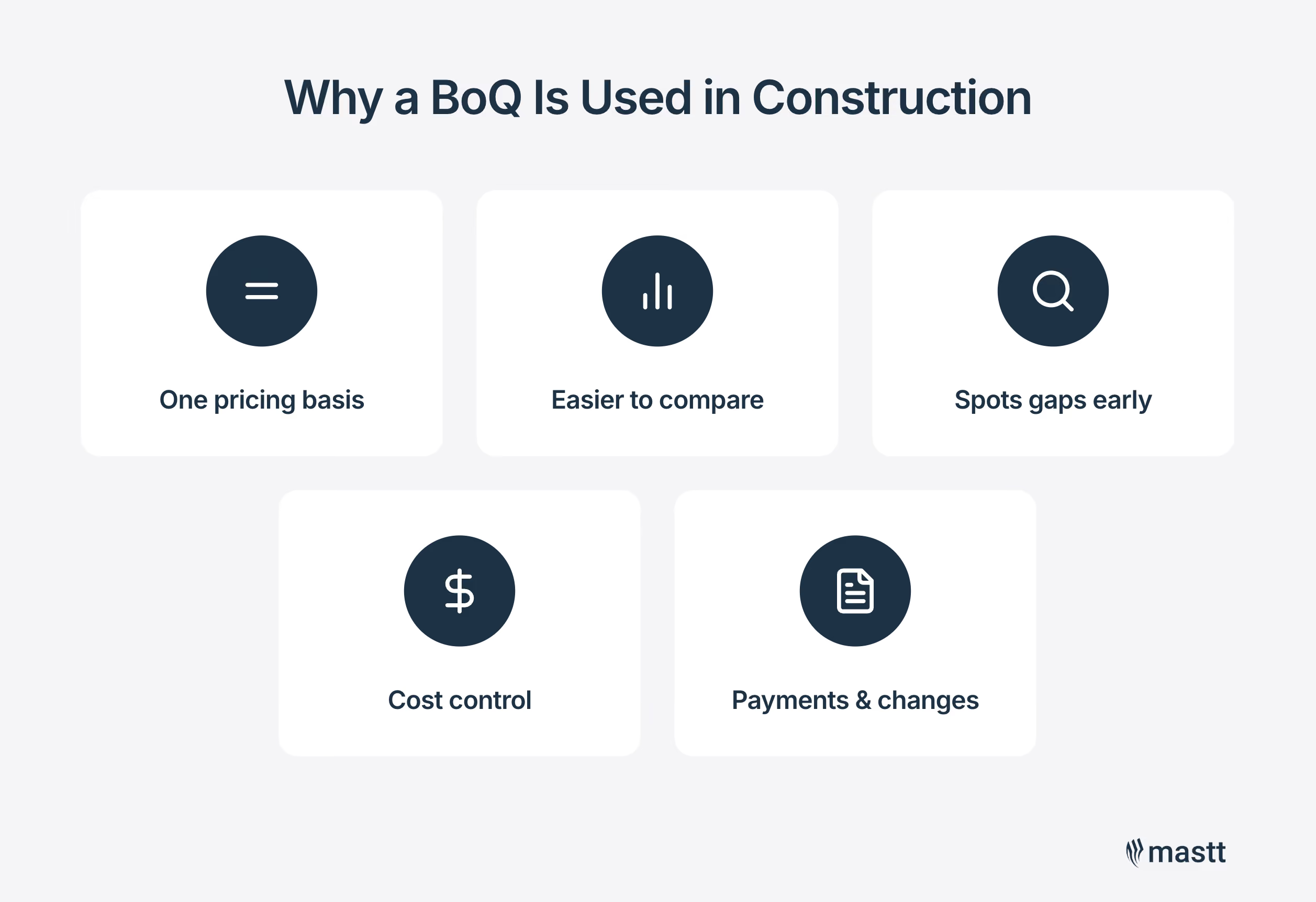
A BoQ gives the owner and bidders one pricing structure for the defined work. It makes bid comparison more consistent and can provide agreed-upon rates for payments and change orders after award.
- Creates a common pricing basis: Each bidder prices the same descriptions, units, and quantities, which reduces differences caused by separate quantity takeoffs.
- Makes bids easier to compare: The owner can compare unit rates, line totals, exclusions, and qualifications across each bid.
- Reveals scope and pricing gaps: Detailed line items make missing work, duplicate items, zero rates, and unusual prices easier to spot before award.
- Supports cost control: A priced BoQ gives the project team a detailed cost breakdown for budgets, cash flow forecasts, and cost reports.
- Provides a basis for payments and changes: The project team can use agreed quantities and rates to value completed work and change orders, subject to the contract terms.
A BoQ only works as well as the information behind it. Incomplete construction drawings, vague descriptions, or outdated quantities can make bids look comparable even when bidders used different assumptions.
💡 Pro Tip: Lock the descriptions, units, quantities, and formulas in the bid workbook. Leave only the rate and approved qualification fields open. Require bidders to explain every blank or zero rate to reduce hidden exclusions and speed up bid leveling.
What Are the Main Types of BoQ?
A BoQ usually uses either firm quantities or approximate quantities, based on how complete the design and quantities are. Elemental and trade bills describe how the work is grouped, so either can contain firm or approximate quantities.
The table shows how each type and format works:
Some construction projects also issue a guaranteed BoQ. This means the contractor can rely on the stated quantities to the extent defined in the contract. Not every firm's BoQ carries this guarantee.
In my view, the best approach is to appoint the best consultant in each discipline, complete a fully documented and peer-reviewed design, and then produce a guaranteed BoQ for the contractor to build from. It costs substantially more during design, but the savings come through less time for the builder and a lower risk and cost of variations (change orders) during construction.
What Does a BoQ Include?
A BoQ outlines project-wide requirements, measured work, allowances, and pricing totals in one document. Its exact layout depends on the contract and measurement rules, but each part should tell bidders what to price and how to record it.
A BoQ typically includes the following information and pricing sections:
- General requirements or preliminaries: These cover project-wide contractor duties and costs, such as site supervision, temporary facilities, testing, insurance, and permits where the contractor is responsible.
- Measured work items: These divide the work into clear sections, such as concrete, masonry, finishes, plumbing, and electrical work.
- Item descriptions: Each line defines the work, material, or system, location, and other details that may affect pricing.
- Units and quantities: The BoQ states how each item is measured, such as linear feet, square feet, cubic yards, pounds, or each.
- Provisional sums: These set aside money for expected work that cannot yet be fully designed, described, or measured. The contract should explain how the amount will be adjusted.
- Material or product allowances: Called prime cost sums in some measurement standards, these cover the supply-only cost of products whose exact type or quality is unknown. Installation labor, equipment, ancillary materials, overhead, and profit are priced separately unless the contract states otherwise.
- Unit prices and line totals: In an unpriced BoQ, bidders enter a unit price and multiply it by the quantity. A priced BoQ records the resulting line total.
- Daywork or time-and-material rates: When required, this schedule records labor, material, and equipment rates for authorized work that cannot be valued through standard measured items.
- Bid summary: This brings the section totals together and may include allowances, taxes, alternates, overhead, profit, and other adjustments required by the bidding rules.
Some BoQs include extra sections for contractor-designed work, risks, credits, or supporting documents. Every section should reference the same drawing and specification revisions used in the bid package. Otherwise, a well-formatted BoQ can still price the wrong scope.
Bill of Quantities Example
The BoQ example below shows a simplified BoQ for cast-in-place concrete work on a small commercial project. The quantities and unit prices are illustrative. Actual rates depend on location, specifications, labor costs, site conditions, and market prices.
Who Prepares a BoQ?
A quantity surveyor or cost consultant usually prepares the BoQ for an owner-led bid. On design-build or contractor-led projects, a contractor’s estimator or trade subcontractors may measure the work instead.
Responsibility changes with the project delivery method:
- A quantity surveyor or cost consultant prepares the measured quantities, item descriptions, and BoQ structure from the project documents.
- A contractor’s estimator may prepare or complete the BoQ when the contractor controls pricing, particularly on design-build projects.
- Trade subcontractors measure and price specialist packages such as concrete, structural steel, plumbing, and electrical work.
- Architects and engineers provide technical design information and may prepare or review specialist sections within their scope.
- The owner’s project team sets the pricing requirements, issues the current bid documents, and checks that the BoQ covers the intended scope.
The appointment documents should name both the BoQ preparer and reviewer. They should also identify who resolves quantity questions and approves the document before bidding.
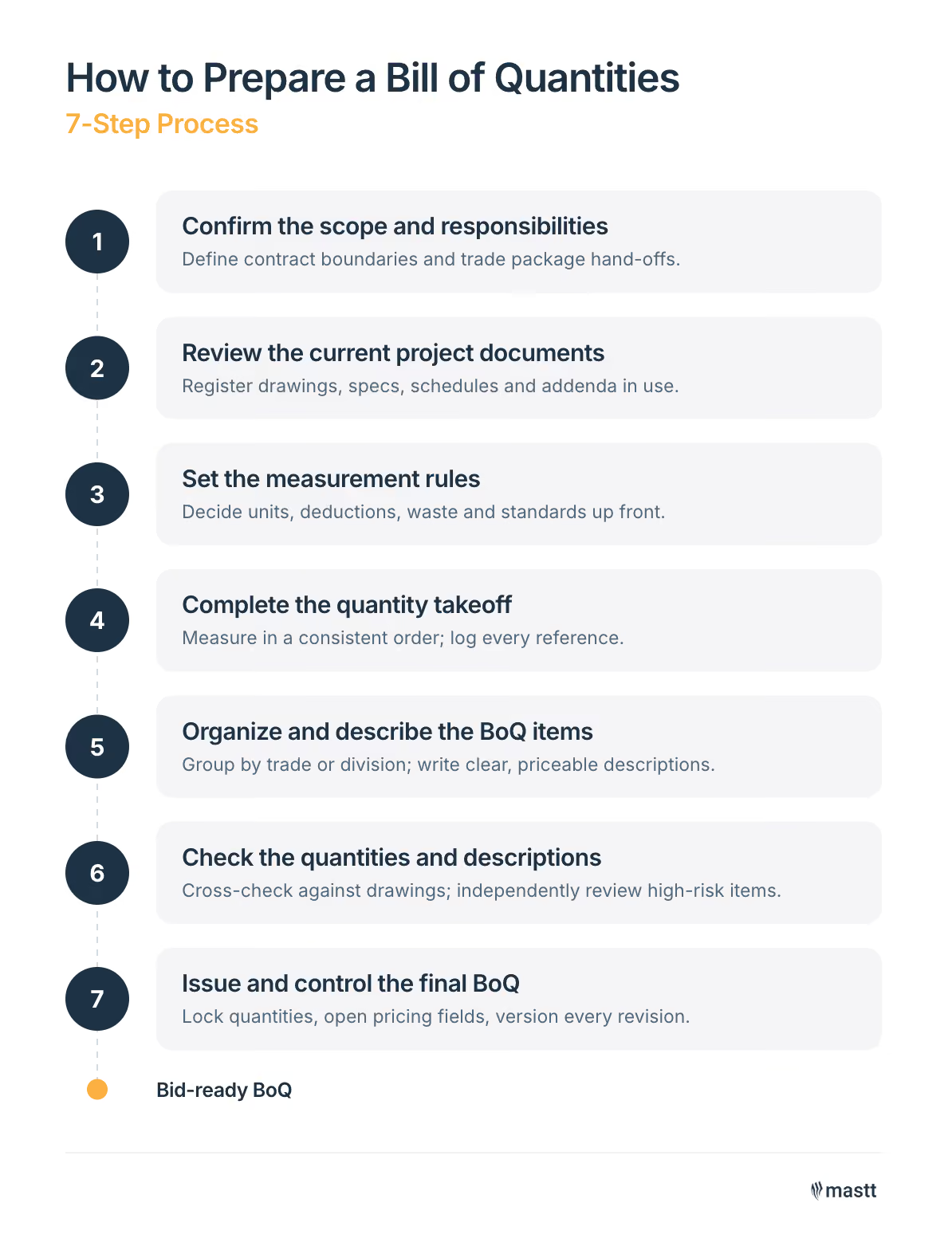
How to Prepare a Bill of Quantities: 7 Step Process
Prepare a BoQ by defining the pricing scope, setting measurement rules, and measuring the latest bidding documents. Then organize those quantities into clear work items that every bidder can price on the same basis.
Step 1: Confirm the scope and responsibilities
Start by defining the boundaries of the contract and each bid package. Create a scope matrix that assigns responsibility for design, supply, installation, testing, and commissioning.
Check where trade packages meet. Pay close attention to owner-furnished products, contractor-supplied equipment, and work shared between subcontractors. Clear boundaries prevent missing scope and duplicated quantities.
Step 2: Review the current project documents
Create a register of the drawings, specifications, schedules, and addenda used for the BoQ. Record each document’s number, revision, date, and bidding status. Remove superseded files so estimators do not measure an outdated design.
Link each takeoff calculation to its source drawing, detail, and specification section. When documents conflict, record the issue and seek clarification through the project’s pre-bid question process.
Step 3: Set the measurement rules
Decide how each type of work will be measured before starting the takeoff. US projects commonly measure concrete in cubic yards, pipe in linear feet, finishes in square feet, reinforcing steel in pounds, and fixtures by each.
State how openings, laps, fittings, accessories, and temporary work will be treated. Also, explain whether quantities are net and where bidders should account for waste.
Follow any measurement standard named in the bidding documents. If none is specified, include project-specific rules in the BoQ preamble. CSI MasterFormat can organize the work, but it does not define how quantities must be measured.
Step 4: Complete the quantity takeoff
Measure the project in a consistent order, such as by building, floor, zone, and trade. This sequence makes it easier to track completed areas and avoid measuring the same location twice.
Record the dimensions, deductions, formulas, and drawing references behind each quantity. Separate related components when different crews, materials, or unit rates apply. A concrete footing may need individual items for concrete, reinforcing steel, formwork, excavation, and backfill.
For example, the net volume of a 5,000-square-foot slab that is 5 inches thick would be:
5,000 SF × (5 inches ÷ 12) ÷ 27 = 77.2 CY
Any waste allowance should follow the measurement and pricing rules stated in the bidding documents.
Step 5: Organize and describe the BoQ items
Arrange the measured work by trade, bid package, or MasterFormat division. Assign a consistent item code to each line. The same codes can support bid comparisons, payment records, and change orders later.
Write descriptions that tell bidders exactly what their rates must cover. Include the material, size, location, finish, and related work where those details affect pricing. For example:
Furnish and place 4,000 psi, 5-inch slab-on-grade with hard-trowel finish, including pumping and curing.
Separate items when differences in strength, thickness, finish, location, or working conditions could change the unit rate. Place work that cannot yet be measured into a clearly defined allowance instead of hiding it within another item.
Step 6: Check the quantities and descriptions
First, compare the BoQ against every drawing and specification section to find missing or duplicated scope. Then have an independent reviewer recalculate high-value or high-risk quantities.
Check that each quantity matches its description and unit. Test the formulas, allowances, item codes, section totals, and bid summary. A correct quantity assigned to the wrong item can still produce an inaccurate bid.
Step 7: Issue and control the final BoQ
Issue the unpriced BoQ with the same drawings, specifications, schedules, and addenda used for measurement. Add a revision number and issue date so bidders can confirm they have the current version.
Protect the descriptions, units, quantities, and formulas while leaving the pricing fields open. Ask bidders to record exclusions, assumptions, or proposed quantity changes in a separate qualifications schedule.
When the design changes, issue a formal addendum. Identify the affected item, previous quantity, revised quantity, reason for the change, and source document.
Use Mastt’s free bill of quantities template to organize item descriptions, units, quantities, rates, and line totals.
💡 Pro Tip: Create control quantities before completing the detailed takeoff. Compare slab volume with floor area multiplied by thickness, or reconcile door quantities against the door schedule. A large difference can reveal a missed floor, duplicated zone, or incorrect unit before bidders price the work.
How Contractors Price a Bill of Quantities
A contractor prices a BoQ by calculating a unit rate for each work item and multiplying it by the stated quantity. The resulting line totals, allowances, and required adjustments form the total bid price. Understanding this process helps owners identify exclusions, inconsistent markups, and unusual rates.
Step 1: Confirm what the unit rate covers
Read each item description with the drawings, specifications, BoQ preamble, and bidding instructions. These documents establish the work and costs that the unit rate must include.
Check responsibility for waste, freight, unloading, storage, accessories, testing, and temporary work. Submit a pre-bid question when the requirements conflict or remain unclear. Written clarification prevents different bidders from pricing different assumptions.
Step 2: Calculate the direct unit cost
Use supplier and subcontractor quotes that match the specified products, quantities, delivery location, and construction schedule. Compare quotes using the same scope, freight terms, tax basis, and validity date.
Calculate labor using the crew cost and expected production for the same period:
Crew cost per day ÷ units installed per day = labor cost per unit
Calculate equipment from the required operating time, rental or ownership rate, fuel, and mobilization. Include operator costs under labor or equipment, but not both.
The direct unit cost combines these components:
Materials + labor + equipment + subcontractor costs + other direct costs = direct unit cost
Adjust expected production for site access, occupied areas, limited work hours, weather exposure, and material-handling constraints.
Step 3: Add the required markups
Add overhead, profit, bonds, escalation, taxes, and risk allowances as required by the bidding instructions. Some projects require these costs within each unit rate. Others show them as separate lines in the bid summary.
Record each markup and where it was applied. This prevents double-counting and creates a clear pricing record for bid review and future change orders.
Step 4: Enter and review the unit rates
Enter the completed rate beside each BoQ item. Multiply the rate by the stated quantity to calculate the line total. Add the line totals, lump-sum items, allowances, and required adjustments to determine the total bid.
Reconcile the completed BoQ with the contractor’s detailed estimate. Review blank, zero, duplicated, and unusually low rates before submission. A missing or misplaced cost can create a loss when quantities change or work is remeasured.
During bid evaluation, owners should compare individual rates as well as total prices. A rate that differs widely from competing bids may indicate a scope misunderstanding, a cost included elsewhere, or strategic pricing. Seek written clarification where the procurement rules permit it.

Common BoQ Mistakes and How to Fix Them
Most BoQ errors come from incorrect quantities, unclear scope, or poor document control. Fixing them requires traceable measurements, consistent rules, and a controlled review before the BoQ reaches bidders.
The table below shows common BoQ mistakes that can distort bid pricing and the practical control for correcting each one.
💡 Pro Tip: Create a reconciliation sheet that links every drawing and specification section to at least one BoQ item or documented exclusion. Any blank entry identifies scope that needs review before bidders price the work.
How Project Owners Use the BoQ After Contract Award
Owners use the priced BoQ as an active cost baseline after contract award. Its detailed descriptions, verified quantities, and agreed unit rates provide a clear reference for reviewing payments and managing changes throughout the project.
Project owners use the BoQ in the following areas:
- Progress reporting: The original quantities provide a baseline for comparing completed work with the remaining scope by trade, location, or work item.
- Payment assessment: Accepted quantities and contract rates establish payment for unit-price work. On lump-sum projects, the BoQ helps test claimed percentages against actual progress.
- Change control: Original quantities, descriptions, and rates provide a reference for pricing added or omitted work. Different conditions may require a new or adjusted rate.
- Allowance tracking: The BoQ records the original allowance, approved selection, and final cost. The difference can then be handled under the contract’s adjustment rules.
- Cost and cash-flow forecasting: Revised quantities and approved changes help predict the final contract amount. When linked to the schedule, they also support forecasts of upcoming payments.
- Contract closeout: Final quantities determine the value of remeasured work. Lump-sum closeout focuses on approved changes, previous payments, retainage, and the remaining contract balance.
A controlled quantity ledger keeps the original BoQ separate from approved changes and completed work. This preserves the pricing history and gives the owner a clear audit trail from the first payment application through final payment.
How Is a BoQ Different From Other Cost Documents?
A BoQ combines measured work items with fields for bidders to enter rates and totals. Other cost documents support budgeting, purchasing, unit pricing, or progress billing.
The table shows the main difference between each document:
These documents are not interchangeable. The contract should state which documents form part of the agreement and how each one supports pricing or payment. Under a lump-sum contract, for example, the schedule of values commonly provides the billing breakdown rather than changing the agreed contract price.
Reliable Pricing Depends on a Clear BoQ
A useful BoQ leaves little room for pricing assumptions. Every item should trace back to the current design, use a consistent measurement unit, and clearly define the work bidders must price. Start with the free bill of quantities template and adapt it to your project scope, bid packages, and contract requirements.

Written by
Gordon Grover
Gordon Grover is Managing Director of Specialised Property Consulting, a Toowoomba-based firm delivering project, development, and superintendency services across Queensland. A QBCC-licensed Builder Project Manager, he has delivered projects from $20 million regional health clinics to the $235 million InterLinkSQ freight terminal, and founded the health-infrastructure advisory Specialised Health Advisory. He contributes content on capital planning and project delivery at Mastt.

.avif)
Contributions by
Doug Vincent
Doug Vincent is the co-founder and CEO of Mastt, the AI capital-project management platform used by governments, Fortune 500 companies, and consultancies across APAC, North America, and MENA. Before founding Mastt in 2019, he spent a decade at RPS delivering more than $2 billion in capital works, including the $2.1B Defence Navy Infrastructure program, and holds a CPSPM certification with the AIPM. He contributes content and speaks on AI in capital project delivery at Mastt.
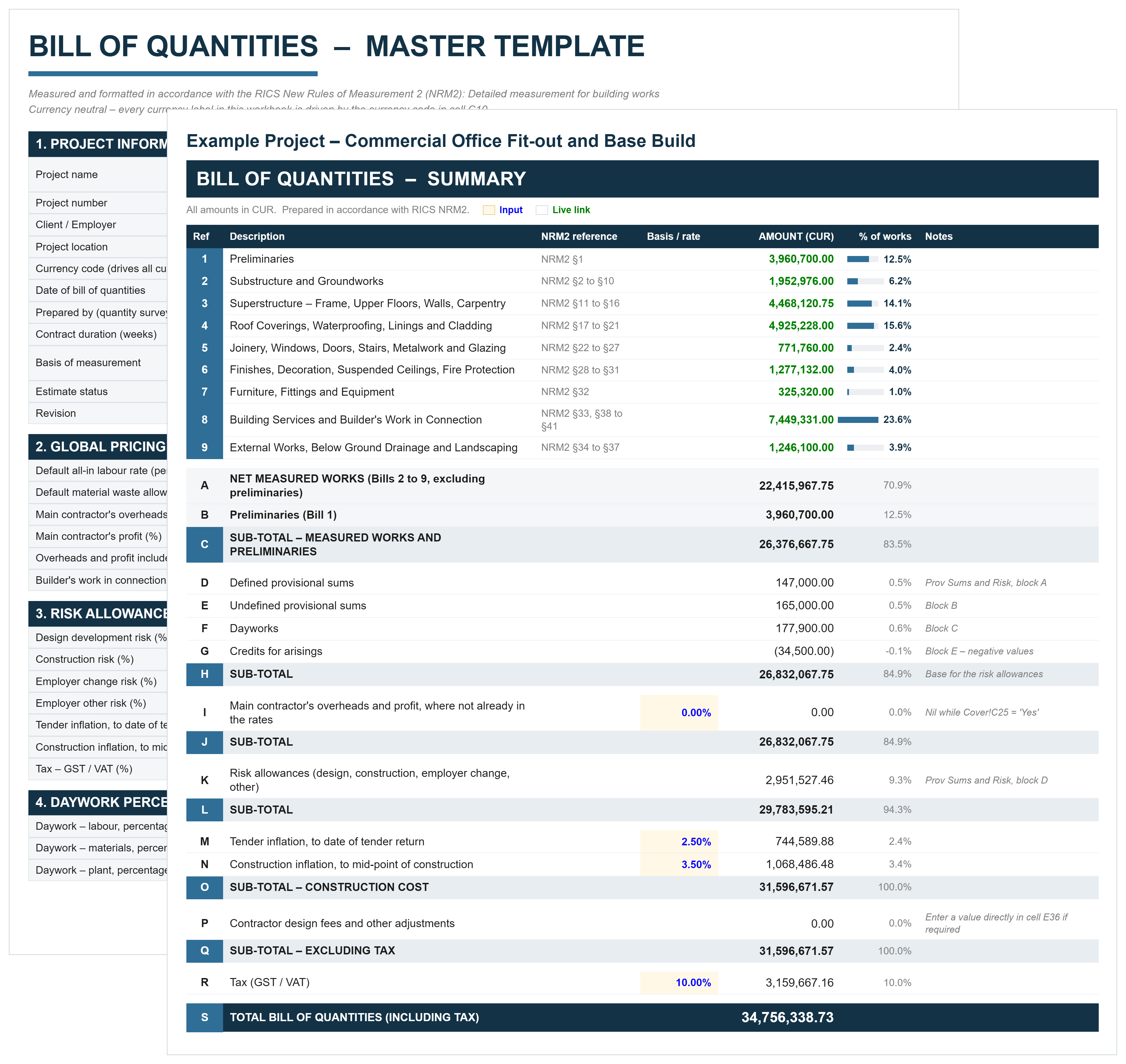
Bill of Quantities Template
Use this bill of quantities template to standardise tender pricing and prevent measurement disputes. Pre-structured NRM2 formats eliminate 40+ hours of manual BoQ creation whilst ensuring fair tender comparison.

Walk Into Every Meeting With Confidence, Clarity, and Control
No one wants to look unprepared, blindsided, or uncertain in front of stakeholders — but that’s exactly what happens without Mastt.
Start for FreeTrusted by the bold, the brave, and the brilliant across governments, Fortune 500s, and the world’s best in delivering the future