
.avif)

Construction schedules are supposed to drive field execution. In practice, they rarely do. After decades in project controls, I have watched the same problem repeat on every major project: the schedule says one thing, the site does another, and someone spends hours reconciling the two after the fact.
Construction Schedule vs. Field Execution: Why the Disconnect Exists
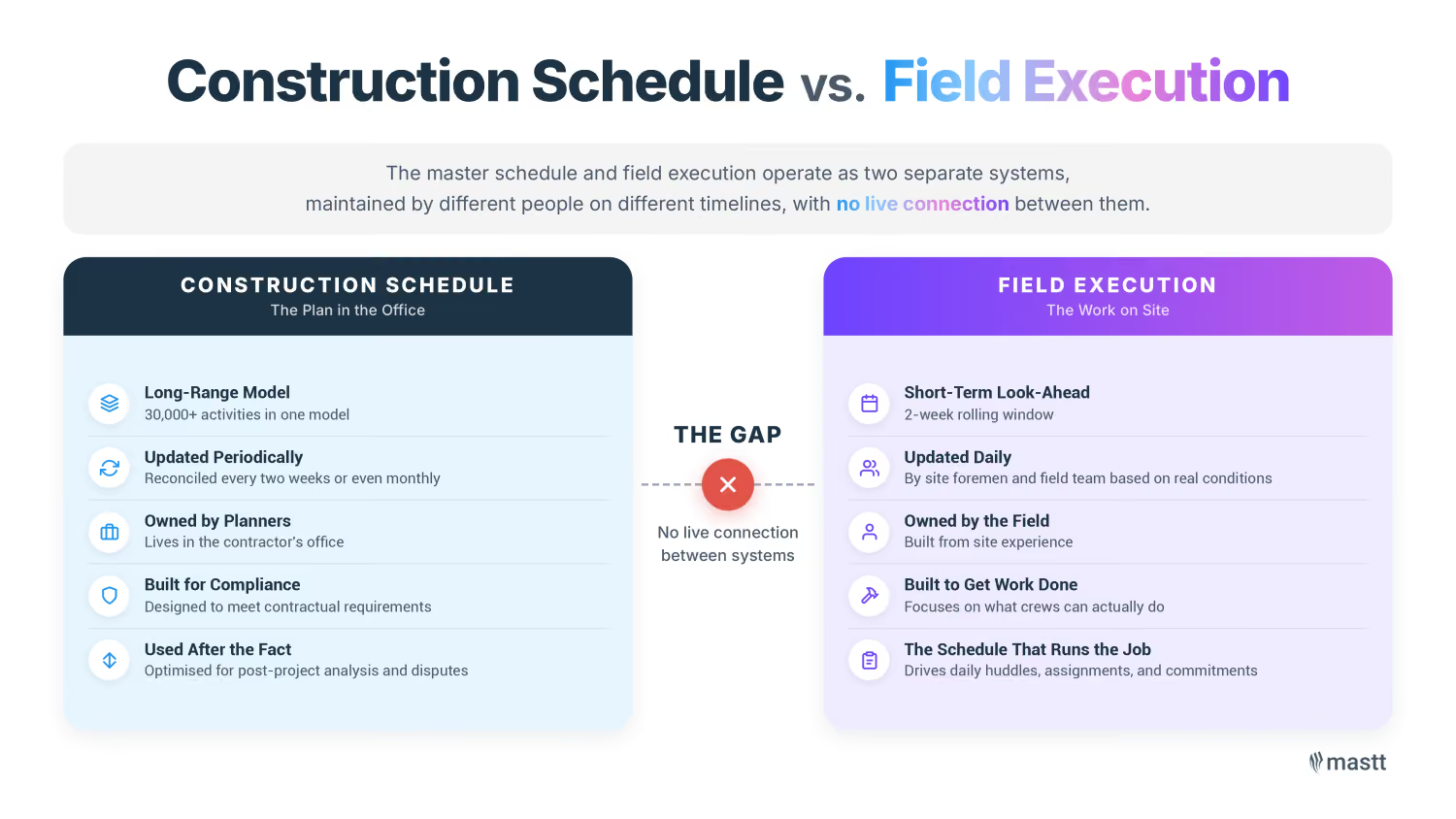
The disconnect exists because the master schedule and field execution operate as two separate systems. I see the field work and the schedule as two separate parallel paths. That 30,000-activity schedule is not actually driving work on the site.
The site team has their own two-week look-ahead. Every month, someone brings those two worlds together and updates the big model. You end up with things out of sequence, things started that should not have been, things not started that should have been.
It just seems like Kabuki theater to me. You should have one consistent platform that is thought out, accessible to everyone, and actually drives the work.
Why Construction Scheduling Hasn't Changed in a Decade
Better platforms have improved how scheduling data is stored and shared, but have not connected the schedule to actual field work. Ten years ago, construction project scheduling was almost entirely P6-based and desktop-only, with no way to integrate other tools. The ability to connect across apps on the web is way better now, but I have not seen much improvement in integrating project planning and execution with real-time updates.
Four forces keep the gap in place:
- Contractual lock-in: Many contracts require a P6 schedule, locking teams into a specific tool regardless of whether it drives execution.
- Professional identity: P6 schedules are so complicated that you have to be an expert to navigate them, which makes that person special.
- The claims industry: The forensic scheduling expert witness industry is a multi-billion dollar industry invested in fighting over P6 schedules.
- Cultural conservatism: A new idea is not a good idea in construction and engineering. That conservatism extends to areas where the risk of not changing is higher than the risk of change.
The Real Cost of Poor Schedule Execution
The disconnect costs projects in three ways: duplicated scheduling overhead, energy diverted to litigation, and execution failure that delays delivery. The contractor will have their critical-path schedule. The owner’s rep may maintain their own as a defensive move. You have got whatever energy, funds, and distraction it takes to maintain two logically tied schedules over the life of the project.
PMBOK says 90% of a project manager’s job is to communicate, and I agree. The PM is the only one with the full view. If the job gets out of sync, you are driving blind, and you have a diffusion of energy in the team. The goal is not more detail. The goal is better execution.
What Integrated Construction Schedule Management Looks Like
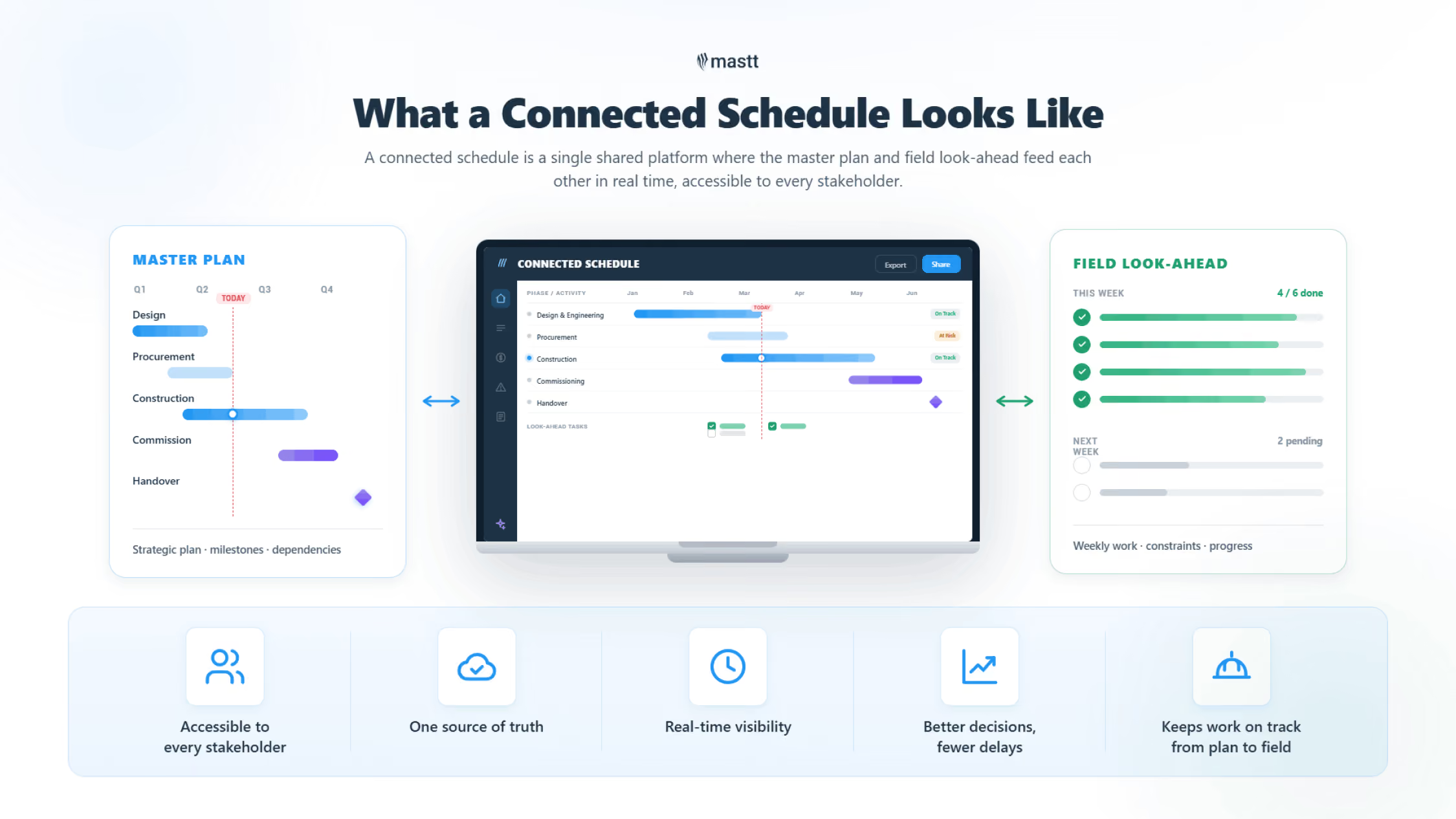
A connected schedule is a single shared platform where the master plan and field look-ahead feed each other in real time, accessible to every stakeholder. You should have one consistent platform that is thought out, accessible to everyone, and actually drives the work.
- Single shared platform: Both the project owner and the contractor update the same data. No more parallel defensive schedules.
- Real-time field data: Progress flows from site to model automatically. No more bi-weekly reconciliation.
- Continuous risk monitoring: Risk is part of the live schedule. AI watches for emerging risks and reruns simulations as conditions change.
- Natural language query access: Any stakeholder can ask plain-English questions about the schedule without knowing P6.
- Portfolio-level visibility: A project controls leader running 30 or 40 projects globally can query across finance, scheduling, safety, and progress from one place.
So much project management is filling out forms and updating spreadsheets. AI could automate that and emancipate experienced project managers to apply their time to higher value work.
How to Align Your Construction Schedule With Field Reality
Start by changing how data flows between the office and the site. Five steps can be implemented incrementally.
Step 1: Connect the look-ahead to the master schedule
Most field teams already build two-week look-ahead schedules. The problem is that these look-aheads exist in isolation. Link them to the master schedule so field progress automatically updates the broader model.
Step 2: Automate progress capture
Use mobile tools, sensors, or photo-based tracking to capture field status without forms. AI can process the data and update the schedule automatically.
Step 3: Embed risk into the live schedule
Risk should be part of your project as it executes, not just at the beginning to get through a stage gate. Having AI query for emerging risks and rerun the Monte Carlo makes perfect sense.
Step 4: Give every stakeholder query access
Build a data lake for a whole project and natural language query it for answers. How many activities have less than two days of float right now? You do not need to know P6 to ask that.
Step 5: Start with the pain, not the pitch
Find what I call a WIIFM: what is in it for me. If a PM’s worst nightmare is updating spreadsheets, help them do that with AI first. They will like AI because you have done something for them, versus training it to take their job.
How AI in Construction Scheduling Closes the Gap
AI changes the equation because it can monitor thousands of activities continuously, surface risks before they become delays, and remove the manual work that keeps schedules disconnected from reality.
Closing the Schedule-to-Site Gap in Construction
The construction industry has better scheduling tools than a decade ago. The disconnect between schedule and site has not gone away. Closing it is not about more detail. It is about accessible data, real-time updates, and catching risks before they cause delays.
The teams that treat the schedule as an execution tool, not a compliance document, will deliver projects faster and with fewer disputes.
To see how AI-powered project controls can close the gap between your schedule and the field, explore Mastt’s Project Controls software.

Written by
Timothy Mather
Tim Mather is a former CTO and COO of PMA Technologies, where he spent 23 years developing construction scheduling and risk analysis software. He co-developed NetPoint® and NetRisk™ and co-authored "Core Traits of a Reliable Schedule." At Mastt, he writes on construction scheduling, project controls, and AI in construction.


Contributions by
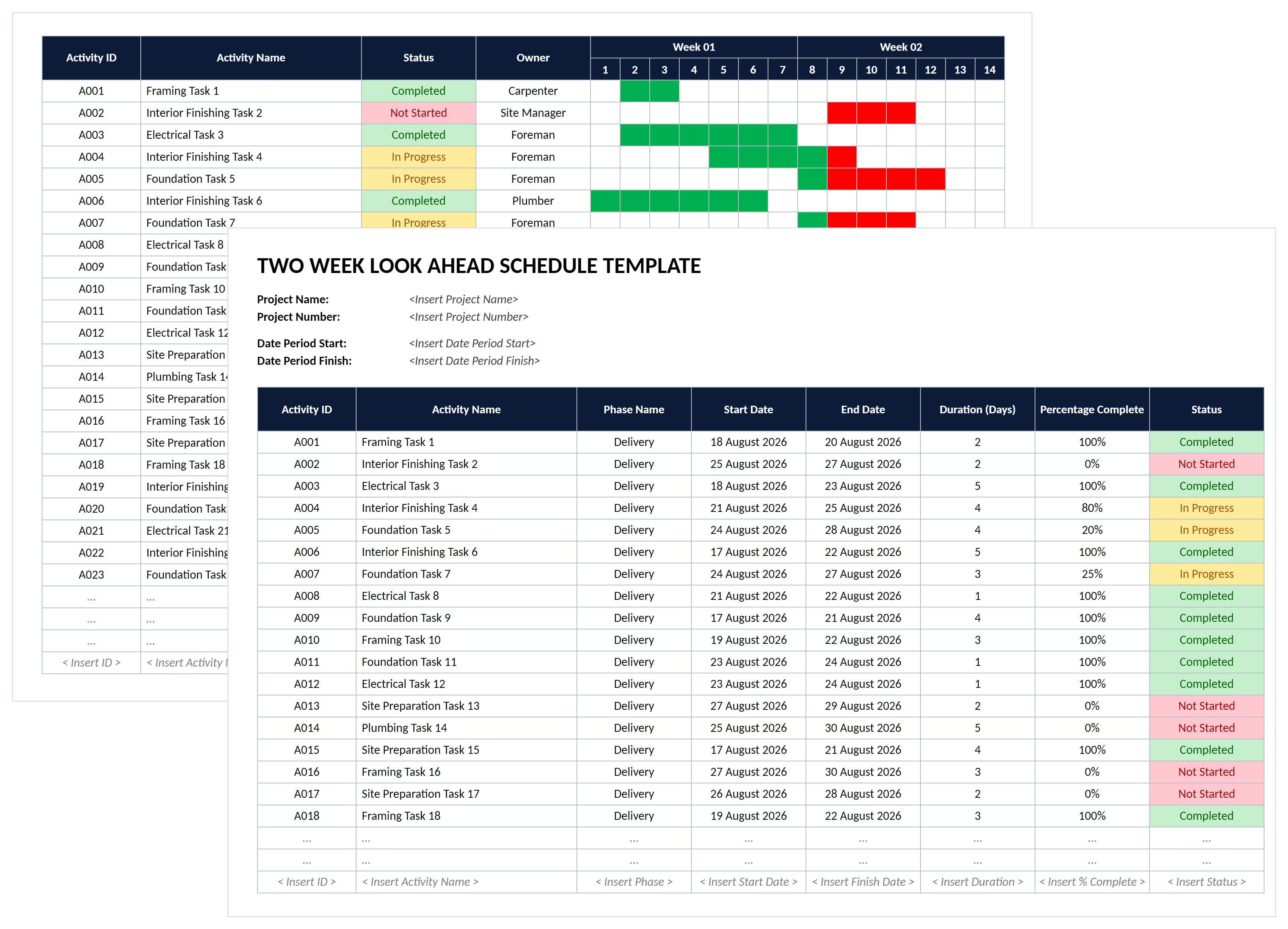
2 Week Look Ahead Schedule Template
Use this FREE 2 week look ahead template to coordinate trades, remove constraints, and prevent delays. Download Excel formats that keep crews productive and plans reliable.

Walk Into Every Meeting With Confidence, Clarity, and Control
No one wants to look unprepared, blindsided, or uncertain in front of stakeholders — but that’s exactly what happens without Mastt.
Start for FreeTrusted by the bold, the brave, and the brilliant across governments, Fortune 500s, and the world’s best in delivering the future