

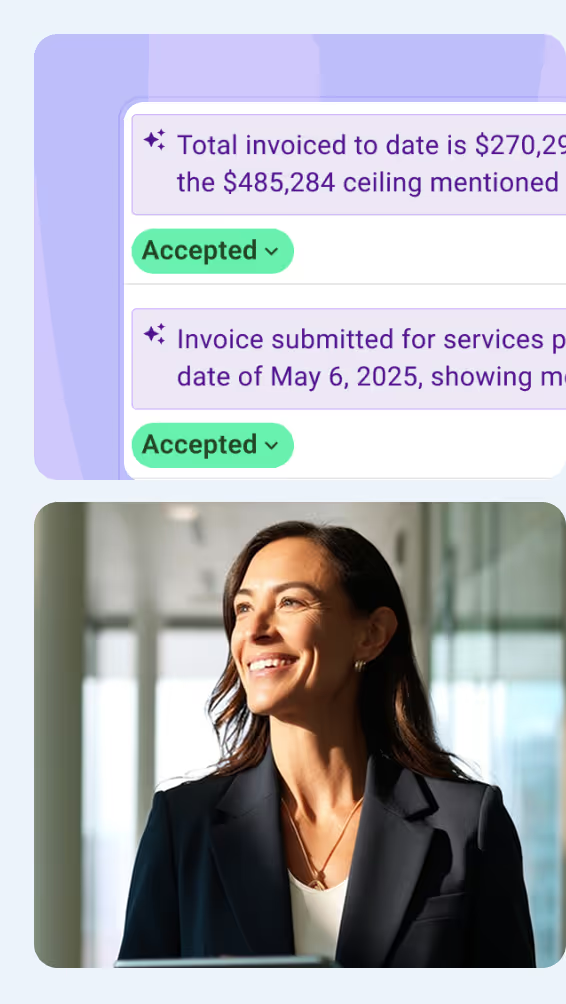


A contract repository is a centralized system where organizations store and manage contracts in a single secure location. The repository keeps agreements organized and accessible so teams can track responsibilities, terms, and key dates.
This article explains what a contract repository is and how it works in practice. It also covers core features, repository types, responsibilities, and practical steps for building and maintaining a reliable repository.
What is a Contract Repository?
A repository is used to store and organize contracts so teams can locate agreements quickly. Each record includes metadata such as counterparties, value, or renewal dates. This allows users to identify the correct agreement without opening each document.
Construction projects rely on contract management to coordinate agreements with subcontractors, suppliers, consultants, and project owners. A repository keeps these visible so project teams can confirm scope requirements and payment conditions during delivery.

Why a Contract Repository is Critical for Visibility
A contract repository keeps agreements visible and easy to locate across projects. Teams can review contract terms or deadlines without searching through scattered files or inboxes. Easy access to contract terms reduces the risk of contract disputes and missed renewal deadlines.
Key visibility gains from a contract repository include:
- Centralized access: All project agreements exist in a single location, which removes the need to search through scattered folders or inboxes.
- Structured contract data: Metadata fields capture details such as contract owner, key dates, and agreement status so contracts can be filtered and reviewed quickly
- Version transparency: Version history shows which document reflects the current agreement and prevents teams from relying on outdated terms.
- Deadline awareness: Renewal windows and notice periods remain visible, allowing teams to respond before contractual deadlines pass.
- Controlled access: Permission settings ensure the right teams can view contract information without exposing sensitive data.
For instance, a project manager may need to confirm the payment clause before approving a subcontractor’s progress invoice. A repository allows the team to find the contract immediately instead of searching through folders or email threads.
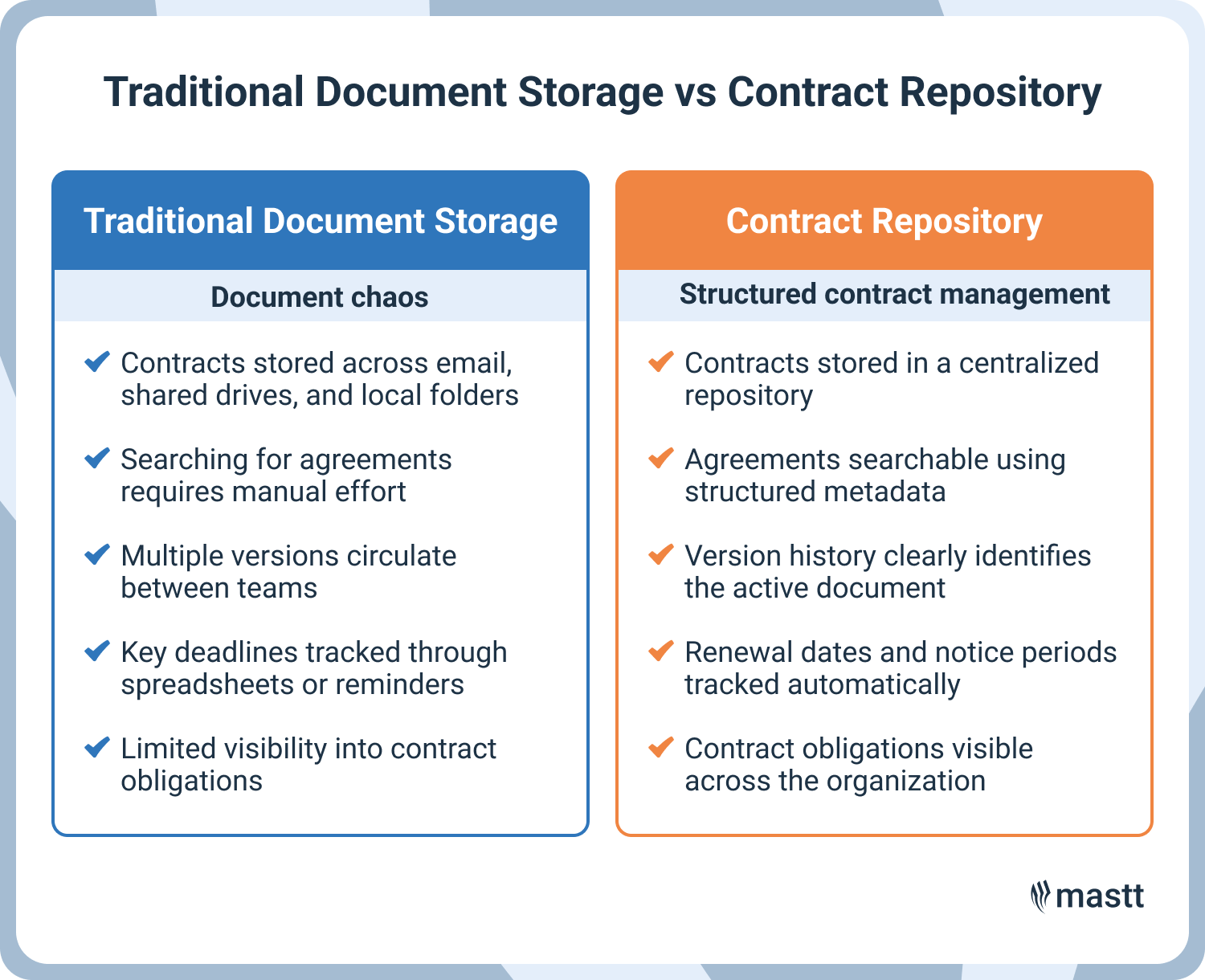
Core Features of a Contract Repository
A contract repository relies on contract data, particularly metadata fields that identify agreements, key dates, and ownership. These features make contract information easier to locate and review throughout the contract lifecycle.
These capabilities turn contracts into an operational reference point rather than archived paperwork. Once agreements are recorded this way, organizations can identify risk exposure, track obligations across vendors, and detect contract issues before they affect operations.
Key Metrics for Monitoring Contract Records
Organizations evaluate a contract repository using metrics that measure retrieval speed, record accuracy, and deadline tracking. These indicators show whether contract data remains accurate, reliable, and actionable during project work.
Indicators used to evaluate repository performance include:
- Contract retrieval time: Measures how quickly users can locate a specific contract or clause when needed.
- Contract cycle time: Tracks the time required for a contract to move from drafting to execution.
- Renewal deadline compliance: Shows whether contracts are reviewed before renewal or notice deadlines pass.
- Contract obligation fulfillment: Monitors whether contractual requirements such as deliverables are completed according to the agreement.
- Contract leakage: Reflects financial loss when negotiated terms are not applied during operations.
- Repository data accuracy: Evaluates whether contract records and metadata remain complete and properly maintained.
These metrics reveal whether the repository supports day-to-day contract management. In construction portfolios, these indicators help teams detect problems early, such as missed notice deadlines or contract terms that are not reflected in project payments.
💡 Pro Tip: Require mandatory metadata fields before contracts enter the repository. Key fields should include contract owner, renewal date, and contract value. This prevents incomplete records and keeps searches reliable.
How to Set Up a Contract Repository
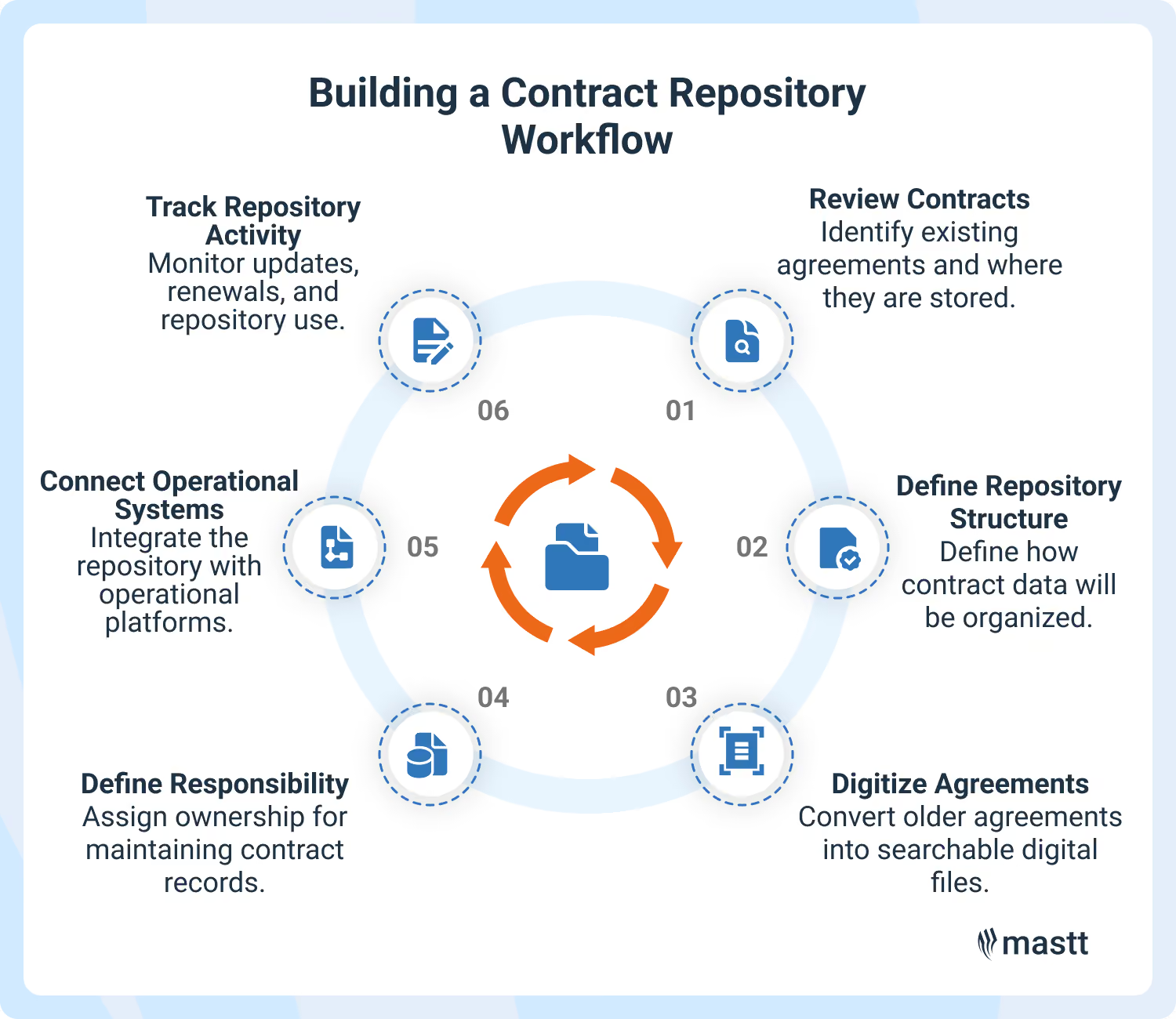
Building a contract repository requires a clear setup. Contracts must be organized so key information remains easy to find during daily operations. The steps below outline how to build a repository that stays usable as the contract portfolio grows.
Step 1: Audit existing contracts
Start by identifying where contracts currently exist across the organization. Agreements often sit in shared drives, procurement systems, email archives, or physical records. Create a simple inventory that records the contract name, owner, and location.
Step 2: Define repository structure and metadata
Define the metadata fields that organize the repository before uploading any contracts. Typical fields include contract owner, contract value, effective date, and renewal date. Establish naming conventions so users can recognize contracts without opening every file.
Step 3: Digitize and standardize legacy contracts
Legacy agreements often exist as scanned files or inconsistent formats. Convert these records into searchable files using OCR and confirm that critical clauses remain readable. Attach the required metadata so older contracts remain discoverable in the repository.
Step 4: Assign ownership and governance rules
Each contract should have a designated owner responsible for maintaining the record. Governance rules should define who uploads contracts, who updates metadata, and who approves revisions. This prevents outdated agreements from remaining in the repository.
Step 5: Connect the repository to operational systems
Contract data becomes more useful when connected to procurement, vendor management, or financial systems. Teams can review contract terms when approving vendors or processing payments. This keeps contractual obligations visible during daily decisions.
Step 6: Monitor repository activity
A repository requires ongoing monitoring as new agreements enter the system. Teams should track renewal timelines and contracts approaching notice periods. Regular reporting helps organizations monitor contract exposure across projects.
💡 Pro Tip: Use a centralized contract repository software to capture contract metadata, dates, and ownership in one place. Platforms like Mastt helps teams manage agreements and track deadlines without relying on spreadsheets or scattered files.
Who Manages Contract Records and Oversight?
In project management, the task of overseeing a repository often sits with a commercial manager, contract administrator, or project controls lead. They set repository standards, manage access permissions, and ensure contract records remain accurate.
This requires clearly defined responsibilities across departments, including the following roles.
- Contract Manager or Legal Counsel: Sets repository standards and ensures contract records remain accurate and compliant.
- Procurement or Commercial Project Manager: Uploads vendor agreements and maintains supplier contract data.
- Finance Manager: Reviews financial obligations and monitors payment terms linked to contracts.
- Systems Administrator: Maintain repository infrastructure and manage system access controls.
- Project Manager or Project Controls Lead: Reference contract terms during delivery and flag required updates.
💡 Pro Tip: Assign a responsible owner for every contract record in the repository. Clear ownership ensures agreements remain updated when amendments, renewals, or revisions occur.
Common Repository Risks and How to Avoid Them
Contract repositories lose value when records become incomplete, outdated, or difficult to locate. These risks arise when contracts enter the system without consistent data standards. As contract portfolios grow, small gaps in records become harder to detect and manage.
Most repository failures result from inconsistent processes rather than limitations in the software itself. Small gaps in contract records can accumulate into financial risk, missed obligations, or unmanaged vendor commitments.

Best Practices for Maintaining an Effective Contract Repository
Repositories remain reliable only when it is maintained consistently after implementation. Contract portfolios expand over time, and records change as agreements evolve. The practices below help keep repository data accurate and usable.
☑️ Upload contracts at execution: Add signed agreements immediately after execution so the repository reflects the current contract portfolio.
☑️ Link contracts to related entities: Associate agreements with the relevant project, asset, vendor, or supplier so users can locate contracts in context.
☑️ Review repository records regularly: Periodically check contract records to confirm key fields such as renewal dates or ownership remain accurate.
☑️ Archive inactive agreements: Move expired or superseded contracts to a designated archive to prevent confusion with active agreements.
☑️ Use consistent file naming: Apply consistent file naming rules so users can recognize contracts without opening each document.
☑️ Store amendments with the base contract: Store addenda and change orders alongside the original contract to preserve the full agreement history.
☑️ Limit editing permissions: Restrict editing rights so contract records cannot be changed unintentionally.
☑️ Monitor repository usage: Review access patterns to identify areas where teams may require training or guidance.
💡 Pro Tip: Use contract register software to track contract ownership, key dates, and status changes in one place. Mastt integrates this register with project data so teams can monitor contract activity without searching individual files.
What Software and Tools are Used for Contract Repositories?
Organizations maintain contract repositories using several types of software, depending on how contracts interact with procurement, finance, and project delivery. Some teams rely on specialized platforms, while others manage agreements within broader business tools.
Common tools used to support a contract repository include:
- Contract management dashboard: Tools that visualize contract activity across agreements, highlighting upcoming milestones and changes. Dashboards help teams monitor contract records and identify issues that may require attention.
- Contract lifecycle management (CLM) platform: Systems that manage drafting, negotiation, approvals, and execution while storing finalized agreements in an integrated repository.
- Document management system (DMS): File management tools that provide structured storage, access permissions, and version history for contract documents.
- Vendor management software: Platforms that manage supplier relationships and store contracts. They connect agreements with vendor performance and procurement records.
- Cloud storage platform: Tools such as Google Drive or SharePoint used by smaller teams to store contract files when specialized systems are not yet implemented.
- Project management reporting software: Construction-focused platforms that connect contract data with budgets, cost tracking, and project controls.

Turn Contracts Into Reliable Project Records
A contract repository allows organizations to treat agreements as operational records rather than scattered documents. When contract terms remain visible, teams can reference them before decisions affect cost, scope, or delivery. Strong repository practices ensure contract information remains dependable throughout the life of a project.

Written by
Stephanie Flores
Stephanie Flores was a Construction Content Writer at Mastt, producing long-form guides and research articles on cost management, contract management, and risk. She holds a Bachelor of Arts in Political Economy from the University of Asia and the Pacific.


Contributions by
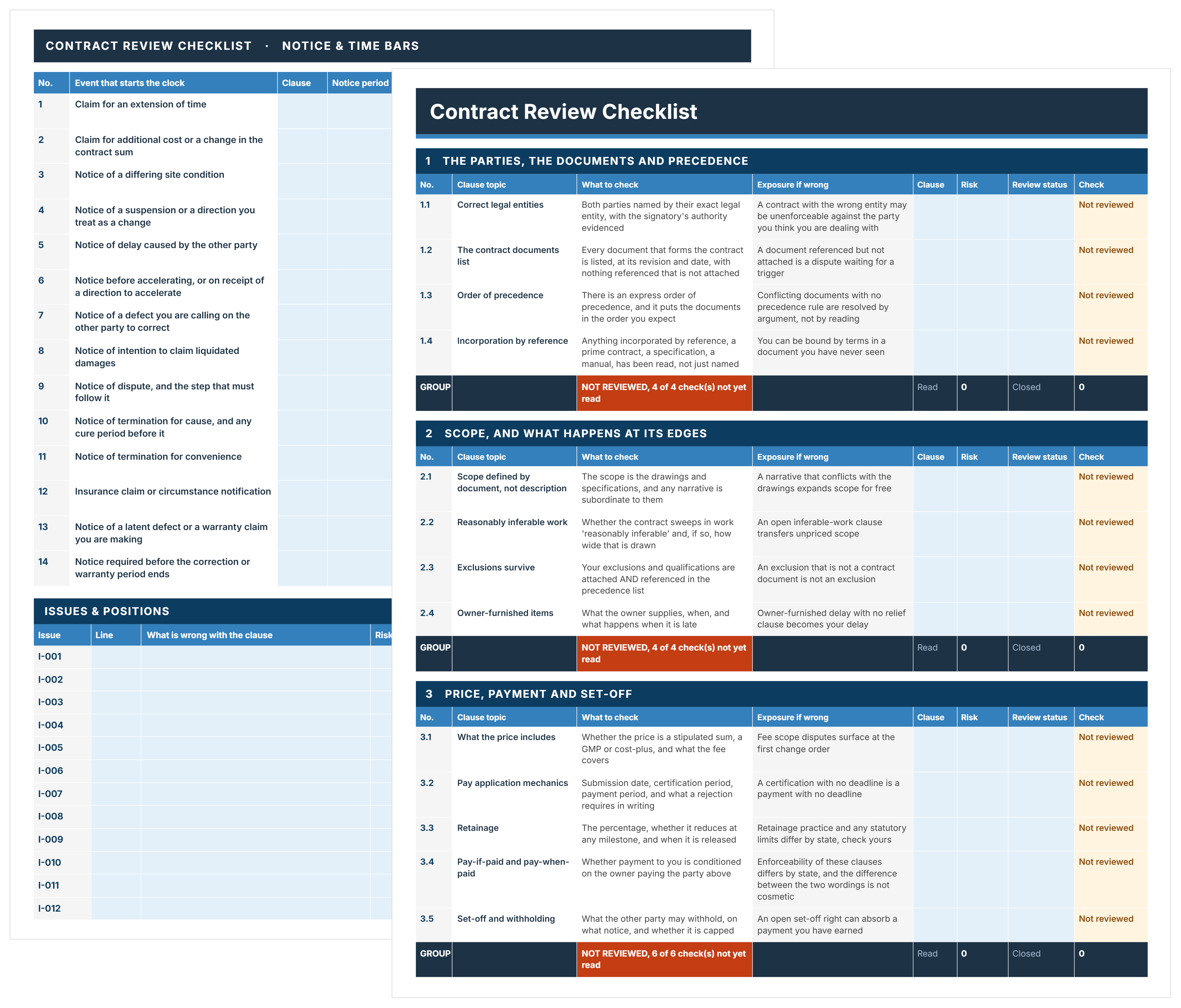
Contract Review Checklist
Know what you are signing before you sign it. This FREE contract review checklist asks 67 questions about the contract in front of you, and records what you found, what you asked for, and what the other side refused.

Walk Into Every Meeting With Confidence, Clarity, and Control
No one wants to look unprepared, blindsided, or uncertain in front of stakeholders — but that’s exactly what happens without Mastt.
Start for FreeTrusted by the bold, the brave, and the brilliant across governments, Fortune 500s, and the world’s best in delivering the future

.avif)

.avif)