
.avif)

Client-side project management is the work of representing a developer throughout a construction project. It is also one of the least understood roles on a job, partly because the people doing it sit between everyone else. William Hodge and Ella Hiles, two experienced project managers at Essence, sat down to explain what the role actually involves and where projects tend to go wrong.
1. A Client-Side PM Sits Between the Developer and the Builder
A client-side project manager is neither the developer nor the builder. They are engaged by the developer to represent its interests, then sit between the two parties once construction starts. William explains it in plain terms.
We're not developers, we're not builders, we kind of sit in between. We're engaged by developers to represent them up until construction.
- William Hodge
Once construction begins, the role of a client-side PM often moves into the superintendent's seat under the contract. The job there is to keep both sides honest, and William describes it as uncomfortable by design.
The most uncomfortable but the best spot to be as a superintendent is where you've got the builder angry at you and the client angry at you. You ultimately have to play it with a straight bat and make sure that contracts are being administered fairly.
- William Hodge
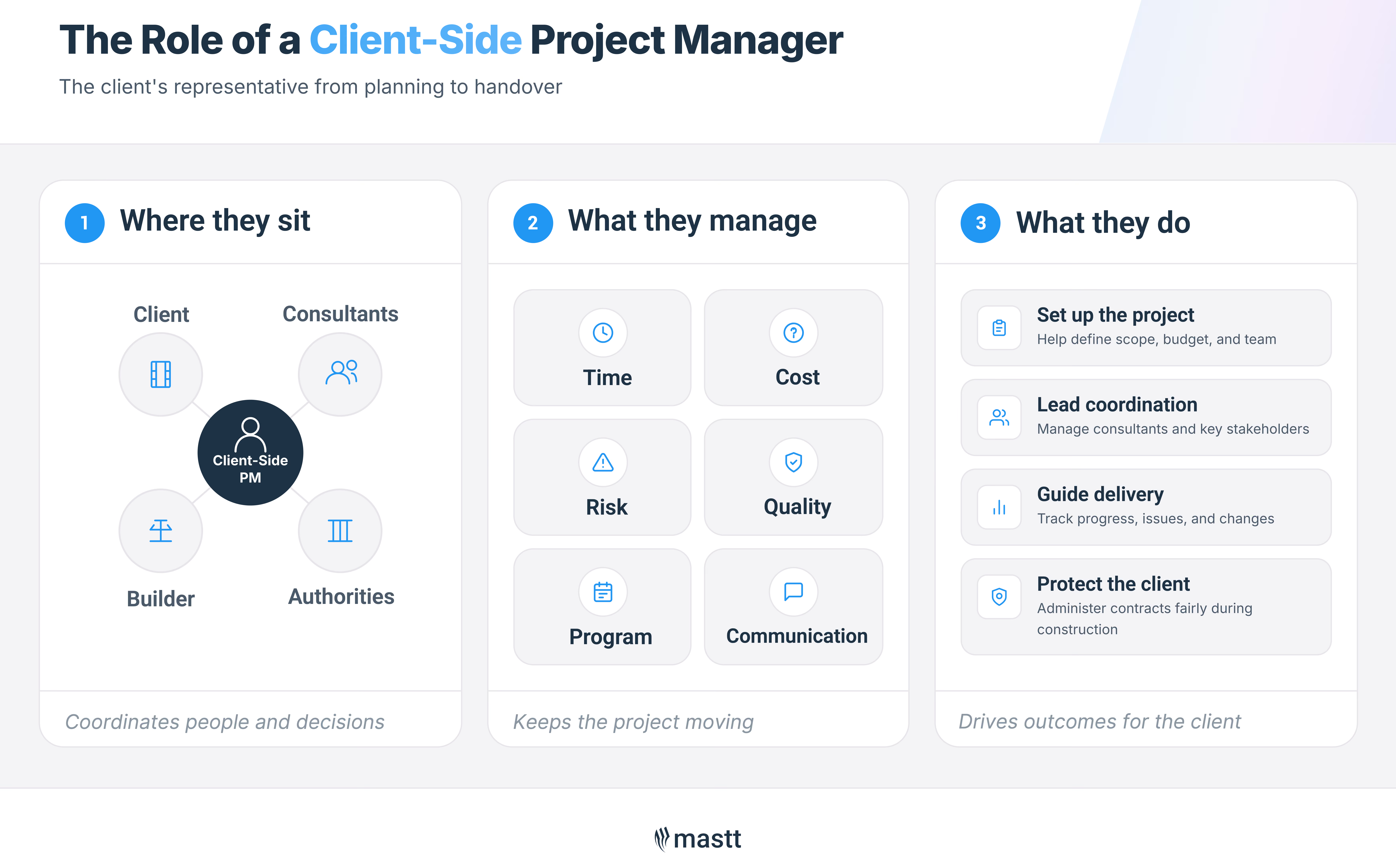
2. The Role Is Managing Stakeholders, Cost, Time, and Quality
The client-side project manager’s role is to oversee the factors that determine whether a project succeeds. Ella reaches for the same list whenever she explains the job to people outside the industry.
At the core of project management, it's about managing key stakeholders, risks, time, cost, program, quality.
- Ella Hiles
The daily work is less tidy than that list suggests. Ella describes a normal day of a client-side PM as a mix of meetings and review work, shaped by whatever the project needs at that point.
An average day, you're doing meetings, you're reviewing design packages, you're taking minutes, and you're sort of just chipping away at what the client needs.
- Ella Hiles
3. The Day-to-Day Work Changes With Every Project Phase
There is no single version of the job. The work shifts depending on which phase of the project a manager is in. Before construction, they deal directly with engineers and architects. During construction, they go through the builder.
Your day to day definitely does change depending on what phase of the project you're in.
- William Hodge
Some people specialize in a single phase rather than running the whole project life cycle. William points to one colleague as the clearest example.
One of our directors is just the DA (Development Application) King. His bread and butter is getting a DA approved, and then he'll pass it on to different project members to lead the design development and construction phase.
- William Hodge
4. Clients Hire a Client-Side PM for Relationships and Market Knowledge
Clients come to a client-side project manager for connections they cannot build themselves. Strong relationships with architects, engineers, and builders are a large part of the value.
A lot of why clients would go to a specific client-side project manager is often for relationships.
- William Hodge
Those relationships also mean live knowledge of the market. When a client wants to go to tender, William says, the team has "feet on the ground" and can tell them which builders are performing and which to steer clear of. Ella frames the same value through communication.
Communication, again, it's really the number one skill that you need.
- Ella Hiles
When you shortlist a client-side PM, ask which architects, engineers, and builders they have worked with recently and on what projects. The depth of those live relationships is what lets them tell you who is performing in the current market, and that is harder to fake than a capability statement.
5. You Need to Know a Little About a Lot, and Ask When You Don't
A client-side project manager does not need deep technical expertise in any one field. They need enough understanding across many fields to ask the right questions of the people who do.
Jack of all trades, master of none. You need to know a little bit about a lot, as opposed to have an in-depth knowledge of one aspect.
- William Hodge
The skill that makes this work is asking, not pretending. William is open about how he handles things he does not understand, on-site or in a meeting full of specialists.
My big theory is if I don't know, I ask. I don't pretend I know. You're not expected to know everything about everyone's disciplines.
- William Hodge
6. Problems Build From Day One Without Cost Control Upfront
Most project problems trace back to a weak start. If the budget and the way forward are not agreed upon early, issues compound from the beginning.
I'm a believer that if you don't get to the right starting point and move forward and agree with the client how you're gonna move forward, the problems will build from day one.
- William Hodge
William points to one early discipline above the rest: bringing a cost expert in before the design runs ahead of the money. Without one in the room, an architect can propose something that looks great but cannot be afforded, and the team finds out too late.
[I'm a] big believer in having a QS, a quantity surveyor from day one, working through cost plans.
- William Hodge
Engage a quantity surveyor at concept design, not at tender or procurement. A QS in the room when the architect is sketching options can price ideas as they come up, so the design that progresses is one the client can actually afford. Pulling a QS in after the design is fixed only tells you what you can no longer change without a redesign cost.

7. Authorities Cause the Biggest Delays on a Project
Authorities are the single most common source of delay. Both managers agree that authority requirements have to be mapped from the very first day, because the team does not control how long a response takes.
If you're not looking at what authorities you need to deal with from day one, the project's already at risk. Because we find the biggest delays come from authorities.
- William Hodge
Ella makes the same point from the planning side. Authority timeframes sit outside the team's control, so they have to be built into the program rather than assumed away.
These authorities, it's sort of out of our control on how long it might take to get a response back. And so you've really got to factor that into your work.
- Ella Hiles
8. Three Things Drive Most Cost Blowouts
William identifies three recurring sources behind most cost blowouts. Naming them early lets a client prepare rather than be surprised. The three biggest, in his experience, are:
- Authority-driven changes, such as a body requiring a brand new substation instead of a connection to an existing one.
- Latent conditions, including contamination, a subsurface that is not as expected, or an archaeological find in the ground.
- Client-driven changes, which surface as more of the project gets uncovered and new stakeholders get involved.
Because changes are certain, contingency is not optional. William says clients need a contingency in place, whether that is a nominal 5 or 10 percent or something with more rigor behind it. Ella puts the same reality more bluntly.
No job from the get-go is going to be to its original budget. It's more than likely always going to increase.
- Ella Hiles
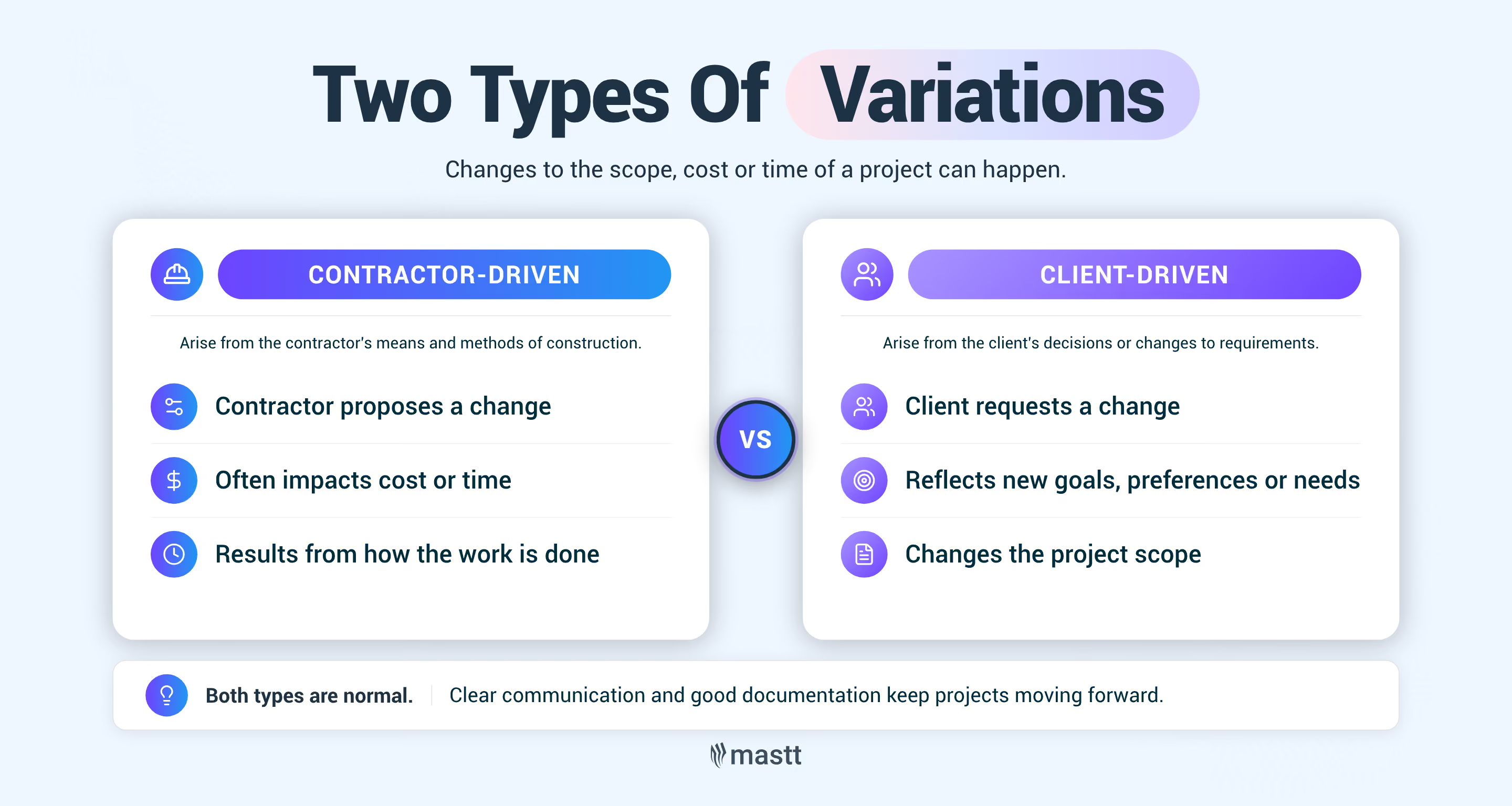
9. Variations Come in Two Types, Contractor-Driven and Client-Driven
A variation (change order) is a change to the contracted scope, and there are two kinds. Knowing which type you are dealing with decides who carries the cost.
There's two kinds of variations. There's contractor driven, i.e. they found something that they believe wasn't captured in the contract. The other variations are client-driven ones.
- William Hodge
Contractor-driven variations are usually the more complicated, because they raise a question of entitlement. Client-driven ones follow a clearer process: when a client wants a change, the manager asks the builder for the cost, time, and quality implications before anything is agreed. Ella walks through that loop.
We as the project manager would send this request to the contractor, and the builder would give us that price, and we would have to go back to the client and explain that this is the price that it's come back at. We'd have our QS assess these costs.
- Ella Hiles
Even small changes carry consequences that clients rarely see coming. William gives a real example: a client decided to knock out a wall, which forced a full structural redesign.
It ended up saving about $2,000 worth of construction costs, but it cost 90 grand to do the redesign.
- William Hodge
This is also where the hardest conversations happen. William says the toughest part of the job is when someone has to pay for something, whether that means telling a contractor it is not entitled to a variation, or telling a client that it is.
10. Both Parties Must Understand Their Risks Before Signing
The strongest advice for anyone starting a major project is to understand the construction contract before signing it. William says both the principal and the contractor have to know what they are taking on, and that the hard conversation belongs at the start, not six months in.
Make sure that both parties have read and understand what their risks and responsibilities are. If there's any issues, we need to talk about them now and not talk about variations in six months time.
- William Hodge
Ella's version is shorter. Asked for a single piece of advice for anyone about to start a major construction project, she gave a one-line answer.
Prepare for the worst and hope for the best.
- Ella Hiles
The Bottom Line on Client-Side Project Management
Client-side project management is the work of representing the client between the developer and the builder, and most of its value is decided early. A clear budget, a quantity surveyor from day one, an honest read of the authorities, and a contract both sides understand are what keep cost, time, and risk under control later.
If you are planning a build, the practical takeaway is to get those early decisions right and bring in a client-side project manager before the contract is signed, not after the first dispute.

Written by
Jacob Gibbs
Before Mastt, Jacob Gibbs worked in customer success at Cisco, MongoDB, N-able, and Vendr. At Mastt, he contributes articles on construction contracts and client-side project management.


Contributions by
William Hodge
William Hodge is a Senior Project Manager at Essence Project Management with 6 years in client-side construction PM across hospitality, commercial, and build-to-rent in Sydney. He holds a Bachelor of Civil Engineering Honours Class 1 from the University of Sydney and guest lectures in UTS's Master of Project Management program. At Mastt, William contributes content on construction project management and contract administration.
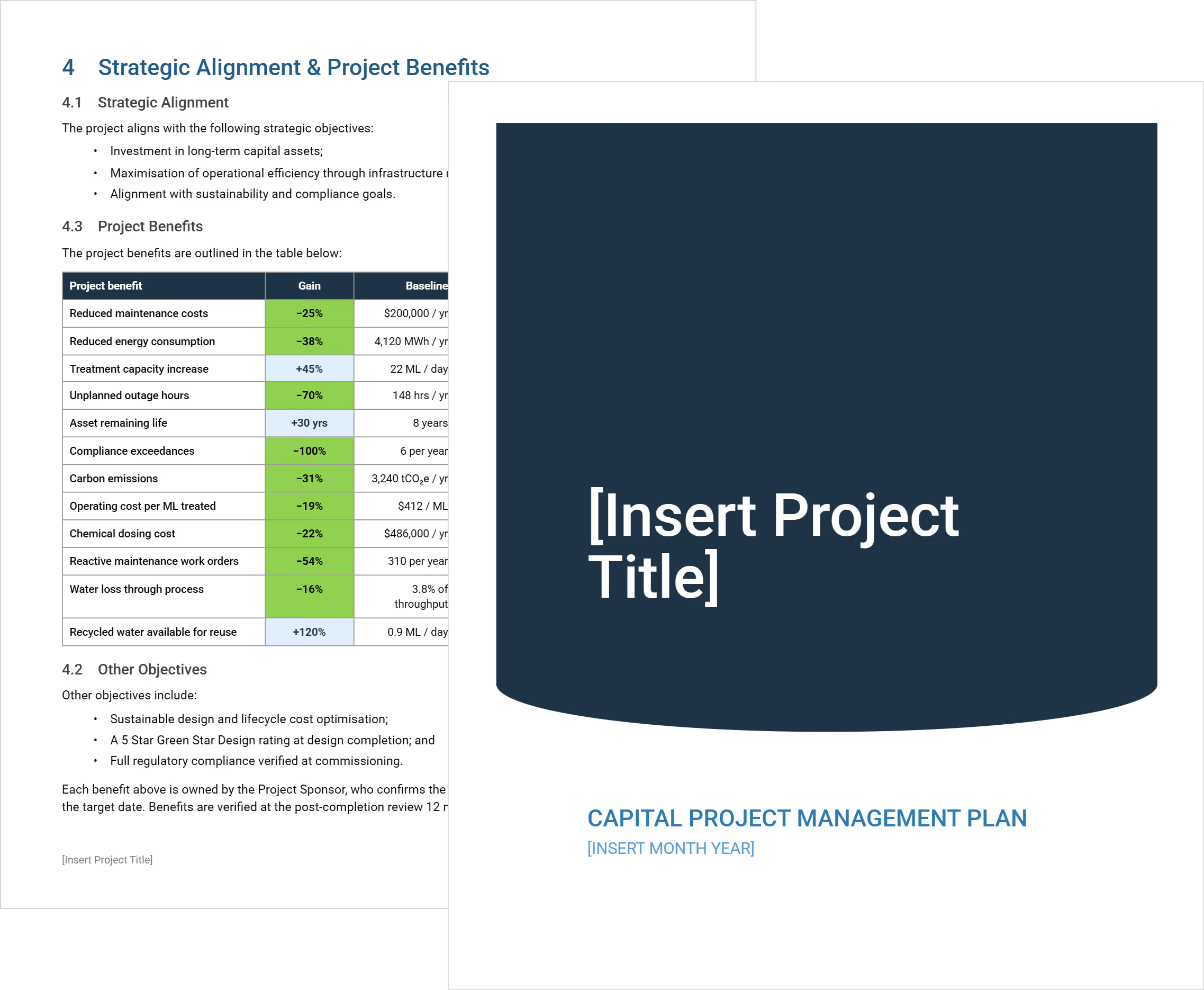
Capital Project Management Plan Template
FREE capital project management plan template in Word. Eighteen ready-to-edit sections built for CapEx control, funding governance, and asset handover.

Walk Into Every Meeting With Confidence, Clarity, and Control
No one wants to look unprepared, blindsided, or uncertain in front of stakeholders — but that’s exactly what happens without Mastt.
Start for FreeTrusted by the bold, the brave, and the brilliant across governments, Fortune 500s, and the world’s best in delivering the future