



Construction contract risk management is the process of identifying and managing risks within construction contracts. It helps project managers, contractors, and owners understand how contract terms allocate responsibility and how those risks influence project delivery.
This article explains how teams recognize these risks early and manage them during project delivery. It outlines practical strategies and tools used to monitor contractual obligations and reduce commercial exposure on construction projects.
What is Construction Contract Risk Management?
Construction contract risk management addresses the risks that arise from the terms written into construction contracts. These risks come from responsibility, payment conditions, and schedule commitments. Managing them helps teams understand how contract terms affect cost exposure.
Contract risk appears when project actions do not follow contract requirements. When notice deadlines are missed, entitlement to time or cost recovery can be lost. Teams manage this risk by reviewing terms early and applying contract management practices during delivery.

Why Contract Risk Management Matters for Project Success
Contract risk management matters because construction contracts determine how risk, responsibility, and entitlement are enforced during project delivery. Managing these risks helps teams protect cost recovery and maintain contractual rights.
Effective risk management supports project success in several ways:
- Risk allocation clarity: Contracts define which party carries financial and operational exposure for specific events.
- Preservation of entitlement: Following notice and claim procedures protects rights to time extensions or compensation.
- Financial control: Payment terms and valuation rules influence construction cash flow and commercial stability.
- Delay accountability: Contract clauses determine how schedule impacts are assessed and attributed.
- Change management discipline: Formal change order procedures prevent unauthorized scope growth and cost leakage.
- Dispute risk reduction: Clear documentation and compliance with contract processes strengthen defensible project positions.
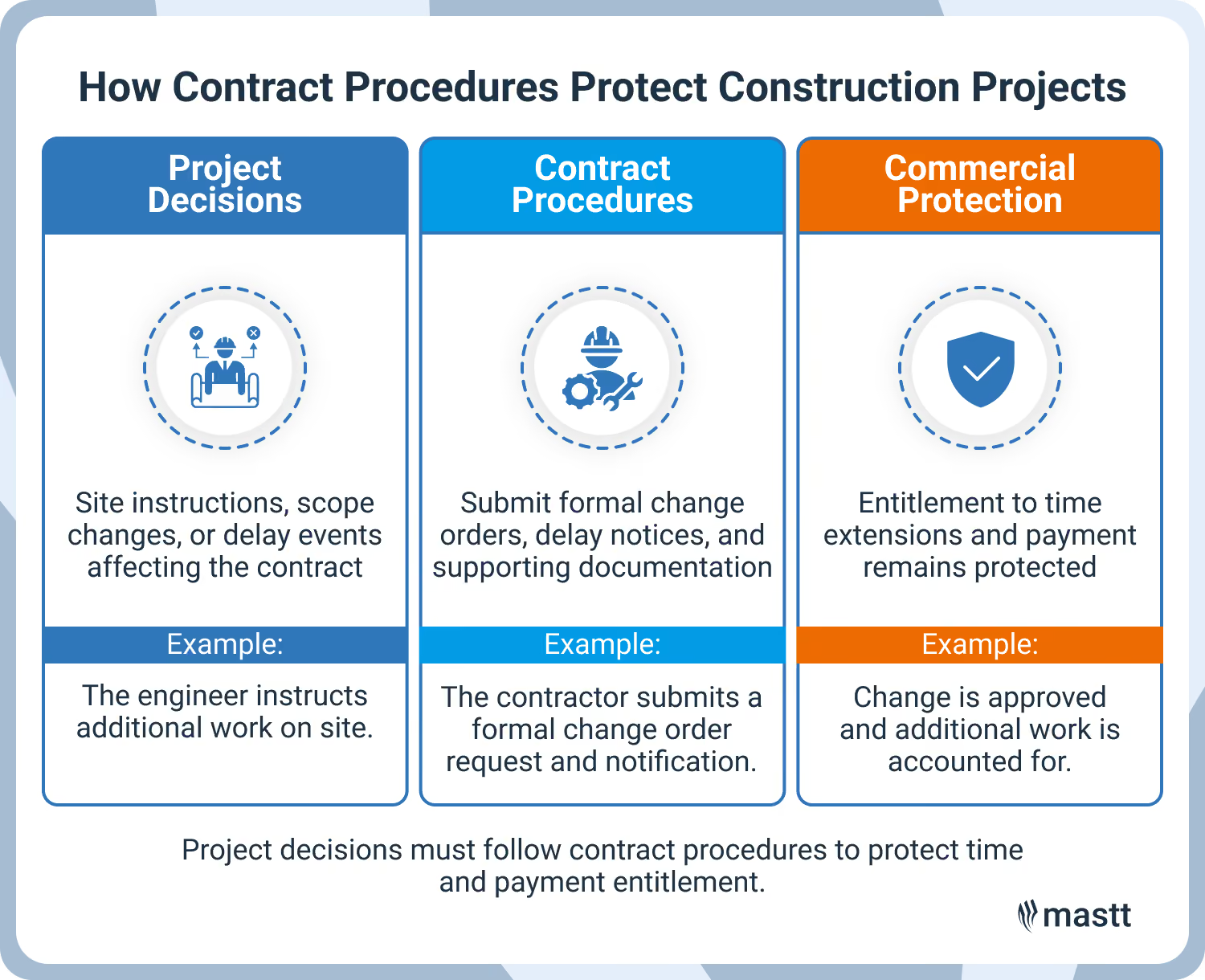
Careful management of contractual obligations keeps project decisions aligned with the agreement. This discipline protects entitlement to time and payment when conditions change. Without it, missed notices or informal scope changes can remove contractual rights.
Common Risks Found in Construction Contracts
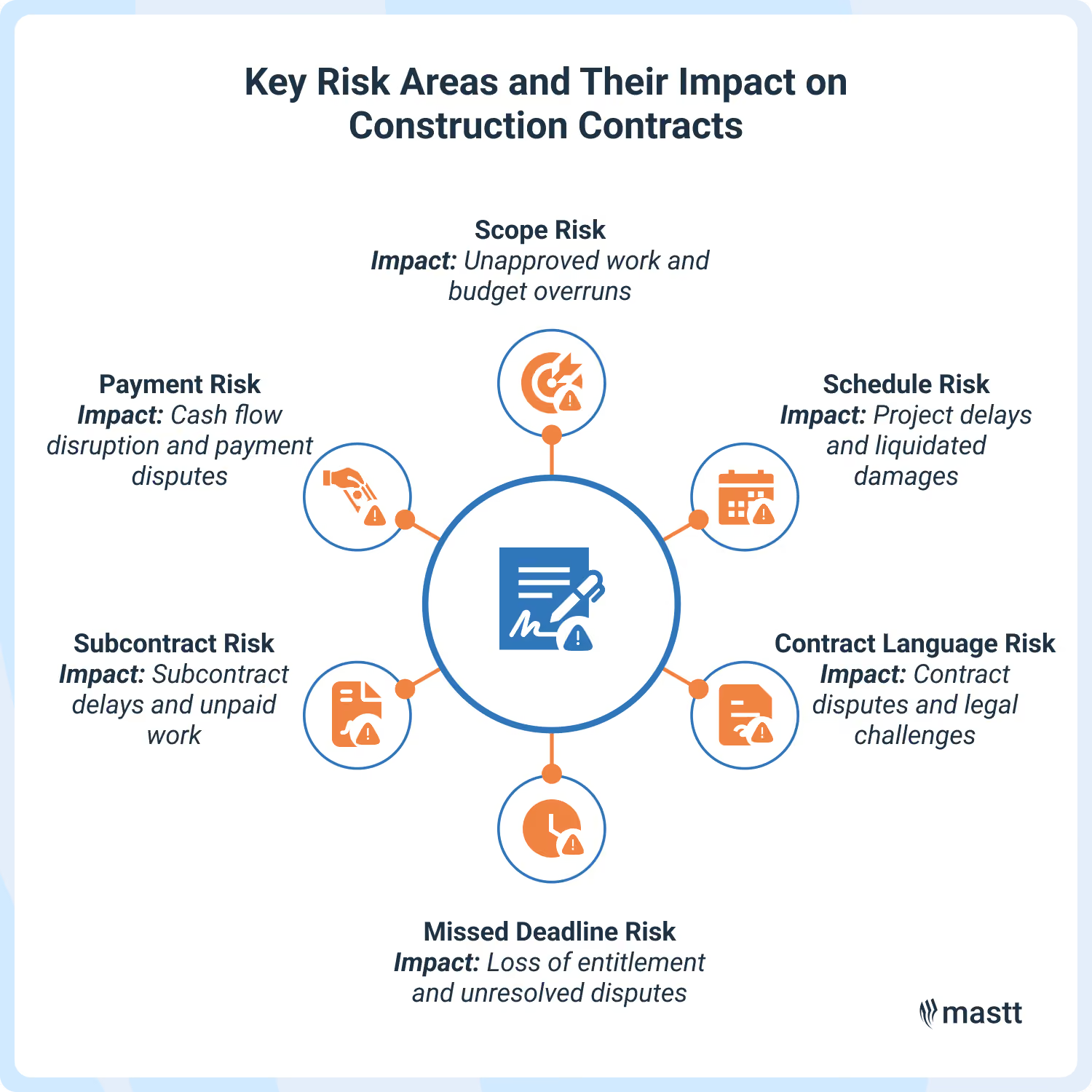
Construction contracts create risk through unclear obligations, inconsistent procedures, or gaps between related agreements. These risks influence project payments, delay exposure, and the ability to enforce contract provisions during delivery.
Contract risk often arises during routine project decisions rather than major disputes. For instance, work may proceed based on verbal instructions even when written approval is required. Lack of formal documentation can remove the contractor’s entitlement to payment.
How to Manage Risks in Construction Contracts: Step-by-Step
Managing risk in construction contracts requires early review of contract terms and disciplined contract administration during delivery. Teams must understand the contract early and apply its procedures consistently during the project lifecycle.
Step 1: Review the contract before project mobilization
Contract review before mobilization reveals obligations that influence entitlement to time extensions or cost recovery later in the project.
Focus on clauses that define scope limits, notice timelines, change order approvals, and payment conditions. Capture these requirements in a short internal summary so the project team understands the contract’s operational rules.
💡 Pro Tip: Use AI for contract review to scan agreements for critical clauses before mobilization. These tools help teams identify notice deadlines and approval conditions that affect project execution.
Step 2: Identify and document contract risks
Contract risks usually originate from particular provisions in the agreement. Recording them early allows the team to monitor exposure as the project progresses.
Create a contract register that links each risk to the clause that creates the exposure. Note the potential impact on time, cost, or responsibility so the team understands where exposure may arise.
Step 3: Assign clear ownership of contract obligations
Contract obligations must have clear ownership within the project team. Each key requirement must have a defined owner within the project team.
Assign responsibility for notices, change order submissions, documentation, and correspondence. This ensures that time-sensitive actions follow contract timelines and are not missed during busy project periods.
Step 4: Align the project team with contract requirements
Operational teams often make decisions that carry contractual consequences. Site leaders should understand the clauses that affect their daily work.
Provide supervisors and field managers with a short briefing on the clauses that affect their decisions. Focus on notification requirements and documentation expectations.
Step 5: Follow contract procedures when issues arise
When changes or delays occur, the contract defines how they must be handled. Skipping these procedures can weaken a contractor’s commercial position.
Follow the contract’s procedure when submitting change order requests and delay notifications. Maintaining this discipline preserves entitlement if disputes arise later.
Step 6: Monitor contract compliance during delivery
Contract obligations continue throughout the project lifecycle. Teams must review them regularly as work progresses.
Monitor notification deadlines, approvals, change orders, and payment milestones as work progresses. Regular tracking ensures that project actions remain consistent with the agreement.
💡 Pro Tip: Use a contract management dashboard that tracks obligations tied to key contract clauses. Mastt connects milestones, notices, and change events with project controls data. This visibility helps teams act before missed deadlines affect entitlement.
Who is Responsible for Managing Risk in Construction Contracts?
The project manager holds primary responsibility for managing contract risk during project delivery. This role ensures that operational decisions remain consistent with the obligations defined in the construction contract.
Contract risk management involves several roles across the project team:
- Project Manager: Oversees contract compliance and ensures project actions align with contractual requirements.
- Commercial Manager: Interprets contract clauses and manages notices, claims, and formal correspondence.
- Construction Project Manager: Ensures field instructions and site decisions follow the contract’s defined procedures.
- Project Controls Group (PCG): Monitors schedule impacts and cost events that may affect contractual entitlement.
- General Contractor and Subcontractor: Follow contract procedures and submit notices or change orders when required.
- Owner Representative: Monitor contract performance and ensure obligations are enforced across the project.
Contract risk management depends on clear responsibility across the project team. Ownership of notices, approvals, and contract interpretation should be defined before construction begins. Without clear accountability, critical obligations may be overlooked.
Challenges That Increase Contract Risk in Construction Projects
Contract risk in construction projects often comes from missed notices, undocumented instructions, and misaligned subcontract terms. These breakdowns usually arise during routine project decisions rather than formal contract negotiations.
Risk increases when project decisions bypass formal contract procedures. Small procedural gaps can accumulate and weaken a contractor’s position later on. Strong contract discipline prevents these issues from escalating into commercial disputes.
Strategies for Managing Risk in Construction Contracts
The most effective strategy for managing contract risk is strong contract administration during execution. Teams must follow the procedures written into the agreement whenever project changes occur. Several additional strategies also help control contract risk such as:
☑️ Clause-level contract review: Examine high-impact clauses such as delay provisions, change order procedures, payment terms, and notice requirements before construction begins.
☑️ Early commercial risk workshops: Bring project managers, commercial leads, and project controls together to review contract obligations before mobilization.
☑️ Entitlement-focused documentation: Record project events with reference to the relevant contract clause that may affect time or cost recovery.
☑️ Change order governance procedures: Establish a formal process for initiating and approving scope changes before work proceeds.
☑️ Contract-aware project controls: Link schedule updates, cost events, and change orders to the clauses that define contractual entitlement.
☑️ Downstream contract alignment: Ensure subcontract agreements reflect key obligations and procedures contained in the main contract.
☑️ Commercial decision checkpoints: Require contract review before major project decisions that affect scope, time, or payment.
☑️ Structured contract communication: Use formal correspondence when issuing instructions or confirming changes that affect contractual obligations.
💡 Pro Tip: Use contract analytics tools to run early risk impact assessments on key clauses. Mastt highlights terms that may affect time or cost exposure during delivery.
Tools That Improve Construction Contract Risk Management
Contract risk oversight improves when teams use tools that track obligations, approvals, and project changes in one system. These systems help teams monitor contract compliance and detect risk before it affects cost or schedule.
The following tools support stronger oversight of contract risk:
- Construction risk management software: Centralizes risk tracking, allowing teams to monitor contract-related exposures tied to cost, schedule, or scope changes.
- Risk register software: Record contract risks linked to specific clauses so teams can track exposure and monitor mitigation actions.
- Construction change order management tool: Capture change orders, approvals, and supporting documentation required under the contract.
- Contract register software: Maintain a structured record of contracts, key clauses, obligations, and deadlines.
- Contract obligations tracker: Monitor deadlines tied to notices, approvals, and other contractual procedures so teams can detect risk before entitlement is affected.
- Project controls dashboard: Connect schedule updates and cost events with contract conditions so teams can see when project changes create contractual exposure.
- Document management system: Store drawings, instructions, approvals, and communications that support contractual compliance.

Strengthen Construction Projects Through Contract Risk Management
Construction contract risk management improves project outcomes when teams follow the procedures written into the contract. When decisions align with those obligations, teams protect time extensions and cost recovery. Effective contract administration turns the agreement into a reliable framework for managing risk throughout the project lifecycle.

Written by
Stephanie Flores
Stephanie Flores was a Construction Content Writer at Mastt, producing long-form guides and research articles on cost management, contract management, and risk. She holds a Bachelor of Arts in Political Economy from the University of Asia and the Pacific.


Contributions by

Contract Register Template
Use this FREE Contract Register Template to track, organize, and manage all your project contracts in one place. Stay on top of key dates, values, and obligations with clarity and confidence.

Walk Into Every Meeting With Confidence, Clarity, and Control
No one wants to look unprepared, blindsided, or uncertain in front of stakeholders — but that’s exactly what happens without Mastt.
Start for FreeTrusted by the bold, the brave, and the brilliant across governments, Fortune 500s, and the world’s best in delivering the future

.avif)
.avif)