
.avif)
I have been in client-side project management for about six and a half years now, and one of the most useful things I have learned is that every project has problems. It is not a problem here and there. It is problem after problem after problem. You solve one thing, you give yourself a pat on the back, and twenty minutes later, another one pops up. If there weren’t problems, then most of us would be out of a job.
The interesting question is not whether problems will happen, because they will. The question is where in the project lifecycle they start. In my experience, construction projects almost never start to go wrong on site. Below are the seven places I see those problems actually begin.
1. Poor Project Setup and Kickoff
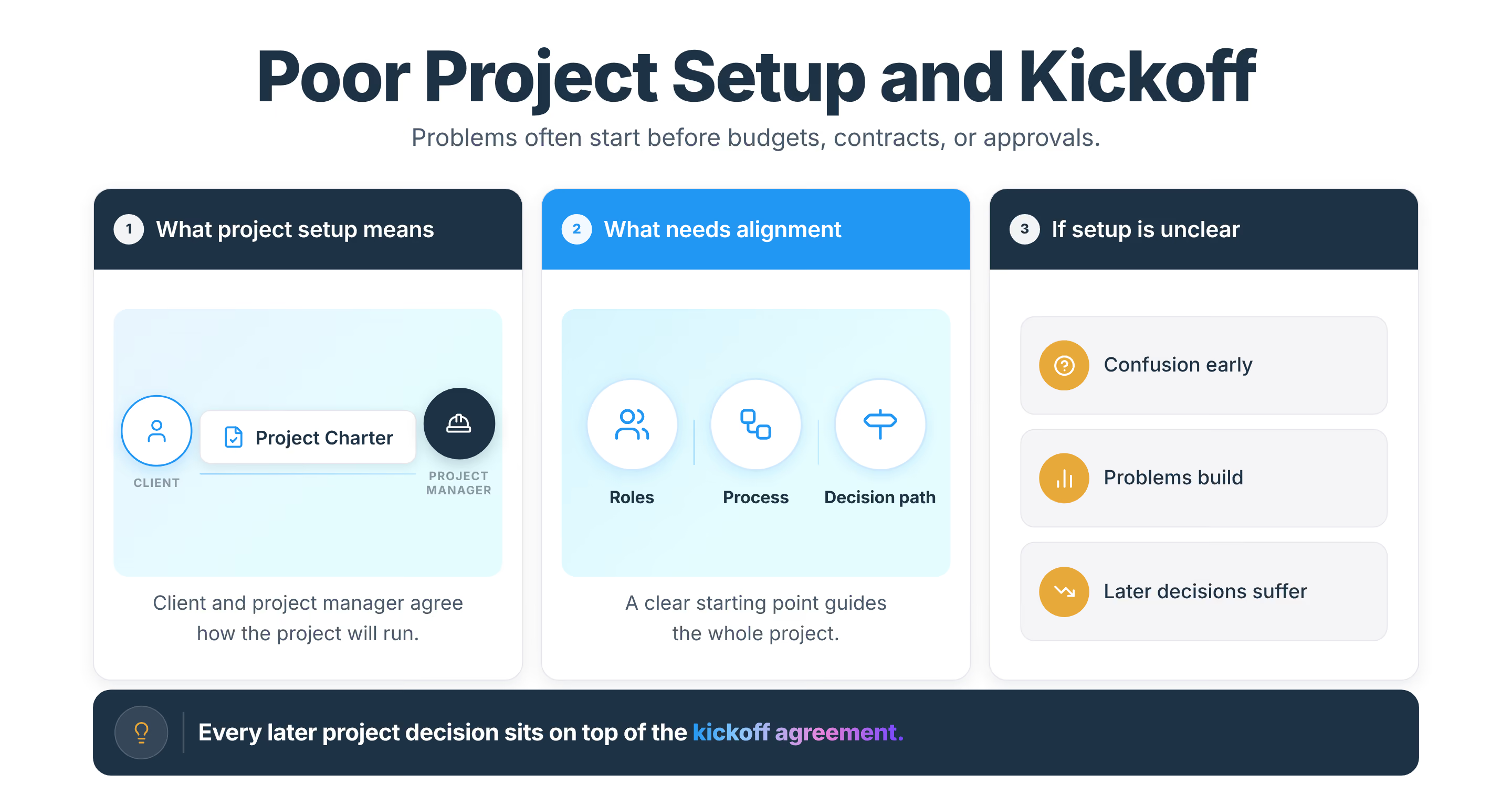
The first place a project starts to go wrong is the setup. Before I look at project budget, contracts, or authorities, I want one thing settled. Have the client and I actually agreed on how we are going to move forward? What are their main goals? What are the assumptions behind their feasibility? Who are the key stakeholders that we need to manage? What is the proposed staging and project structure ?
If you don’t get to the right starting point and move forward and agree with the client on how you’re gonna move forward, the problems will build from day one. Project setup is the agreement between the client and PM about how the project will run. Skip it, and every later decision sits on a foundation that was never built.
2. Unclear Budget and Cost Planning
The next place I see things slip is on cost management, and it is almost always for the same three reasons. Below are the failures I often see, what each one looks like on the ground, and where the cost lands:
Why does the quantity surveyor need to be there from day one?
Because no one else in the design room is pricing things in real time. I am a big believer in having a QS, a quantity surveyor, from day one, working through cost plans and cost estimates as design develops. When the architect suggests something, it's gonna look amazing. But those in the room might not appreciate the cost. The QS is the one who does.
If they are not in the room, the design quietly drifts past the budget. Often, the designs progress quite far through design development, and undoing these certain things takes time. So I think getting cost control upfront is really important.
Why isn't a contract sum the same as a budget?
Because the contract sum and the budget are not the same thing. Something on every project will move, and a contract sum cannot stretch to cover it. That's why there's a cost blowout, and then there's a budget blowout. That gap is what contingency is for.
A cost blowout is when the contract sum with the builder gets exceeded. A budget blowout is when the total amount you actually planned to spend on the project gets exceeded.
Clients need to make sure that they've got a contingency in place, whether they call that a nominal amount of 5% or 10% or if there's some bit more rigor behind it, especially on a design and construct contract. There are always unknowns and these need to be allowed for.

3. Late Authority Engagement
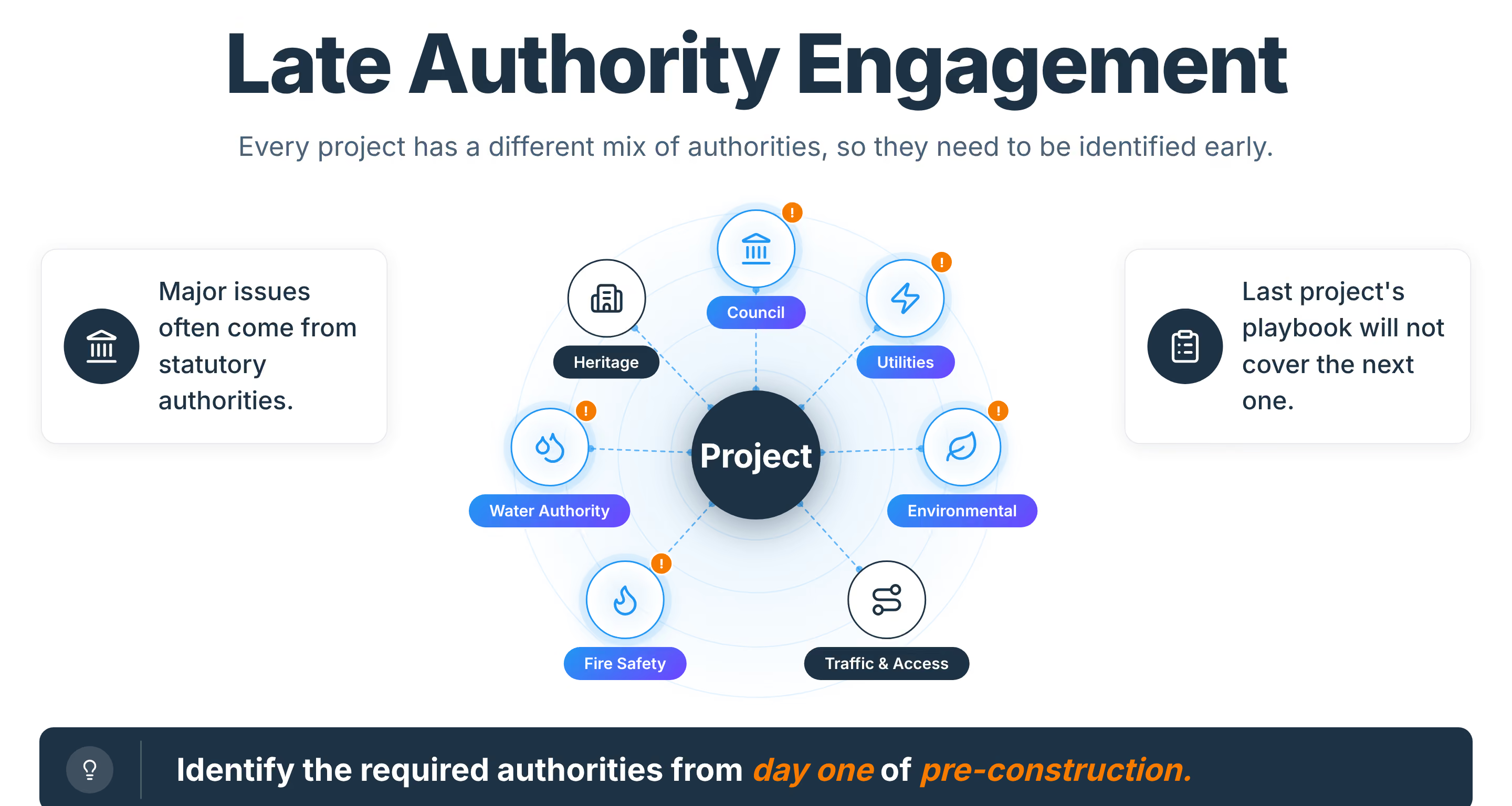
Some of the biggest issues we have are with statutory authorities, and that's consistent across projects. Every job has a different one giving you grief, so the last project's playbook will not save you on the next.
I'm a believer that if you're not identifying which authorities you need to deal with from day one of pre-construction, the project's already at risk.
EXAMPLE
The Ausgrid is one example I always come back to. You plan a connection in good faith. Then, mid-project, the authority changes the requirement on you. All of a sudden, Ausgrid says you need to replace, or do a brand new substation instead of tapping into an existing substation. They might backflip throughout the project.
4. Insufficient Site Investigations
Insufficient site investigations mean the builder prices in unknowns, or won’t price them at all. This leaves real cost exposure. Test what you can on site before builders start pricing it, so there are no surprises. And that’s for things like contamination, geotech, whatever other studies you need to undertake up front.
Below are three tests worth running before pricing, and the latent condition each one becomes if you skip it.
Why pay for site testing this early?
Because what you skip upfront comes back as either excessive fat in the builder’s pricing or a latent condition claim. Latent conditions, whether it’s contamination, whether the geotechnical or the subsurface isn’t as expected, or whether you find some archeological finding in the ground. And latent conditions are one of the three biggest cost blowouts I see on any project.
front comes back as either excessive fat in the builder’s pricing or a latent-The cost of doing the study before pricing is almost always less than the cost of the resulting variation. Doing the study first is the trade-off worth making early, even when it feels like a delay to the program.
5. Unclear Contract Documents
Once you move into the construction phase, I think the biggest issues I've had are from unclear contracts. If the construction contract isn't clear or it's ambiguous, or scope documents are missing, that's what often leads to arguments and disputes over variations during construction.
Below are the four shapes those failures take, and what each one ends up causing on site.
Why does the same contract problem keep happening?
Because the contract gets signed without either side really reading it and understanding their risks. Six months into contract administration, a variation comes through, and no one can find the relevant document. Now you are arguing about entitlement instead of building.

6. Unchecked Design and Scope Changes
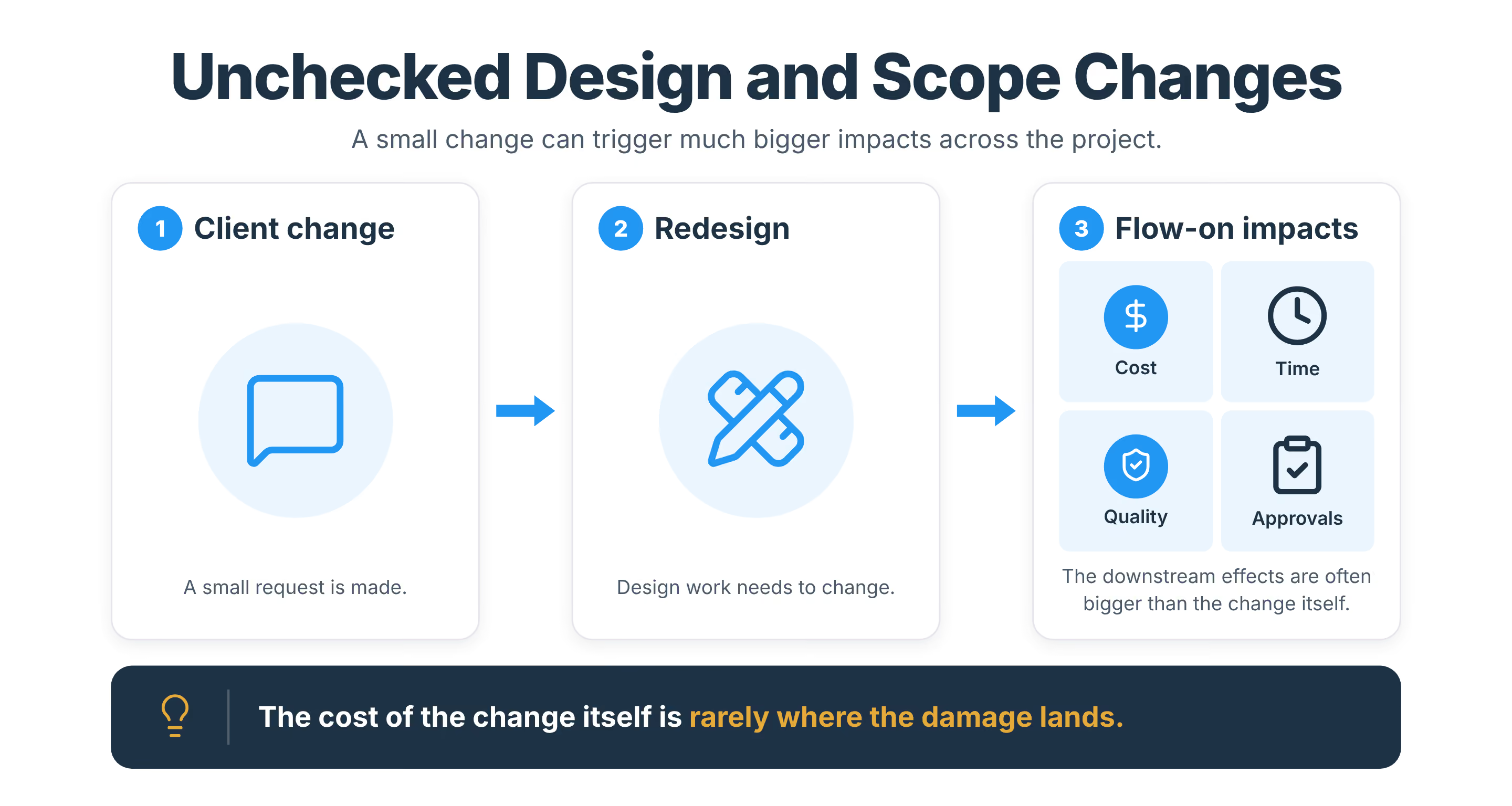
Even with a perfect setup, every project has changes. As you build, more things get uncovered, more stakeholders get involved, and often some key stakeholders change. That is going to result in some redesign and likely additional costs.
The part clients rarely predict is the flow-on effects of those scope changes. A small request can trigger a redesign that costs more than the change itself would ever have saved.
EXAMPLE
I've had a project where they've decided they want to knock out a wall. We've had to do a full structural redesign to remove the wall. It ended up saving about $2,000 worth of construction costs, but it cost 90 grand to do the redesign.
7. Late Risk Management Conversations
Risk conversations on every project need to happen earlier in the project lifecycle than they usually do. The hardest conversation to have is when someone has to pay for something. Pushed too late, every risk on the register becomes a variation or a fight instead of a decision.
What to do when a client's target isn't realistic?
I find it's best to be upfront and say, look, I hear your goal. We've got to do a bit more digging, put together a program, talk to the right consultants, talk to the contractor, see what's realistic, and then come back to them with what we see as a realistic date.
Here's how I handle it when a client's goal isn't realistic:
- Hear the goal: Acknowledge what the client is aiming for before pushing back.
- Do more digging: Do not commit to a date without doing the work first.
- Talk to the right consultants: Get the technical reality from the experts.
- Talk to the contractor: Get the build-side view of what is actually deliverable.
- Come back with a realistic date: Based on what you actually see, not the original target.
Get the First Day Right
The problems don’t start on-site. They go wrong on day one, when the budget, the construction contract, the statutory authorities, and the site investigation plan are all decided. Get those right in pre-construction, and the problems that remain are problems you can actually solve.
If you are about to start a major project, my single most useful piece of advice is the simplest one. Make sure you get a client-side project manager.

Written by
William Hodge
William Hodge is a Senior Project Manager at Essence Project Management with 6 years in client-side construction PM across hospitality, commercial, and build-to-rent in Sydney. He holds a Bachelor of Civil Engineering Honours Class 1 from the University of Sydney and guest lectures in UTS's Master of Project Management program. At Mastt, William contributes content on construction project management and contract administration.


Contributions by
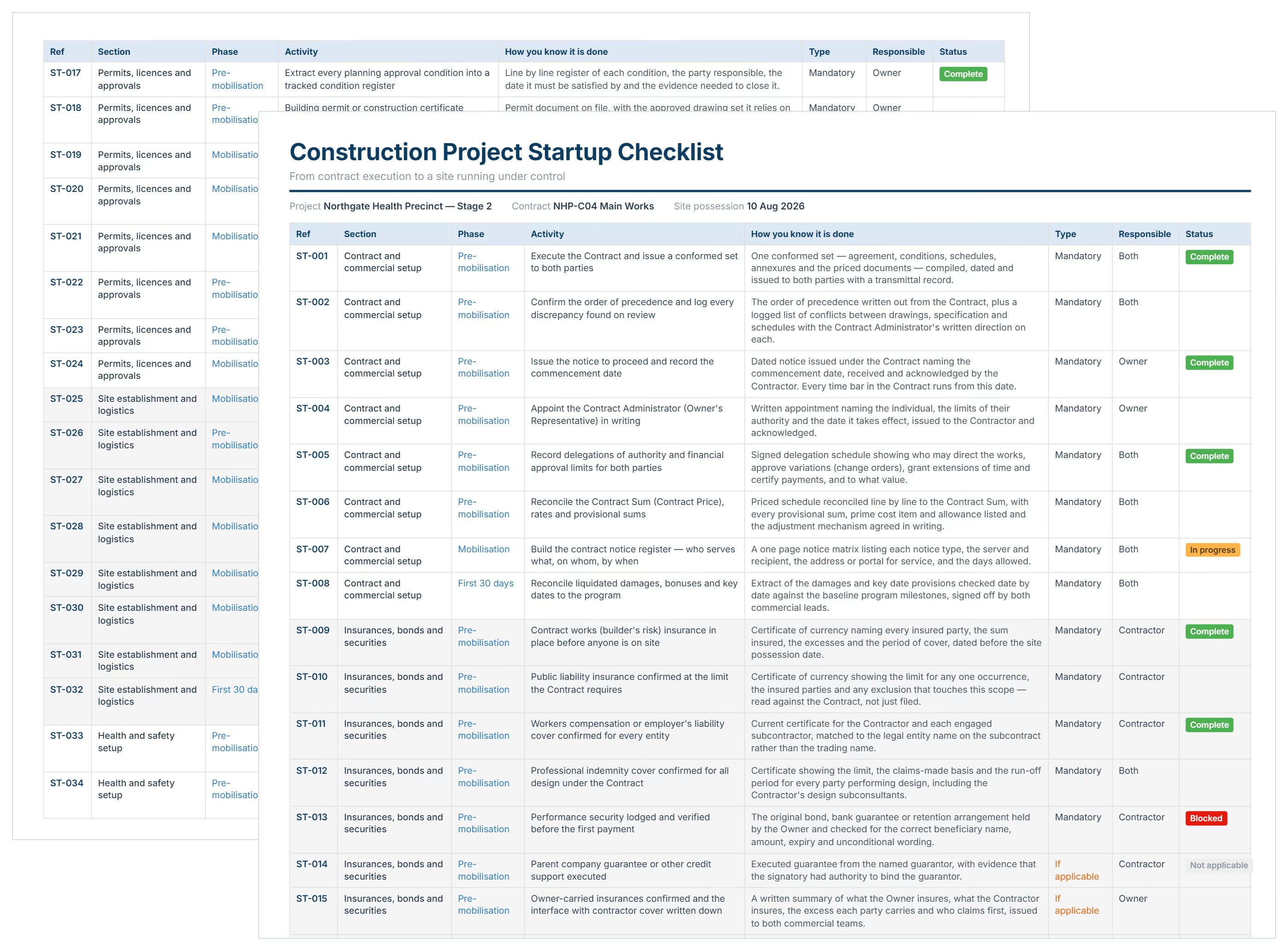
Construction Project Startup Checklist
Use this FREE construction project startup checklist to verify mobilization readiness before ground. Covers permits, site prep, safety, and coordination for on-time starts.

Walk Into Every Meeting With Confidence, Clarity, and Control
No one wants to look unprepared, blindsided, or uncertain in front of stakeholders — but that’s exactly what happens without Mastt.
Start for FreeTrusted by the bold, the brave, and the brilliant across governments, Fortune 500s, and the world’s best in delivering the future